Long Beach Phu Quoc: The Island's Longest Shoreline
Long Beach (Bãi Trường) runs roughly 20 kilometres down Phu Quoc's west coast, from south Dinh Cau in the north towards the north An Thoi area. It concentrates the island's accommodation, dining, and beach clubs, and faces west for consistently impressive sunsets. The northern stretch is livelier and cheaper; the southern end quieter and more resort-oriented.
Quick Facts
- Location
- West coast of Phu Quoc, stretching ~20km from Duong Dong south to the An Thoi area
- Getting There
- Walking distance from Duong Dong for the north end; taxi or Grab for the south sections
- Time Needed
- A few hours for the beach itself; the strip works as a base for your whole stay
- Cost
- Beach access is free; sunbed and umbrella hire charged by operators at most beach clubs
- Best for
- Resort stays, sunset watching, beach swimming, families, couples, budget travelers on the north end
The Shape of Long Beach
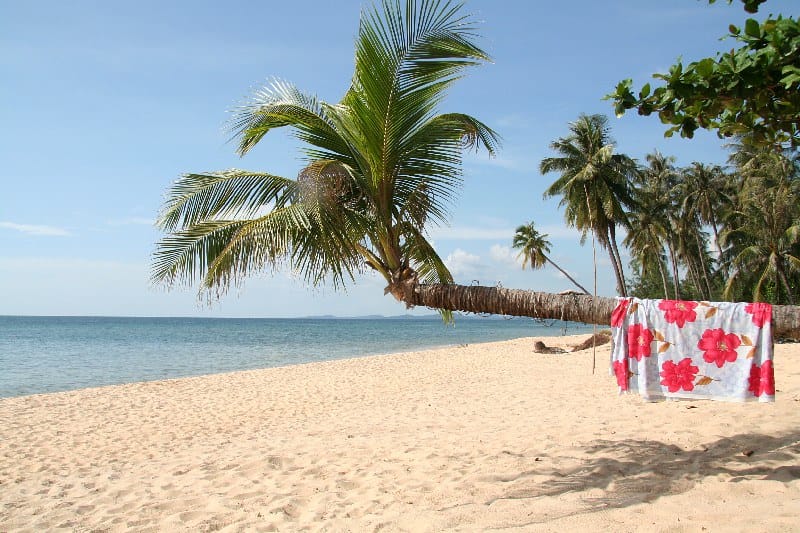
Long Beach, known locally as Bãi Trường, runs approximately 20 kilometres along Phu Quoc's west coast from the rocky outcrop at Dinh Cau in the north down to the An Thoi area in the south. It is the island's main beach — the one that most visitors stay near, eat alongside, and return to each evening. Nearly all of Phu Quoc's hotels, guesthouses, resort complexes, bars, and beach-facing restaurants are located on or immediately behind this stretch of coast. It faces west across the Gulf of Thailand, which means the sun sets directly over the water every evening, a condition that makes it consistently one of the better sunset-watching locations in southern Vietnam.
Understanding Long Beach means understanding that it is not one beach but a sequence of different experiences along a 20-kilometre corridor. The character changes significantly as you move south. For more detail on how to navigate between points on the island, the getting around Phu Quoc guide covers transport options in full.
North Long Beach: Lively and Accessible
The northern section, running south from the Dinh Cau area for roughly the first five kilometres, is where the original tourist infrastructure developed. The road running parallel to the beach here is dense with restaurants, bars, guesthouses, motorbike rental shops, dive operators, and massage places. The beach itself is narrower in places than the southern end, and busier — particularly in the evenings when it becomes the default gathering point for anyone staying nearby. It's the part of Long Beach that functions most like a beach town rather than a resort destination. Prices here are lower across the board, and you can walk between virtually everything you need without taking transport.
The water in the northern section is calm and shallow, which makes it practical for swimming throughout the dry season. At very low tides, some sections become shallow enough to wade for a considerable distance, which suits families with young children well. The seabed is sandy rather than rocky, and there are no significant currents to worry about under normal conditions.
Tickets & tours
Live prices and dates from our booking partner. If you book, we may earn a commission at no extra cost to you.
Phu Quoc Island southern discovery tour with lunch
From 125 €Instant confirmationFree cancellationPrivate transfer between Phu Quoc Airport and Duong Dong Town
From 12 €Instant confirmationFree cancellationPhu Quoc 4 islands speedboat tour with cable car ride and lunch
From 62 €Instant confirmationFree cancellationGuided tour of Phu Quoc Island with visit to a local distillery
From 26 €Instant confirmationFree cancellation
South Long Beach: Resort Territory
The southern stretch — loosely from the 10km mark down toward An Thoi — looks and feels substantially different. Larger resort complexes set behind their own beach frontage, luxury villas, and high-end restaurant properties have replaced the dense budget strip. The road here runs further from the water, and large sections of beach are effectively controlled by the adjacent resorts, though access to the sea itself remains public. The sand is broader, the crowds are thinner, and the pace is slower. For the full picture on accommodation across these zones, the where to stay guide breaks down each section.
Some sections in the south have imported white sand to supplement the natural beach, which can look slightly artificial up close. The natural sand on Long Beach varies from pale gold to a somewhat darker tone depending on location — less brilliantly white than Sao Beach in the south, but perfectly comfortable for a day out.
Sunsets
The west-facing orientation of Long Beach is its single most consistent advantage over other beaches on the island. From roughly 5pm until shortly after 6pm, the sky above the Gulf of Thailand delivers a color progression — orange, pink, deep red — that reflects off calm water on clear-weather days. The Dinh Cau Temple at the northern end of the beach sits on a promontory that frames the sunset from the east; watching it from the rocks below the temple or from the adjacent pier is one of the more memorable versions of the experience. Sunset Sanato Beach Club is the most organized viewing option if you want drinks and seating built around the timing, but the beach itself is free.
Swimming and Water Conditions
Long Beach is best for swimming between November and April, when the west coast is sheltered from the northeast monsoon and the water stays relatively clear. During the southwest monsoon from May to October — particularly June through September — conditions deteriorate: the water becomes rougher, visibility drops, occasional jellyfish appear, and beach cleanup becomes inconsistent. The beach doesn't close, and it's not dangerous for confident adult swimmers, but the experience is meaningfully worse than in the dry season. November to April reliably delivers flat water, good visibility for snorkeling close to shore, and comfortable temperatures.
💡 Local tip
The water on Long Beach is calmest and clearest from November through April. If you're visiting between May and October, check conditions before committing to a beach day here — the southwest monsoon brings rougher water and inconsistent cleanup on the west coast.
Getting There and Practical Notes
The northern end of Long Beach is within walking distance of Duong Dong town centre and most of its restaurants, markets, and services. The Phu Quoc Night Market is a five-minute walk from the northern beach strip. The southern end requires a motorbike or taxi to reach from town — distances add up quickly along this coast. No specific entrance or parking fees apply to Long Beach; the public beach is accessible at any point along its length.
Who Should Look Elsewhere
Travelers specifically seeking the clearest water and most photogenic sand should make the drive to Sao Beach in the south of the island — Long Beach is convenient, not spectacular. Those visiting between June and September who are sensitive to rough conditions may be disappointed. And anyone who finds beach-strip tourism environments draining — the constant offers from vendors, the beach clubs, the commercial density — will find the quieter east coast or southern beaches more to their liking.
Insider Tips
- The sun sets directly over the sea from Long Beach, which means the window between about 5pm and 6pm is genuinely spectacular — particularly at the northern end near Dinh Cau, where you can watch from the pier or the beach with the temple in the frame. No other beach on the island has this geometry.
- The northern stretch of Long Beach, running south from Dinh Cau, is far more accessible and sociable than the resort-heavy south. Budget restaurants, rental shops, massage stalls, and bars line the road immediately behind the sand, and you can walk between them without needing transport. The south is calmer but requires a scooter or taxi to get anywhere.
- The sea here is calmer than Sao Beach during the southwest monsoon (May to October), but conditions do deteriorate. Between June and September, expect rougher water, occasional jellyfish, and less appealing beach conditions — not dangerous, but not ideal. The November to April window is reliably good.
- Motorbike and bicycle rental is cheapest and most available in the northern Long Beach strip. If you're planning to explore the island during your stay, setting up a rental here on day one saves the organisational effort later.
- If you're looking for a quieter stretch without relocating entirely, the section between roughly the 10km and 14km marks south of Duong Dong tends to be less densely packed with beach clubs and offers more space. The trade-off is fewer food options and fewer amenities within walking range.
Who Is Long Beach For?
- Travelers using Phu Quoc's main accommodation and dining infrastructure as a base, with Long Beach as the anchor for daily beach time
- Anyone who wants a sunset-facing beach with consistent west-coast views — no other beach on the island has this combination of accessibility and orientation
- Budget travelers and backpackers on the northern end, where accommodation, food, and rental options are concentrated and affordable
- Families who want calm, shallow water within easy reach of restaurants, shops, and resort facilities
- Couples staying at mid-range or luxury resorts on the southern stretch who want a quieter, more private beach experience
Nearby Attractions
Other things to see while in Duong Dong:
- Dinh Cau Temple
Perched on a small rocky outcrop where the Duong Dong River meets the sea, Dinh Cau Temple is a working place of worship tied to Phu Quoc's fishing heritage. Compact but atmospheric, it rewards visitors who take time to understand its cultural context rather than simply photograph it from the road.
- Phu Quoc Night Market
The Phu Quoc Night Market on Bach Dang Street in Duong Dong is the island's main evening street market. It opens around 6pm and runs to midnight, with fresh grilled seafood in Zone 1 and Phu Quoc souvenirs — pearls, sim wine, fish sauce, dried seafood — in Zone 2. It sits beside Dinh Cau Temple, walkable from most Long Beach hotels.
Planning a trip? Discover personalized activities with the Nomado app.