Sao Beach: Phu Quoc's Postcard Shore, Honestly Reviewed
Sao Beach, on Phu Quoc's southeastern tip, delivers the kind of white-sand, turquoise-water scenery that looks almost too good to be true. The reality lives up to the images, but timing and expectations matter. Here's what you actually need to know before making the trip.
Quick Facts
- Location
- An Thoi area, southeastern Phu Quoc
- Getting There
- Motorbike or taxi/car hire from Duong Dong (~25–30 km); no public bus service
- Time Needed
- 2–4 hours; a full half-day if you swim and eat
- Cost
- Beach access is free; sunbed/umbrella hire charged by beachside operators
- Best for
- Swimming, photography, relaxed beach days, couples, families with young children
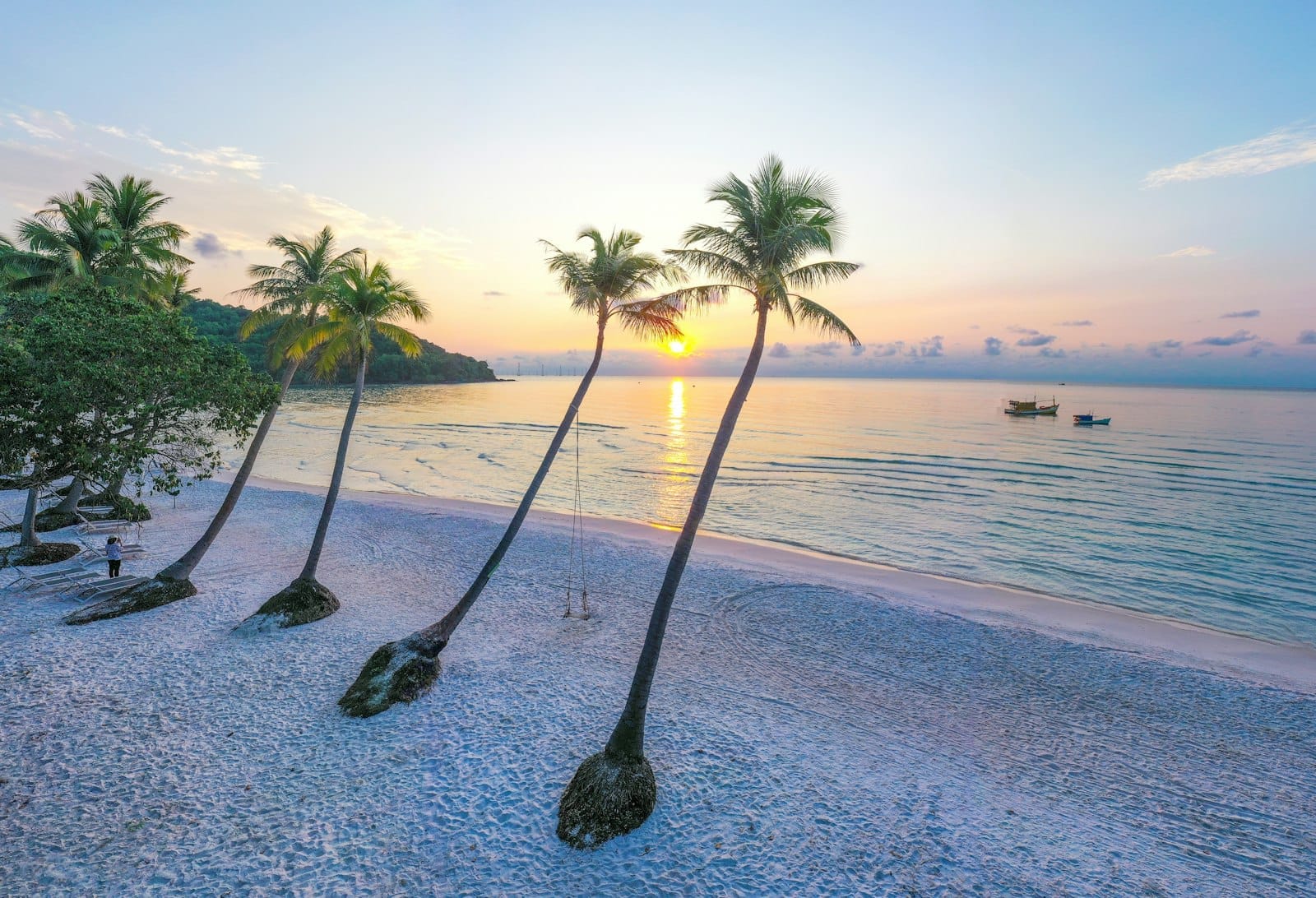
What Sao Beach Actually Looks Like
Sao Beach (Bai Sao in Vietnamese) sits on the southeastern coast of Phu Quoc, tucked into a wide, gently curving bay framed by low forested hills on either side. The sand here is genuinely white, powdery, and fine, the kind that squeaks faintly underfoot and stays surprisingly cool even in full sun. The water runs in distinct bands of color: pale jade close to shore, deepening to a rich turquoise further out. On calm days, the surface is flat enough to reflect the sky like a mirror.
This is widely considered Phu Quoc's most classically beautiful beach, and for once the reputation is fair. The bay's gentle curve means the water stays shallow and calm for a good distance out, making it genuinely comfortable for swimming. There is no heavy surf, no rip currents to worry about under normal conditions, and the seabed is sandy rather than rocky. For travelers who have visited other parts of the island and found the water choppy or the beaches more functional than beautiful, Sao Beach tends to be the one that finally delivers.
💡 Local tip
The beach faces east-southeast, which means it catches morning light beautifully. Arrive before 9am for the best photography light, the coolest air temperature, and the calmest water surface.
How the Beach Changes Through the Day
The early morning version of Sao Beach is the one worth planning around. Before tour groups arrive, the shore is quiet enough that you can hear the small waves folding over the sand. The light at this hour is warm and low, catching the texture of the water rather than bleaching it out. A few local vendors set up early, but the main stretch of sunbeds is often still empty.
By late morning, day-trippers and tour buses begin arriving, and the atmosphere shifts noticeably. The sunbed rows fill up, the beach bars start serving drinks and food, and the water fills with swimmers. It does not become overcrowded in the way that beach destinations in Thailand or Bali often do, but the solitude of the early hours gives way to a more social, resort-style mood. This is still pleasant, just different. If you are traveling with children or prefer a livelier atmosphere with easy access to food and shade, mid-morning onwards works perfectly well.
The beach faces away from the sunset, so there is no dramatic evening light show here. The late afternoon does bring some relief from the midday heat, and the crowd thins noticeably after around 3pm as tour groups head back. That window, roughly 3pm to 5pm, offers a second quieter period that many visitors miss because they assume the best time is always morning.
Tickets & tours
Live prices and dates from our booking partner. If you book, we may earn a commission at no extra cost to you.
Phu Quoc Island southern discovery tour with lunch
From 125 €Instant confirmationFree cancellationPrivate transfer between Phu Quoc Airport and Duong Dong Town
From 12 €Instant confirmationFree cancellationPhu Quoc 4 islands speedboat tour with cable car ride and lunch
From 62 €Instant confirmationFree cancellationGuided tour of Phu Quoc Island with visit to a local distillery
From 26 €Instant confirmationFree cancellation
Getting to Sao Beach from Duong Dong
Sao Beach is located in the An Thoi area at the island's southern end, roughly 25 to 30 kilometers from Duong Dong, where most accommodations are concentrated. The drive takes around 30 to 40 minutes depending on traffic, and the road is in good condition throughout. There is no scheduled public bus service running this route, so your options are renting a motorbike, hiring a taxi or car, or booking a day tour that includes the beach.
Motorbike is the most flexible option and lets you arrive early without depending on a tour schedule. The route south through the island is straightforward, passing through patches of farmland and small villages before the road narrows slightly near the beach turnoff. The final stretch toward the beach is signposted. Parking is available at the beach and typically charged at a small flat rate.
If you are making a day of the southern end of the island, Sao Beach pairs well with a visit to Phu Quoc Prison, which is located nearby in An Thoi and adds historical context to the trip. The Hon Thom Cable Car terminal is also in this part of the island if you want to combine attractions in one southern loop.
ℹ️ Good to know
If you are renting a motorbike for the first time on Phu Quoc, review the road conditions and traffic patterns in advance. The main roads are generally manageable, but traffic near Duong Dong can be hectic during peak hours.
Swimming, Sunbeds, and What's Available on the Beach
The beach is lined with a row of simple open-air restaurants and beach bars, most of which offer sunbed and umbrella hire as part of a package, often tied to a minimum food or drink spend. The setup is informal rather than corporate, and the pricing is generally reasonable. Seafood grilled to order is the main attraction on the food side, particularly fresh squid and shellfish brought in from local boats.
The swimming is genuinely good. The shallow gradient and calm conditions mean the water is accessible for all ages, and you can wade out a significant distance before the depth becomes an issue. The sea is generally clear, though it can cloud slightly after rain or when the wind picks up. Snorkeling directly off the beach is possible on calm days, though the reef quality is not particularly remarkable here compared to the islands further offshore.
For serious snorkeling or diving, the island-hopping routes around the An Thoi archipelago offer significantly better underwater scenery. Sao Beach is better understood as a swimming and relaxation spot rather than a dive destination.
Seasonal Conditions and When to Visit
Sao Beach is at its best during the dry season, which runs roughly from November through April. During these months the water is calm, clear, and the sky reliably blue. The best time to visit Phu Quoc overall aligns with this window, and Sao Beach is one of the beaches that benefits most from it.
The southwest monsoon, active roughly May through October, brings rain and wind that can make the water murky and the beach less appealing. That said, Sao Beach sits on the southeastern coast, which gives it some protection from the prevailing wet-season winds compared to the west-facing beaches. It is often still swimmable in the early wet season when Long Beach on the west coast is already rough. However, conditions vary, and a stormy week can affect any beach regardless of orientation.
⚠️ What to skip
During the peak dry season months (December to February), Sao Beach sees its highest visitor numbers. If you want quieter conditions, aim for early morning visits or consider the shoulder months of November or March.
Photography, Accessibility, and Practical Notes
Sao Beach photographs well in almost any conditions during the dry season, but the classic postcard shot, with white sand, clear turquoise water, and green hills as a backdrop, is easiest to capture in the morning before sunbeds and swimmers crowd the foreground. A polarizing filter makes a meaningful difference for water photography here. The white sand also reflects a lot of light, so if you are shooting in direct midday sun, exposure compensation will help.
Accessibility is limited. The beach is reached via an unpaved or lightly paved approach in places, and the soft sand itself is not easily navigated by wheelchair. There are no formal accessibility facilities. The restaurants and bars are open-air structures with informal seating rather than full-service facilities. Toilets are available at the beachside establishments, typically for paying customers.
Travelers staying on the west coast may want to compare options before committing to the long drive south. Ong Lang Beach and Long Beach are closer to Duong Dong and offer a very different experience. Sao Beach is worth the journey specifically for its water quality and scenery, but it is a deliberate half-day trip rather than a casual stop.
Who Should Skip Sao Beach
Travelers who are primarily interested in nightlife, market culture, or historical sites will find the long drive south less justified. The beach has no nightlife and shuts down in the early evening. Anyone with mobility constraints will find the logistics challenging. And visitors staying only one or two days on the island may find the round-trip time investment competes with other priorities, particularly if they are also considering the national park, the prison museum, or the cable car.
Insider Tips
- Arrive before 9am to have the beach largely to yourself. The light is better, the water calmer, and the sand unoccupied by sunbed rows. Even during peak season, the very early morning is noticeably quieter.
- The beachside restaurants are your best option for lunch on this side of the island. Ordering grilled seafood directly from the catch rather than off a laminated menu tends to yield better results. Point and ask what is fresh that morning.
- The road to Sao Beach passes through the An Thoi area, which is also the departure point for the Hon Thom Cable Car. Combining both into one southern day-trip makes the long drive from Duong Dong more efficient.
- Bring cash. The beachside operators are informal, and card payment is not reliably available. Small denominations work best for parking fees and sunbed hire.
- If the beach feels too crowded when you arrive, walk to the northern end of the bay where the tree line begins. This stretch tends to stay quieter because it is further from the main parking area and restaurant strip.
Who Is Sao Beach For?
- Swimmers and families with young children looking for calm, shallow water
- Photographers wanting Phu Quoc's most classically scenic beach setting
- Couples looking for a relaxed beach day away from the main resort areas
- Travelers pairing a beach visit with the An Thoi area's other attractions
- Anyone visiting during the dry season who wants genuinely clear water
Nearby Attractions
Other things to see while in An Thoi:
- Hon Thom Cable Car
The Hon Thom cable car runs from the An Thoi area in southern Phu Quoc across the sea to Hon Thom island, covering nearly 8 kilometres in about 15 minutes. It holds a Guinness World Record as the world's longest non-stop three-cable gondola. The views across the An Thoi archipelago are the main draw; Hon Thom island has a water park and beaches on the other end.
- Phu Quoc Prison
Phu Quoc Prison, also called the Coconut Tree Prison, is a national heritage site in the south of the island near An Thoi. Built by the French and expanded during the Vietnam War, it held tens of thousands of prisoners and is now a museum with preserved compounds, tiger cages, and exhibits documenting the conditions inside. Entry is free.
- Sunset Town
Sunset Town is Sun Group's Mediterranean-inspired development at the southwestern tip of Phu Quoc, adjacent to the Hon Thom Cable Car departure station. It reproduces elements of Amalfi, Santorini, and Venice in a purpose-built coastal complex, with evening shows, a 75-metre clock tower, the Kiss Bridge, and a clear view across the sea for sunset.
Planning a trip? Discover personalized activities with the Nomado app.