Dinh Cau Temple: Phu Quoc's Coastal Shrine Worth a Short Stop
Perched on a small rocky outcrop where the Duong Dong River meets the sea, Dinh Cau Temple is a working place of worship tied to Phu Quoc's fishing heritage. Compact but atmospheric, it rewards visitors who take time to understand its cultural context rather than simply photograph it from the road.
Quick Facts
- Location
- Duong Dong, Phu Quoc Island
- Getting There
- 10-minute walk from Duong Dong town center; easy to combine with a visit to the night market
- Time Needed
- 20 to 40 minutes
- Cost
- Free to enter
- Best for
- Cultural curiosity, coastal views, early morning atmosphere
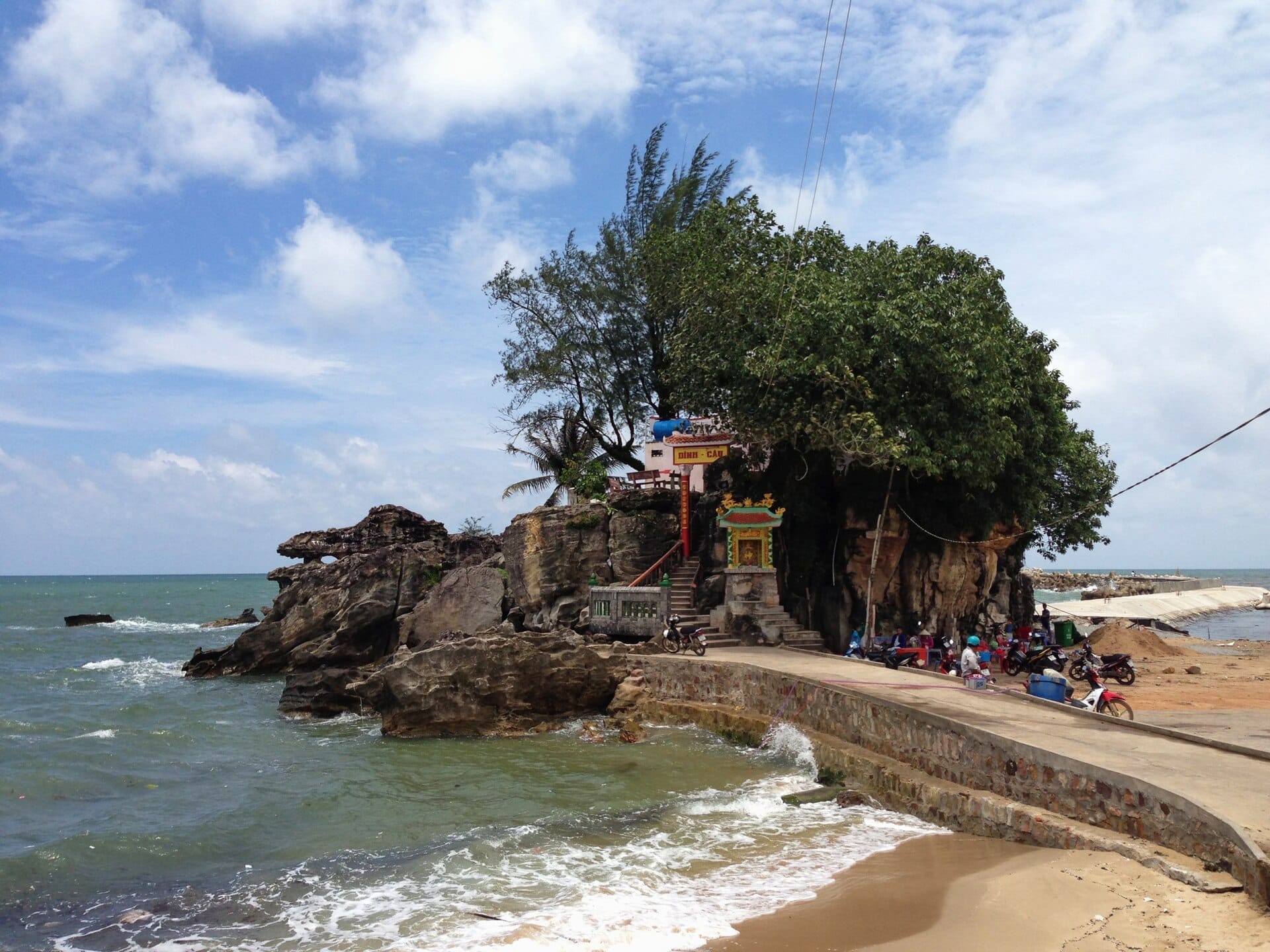
What Dinh Cau Temple Actually Is
Dinh Cau Temple is a small but significant Vietnamese shrine built on a natural rock formation at the mouth of the Duong Dong River, on the northwestern coast of Phu Quoc. It is dedicated to Thien Hau, the goddess of the sea, who is venerated across coastal communities in southern Vietnam as a protector of sailors and fishermen. For the fishing families who have worked these waters for generations, this is not a tourist attraction — it is an active place of prayer and offering.
The temple's current structure was built in the early twentieth century and has been maintained and periodically restored by the local community ever since. Its position on the rocks, flanked by a small lighthouse on one side and open water on the other, gives it an immediate visual presence that photographs consistently fail to fully convey. The scale is intimate: this is a shrine, not a grand pagoda, and that restraint is part of its character.
💡 Local tip
Dress modestly before arriving — covered shoulders and knees are expected inside the temple grounds. This is an active religious site, not a photo backdrop.
The Setting: Rock, River, and Open Sea
The physical setting of Dinh Cau is what separates it from other small temples on the island. A short stone staircase climbs the rocky outcrop to reach the main shrine, and from the top you get an unobstructed view across the river mouth toward the fishing harbor and the open waters of the Gulf of Thailand beyond. Fishing boats move through the channel below, and on calm mornings the water is flat and copper-colored in the early light.
The rocks themselves are weathered and salt-pitted, covered in patches of lichen. Incense smoke drifts from burners at the entrance, and the smell of it mixes with the salt air in a way that is very particular to coastal Vietnamese religious sites. Small offerings of fruit and flowers are typically left at the altar, replaced daily by local worshippers.
The temple sits at the northern edge of Duong Dong, Phu Quoc's main town, and it is one of the few places in the area where the working character of the island is still clearly visible. The fishing harbor nearby handles real commercial catches, and early in the morning you can watch boats returning with the night's haul.
Tickets & tours
Live prices and dates from our booking partner. If you book, we may earn a commission at no extra cost to you.
Phu Quoc Island southern discovery tour with lunch
From 125 €Instant confirmationFree cancellationPrivate transfer between Phu Quoc Airport and Duong Dong Town
From 12 €Instant confirmationFree cancellationPhu Quoc 4 islands speedboat tour with cable car ride and lunch
From 62 €Instant confirmationFree cancellationGuided tour of Phu Quoc Island with visit to a local distillery
From 26 €Instant confirmationFree cancellation
How the Experience Changes by Time of Day
Early morning, before 8am, is when Dinh Cau Temple feels most authentic. Local residents come to pray before the day begins, incense is freshly lit, and the harbor nearby is at its most active. The light is soft and directional, making the rocky outcrop and the small lighthouse above the shrine especially photogenic. If you want to see the temple as it functions within the community, this is the time to arrive.
By mid-morning and into the afternoon, tour groups and day-trippers cycle through in quick succession, and the site can feel congested given its small footprint. The experience becomes more transactional: photos taken, boxes ticked. There is nothing wrong with visiting at this time, but manage your expectations accordingly.
Sunset draws another wave of visitors, this time often from the adjacent Phu Quoc Night Market, which operates along the riverbank just south of the temple. The evening light on the water is genuinely attractive, and the activity at the market creates a lively backdrop, though the temple itself quiets down as a place of worship by late afternoon.
Cultural Context: Why This Place Matters
Phu Quoc's economy was built on fishing long before tourism arrived, and Dinh Cau Temple is the clearest remaining symbol of that history in the island's main town. The veneration of Thien Hau reflects the real dangers faced by fishing communities: the Gulf of Thailand is not always calm, and the prayers offered here have historically carried genuine weight for families whose livelihoods depend on safe returns.
Annual festivals at the temple draw large gatherings from across the island, typically centered on traditional lunar calendar dates. During these events, the site is decorated with lanterns and banners, offerings are elaborated, and ceremonies may involve music and community processions. If your visit coincides with one of these occasions, the atmosphere is substantially different from a regular day — more crowded, but also more revealing of the temple's role in local life.
Understanding this context makes the visit more meaningful. Phu Quoc has changed rapidly over the past decade, with large-scale resort development reshaping much of the coastline. Seeing Ham Ninh Fishing Village in combination with Dinh Cau Temple gives a fuller picture of the island's pre-tourism identity.
Getting There and Getting Around
Dinh Cau Temple is easy to reach without planning. It sits at the western end of the main road running through Duong Dong, close to the river mouth. Most visitors arrive on foot from the town center, by motorbike taxi (xe om), or by rented scooter. If you are staying near Long Beach, the temple is a short ride north.
There is no formal parking area, but motorbikes can typically be left roadside nearby. The temple itself is free to enter. It combines naturally with a walk along the river and an evening visit to the night market, making it a practical anchor for an afternoon-into-evening itinerary in Duong Dong. For a broader guide to moving around the island, see getting around Phu Quoc.
Photography and Practical Notes
The composition most photographers seek is the shrine against the open water, ideally with a fishing boat in the channel below. This works best from the upper steps of the rock, looking west toward the sea. A wide-angle lens handles the compact space well. Early morning gives you soft, diffused light and fewer people in frame.
Be respectful with your camera inside the main shrine room. Wait for a natural pause in any prayer activity before photographing the altar, or simply refrain. The exterior and the surrounding coastal views are the more visually interesting elements in any case.
⚠️ What to skip
The rocks around the base of the temple can be slippery, especially after rain or at high tide. Wear shoes with grip — sandals with flat smooth soles are a genuine hazard on wet stone steps.
Accessibility is limited: the stone steps up the outcrop have no railings in sections and the surface is uneven. Visitors with mobility difficulties may find the upper shrine inaccessible, though the lower approach and views from ground level are still worthwhile.
Is Dinh Cau Worth Your Time?
Dinh Cau Temple is a 20-to-40-minute stop, not a half-day destination. Visitors expecting elaborate architecture or a large complex will be underwhelmed — the shrine is small, and its significance is cultural rather than monumental. But for anyone trying to understand Phu Quoc beyond its beaches and resorts, it is a meaningful ten minutes on the rocks above the sea. It fits easily into a broader day exploring things to do in Phu Quoc without feeling like a detour.
If you are only on the island for beach relaxation and have no interest in local religious or cultural sites, it is honest to say this may not move you. The setting is appealing, but the experience depends heavily on what you bring to it.
Insider Tips
- Arrive before 8am on a weekday to see local worshippers at the temple before tour groups arrive. The morning fishing activity in the harbor below adds to the atmosphere considerably.
- The small lighthouse above the main shrine is part of the same rocky structure and offers a slightly higher vantage point — walk up past the temple to see the full coastal panorama.
- Combining this stop with the Phu Quoc Night Market, which begins in the early evening just south along the riverbank, makes for an efficient and varied evening in Duong Dong without needing a vehicle.
- Fresh fruit offerings at the altar are replaced regularly by local families — if you want to make an offering, small items of fruit purchased from nearby market stalls are appropriate.
- Check whether your visit coincides with a Vietnamese lunar festival date. The temple sees notably larger gatherings during certain traditional holidays, which changes the experience entirely.
Who Is Dinh Cau Temple For?
- Travelers curious about Vietnamese coastal religious culture and local traditions
- Photographers looking for authentic coastal compositions in soft morning light
- Anyone spending an evening in Duong Dong who wants cultural context before or after the night market
- First-time visitors to Phu Quoc who want a quick introduction to the island's pre-tourism identity
- Couples or solo travelers who prefer atmosphere over spectacle
Nearby Attractions
Other things to see while in Duong Dong:
- Long Beach
Long Beach (Bãi Trường) runs roughly 20 kilometres down Phu Quoc's west coast, from south Dinh Cau in the north towards the north An Thoi area. It concentrates the island's accommodation, dining, and beach clubs, and faces west for consistently impressive sunsets. The northern stretch is livelier and cheaper; the southern end quieter and more resort-oriented.
- Phu Quoc Night Market
The Phu Quoc Night Market on Bach Dang Street in Duong Dong is the island's main evening street market. It opens around 6pm and runs to midnight, with fresh grilled seafood in Zone 1 and Phu Quoc souvenirs — pearls, sim wine, fish sauce, dried seafood — in Zone 2. It sits beside Dinh Cau Temple, walkable from most Long Beach hotels.
Planning a trip? Discover personalized activities with the Nomado app.