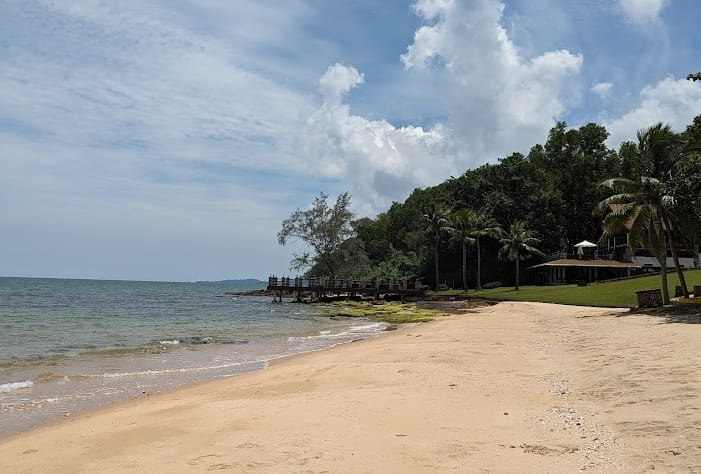
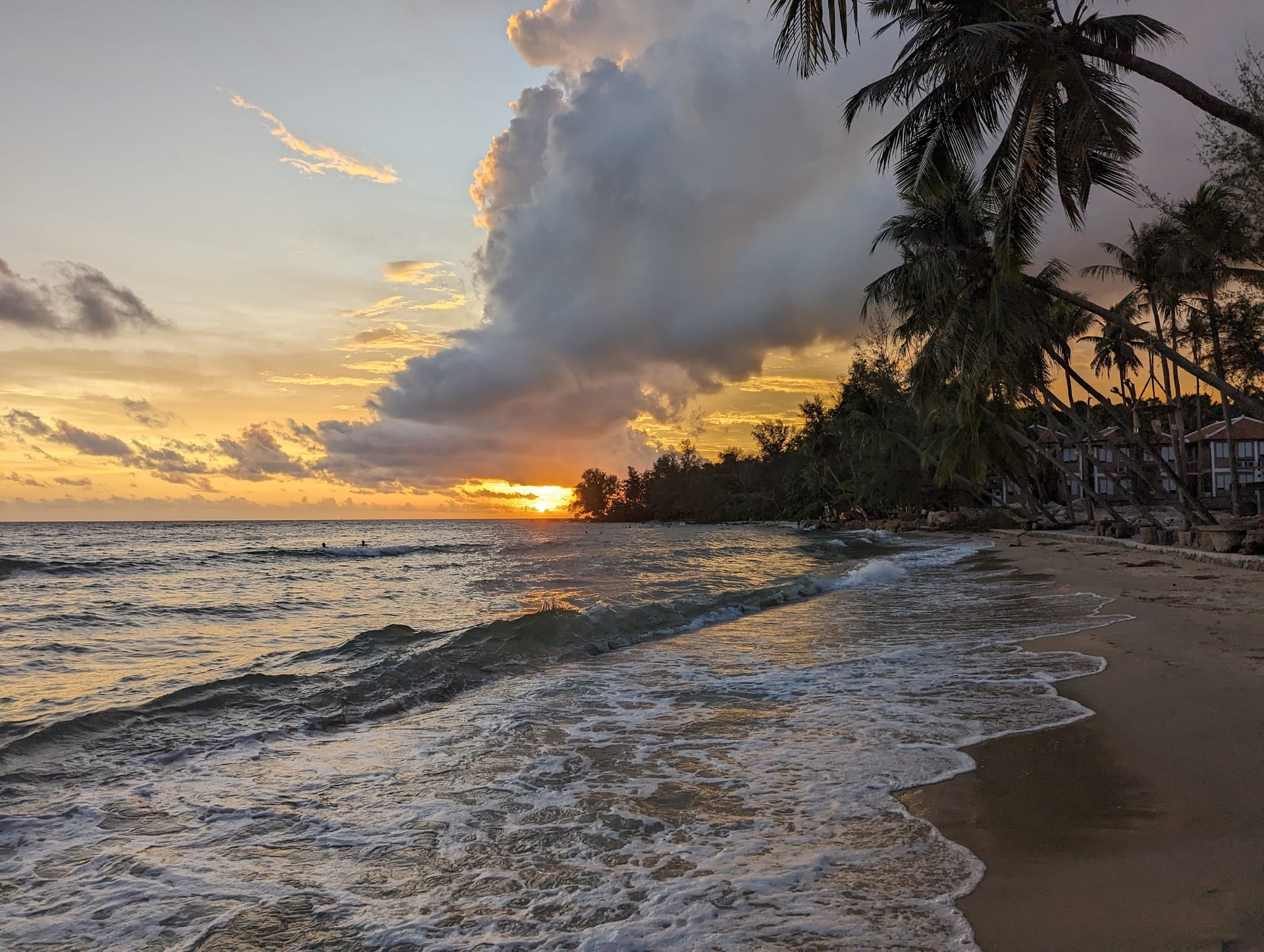
Ong Lang sits on Phu Quoc's mid-west coast, a stretch of coves and low-rise resorts that has managed to stay genuinely relaxed while the rest of the island builds upward. It draws travelers who want beach access, good food, and a slower rhythm without committing to true remoteness.
Ong Lang is the quietly confident alternative to Long Beach: close enough to Duong Dong for convenience, far enough from the main tourist strip to feel like a different island entirely. The shoreline here is a series of small, informal coves backed by casuarina trees, and the pace of life rarely accelerates beyond a gentle walk to the nearest sunlounger.
Orientation
Ong Lang Beach occupies a four-kilometer stretch of Phu Quoc's western coast, running roughly between the northern edge of Long Beach and the quieter coves that begin pushing toward the national park boundary. In practical terms, it sits about 7 to 10 kilometers north of Duong Dong town center, depending on which part of the beach you're heading to.
The main access road runs inland and parallel to the coast, with a series of dirt and laterite tracks branching west toward the water. This means the beach itself is not one continuous strip you can walk end to end easily: it is broken into pocket coves by rocky headlands and low vegetation, each section often dominated by one or two small resorts or guesthouses. If you picture Long Beach as a continuous highway of hotels, Ong Lang is more like a dotted line, with patches of development separated by scrub and small fishing areas.
To the south, Ong Lang blurs into the upper end of the Long Beach corridor. To the north and east, the road eventually feeds into the fringes of Phu Quoc National Park, which covers a large portion of the island's interior. This positioning gives Ong Lang a distinct advantage: you are close to both the island's main town and some of its last remaining wild forest, without being swallowed by either.
ℹ️ Good to know
Ong Lang does not have a single central point or landmark. Navigation works best by naming your specific resort or cove rather than just saying 'Ong Lang' to a driver or on a map app.
Character and Atmosphere
In the early morning, Ong Lang is one of the quietest places you can be on Phu Quoc. The light comes in low and orange across the water around 6am, and the only sounds are the occasional fishing boat engine and roosters somewhere in the treeline. A handful of guests from the small resorts will be out walking the sand, often alone. It feels less like a tourist destination and more like a coastal village that happens to have foreigners staying in it.
By midday, the heat becomes serious and the beach empties. The few open-air restaurants along the coast start preparing for lunch, and the shaded areas under the casuarinas fill with people reading or sleeping. There are no beach clubs here with pumping music and cocktail lists, and no jet ski operators circling offshore. If that sounds dull to you, Ong Lang is not your beach. If it sounds like relief, this is where you should book.
After dark, the strip does not transform into a nightlife zone. A few small restaurants stay open for dinner, lit by string lights and the occasional candle on a plastic table. The road back toward Duong Dong gets dark and narrow in places. The overall feeling at night is calm to the point of sleepy, and many guests find themselves turning in earlier here than they would anywhere else on the island. That is, for many travelers, entirely the point.
The mix of people staying in Ong Lang skews older and more independent than the party-focused resorts further south. You find couples on longer trips, solo travelers who have already done the big-ticket sights, and families who want beach access without the noise. The local community here is a mix of fishing families and resort workers, and interaction between the two groups happens naturally along the road and at the small roadside stalls.
What to See and Do
The primary draw is the beach itself. Ong Lang Beach is not uniformly beautiful: some sections are rocky near the water's edge, and the sand quality varies between coves. The best stretches tend to be in front of the larger resorts, which maintain their sections reasonably well. Swimming is generally safe outside of monsoon season, and the water is clear enough for snorkeling in the calmer months.
Ong Lang is a useful base for day trips without being a destination that demands days of exploration. The Phu Quoc National Park is reachable by motorbike within 20 to 30 minutes, and its trails and interior roads make for good early-morning riding when the heat is manageable. Heading south, Duong Dong offers the night market, temples, and the main fishing port, all within a 15 to 20 minute drive.
Visitors with more time and energy often use Ong Lang as a decompression zone between bigger activities. Spending a morning at the Phu Quoc Night Market in Duong Dong and an afternoon back at the Ong Lang shoreline is a natural daily rhythm for many guests. Those wanting more structured activity can arrange island-hopping excursions or day trips to Sao Beach through their resort, which typically offers the most reliable connection to tour operators.
Swimming and snorkeling from the coves in front of the main resort sections
Motorbike riding north into the national park boundary roads in the early morning
Day trips to Duong Dong for market visits and the Dinh Cau temple area
Sunset watching from the beach, which faces due west for unobstructed views
Island-hopping or snorkeling tours departing from An Thoi, bookable through local resorts
💡 Local tip
Sunsets at Ong Lang are genuinely good. The west-facing orientation and low development on the horizon mean you get clean color without buildings or power lines in the way. Plan to be on the beach from about 5:30pm.
Eating and Drinking
The food scene in Ong Lang is small, honest, and reasonably priced by Phu Quoc standards. It is not a place to look for trendy restaurants or long tasting menus. Most eating happens either inside resort restaurants or at a handful of small independent places along the main access road. The strongest category here is seafood: grilled fish, clams cooked with butter and chili, and steamed crab are common and usually sourced locally the same day.
Several small café-style spots along the road toward Duong Dong open early and do a reliable Vietnamese breakfast: pho, banh mi, and ca phe trung (egg coffee) are available if you explore a little rather than defaulting to your resort's breakfast spread. Prices at these places are noticeably lower than at resort restaurants, and the food quality is often comparable or better.
There are no craft cocktail bars, no beach clubs, and no wine bars in Ong Lang. Cold beer from the fridge at a beachside shack, perhaps a gin and tonic at your resort bar, is about the ceiling of the drinks scene. For anyone wanting a more developed food and nightlife experience, the drive into Duong Dong is short enough to do by motorbike taxi without difficulty.
Local seafood grills along the beach road: grilled squid, crab, and local fish are reliable choices
Roadside pho and banh mi stalls for cheap, fast Vietnamese breakfasts
Resort restaurants: more expensive but convenient for dinner, particularly on dark nights when the road back from town feels long
Duong Dong's Phu Quoc Night Market is 15 minutes by road for anyone wanting more variety
Getting There and Around
Phu Quoc does not have a public bus system that reaches Ong Lang reliably. The practical options are motorbike taxi, private taxi, or a rental motorbike or scooter. For the full guide to getting around Phu Quoc, including costs and app-based booking options, the transport landscape has improved significantly in recent years, with Grab operating on the island.
From Phu Quoc International Airport, Ong Lang is roughly 25 to 35 minutes by taxi depending on where exactly you are staying, with fares typically in the 100,000 to 300,000 VND range. Taxis from the airport do not use meters universally, so agree on a price before departure or use Grab where available.
Within Ong Lang itself, the coves and resorts are spaced out enough that walking between them can take 15 to 30 minutes along the road or longer if navigating beach sections. A rented scooter is by far the most practical option for anyone planning to leave the beach more than once a day. Most resorts and a few small shops along the main road rent scooters at standard island rates.
⚠️ What to skip
The laterite and dirt tracks connecting the main road to some beach sections become muddy and slippery after rain. If you are on a scooter for the first time, take the wider paved tracks where possible, especially after the afternoon rains that arrive in the wet season.
Where to Stay
Ong Lang punches above its weight for accommodation quality relative to price. Several small resorts here offer bungalow-style rooms or standalone villas at rates that would buy you a standard hotel room in the Long Beach strip. The tradeoff is convenience: you are away from the main town, the dining options are limited after dark, and the beach access points vary in quality. For a detailed look at how Ong Lang fits into the wider island picture, the Phu Quoc accommodation guide breaks down every main area.
The best-placed accommodation in Ong Lang is on or very near the beach, particularly in the central sections of the strip where the sand quality is better and the views are uninterrupted. Resorts set back from the beach by more than 200 meters can feel cut off, especially at night when the tracks are dark and mosquitoes are active.
The area suits couples, solo travelers, and small families who prioritize peace over convenience. It is not well-suited to groups wanting a social scene, travelers relying heavily on public transport, or anyone who gets restless without options within walking distance. The guesthouse and budget end of the market also exists here, with a handful of simple rooms available for under 500,000 VND per night, though these fill up in high season.
Practical Tips and Honest Drawbacks
Ong Lang's isolation is its main asset and its main liability. If a plan changes, if you want to go out for dinner, or if you need anything bought in a shop, you are looking at a motorbike ride into town rather than a short walk. Travelers who underestimate this often feel more stranded than relaxed, particularly on days when the beach weather is poor.
The beach quality itself is inconsistent. Some coves are genuinely beautiful; others have rocky or weedy water. Unlike the more developed stretches of the island such as Sao Beach in the south, Ong Lang has not been manicured into picture-postcard perfection. That suits some travelers perfectly and disappoints others.
Mosquitoes are a real issue here in the evenings, particularly from May through October. Bring repellent and do not rely on your resort supplying adequate quantities.
ℹ️ Good to know
Ong Lang sits outside the concentrated tourist development zone, which means it has survived the rapid construction that has changed other parts of Phu Quoc over the past decade. Whether that continues long-term is uncertain, but for now the area retains a character that larger resort zones have largely lost.
TL;DR
Ong Lang is best suited to travelers who want genuine quiet, a west-facing beach, and easy access to Duong Dong without being in the middle of it.
The food scene is small but honest, centered on local seafood and Vietnamese basics. Nightlife is minimal by design.
Getting around requires a scooter or regular taxi use: this is not a walkable neighborhood beyond the beach itself.
Accommodation quality relative to price is one of the strongest cases for staying here, particularly in the bungalow-style resorts on or near the water.
Not ideal for travelers wanting beach clubs, nightlife, dense dining options, or easy access to the main tourist circuit without a vehicle.
Phu Quoc has two distinct seasons: a dry season from November to April, which offers the most reliable conditions for beaches and water activities, and a rainy season from May to October, which brings fewer crowds and lower prices but less predictable weather and sometimes rough seas.
Phu Quoc has no island-wide public bus network. Getting around means choosing between motorbike rental, Grab, metered taxis, VinBus on specific routes, or hiring a private driver. This guide explains each option with honest advice on what works where.
Phu Quoc has beaches spread around the island with very different characters. Sao Beach delivers the most photogenic white sand. Long Beach is the most convenient. Ong Lang offers rocky coves and a quieter atmosphere. This guide compares each main beach to help you choose based on your priorities.
The An Thoi archipelago sits south of Phu Quoc and contains around 20 small islands in the Gulf of Thailand. Day tours depart from An Thoi pier and visit several islands for snorkeling, swimming, and lunch. This guide covers what to expect, how to choose a tour, and the best conditions for going.
Phu Quoc's main draws span beaches, a large national park, island hopping, a wartime prison museum, a night market, and an entertainment cluster in the north. This guide covers the island's key attractions across all categories, with honest notes on what each involves and who it suits.
Phu Quoc has no island-wide public transport, so where you stay determines your daily logistics. Duong Dong is the most central base. Long Beach covers the widest range of accommodation. Ong Lang suits eco-resort travelers. The Ganh Dau north and An Thoi south are best if you're visiting the Vinpearl complex or Sunset Town specifically.