Ba Na Hills: The Complete Visitor Guide
Ba Na Hills is a high-altitude resort complex sitting at 1,487 metres above sea level, about 25 km southwest of Da Nang. This guide covers everything from ticket prices and cable car logistics to seasonal conditions, crowd patterns, and what the French Village is really like.
Tickets & tours
Live prices and dates from our booking partner. If you book, we may earn a commission at no extra cost to you.
TL;DR
- Ba Na Hills sits at 1,487 m elevation, about 25 km southwest of Da Nang, roughly 40–45 minutes by car.
- Standard adult tickets run around about 1,000,000 VND and include the cable car; combo tickets with buffet lunch cost around 1,250,000 VND.
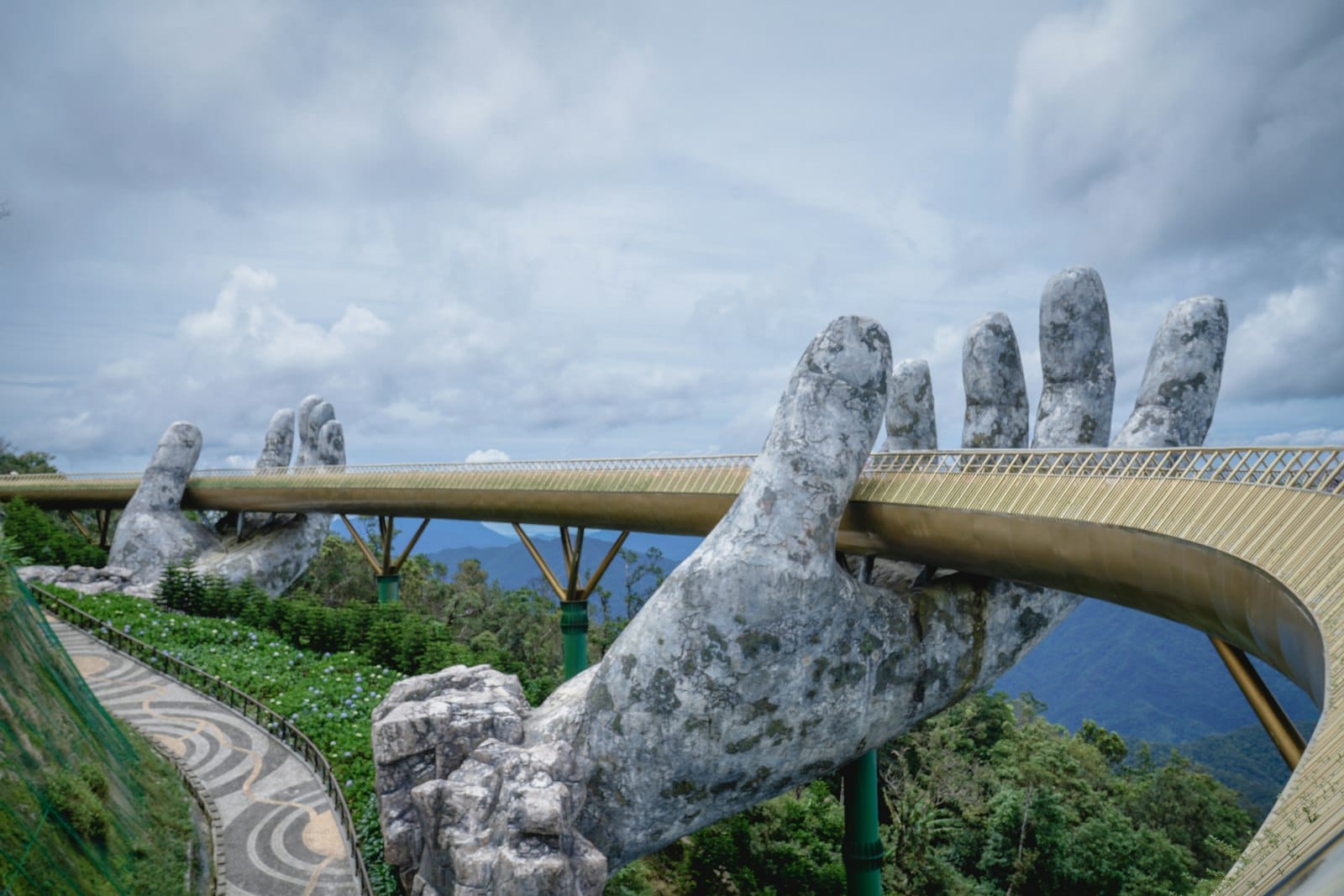
- The Golden Bridge is the headline attraction, but plan for at least 6–8 hours to do the full resort justice. See our Golden Bridge at Ba Na Hills guide for photos and access tips.
- Weekends and Vietnamese public holidays bring 30–60 minute cable car queues. Arrive by 8:00 on a weekday to beat the crowds.
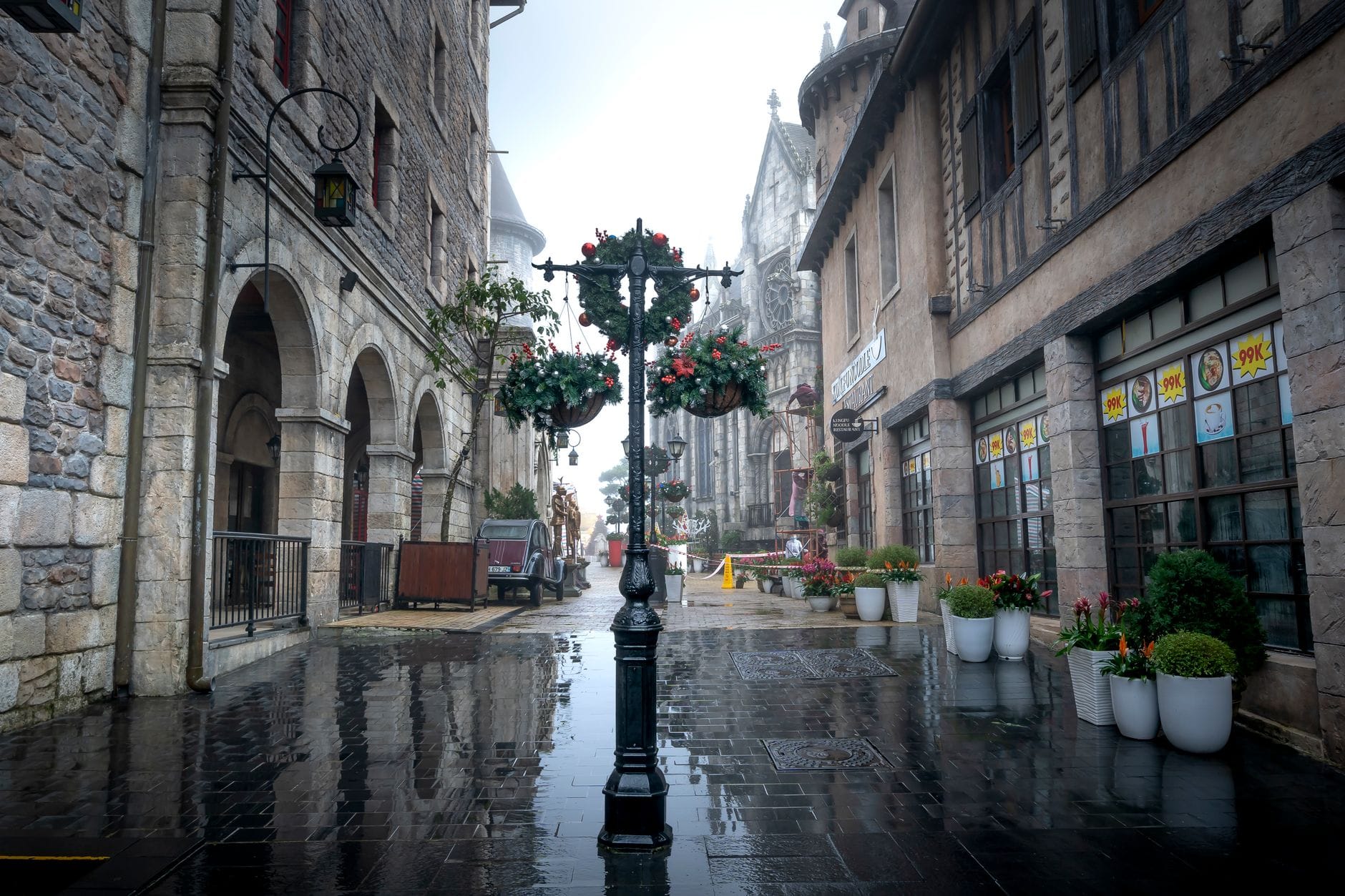
- The French Village is a modern themed construction, not a preserved historic site. Manage expectations accordingly.
What Ba Na Hills Actually Is

Ba Na Hills (Bà Nà Hills) is a mountain resort and entertainment complex operated by Sun World, a division of Sun Group, on Mount Chúa in the Trường Sơn mountain range. It sits at 1,487 metres above sea level and is administratively part of Hòa Vang district, Da Nang's rural hinterland. The resort is not a natural park or a heritage village. It is a large commercial attraction that combines theme-park rides, cable cars, gardens, restaurants, hotels, and a French colonial-themed zone, all built and managed by a private operator. If you are travelling through central Vietnam and want to understand what fits your travel style before buying a ticket, that distinction matters.
The site has French colonial roots. During the early 20th century, French administrators built a hill station here to escape the coastal heat, and the altitude delivers a real temperature difference: Da Nang's lowlands can be 38°C in summer while the summit stays in the mid-20s. That historical connection inspired the resort's aesthetic, but most of the original colonial structures no longer exist. What stands today is a reconstructed French village designed for tourism, not a preserved historic settlement.
ℹ️ Good to know
Ba Na Hills is operated entirely by Sun World (Sun Group). All ticket purchases, cable car access, and most food and beverage on-site flow through their system. There is no meaningful way to visit without going through the official ticketing process.
Getting There: Distance, Routes, and Transport Options
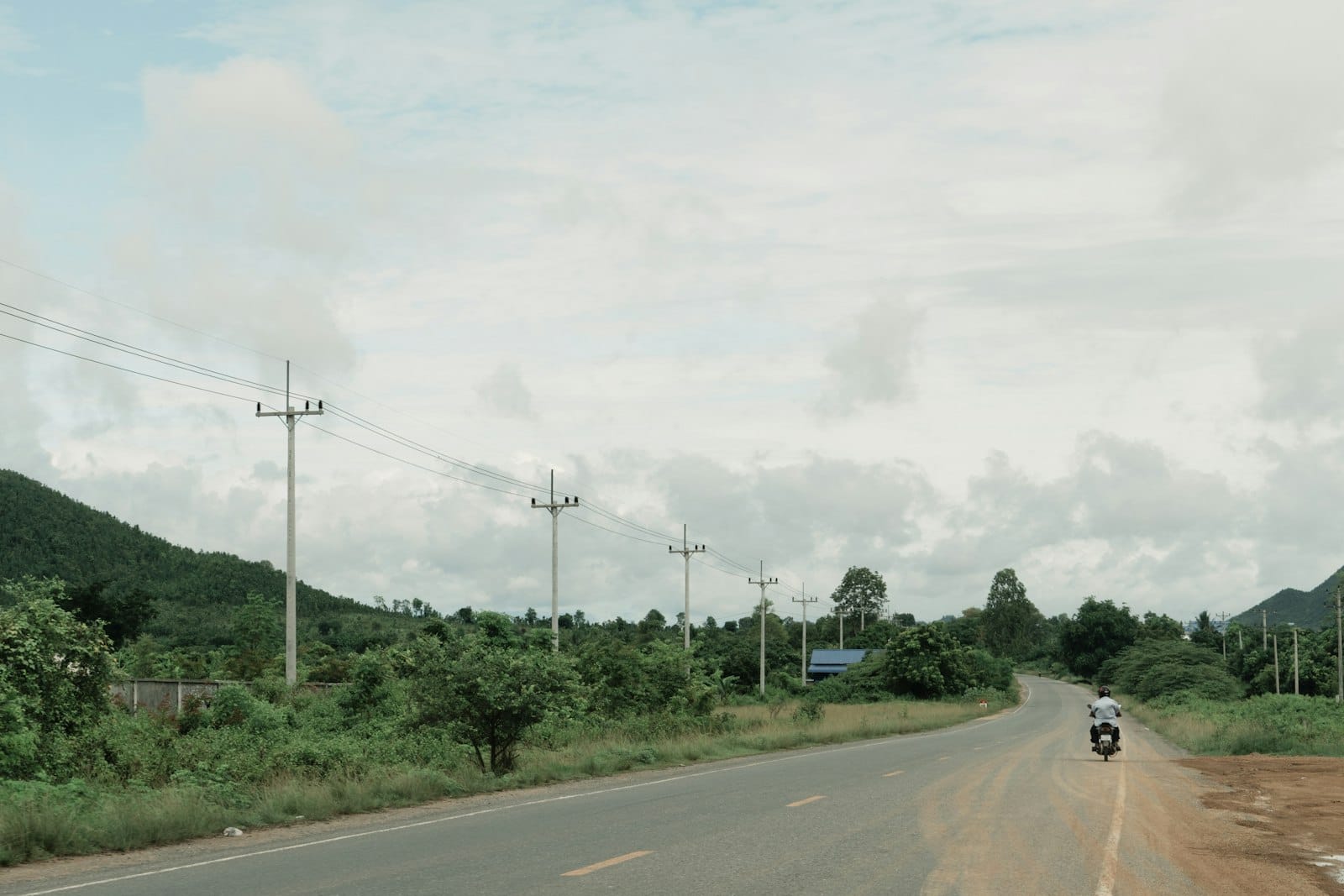
The resort entrance is at the end of Ba Na – Suoi Mo Road, near An Sơn village in Hòa Ninh commune. From central Da Nang, the drive is approximately 25 km and takes 40–45 minutes under normal traffic conditions. From Hoi An, expect around 42–45 km and closer to one hour by car. The road is well-paved and straightforward, but the final stretch into the hills involves switchbacks. For a broader look at transport options around the region, the getting around Da Nang guide covers taxis, ride-hailing, and rental options in detail.
- Private taxi or ride-hail The most practical option. Apps like Grab work for the journey out, though finding a return ride from the base station can be harder. Negotiate a return pickup time with a taxi driver or book a round-trip.
- Organised day tour Many Da Nang and Hoi An operators run Ba Na Hills day tours that include transport, entrance tickets, and sometimes a buffet lunch. Convenient but less flexible on timing.
- Self-drive motorbike or car rental Feasible for confident riders and drivers. The road is manageable, and parking is available at the base station. Factor in fuel and the time cost of navigating out of the city.
- Hotel-arranged transfer Many hotels in Da Nang offer shuttle transfers to Ba Na Hills, typically at a fixed rate per person. Worth comparing against Grab prices for groups of two or more.
⚠️ What to skip
There is no reliable public bus route to Ba Na Hills. Do not count on catching a local bus from central Da Nang. Plan your transport in advance, especially the return journey, as the base station can be busy in the late afternoon when crowds are heading down simultaneously.
Tickets, Prices, and the Cable Car
Ticket pricing at Ba Na Hills changes periodically with seasonal promotions, so treat any figures here as a guide rather than a guarantee. Always verify current prices on the official Sun World Ba Na Hills website before you go. That said, the structure is consistent: a standard entrance ticket includes cable car access and entry to most attractions within the resort.
- Standard adult ticket Around about 1,000,000 VND per person, covering cable car access and general resort entry.
- Child ticket (1 m to 1.4 m height) Around 700,000–750,000 VND. Children under 1 m typically enter free or pay a nominal safety fee.
- Combo ticket with buffet lunch Around 1,250,000 VND for adults, approximately 960,000 VND for children. The buffet is a reasonable option if you plan to stay most of the day; food outlets inside the resort are limited and can be slow at peak hours.
- Online booking Available through the Sun World website and authorised partners. No significant discount versus gate price in most cases, but booking ahead saves time at the ticket booth.
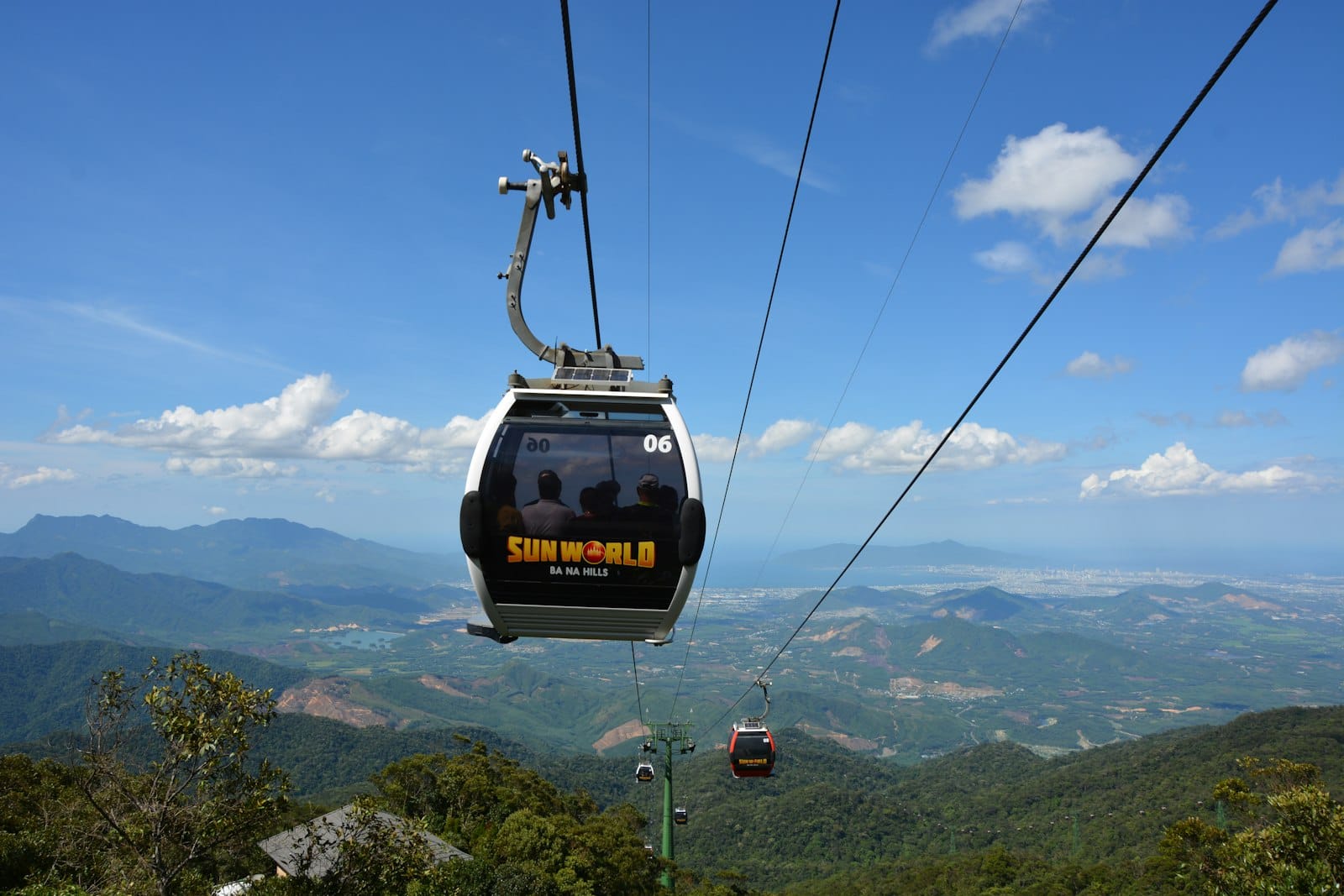
The main cable car line is one of the longest single-track cable car systems in the world, at 5,801 metres, and holds multiple Guinness World Records including greatest length and greatest height difference on a non-stop single-track cable car system. The ride takes around 20 minutes and passes through dramatic mountain scenery. A second cable car line connects different zones within the resort once you are at the top. Both lines are included in the standard ticket.
✨ Pro tip
Buy your tickets online the night before to skip the morning queue at the ticket windows. On busy days, the ticketing process alone can add 20–30 minutes to your wait before you even reach the cable car queue.
What to Do at Ba Na Hills: The Main Attractions
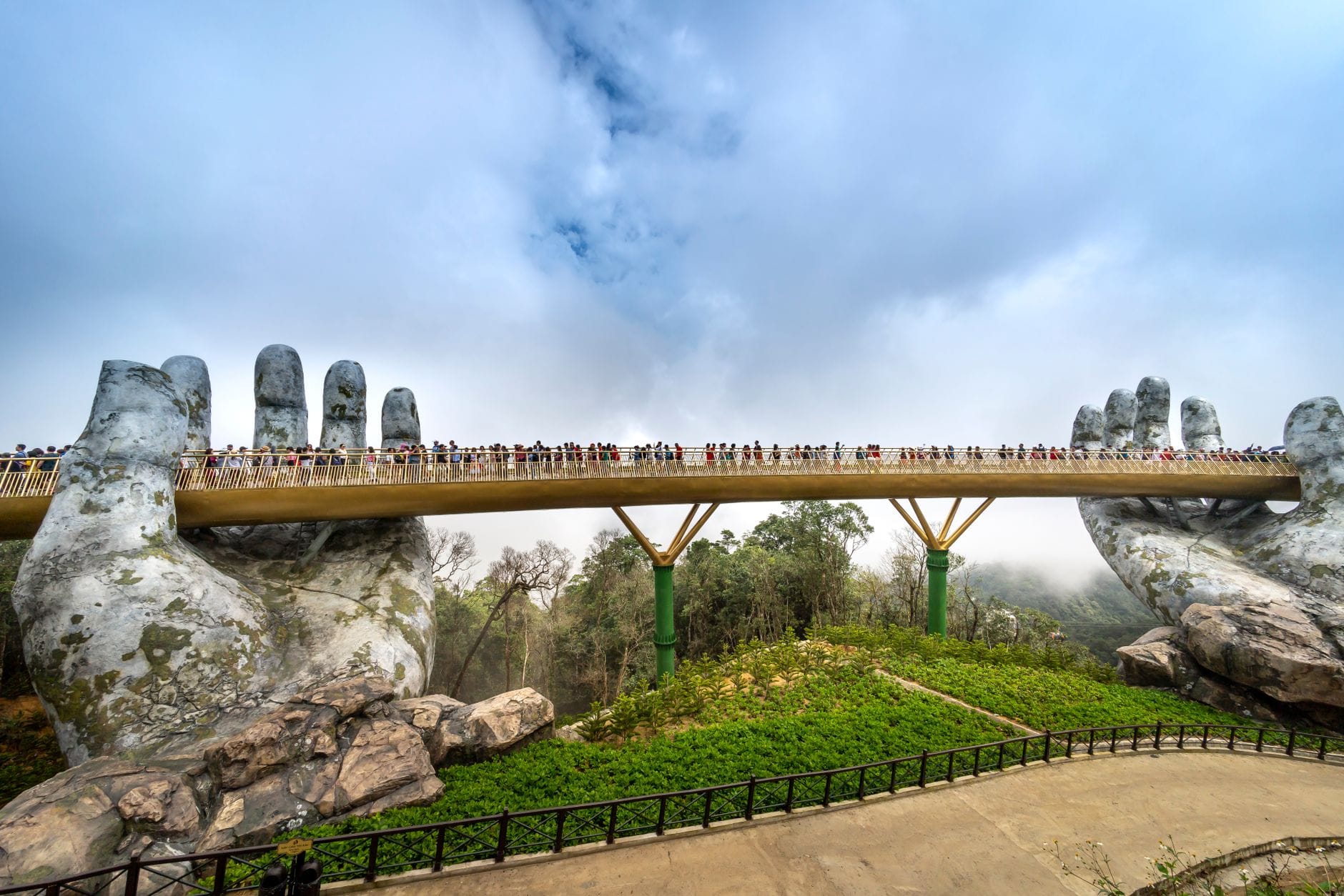
The Golden Bridge is the image that put Ba Na Hills on the global map: a 150-metre pedestrian walkway held up by two giant stone hands, sitting at around 1,400 metres elevation. The views on clear days are genuinely striking, and the design is unlike anything else in Vietnam. Expect a crowd for photos, especially at the viewing spots. Arriving early in the morning gives you a narrow window before the tour groups arrive around 10:00.
Beyond the Golden Bridge, the resort covers several distinct zones. The French Village clusters around a central square with European-style architecture, a wax museum, restaurants, and regular street performances. Fantasy Park is a large indoor entertainment complex with rides, games, and a 4D cinema, aimed primarily at families with children. The Linh Ung Pagoda at the summit is a quieter counterpoint to the theme-park energy, set among gardens and offering views across the range on clear days.
For visitors combining Ba Na Hills with a broader Da Nang itinerary, it works well as a full-day excursion on its own. It pairs less naturally with beach time on the same day given the 40–45 minute drive each way. A logical structure is to dedicate one day entirely to Ba Na Hills and use other days for My Khe Beach, the city centre, or a day trip to Hoi An.
- Golden Bridge: The headline draw. Photograph it early, before 9:30, for manageable crowds.
- Cable Car Ride: The ascent itself is a highlight, especially when the forest gives way to cloud at mid-elevation.
- Fantasy Park: Worth it if you are travelling with children or want a break from the outdoor walking. The indoor space is genuinely large.
- Linh Ung Pagoda and gardens: Calmer and less visited than the French Village area. Good for an hour of quieter sightseeing.
- French Village square: Nice for a coffee or a slow walk, though the architecture is entirely modern.
Crowds, Timing, and Seasonal Conditions
Ba Na Hills is busy. It consistently draws large numbers of domestic tourists and international visitors, and the infrastructure is designed for scale rather than intimacy. Peak days are weekends and Vietnamese public holidays, when cable car queues can reach 30–60 minutes at the base station. The resort opens around 8:00 and the cable cars typically start running around the same time. Getting there before 8:30 on a weekday is the single most effective way to have a reasonable experience at the Golden Bridge before the mass arrivals.
Seasonally, the best months to visit are March through August, when skies are clearer and the chance of prolonged rain is lower. September through February brings Da Nang's wet season, and at 1,487 metres, Ba Na Hills gets more of it than the coast. Fog can be thick enough to reduce visibility significantly, particularly between November and February. That said, fog creates a genuinely atmospheric mood around the French Village, and some visitors prefer the cooler, quieter off-season. For context on Da Nang's climate patterns more broadly, the best time to visit Da Nang guide breaks down rainfall and temperature month by month.
Temperature at the summit runs roughly 5–10°C cooler than Da Nang's coast on any given day. In summer, that means a pleasant 22–26°C when the city below is sweltering. In winter (December–February), it can drop to 10–15°C with wind chill making it feel colder. Bring a light layer regardless of the season, even in July. The phrase 'four seasons in one day' is overused but has a basis in reality: the weather can shift from sunny to foggy to light rain and back within a few hours.
💡 Local tip
Check the weather forecast the morning you plan to visit. If Da Nang's coast is showing low cloud and rain, conditions at 1,487 m will be significantly worse. Shifting your visit by one day can make the difference between spectacular views and zero visibility at the Golden Bridge.
Practical Logistics: Food, Accommodation, and Honest Caveats
Food on-site is controlled entirely by Sun World. Options include the buffet lunch (available as part of a combo ticket), sit-down restaurants in the French Village, and fast-food-style outlets in Fantasy Park. Quality is adequate rather than exceptional, and prices are higher than Da Nang's street level. The buffet combo ticket is often the most economical way to eat if you are spending a full day. Bringing snacks from the city is a reasonable approach if you want to limit on-site spending.
Accommodation is available within the resort complex at the Mercure Ba Na Hills French Village hotel. Staying overnight allows you to experience the resort after the day-trip crowds have left, which is a genuinely different atmosphere. It is not a budget option. For most visitors, Ba Na Hills works as a day trip from Da Nang's coastal hotels. The where to stay in Da Nang guide covers the main hotel zones if you are still deciding on a base.
On the honest side: Ba Na Hills is not for everyone. If you have limited time in Vietnam and are choosing between this and, say, a morning at the Marble Mountains followed by an afternoon in Hoi An, the latter combination will give you more cultural depth and better food for less money. Ba Na Hills is a well-executed theme resort with a genuinely impressive cable car system and a photogenic bridge. It works well as a family day out, as a break from beach days, or as a deliberate taste of Vietnamese domestic tourism culture. Go in knowing what it is.
Visitors fitting Ba Na Hills into a broader central Vietnam itinerary often combine it with the Marble Mountains on a separate day, since both are southwest of the city centre and each warrants several hours. The 3-day Da Nang itinerary has a suggested sequence that accounts for travel time and energy levels across multiple days.
FAQ
How much does it cost to visit Ba Na Hills?
Standard adult entrance tickets are around 900,000–950,000 VND, which includes cable car access and entry to most resort areas. Children between 1 m and 1.4 m in height pay around 730,000–750,000 VND. A combo ticket adding a buffet lunch runs approximately 1,190,000–1,250,000 VND for adults. Prices change periodically, so check the Sun World Ba Na Hills official website before you go.
How do I get from Da Nang city centre to Ba Na Hills?
The most practical options are a private taxi, a Grab ride, or an organised day tour that includes transport. The resort is about 25–30 km southwest of central Da Nang and takes 40–45 minutes by car. There is no public bus route to the resort. If taking Grab, book a return time with the driver or arrange a separate pickup, as return rides from the base station can be scarce in the late afternoon.
What is the best time of year to visit Ba Na Hills?
March through September offers the clearest skies and best visibility for views from the Golden Bridge and the summit. September through February is Da Nang's wet season, and the summit receives heavier rain and frequent fog at this altitude. That said, off-season visits can be atmospheric and significantly less crowded. Avoid Vietnamese public holidays and weekends if crowd avoidance is a priority.
Is Ba Na Hills worth visiting?
That depends on what you are looking for. The cable car is genuinely impressive and the Golden Bridge is a striking piece of design. As a full-day family experience or a break from beach days, it delivers. For travellers prioritising cultural depth or value for money, the ticket price is steep and the resort is a commercial entertainment complex rather than a heritage destination. Combine it with realistic expectations and you will likely enjoy it.
How long should I spend at Ba Na Hills?
A full visit covering the Golden Bridge, French Village, Linh Ung Pagoda area, and Fantasy Park takes 6–8 hours. If you arrive when the resort opens and plan to return to Da Nang by early evening, a departure from the city by 7:30–8:00 gives you the best balance of time and manageable crowds. Rushing it in three or four hours is possible but leaves little room for queues and meal breaks.
Tickets & tours
Live prices and dates from our booking partner. If you book, we may earn a commission at no extra cost to you.
Planning a trip? Discover personalized activities with the Nomado app.