Zitadelle Spandau: The Fortress at Berlin's Edge That Most Visitors Never Find
Zitadelle Spandau is one of the most completely preserved Renaissance fortresses in Europe, built in the 16th century on a site with recorded history stretching back to 1197. Tucked into the western borough of Spandau, it sits where the Havel and Spree rivers meet, encircled by a water-filled moat and punctuated by the ancient Juliusturm tower. The admission price is low, the crowds are thin, and the history runs deep.
Quick Facts
- Location
- Am Juliusturm 64, 13599 Berlin (Spandau borough)
- Getting There
- U7 to Zitadelle, then a short walk
- Time Needed
- 2 to 3 hours for the fortress, museums, and tower climb
- Cost
- €4.50 standard / €2.50 reduced / Free on the first Sunday of each month
- Best for
- History enthusiasts, families, photographers, slow-travel visitors
- Official website
- www.zitadelle-berlin.de/en
What Zitadelle Spandau Actually Is
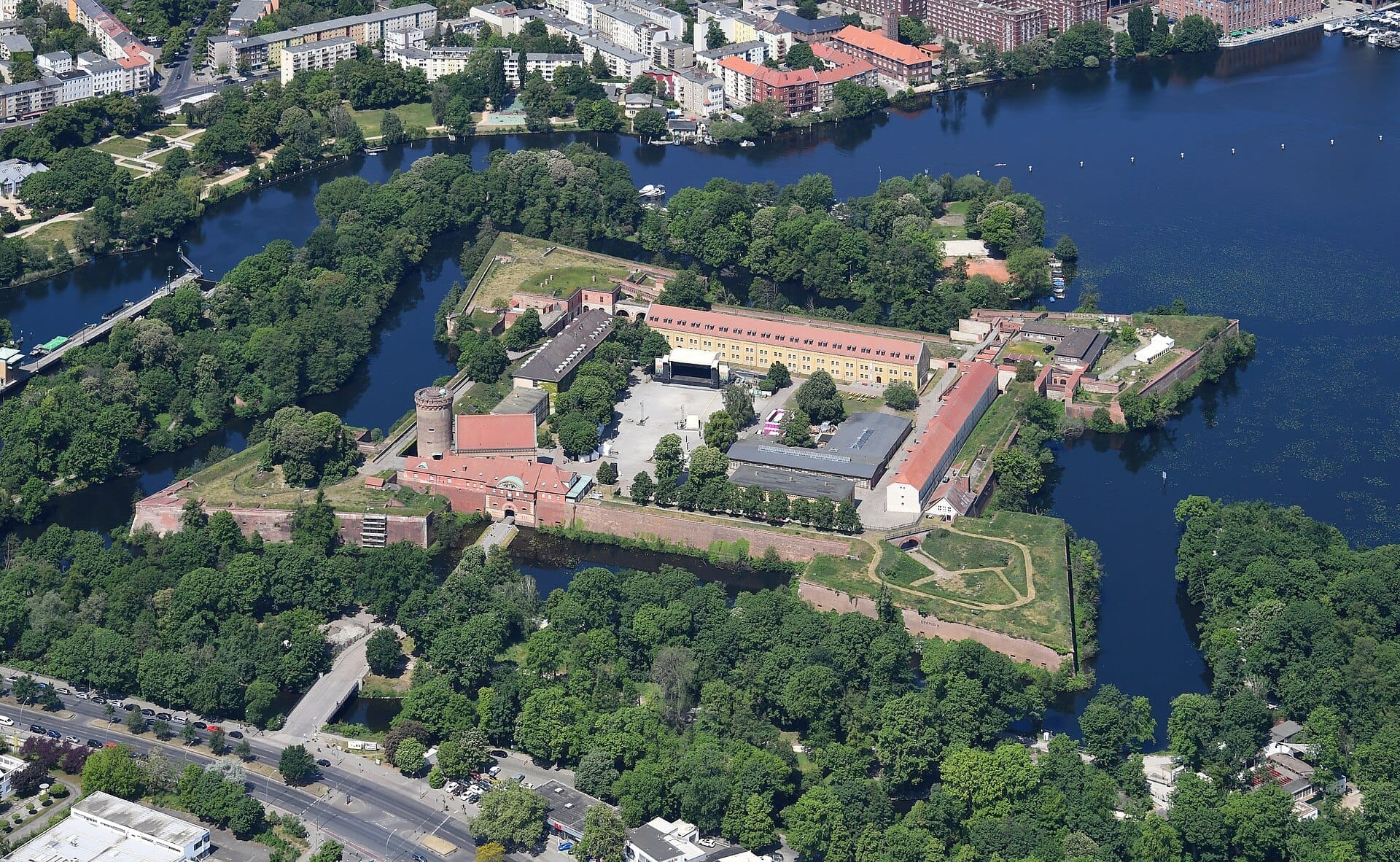
Zitadelle Spandau is a Renaissance military fortress on a small island near where the Havel and Spree rivers meet, roughly a 30‑minute ride from central Berlin. Its symmetrical layout, four Italian-style bastions connected by walls of equal length, was a deliberate tactical innovation: the design eliminated the blind spots that plagued medieval castles, ensuring that defenders could cover every angle of approach. The geometry still reads clearly from above and gives the site an almost abstract, diagrammatic quality when you walk its perimeter.
The fortress was commissioned by Elector Joachim II of Brandenburg and constructed in the second half of the 16th century by Italian master builders, placing it squarely in the tradition of Renaissance military architecture that was transforming Europe's defensive structures at the time. But the site itself is older. A medieval castle stood here as early as the 12th century, and the Juliusturm, the round medieval tower that anchors the northeastern corner of the complex, is the oldest structure in the ensemble and one of the oldest surviving buildings in the entire Berlin region. Its first written mention dates to 1197.
💡 Local tip
Admission is free on the first Sunday of every month ('Citadel Sunday'). If your schedule is flexible, this is the easiest way to visit without paying, though expect slightly larger crowds than a typical weekday.
The Experience on the Ground
Arriving via the U7 at Zitadelle station, the fortress appears almost immediately as you exit: a long stone wall, a moat still filled with greenish water, and the silhouette of the Juliusturm rising above the tree line. The approach across the drawbridge sets an immediate tone. Stone, water, silence. Even on weekends, the citadel rarely feels packed. School groups arrive in the mornings on weekdays, but by early afternoon the interior courtyards settle into a quiet that feels unusual for a Berlin attraction of this scale.
Inside the main gate, the central courtyard opens up. The Renaissance facade of the main palace building faces you, its proportions measured and formal compared to the rougher stonework of the bastions. In warmer months, the courtyard hosts open-air events, concerts, and the popular Citadel Festival, so the surface underfoot is well-worn but clean. In winter, when the trees along the moat are bare and the stone takes on a colder grey tone, the site reads as almost severe. Both versions are worth experiencing.
Tickets & tours
Live prices and dates from our booking partner. If you book, we may earn a commission at no extra cost to you.
Berlin's Museum Island and Spandauer Vorstadt audio tour
From 9 €Instant confirmationSkip-the-line ticket for Gemaldegalerie Berlin
From 14 €Instant confirmationPanoramapunkt Berlin ticket with skip-the-line option
From 9 €Instant confirmation1-Hour Berlin Spree River Cruise with On-Board Guide
From 21 €Instant confirmationFree cancellation
The Juliusturm: The Oldest Part of the Site
Climbing the Juliusturm is the physical highlight of a visit. The tower is cylindrical, with thick walls and a winding staircase that narrows as it rises. The stone is worn smooth in the center of each step from centuries of foot traffic, which tells you more about the age of the place than any placard could. At the top, the view stretches across the Havel floodplain, the rooftops of Spandau's old town, and on clear days, far into the western Berlin landscape.
Photographers should note that the best light on the tower exterior hits from the southeast in morning hours. The interior of the tower is dim regardless of the time of day, so a phone flash or small torch is useful for reading the wall-mounted information panels on the way up. The staircase is narrow: not suitable for visitors with mobility limitations, and worth knowing in advance if you are traveling with a pushchair or heavy camera bag.
The Museums Inside the Fortress
Zitadelle Spandau operates as a cultural and museum complex, not just a monument. The main permanent exhibition covers the history of the citadel and the surrounding Spandau region, with artefacts, models, and detailed panels tracing the site from its medieval origins through the Renaissance construction phase, its use as a Prussian treasury (the 'Juliusturm' famously held part of Germany's war reparations gold reserves after 1871), and its later roles up to the present day.
The museum spaces are distributed across the ground-floor rooms of the main building. The layout is logical and unhurried. Labelling is in German and English throughout the permanent collection, and audio guides are available in German, English, French, Italian, Spanish, Turkish, and Russian for €2.00. The multilingual provision reflects the citadel's self-positioning as a multicultural centre: it also provides information in German Sign Language (DGS) on its official site, which is notable for a site of this type.
For visitors building a deeper itinerary around Berlin's historical sites, Zitadelle Spandau works well alongside other layers of the city's past. The German Historical Museum in Mitte provides the broader national narrative that contextualizes what you see at Spandau, while the Cold War Berlin guide covers the postwar period that the citadel's own museum only briefly touches.
Practical Walkthrough: How to Structure Your Visit
A thorough visit runs around two to three hours. Most people spend 30 to 45 minutes in the permanent exhibition, another 20 to 30 minutes climbing the Juliusturm and taking in the view, and the remaining time walking the bastions and moat perimeter. The bastion walks are gravel-surfaced and mostly flat, though some sections involve short ramps or uneven stone edges.
Opening hours are Friday through Wednesday 10:00 to 17:00, and Thursday 13:00 to 20:00. Last entry is 30 minutes before closing. Hours can vary on event days, and specific closure dates are occasionally announced, so checking the official site before your visit is worth the 60 seconds it takes. The Thursday evening opening is a minor insider advantage: the site is quieter, the late afternoon light is good for photography, and the extended hours allow a more relaxed pace.
ℹ️ Good to know
The Berlin WelcomeCard covers admission at Zitadelle Spandau, making it worth factoring into your transport and museum budget if you plan to visit multiple attractions. See the full breakdown in the Berlin WelcomeCard guide.
Getting to Spandau from central Berlin takes around 30 minutes on the U7, which runs frequently. The U7 is the same line that serves Schöneberg and Neukölln, so it is well-integrated into most central Berlin itineraries. Exiting at Zitadelle station is the most direct option: the fortress entrance is visible within a two-minute walk.
Context: Why Spandau Matters Separately from Berlin
Spandau is one of Berlin's oldest settlements, predating the city itself by several decades. Where central Berlin grew around the twin merchant towns of Berlin and Cölln from the 13th century onward, Spandau developed independently as a fortified river-crossing town with its own civic identity. Even today, longtime Spandau residents sometimes half-jokingly describe their borough as not quite Berlin, a sentiment that the historical record partially supports. The citadel was built to defend Spandau specifically, and the town's physical separation from the city centre, surrounded by waterways and forested hinterland, remains part of its character.
Visiting Zitadelle Spandau works well as a half-day excursion paired with a walk through Spandau's Altstadt, the old town that survives just across the river from the fortress, with its late-Gothic St. Nicholas Church and pedestrianised market street. For visitors comparing Berlin's different historical registers, the citadel's Renaissance and medieval layers contrast usefully with the Cold War and 20th-century sites covered in the Berlin memorials guide.
When to Visit and What Affects the Experience
Spring and early autumn are the strongest seasons for a visit. Between April and October, the moat vegetation is full, the stonework is warm-toned in daylight, and the outdoor areas of the fortress are comfortable to walk for extended periods. Summer brings open-air concerts and the annual Citadel Festival, which transforms the courtyard into an event venue; if you are visiting specifically for the architecture and museums, check the events calendar and plan around major programming dates when access to parts of the site may be restricted.
Winter visits are quieter and carry a different atmosphere: the bare trees along the moat expose the full geometry of the bastions, and the stone interior of the tower is noticeably cold. Bring an extra layer even in mild Berlin winters. Rain affects the bastion walks more than the indoor museum spaces, which are sheltered. The site does not become unpleasant in wet weather, but waterproof footwear is a practical upgrade over ordinary shoes.
⚠️ What to skip
Event programming can close parts of the courtyard or alter standard opening hours. Check the official events calendar at zitadelle-berlin.de/en before visiting, particularly on summer weekends and around major German public holidays.
Who Should Visit Zitadelle Spandau
Zitadelle Spandau will not suit every traveller. Visitors with only two or three days in Berlin and a checklist built around the Reichstag, Brandenburg Gate, and Museum Island have reasonable grounds to skip it: the journey to Spandau takes a real chunk of time, and the site does not compete with those landmarks for sheer iconic density. But for visitors who have covered the central circuit or who are specifically interested in medieval and Renaissance architecture, military history, or finding a well-preserved historical site without the tour-bus layer, the citadel delivers at a price point that makes the trip feel low-risk.
Families with children old enough to climb the tower staircase (roughly ages 6 and up) tend to respond well to the combination of outdoor space, the moat, and the physical experience of a real medieval-to-Renaissance fortress. The reduced ticket price of €2.50 for children aged 6 to 14 and the €10 family ticket make it one of the more affordable half-days in the city. For further context on keeping costs down across a Berlin trip, the Berlin on a budget guide covers free and low-cost options across the city's main attractions.
Insider Tips
- The Thursday evening opening (13:00 to 20:00) is the quietest time to visit on a weekday: school groups are gone by afternoon, the late light is ideal for photographing the bastions and moat, and you can take your time in the tower without congestion on the staircase.
- The first Sunday of each month is free admission ('Citadel Sunday'), but note that Sunday mornings do attract more visitors than a midweek morning. Arriving within the first hour of opening gets you ahead of any building crowd.
- The bastion ramparts are walkable and offer close-up views of the stonework and the water moat that you do not get from the main courtyard. Budget 20 minutes for a full circuit: it is the part most casual visitors skip.
- Audio guides are available in seven languages including Turkish, Russian, and Spanish, which is unusually broad for a Berlin municipal site. If you are visiting with family members who do not read German or English, picking up the audio guide is worth the €2.00.
- Spandau Altstadt, the pedestrianised old town centre, is a five-minute walk from the citadel across the Havel. Pairing the two into a half-day itinerary gives the visit more texture and context, and there are cafés and lunch spots near the Marktplatz that the citadel itself lacks.
Who Is Zitadelle Spandau (Spandau Citadel) For?
- History and architecture enthusiasts looking for a Renaissance military site without the tourist density of central Berlin
- Families with school-age children who want outdoor space, a tower to climb, and real historical context
- Budget-conscious travellers: low admission, discounted with the Berlin WelcomeCard, and free on the first Sunday of the month
- Photographers interested in moated fortresses, medieval stonework, and geometric bastion layouts
- Visitors on a longer Berlin trip who have already covered the central landmarks and want to explore the city's older, lesser-known layer
Planning a trip? Discover personalized activities with the Nomado app.