Yingge Ceramics Old Street: A Complete Guide to Taiwan's Pottery Capital
Yingge Ceramics Old Street in New Taipei City has been Taiwan's center for ceramic craft for over two centuries. From affordable souvenir teacups to gallery-quality stoneware, the street draws both casual browsers and serious collectors. Combine it with the nearby Yingge Ceramics Museum for a full day of pottery culture.
Quick Facts
- Location
- Jianshanpu Road, Wenhua Road & Chongqing Street, Yingge District, New Taipei City
- Getting There
- New Taipei Metro Sanying Line: Ceramics Old Street Station (2-min walk), or Taiwan Railways: Yingge Station (10-15 min walk)
- Time Needed
- 2-4 hours for the street alone; full day if combining with Yingge Ceramics Museum
- Cost
- Street: free. Yingge Ceramics Museum: NT$80 general admission (free for New Taipei City residents, children 12 and under, seniors 65+, students, and people with disabilities)
- Best for
- Pottery shoppers, craft enthusiasts, families, day-trippers from Taipei
- Official website
- eng.taiwan.net.tw/m1.aspx?sNo=0002091&id=A12-00512
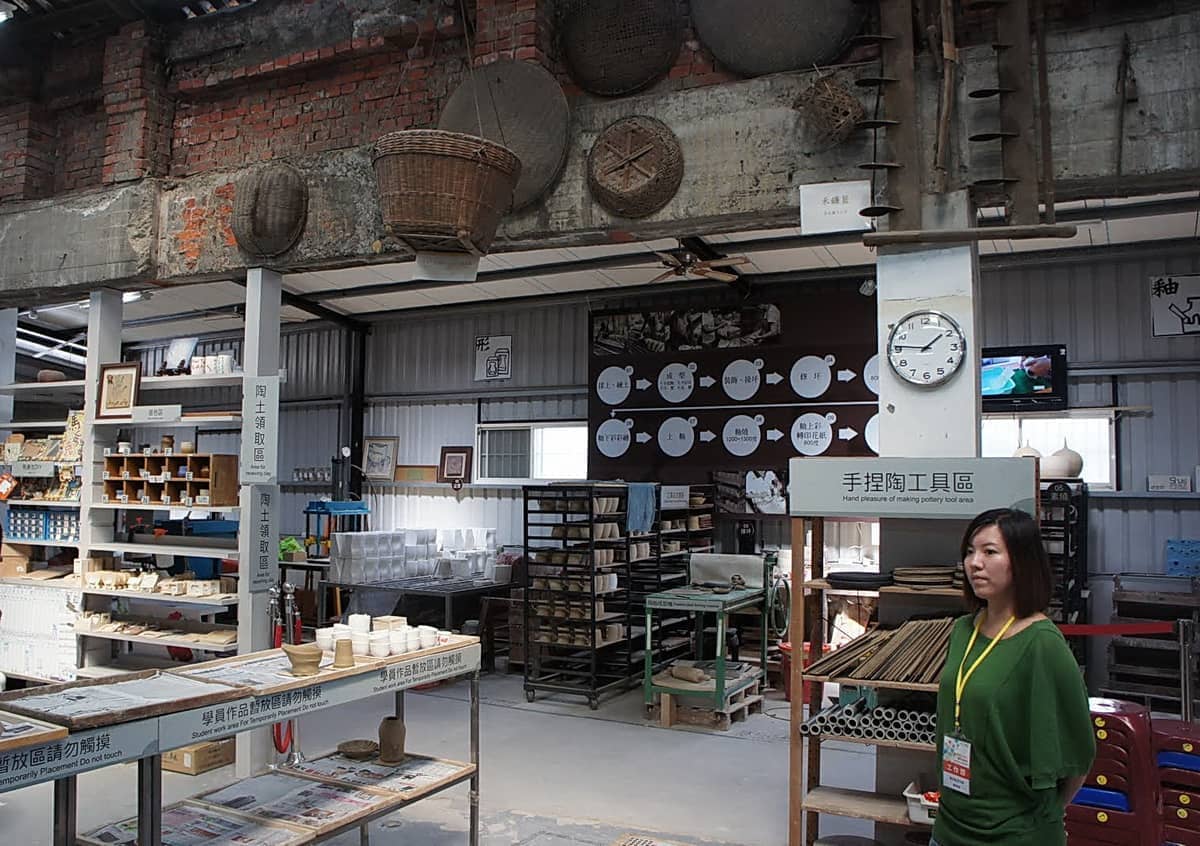
What Yingge Ceramics Old Street Actually Is
Yingge Ceramics Old Street, known in Chinese as 鶯歌陶瓷老街, is a historic commercial district in Yingge District, New Taipei City, about 30 kilometers southwest of central Taipei. The street runs primarily along Jianshanpu Road, with branches onto Yuying Street and Chongqing Street. Together, these three arteries form what has long been recognized as the earliest gathering place for ceramics production and trade in Taiwan.
This is not a theme park recreation of a craft village. The district has been a working pottery hub since at least the early 19th century, when local clay deposits and good transport links via the Dahan River made Yingge a natural center for kiln operations. Over time, the number of active kilns in the area grew to the point where Yingge became shorthand in Taiwan for ceramics itself. Today, the old street has been redeveloped into a pedestrian-friendly red-brick corridor, but the craft shops, studios, and wholesale warehouses are still the real thing.
ℹ️ Good to know
The street area is a public urban district with no admission gate or fee. Individual shops typically open around 10:00 and close by 19:00, with some extending hours on weekends. Arriving before 10:30 on a weekday gives you the street largely to yourself.
The Street Itself: What You'll See Walking Through
The approach from Ceramic Old Street Station deposits you almost directly at the top of Jianshanpu Road. The first thing you notice is the scale: the street is relatively short by tourist-strip standards, but it is dense. Shops are stacked next to each other on both sides, their fronts open to the air and their interiors stacked floor to ceiling with ceramics. The visual effect is somewhere between a market and a gallery depending on the shop.
The product range is enormous. At one end of the spectrum, you'll find NT$50 hand-painted tea cups, ceramic chopstick rests shaped like animals, and souvenir plates glazed with ink-wash landscapes. At the other end, independent studios along side streets sell signed, kiln-fired stoneware from working artists, with prices that reflect the craft involved. A mid-range teapot in Yixing style, made locally rather than imported, might run NT$800 to NT$3,000. The trick is knowing which shops represent which category, and the answer is usually evident within five seconds of stepping inside.
The clay smell is real. In the studios and workshop spaces that still operate kilns or production areas behind the storefront, you catch a faint mineral, earthy scent that is distinct from any other kind of shopping street. On warm days when shop doors are fully open, this carries out to the street itself. It is one of those sensory details that confirms you are somewhere specific, not generic.
How the Experience Changes by Time of Day
Weekday mornings, roughly 10:00 to 12:00, are the quietest window. Shopkeepers are arranging displays or doing inventory, some shops are still shuttered, and the street has a calm, neighborhood feel. This is the best time to browse seriously and have actual conversations with shop owners about their pieces. Many of the smaller studios that do not cater primarily to tour groups are far more accessible at this hour.
By early afternoon, particularly on weekends, tour groups arrive and the dynamic shifts. The main stretch of Jianshanpu Road gets crowded enough that moving from shop to shop requires patience. This is not necessarily a bad experience, since the energy makes it feel like a genuine commercial center rather than a preserved relic, but it is worth knowing that photography of detailed pieces or unhurried conversation with artisans becomes harder.
Late afternoon, around 16:30 to 18:00, is a second quieter window as tour groups leave and before the day's final shoppers arrive. The light in this window, angled low through the street, is flattering for photography. Many shops stay open until around 19:00 on weekdays and later on weekends, so there is no pressure to rush.
💡 Local tip
Weekends between noon and 15:00 are the most crowded period by a wide margin. If your visit falls on a weekend, aim for a 10:00 start or come after 16:00.
Historical and Cultural Context
Yingge's ceramics industry dates back roughly two hundred years, making it one of Taiwan's oldest continuous craft traditions. The town's position along the Dahan River gave early kiln operators access to both raw clay materials in the surrounding hills and a transport route for distributing goods across northern Taiwan. By the Japanese colonial period (1895-1945), Yingge's kilns were producing a significant share of Taiwan's household ceramics.
The tourism-focused version of the old street has been in development for about thirty years, following deliberate investment in pedestrianization, façade restoration, and cultural programming. The red-brick streetscape you walk through today is partly the result of that planning effort. This is worth knowing not as a criticism but as context: Yingge is a living craft district that chose to formalize its tourist appeal, rather than a street that happened to survive unchanged. The result is a space that functions well for visitors without feeling artificially preserved.
The opening of the New Taipei City Yingge Ceramics Museum in 2000 was a turning point in how the district is experienced. The museum documents the full arc of Taiwanese ceramic production, from prehistoric earthenware to contemporary studio art, and places the street's commercial activity in a broader cultural frame. If you are visiting Yingge to understand ceramics rather than just buy it, the museum is worth the NT$80 admission and is best visited before or after the street. You can read more about planning this kind of cultural day trip in our guide to Taipei's best museums.
Practical Walkthrough: Getting There and Getting Around
The easiest route from central Taipei is by Taiwan Railways (TRA) train to Yingge Station. The walk from the station exit to the start of Jianshanpu Road is approximately 10 to 15 minutes. TRA is a common choice for travelers combining Yingge with other destinations along the western rail corridor.
If you are driving, be aware that parking enforcement is active in the area. Designated public parking lots are available nearby; street parking without a permit is likely to result in towing. This is worth flagging since Yingge's narrow side streets look like they should accommodate short-term parking but do not.
The main streets are flat and broadly walkable, which makes the old street accessible for most visitors. That said, this is a traditional commercial district, not a purpose-built tourist facility. Sidewalk widths are inconsistent, some shop interiors have a single step up from street level, and the narrower lanes off the main road can be awkward with a wheelchair or stroller. The Yingge Ceramics Museum, which is purpose-built and modern, has full accessibility infrastructure including ramps and elevators.
Yingge is a natural component of a full-day itinerary that includes other destinations along the Taiwan Railways western line. Tamsui, Sanxia, and the towns further west are all feasible as part of the same day if you plan transport carefully. For inspiration on structuring this kind of trip, see our guide to day trips from Taipei.
Shopping Strategy: How to Buy Well Here
The single most useful thing to know before shopping in Yingge is that price does not automatically signal quality, and the reverse is also true. The souvenir-oriented shops cluster near the station end of Jianshanpu Road, where foot traffic is highest. These shops carry attractive, affordable pieces but the production is often industrialized. The smaller studios on side alleys and toward the far end of the street are where you find hand-thrown, kiln-fired work with the maker's mark on the base.
Several shops offer hands-on pottery workshops, typically for an additional fee and by advance reservation. These vary from brief paint-your-own-ceramic sessions (suitable for children, requiring no skill) to wheel-throwing classes that run one to two hours and produce a piece you can take home after firing. If a workshop is your primary goal, book ahead via the shop's contact channel, since walk-in availability is inconsistent.
For packing purposes: most shops will wrap purchases securely in newspaper or bubble wrap for the journey home, and some offer box packaging for fragile pieces. If you are buying teapots or anything hollow, ask about packing before you pay. Airline checked baggage is a risk even with good wrapping; carry-on packing is safer for anything irreplaceable.
💡 Local tip
Look for pieces marked with the maker's seal or stamp on the base. This is a reliable indicator of individual studio production versus batch manufacturing, and it matters for resale value and authenticity.
Weather, Seasons, and When to Visit
Yingge is an outdoor street experience, which means weather matters more than it would for a museum visit. Taipei's climate is humid subtropical, with hot, wet summers running roughly May through September and cooler, drier conditions from October through April. October to April is generally the more comfortable window for an outdoor street visit. Spring and autumn are the most pleasant seasons overall.
Summer visits are entirely feasible but require preparation. The street has limited shade on the main road, and midday temperatures in July and August can make extended browsing genuinely uncomfortable. An early morning start, light clothing, and a plan to step into air-conditioned shops during the hottest hour (roughly 13:00 to 15:00) makes summer visits workable. Bring water.
Winter visits, roughly December through February, have a different character: cooler air, fewer tourists, and a quieter street that rewards slower browsing. The covered sections of the street offer some rain shelter, but a compact umbrella is worth carrying regardless of season given Taipei's unpredictable rain patterns. For a broader look at seasonal planning, see our guide to the best time to visit Taipei.
Who Should Reconsider This Trip
Yingge is a specific-interest destination. If ceramics and craft hold no particular appeal, the street offers relatively little that is not replicated closer to central Taipei in terms of general shopping or food. The journey from central Taipei takes at least 30 to 45 minutes each way, which is a real commitment of time for a half-day. Visitors on a tight two or three day itinerary who are indifferent to pottery would likely spend that time better elsewhere.
Similarly, travelers whose primary interest is Taipei's historic neighborhoods, temple architecture, or street food culture will find more density of those experiences in areas like Dihua Street or Wanhua. Yingge rewards visitors who come specifically for what it does best.
Insider Tips
- Walk to the far end of Jianshanpu Road and turn onto the side alleys before doubling back. The shops closest to the station are the most tourist-facing; the studios further along and off the main drag are where working potters sell directly.
- If you are serious about buying, visit the Yingge Ceramics Museum first. The permanent collection gives you visual vocabulary for distinguishing glaze techniques, clay types, and historical periods, which makes the shopping experience significantly more informed.
- Some shops along the street operate wholesale pricing for orders above a certain quantity. If you are buying gifts in multiples, it is worth asking directly whether a volume discount applies.
- The street hosts the Yingge Ceramics Festival annually, typically in autumn, though exact dates vary each year. The event includes outdoor displays, artist demonstrations, and temporary stalls from studios that do not normally sell retail. Check New Taipei City Tourism Bureau announcements for exact dates each year.
- Carry small-denomination bills and coins. A number of the smaller studios are cash-only, and the nearest ATM may require a short walk back toward the station.
Who Is Yingge Ceramics Old Street For?
- Pottery collectors and ceramics enthusiasts looking for a serious shopping destination
- Families with children who want a hands-on craft workshop experience
- Travelers interested in Taiwanese craft history and industrial heritage
- Day-trippers combining Yingge with other New Taipei destinations along the TRA western line
- Gift-buyers looking for distinctive, locally made souvenirs beyond the standard tourist shop range
Nearby Attractions
Combine your visit with:
- Bitou Cape Trail
The Bitou Cape Trail (鼻頭角步道) traces a narrow coastal ridge above the Pacific Ocean in Ruifang District, New Taipei City. Free to enter and roughly 3.5 km long, it rewards hikers with some of the most dramatic ocean scenery within striking distance of Taipei. Note that sections have been under reconstruction since 2020, so checking current trail status before visiting is essential.
- Houtong Cat Village
Houtong Cat Village is a retired mining settlement in New Taipei City's Ruifang District where a large resident cat population transformed a fading industrial town into one of Taiwan's most photographed day trips. The village is free to enter, reached by a scenic Taiwan Railways train ride from Taipei, and pairs well with the adjacent Houtong Coal Mine Ecological Park.
- Jinguashi Gold Museum Area
Set high in the mountains of Ruifang District, the Gold Museum in Jinguashi preserves an entire Japanese-era gold and copper mining complex. Expect underground tunnel walks, colonial architecture, a POW camp memorial, and sweeping Pacific coastline views, all within a single open-air park.
- Jiufen Old Street
Jiufen Old Street (Jishan Street) is a narrow, lantern-lit lane winding through a former gold-mining town above Taiwan's northeast coast. Free to enter and accessible by train and bus from Taipei, it rewards visitors who arrive early or stay for dusk, when the red lanterns glow against the mountain fog.