Yedikule Fortress: Istanbul's Forgotten Castle of Seven Towers
Yedikule Fortress stands where the Byzantine Golden Gate meets three towers added by Sultan Mehmed II in 1458, creating a seven-tower complex that served as imperial treasury, state prison, and site of royal execution. It is one of Istanbul's most historically layered landmarks and one of its least crowded.
Quick Facts
- Location
- Yedikule, Fatih district, Istanbul (Yedikule Meydanı Sk. No:9, 34107)
- Getting There
- Marmaray to Kazlıçeşme, then a short walk; or bus 80 from Eminönü / 80T from Taksim
- Time Needed
- 1.5 to 2.5 hours
- Cost
- Approx. 250–260 TRY for foreign visitors (verify on site; prices change frequently)
- Best for
- History enthusiasts, Byzantine and Ottoman architecture, off-the-beaten-path sightseeing
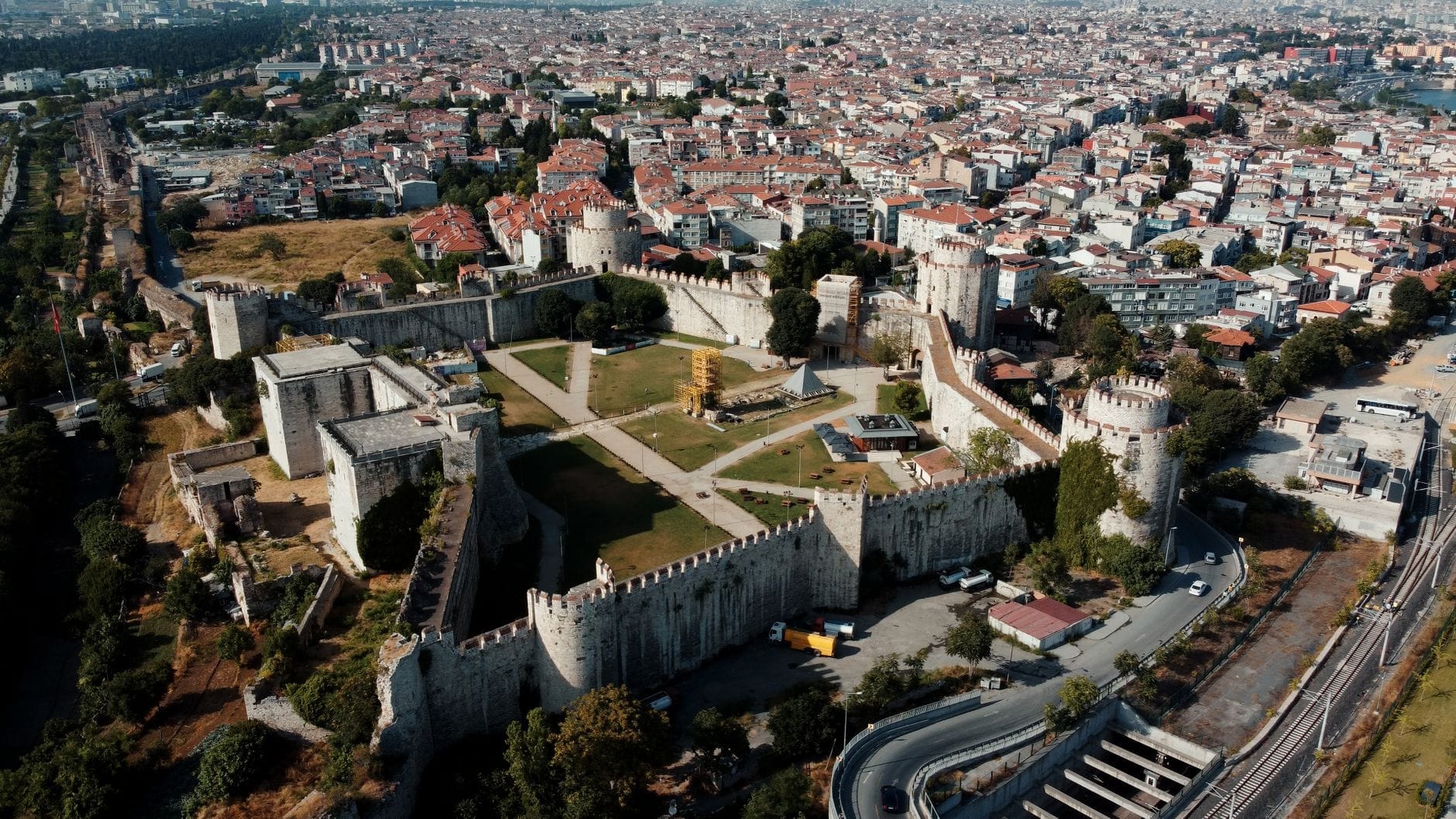
What Is Yedikule Fortress?
Yedikule Fortress, known in Turkish as Yedikule Hisarı or Yedikule Zindanları, translates literally as the Fortress of the Seven Towers. The name is accurate: the complex contains seven towers in total, but they come from two different civilizations and two different centuries. Four of the towers are remnants of the Theodosian land walls, the fifth-century defensive barrier that once ringed Constantinople. The other three were added in 1458 on the orders of Ottoman Sultan Mehmed II, who had conquered the city just five years earlier. He connected the new towers to the existing Byzantine walls with curtain walls, enclosing a large courtyard and transforming a gateway into a fortress.
The centerpiece of the older section is the Golden Gate, a triumphal arch built around 390 CE by the Emperor Theodosius I. It was originally a freestanding marble monument clad in gilded bronze reliefs, used for ceremonial imperial entries into Constantinople. By the time the Ottomans arrived, the gold had long been stripped and the gate sealed. What remains today is the skeletal outline of three arched passageways in white marble, embedded in the dark stone of the Ottoman additions. Standing between them, you feel the collision of two empires in a single wall.
ℹ️ Good to know
Yedikule’s opening status and hours have varied in recent years, including periods of closure and restricted access, so confirm current hours locally or through Istanbul tourism channels before visiting, especially outside the April–October window.
The History Embedded in Every Stone
After Mehmed II completed the fortress in 1458, it served as the Ottoman imperial treasury for more than three centuries, until 1789. Gold, silver, and state documents were stored in the towers. Later, the complex became a state prison, holding foreign ambassadors during wartime, political enemies, and eventually sultans themselves. The most dramatic of these incarcerations ended in May 1622, when Sultan Osman II was strangled inside the fortress at the age of seventeen, having been deposed by Janissary soldiers. He was the first Ottoman sultan to be killed by his own troops. The tower where this is said to have happened is still pointed out to visitors.
The walls enclosing Yedikule are a direct continuation of the Theodosian land walls, which stretched roughly 6.5 kilometres across the peninsula and held Constantinople against sieges for over a thousand years. To understand the full scale of that defensive system, the Theodosian Walls extend northward from here and are worth tracing on foot if your legs allow. Yedikule marks the southern anchor of that system, sitting where the walls meet the Sea of Marmara shoreline.
The fortress stopped functioning as a prison around 1800 and fell into gradual disrepair over the 19th century. It opened to the public as an open-air museum and has been the subject of intermittent restoration efforts, though large sections retain a raw, unpolished quality that many visitors find more compelling than the heavily manicured major sites elsewhere in the city.
Tickets & tours
Hand-picked options from our booking partner. Prices are indicative; availability and final rates are confirmed when you complete your booking.
Rumeli Fortress Skip-the-Line Ticket with Audio Guide
From 15 €Instant confirmationFree cancellationBosphorus sunset cruise on luxury yacht with guide
From 55 €Free cancellationIstanbul and Bosphorus cruise on private boat - half day afternoon tour
From 40 €Instant confirmationFree cancellationWhirling Dervishes live show and exhibition
From 29 €Instant confirmation
What You Actually See Inside
Entering through the ticket booth, you walk into a large open courtyard covered in uneven grass and gravel, surrounded on all sides by the circuit of towers and walls. There are no roped-off queues, no audio guide stations, and very little interpretive signage in English. The experience is exploratory by nature. Most visitors spend the first few minutes orienting themselves before realizing they can climb directly up into the towers and walk long stretches of the battlements.
The towers vary in condition. Some have narrow internal staircases with low clearance and uneven stone steps worn smooth by centuries of foot traffic. The climb is worth it: from the upper levels you get direct views of the Sea of Marmara to the south, the continuing line of the old walls to the north, and the dense residential fabric of the Yedikule and Kocamustafapaşa neighbourhoods spreading inland. On clear mornings, the light hits the water in a way that makes the geography of the old city feel suddenly comprehensible.
The interior walls of several towers still carry inscriptions scratched into the stone by prisoners, some dating back hundreds of years. These are easy to miss unless you look closely at chest and shoulder height along the inner surfaces. There are no labels identifying them. Whether this informality bothers you or delights you depends entirely on what kind of traveler you are.
⚠️ What to skip
The battlements have no safety railings in many sections, and some drops are severe. This is not a suitable visit for young children or anyone with a significant fear of heights or limited mobility. Wear closed-toe shoes with grip — leather-soled footwear is dangerous on the worn stone stairs.
How the Visit Changes by Time of Day
Yedikule gets a fraction of the visitors that Topkapi or the Basilica Cistern receive, which means timing is less critical here than at those sites. That said, mid-morning on a weekday is when the light falls most usefully into the courtyard and towers, making it the best window for photography of the Golden Gate's marble arch against the surrounding dark stonework.
By early afternoon in summer, the open courtyard offers almost no shade, and the stone walls radiate heat accumulated over the morning. Bring water. Late afternoon visits in spring and autumn can be atmospheric, as the low sun catches the texture of the walls and the neighbourhood outside grows quieter. In winter, the site is rarely crowded and the grey light suits the fortress's austere character, though verify opening access beforehand as seasonal closures do occur.
If you are visiting on a day that also includes the Fatih district's main sites, Yedikule is most logical as either a morning start or a late-afternoon finish, since it sits at the far western edge of the historic peninsula. Pair it with a walk along part of the Theodosian Walls, or combine it with a visit to the Fatih Mosque on your way back into the city center.
Getting There and Getting Around the Area
The most reliable route from central Istanbul is the Marmaray commuter line to Kazlıçeşme station. From there, follow signs for Yedikule Zindanları — the walk takes roughly ten to fifteen minutes through a quiet residential neighbourhood. Bus 80 from Eminönü and bus 80T from Taksim also stop near the fortress. An older suburban rail stop called Yedikule exists on the historical Sirkeci-Halkalı line, with a roughly five-minute walk to the entrance, though Marmaray connections tend to be more straightforward for visitors unfamiliar with the suburban rail network.
The neighbourhood around the fortress is predominantly residential and sees few tourists. There is no cluster of restaurants or souvenir shops at the gate. If you need food before or after, it is worth planning around a stop in Fatih's main commercial streets on the way. For a broader orientation to this part of the city, the Fatih neighbourhood guide covers the district's character and logistics.
Photography and Practical Details
Yedikule is excellent for photography, with the caveat that the best architectural compositions require getting up on the walls. The Golden Gate is the most photographed element, and the late-morning light from the east illuminates the marble facing at a good angle. For the Sea of Marmara panorama from the southern towers, you want morning light behind you. A wide-angle lens handles the courtyard well; a moderate telephoto is useful for wall texture and the distant cityscape from height.
Drone photography is subject to Turkey's civil aviation authority restrictions in urban areas; check current regulations before bringing one. Tripods are generally permitted inside open-air archaeological sites, but confirm with staff on entry.
The admission fee as of 2026 was reported at approximately 250 Turkish lira for foreign visitors, with reduced rates for certain ID holders. Turkish lira prices at state sites tend to rise significantly each year due to inflation — treat any figure here as a rough indicator and verify on site. The Istanbul Museum Pass does not include Yedikule at the time of writing; confirm current inclusion status before purchasing. For more on pass options, see the Istanbul Museum Pass guide.
Is Yedikule Worth Your Time?
Yedikule is genuinely significant — historically, architecturally, and as a piece of urban geography. It is where Byzantine ceremonial architecture and early Ottoman military engineering occupy the same stone, and where more than a thousand years of the city's political drama played out in a single enclosure. It is not, however, a polished museum experience. Signage is sparse, restoration is incomplete, and the site requires a degree of physical engagement that not every visitor will be comfortable with.
Travelers who have already visited Hagia Sophia, the Topkapi Palace complex, and the Grand Bazaar and are looking for something that feels less trafficked and more raw will find Yedikule rewarding. Those expecting the interpretive richness of a major European fortification museum may find the lack of context frustrating. If you want to calibrate expectations about Istanbul's historic sites before you go, the Istanbul Byzantine history guide is a useful primer, and the historic peninsula guide helps situate Yedikule within a full day of sightseeing.
People who should skip it: families with young children, anyone with significant mobility limitations, and visitors on a very short trip who need to prioritize and have not yet seen the city's tier-one sites. For everyone else with a genuine interest in the layered history of Constantinople and Istanbul, this is one of the most undervisited major monuments in the city.
Insider Tips
- Look at chest height along the interior walls of the larger towers for centuries-old prisoner inscriptions scratched into the stone. They are easy to miss without deliberate looking, and there are no labels pointing them out.
- The climb to the top of the towers is steeper and more confined than it appears from below. If you have any hesitation about tight spiral staircases, test the first flight before committing — retreating from the middle is harder.
- Bring your own water. There are no refreshment facilities inside the fortress, and the courtyard is fully exposed in summer.
- Visit on a weekday morning if you want the courtyard largely to yourself. Weekend afternoons occasionally attract school groups and local families, though crowds here are a fraction of what you will find at Sultanahmet sites.
- From the southern towers, look for the Sea of Marmara view and orient yourself to the line of the land walls running north. This is one of the few places in Istanbul where you can grasp the full geographic logic of how Constantinople was defended.
Who Is Yedikule Fortress For?
- Travelers with a specific interest in Byzantine or Ottoman history who want context beyond the Sultanahmet core
- Architecture enthusiasts drawn to the collision of a Roman triumphal gate and 15th-century Ottoman military construction
- Photographers looking for dramatic stonework, wall textures, and sea views without tour-group crowds
- Repeat visitors to Istanbul who have covered the major sites and want to explore further
- Walkers interested in combining Yedikule with a stretch of the Theodosian land walls
Nearby Attractions
Other things to see while in Fatih:
- Chora Church (Kariye Mosque)
The Chora Church, now Kariye Mosque, preserves the most complete cycle of late Byzantine mosaics and frescoes anywhere in the world. Tucked inside the Fatih district near the ancient Theodosian Walls, it rewards visitors who make the effort to reach it — but requires some planning around prayer times and dress codes.
- Fatih Mosque
Commissioned by Sultan Mehmed II a decade after the Ottoman conquest of Constantinople, Fatih Mosque stands as one of Istanbul's most historically charged religious sites. Unlike the tourist-heavy mosques of Sultanahmet, this one belongs primarily to the local neighborhood — and that contrast is exactly what makes it worth visiting.
- Panorama 1453 History Museum
The Panorama 1453 History Museum in Istanbul's Fatih district puts visitors at the center of one of history's most decisive moments: the Ottoman conquest of Constantinople on May 29, 1453. Housed in Topkapı Culture Park beside the ancient Theodosian Walls, the museum wraps a 38-meter-high, 238-meter-long cylindrical painting around a raised viewing platform, blending painted canvas with three-dimensional foreground figures to create an effect that is disorienting in the best possible way.
- Süleymaniye Mosque
Rising above the Golden Horn on Istanbul's Third Hill, Süleymaniye Mosque is widely regarded as the finest work of Ottoman imperial architecture. Built between 1550 and 1557 under the direction of master architect Mimar Sinan for Sultan Suleiman the Magnificent, it remains a functioning mosque with free admission and considerably fewer visitors than the Blue Mosque in Sultanahmet.