Vyšehrad Fortress: Prague's Quieter Hilltop Stronghold
Perched on a rocky promontory above the Vltava River, Vyšehrad Fortress is one of Prague's oldest and most historically layered sites. The park grounds and cemetery are free to enter, with paid access to the basilica and casemates. Expect wide river views, Baroque ramparts, and a noticeably calmer atmosphere than the city's more tourist-heavy landmarks.
Quick Facts
- Location
- V Pevnosti, Praha 2 – Vyšehrad, on a rock above the right bank of the Vltava, about 3 km southeast of Prague Castle
- Getting There
- Metro Line C to Vyšehrad station (easiest approach); Trams 3, 7, 16, or 17 to Výtoň stop with a steeper riverside climb
- Time Needed
- 2 to 4 hours for the full complex; 1 hour if you are only visiting the park and viewpoints
- Cost
- Outdoor grounds and park: free. Individual interiors (basilica, casemates, exhibitions) require separate tickets; check current prices at praha-vysehrad.cz
- Best for
- History seekers, photographers, walkers wanting views without crowds, and visitors with a full day in Prague
- Official website
- www.praha-vysehrad.cz
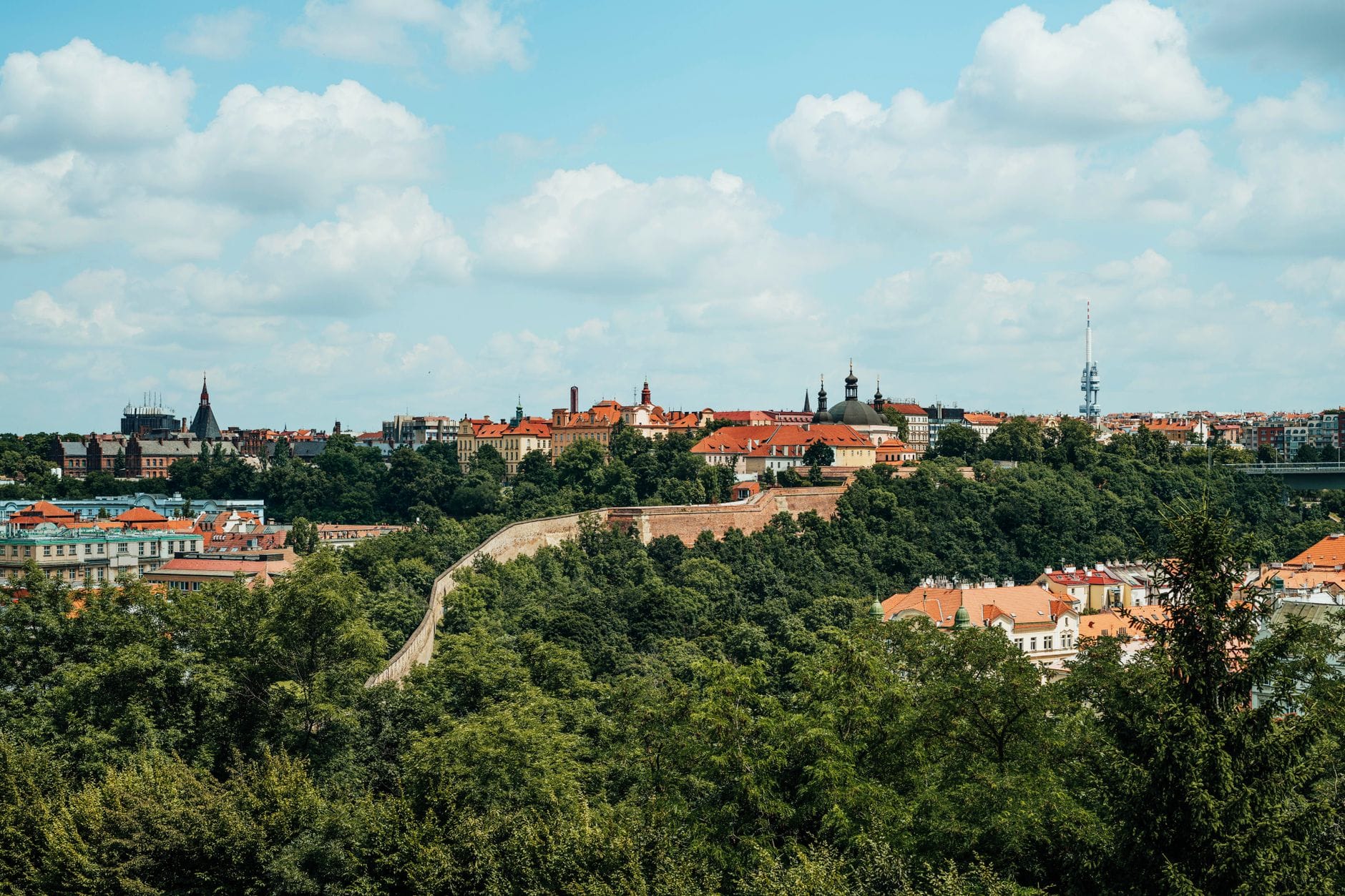
What Vyšehrad Fortress Actually Is
Vyšehrad Fortress is a National Cultural Monument occupying a flat-topped rock above the Vltava River at the southern edge of Prague's historic city. The site dates to the 10th century, when it functioned as a fortified settlement rivalling Prague Castle in political importance. By the 17th century it had been comprehensively rebuilt as a Baroque military fortress, and its thick star-shaped ramparts, gates, and casemates largely survive in that form today.
Today the complex functions as an open public park layered over that military and royal history. You can walk the ramparts, visit the neo-Gothic Basilica of Saints Peter and Paul, tour the underground casemates, and pay your respects at the Vyšehrad Cemetery, where many of the Czech Republic's most celebrated artists and intellectuals are buried. The outdoor grounds are freely accessible at all hours for practical purposes, which makes Vyšehrad genuinely different from most major Prague sites: there is no admission gate to push through, no queue to join, and no ticket-checking closing time for the park itself.
ℹ️ Good to know
The park and rampart walks are free and, for practical purposes, accessible at all hours. Paid tickets apply only to specific interiors: the Basilica of Saints Peter and Paul, the casemates, and temporary exhibitions. Buy those on-site or check current prices at the official website before visiting.
Arriving at Vyšehrad: Two Routes, Two Very Different First Impressions
Most visitors arrive via Metro Line C to Vyšehrad station, which exits at the base of the fortress hill. From there, a short but uphill walk along local streets such as Na Bučance and V Pevnosti leads you through the Táborská or Leopoldova gate directly into the fortress grounds. This route is straightforward and paved, and is still the better option for anyone with limited mobility or heavy bags compared with the steeper climb from the riverfront.
The alternative approach from the riverfront is more atmospheric but physically demanding. Trams 2, 3, 7, or 17 stop at Výtoň on Rašínovo nábřeží, and from there a path winds sharply uphill past old walls and through trees before opening onto the plateau. On a clear morning this climb rewards you with progressive views of the river and the opposite bank, but it involves genuine inclines and uneven surfaces. Wear shoes with grip.
Arriving early, before 9 a.m., you will have most of the grounds to yourself. The park fills gradually from mid-morning, particularly on weekends between May and September. Even at peak times, however, the crowd density here does not approach what you would find on Charles Bridge or in Old Town Square on a Saturday afternoon.
Tickets & tours
Hand-picked options from our booking partner. Prices are indicative; availability and final rates are confirmed when you complete your booking.
Vysehrad Castle and Fortress 2.5-hour guided tour
From 34 €Instant confirmationFree cancellationVysehrad Audio Guide with Optional St. Peter and Paul Basilica Entry
From 5 €Instant confirmationFree cancellationSelf guided tour with interactive city game of Prague
From 5 €Instant confirmationFree cancellationPrague by night city tour
From 27 €Instant confirmationFree cancellation
The Grounds: Ramparts, Views, and Open Space
Once inside, the immediate impression is of a working park rather than a tourist site. Local residents walk dogs along the rampart paths, cyclists pass through, and families occupy benches in the shade. The fortress walls are thick enough to walk along their top in places, and the views from the southern and western edges of the plateau are among the widest you will find in Prague: the river curves below, the red rooftops of Smíchov and Nové Město spread north, and on clear days the hills of the Bohemian countryside appear beyond the city.
The light changes meaningfully by time of day. Morning brings a cooler, softer quality that suits photography of the basilica's twin spires and the Baroque gates. By afternoon in summer the plateau gets direct sun with limited shade except near the trees in the park's central area. Sunset from the western rampart above the river can be striking, and because the grounds are open after dark, some visitors return in the evening for the quieter atmosphere and city lights below.
For a wider sense of Prague's geography from elevated positions, the Petřín Lookout Tower offers a different vantage point from the western hills, while the best views in Prague guide covers both options and several others worth comparing.
💡 Local tip
Photography tip: The twin spires of the Basilica of Saints Peter and Paul photograph best from the northeast corner of the grounds in the morning, when the light falls directly on the facade. The view south from the rocky outcrop at the far end of the plateau, looking down to the river bend, is the shot most visitors miss.
Inside the Complex: Basilica, Casemates, and Cemetery
Basilica of Saints Peter and Paul
The Basilica of Saints Peter and Paul dominates the plateau visually. Its current neo-Gothic form, with the distinctive twin black spires, dates primarily from reconstructions in the late 19th and early 20th centuries, but the site itself has held a church since at least the 11th century. The interior is notable for its Art Nouveau decorative programme: the walls and vaults are covered in painted panels and ornamental detail from around 1900, giving the space a quality different from the typical Gothic interiors found elsewhere in Prague. Entry requires a separate ticket.
The basilica sits directly adjacent to the Vyšehrad Cemetery, which is free to enter and is one of the most significant cultural sites on the entire complex.
Vyšehrad Cemetery
The cemetery deserves more time than most visitors give it. Established in the 19th century as a burial ground for prominent Czech figures, it holds the graves of composers Antonín Dvořák and Bedřich Smetana, artist Alfons Mucha, and writer Karel Čapek, among many others. The tombstones and monuments range from modest markers to elaborate sculptural works. The atmosphere is quiet and shaded, and the site is maintained with obvious care. Even for visitors with no prior knowledge of Czech cultural history, the density and quality of the funerary sculpture makes it worth a slow walk.
Casemates and Gothic Cellar
Beneath the Baroque ramparts, the casemates are a network of vaulted underground passages originally built for military storage and defence. A guided tour takes you through these tunnels and into the Gothic Cellar, which holds a collection of original Baroque statues removed from Charles Bridge for conservation. Seeing those figures up close, at eye level rather than glimpsed from below on the bridge, is genuinely worthwhile. Tours operate on a timed schedule; check current hours and ticket availability at the official website before your visit, as they vary seasonally.
Historical and Cultural Context
Vyšehrad occupies a particular place in Czech national identity that goes beyond its physical remains. Medieval chronicles, some of questionable historical accuracy but great cultural influence, described Vyšehrad as the seat of the earliest Přemyslid rulers and the origin point of Czech statehood. Whether or not those specific legends are historical, they shaped how 19th-century Czech nationalists understood the site: Vyšehrad became a symbol of national continuity and cultural pride during a period when Czech identity was being actively constructed and defended against Germanisation.
That 19th-century impulse explains both the cemetery's purpose and the neo-Gothic reconstruction of the basilica. It also connects Vyšehrad to a broader pattern of nationalist reinterpretation of Prague's historic fabric, a theme explored in the Prague history guide. The fortress itself, in its Baroque military form, was built in the 17th century following the Habsburg reconquest of Bohemia after the Battle of White Mountain in 1620.
The military function of the fortress was gradually wound down in the 19th century, and the ramparts and casemates were repurposed. The area was incorporated into the city as a public park and cultural monument, a status it retains today under the designation Vyšehradský areál, a National Cultural Monument.
Practical Walkthrough: How to Spend Your Time
A thorough visit covering the cemetery, basilica interior, casemates, and a full walk of the ramparts takes approximately three hours. If you are short on time, prioritise the cemetery and the southwestern viewpoints above the river: those two things alone make the trip worthwhile and cost nothing.
- Enter from Vyšehrad metro station via the Táborská Gate for the most direct route
- Walk south along the ramparts toward the river outcrop for the widest views
- Visit the Vyšehrad Cemetery (free, no ticket required)
- Check the basilica's opening hours on arrival; it is occasionally closed for services
- Book or time the casemates tour separately, as entry is on a schedule
- Allow time to explore the quieter eastern section of the park, which most visitors skip
⚠️ What to skip
The approach from Výtoň tram stop involves a steep climb on uneven paths. Visitors with mobility limitations, strollers, or young children should use the Metro Line C route to Vyšehrad station instead, which arrives at plateau level.
If you are combining Vyšehrad with a full day in Prague, consider pairing it with the Náplavka riverfront below, which runs along the Vltava bank and is walking distance from the Výtoň tram stop. The combination works well as a half-day itinerary on the southern edge of the city centre.
Weather and Seasonal Considerations
The exposed rampart walks have little natural shelter. In summer, the plateau receives full afternoon sun, and the stone surfaces retain heat. Bring water and sun protection if you are visiting between June and August. In winter, the grounds are quieter and often frost-covered, which gives the Baroque walls and cemetery a different character, though some interiors may have reduced hours. The casemates are cool year-round, which makes them a welcome break on hot days.
May, June, and September are generally the most comfortable months for walking the grounds at length. For a broader seasonal perspective on visiting the city, the best time to visit Prague covers climate, crowds, and events across the year.
Insider Tips
- The rocky outcrop at the far southern end of the plateau, overlooking the river bend toward Braník, is one of Prague's quieter viewpoints. Few visitors walk that far, but the perspective south along the Vltava is worth the extra ten minutes.
- The Vyšehrad Cemetery closes earlier than the park. If paying your respects to Dvořák or Mucha is a priority, check the cemetery's current closing time and plan accordingly rather than leaving it for the end of your visit.
- The casemates hold original Baroque statues removed from Charles Bridge for conservation. These are the actual sculptures, not replicas, which makes them significantly more interesting than what you will find on the bridge itself.
- Early weekday mornings before 9 a.m. the grounds are used almost entirely by locals exercising, walking dogs, or sitting with coffee. That hour gives you the place almost to yourself and a very different sense of the site.
- Parking near Vyšehrad is genuinely difficult on weekends. If you are not using public transport, allow extra time. The metro connection is fast and straightforward from the city centre.
Who Is Vyšehrad Fortress For?
- History and architecture enthusiasts who want depth beyond Prague Castle
- Photographers looking for elevated river views without crowds
- Walkers combining a cultural site with an open-air park stroll
- Visitors with a full day in Prague who have already covered the Old Town highlights
- Travellers interested in Czech cultural identity and 19th-century national history
Nearby Attractions
Other things to see while in Vyšehrad:
- Basilica of St. Peter and Paul (Vyšehrad)
Standing at the heart of the ancient Vyšehrad fortress, the Basilica of St. Peter and Paul is one of Prague's oldest and most architecturally layered sacred sites. Its twin 58-metre neo-Gothic towers define the city's southern skyline, and inside, centuries of Czech history press close. Unlike the crowds of the Old Town, this hilltop church rewards those willing to walk a little further.
- Vyšehrad Cemetery (Slavín)
Established in 1869 on the grounds of Vyšehrad fortress, the Vyšehrad Cemetery is the resting place of many of the most significant figures in Czech cultural history. At its heart stands the Slavín, a monumental shared tomb completed in 1893. Entry is free, the atmosphere is quietly powerful, and the crowds rarely reach city-centre levels.