The Met Cloisters: A Medieval World at the Top of Manhattan
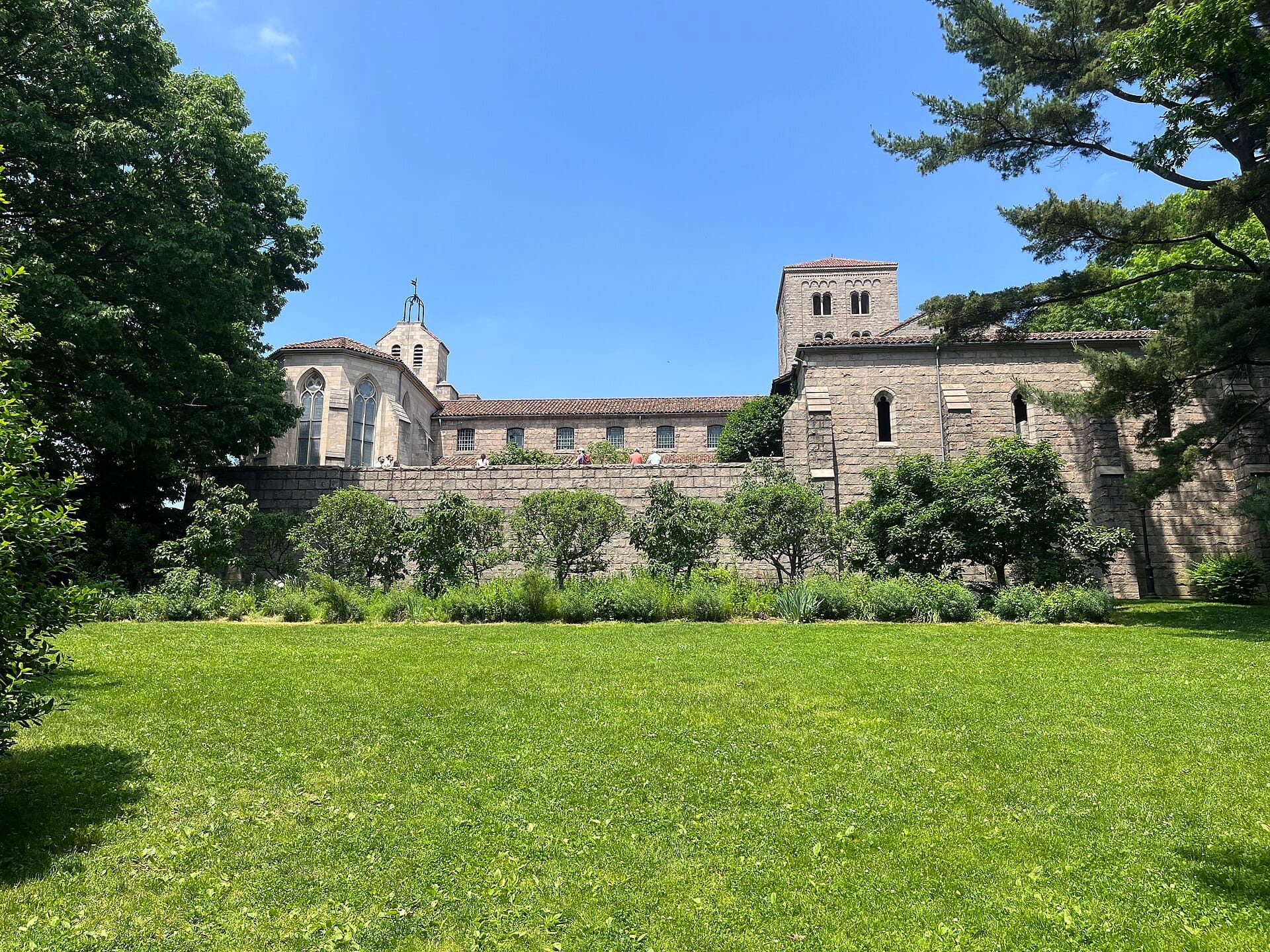
Perched above the Hudson River in Fort Tryon Park, The Met Cloisters is a branch of the Metropolitan Museum of Art devoted entirely to medieval European art and architecture. Built around actual monastery elements shipped from France and Spain, it is one of the most architecturally distinctive museum experiences in the United States.
Quick Facts
- Location
- 99 Margaret Corbin Drive, Fort Tryon Park, Manhattan, NY 10040
- Getting There
- A train to 190th St, then 10-min walk north or one stop on the M4 bus
- Time Needed
- 2–3 hours
- Cost
- Admission required; verify current pricing at metmuseum.org
- Best for
- Art lovers, architecture fans, history travelers, quiet seekers
- Official website
- www.metmuseum.org/plan-your-visit/met-cloisters
What The Met Cloisters Actually Is
The Met Cloisters is not a reconstructed replica or a themed exhibit. It is a museum built using genuine architectural fragments, including five medieval cloisters, Romanesque chapels, and Gothic hall elements, physically transported from France and Spain and reassembled stone by stone in upper Manhattan. The building opened in 1938 as a dedicated branch of the Metropolitan Museum of Art, making it the only museum in the United States focused entirely on medieval European art and architecture from roughly the 9th through the 15th centuries.
The collection contains roughly 2,000 works: ivory altarpieces, illuminated manuscripts, enameled reliquaries, tapestries, and carved stone capitals. The most famous objects are the seven Unicorn Tapestries, woven in the Southern Netherlands around 1500, whose condition, scale, and visual complexity stop most visitors in their tracks. But the building itself is arguably the collection's greatest artifact.
💡 Local tip
The museum opens at 10:00 am and is closed on Wednesdays, Thanksgiving Day, December 25, and January 1. Arriving within the first 30 minutes gives you the chapels and tapestry hall in near-silence before tour groups arrive, which transforms the experience considerably.
The Architecture: Five Cloisters in One Building
The building was designed by Charles Collens under the direction of curator Joseph Breck and later James Rorimer, with funding from John D. Rockefeller Jr., who also donated the surrounding Fort Tryon Park land and, crucially, purchased and protected the Palisades across the river in New Jersey to preserve the Hudson River view. That view, largely unchanged since the 1930s, is visible from the Cuxa Cloister's open garden court and remains one of the more affecting panoramas in New York City.
The five incorporated cloisters, each from a different region and period, give the building an unusual spatial rhythm. The Cuxa Cloister, with its pink Languedoc marble columns dating to around 1130–1140, forms the largest open courtyard and is planted seasonally with herbs and flowers typical of medieval monastery gardens. The Saint-Guilhem Cloister is smaller and quieter, its carved capitals showing remarkable detail despite nine centuries of age. The Bonnefont and Trie cloisters hold medicinal and aromatic plants identified with small labels. Moving between them, you notice changes in stone color, column proportion, and light quality that mark the shift from Romanesque to Gothic architecture.
None of this is obvious unless you slow down. The building rewards visitors who resist moving quickly. Spend time looking at a single carved capital. Notice how the light in the Fuentiduena Chapel, a 12th-century apse transported from Segovia province in Spain, changes as the morning advances. The fresco above the apse dates to around 1130 and is one of the largest Romanesque murals in North America.
Tickets & tours
Hand-picked options from our booking partner. Prices are indicative; availability and final rates are confirmed when you complete your booking.
New York Mets Baseball Game Tickets at Citi Field
From 42 €Instant confirmationPrivate Metropolitan Museum of Art skip-the-line guided tour
From 131 €Instant confirmationFree cancellationBustronome Gourmet Lunch Tour in New York
From 93 €Instant confirmationFree cancellationSemi-private Metropolitan Museum of Art Skip-the-Line guided tour
From 90 €Instant confirmationFree cancellation
The Unicorn Tapestries and the Main Collection
Seven tapestries known as the Unicorn Tapestries hang in a dedicated gallery, each measuring roughly 12 feet tall. Woven from wool and silk with metallic threads, they depict the hunt and capture of a unicorn in landscapes filled with accurately rendered plants and animals. Art historians have identified more than 100 plant species in the tapestries, which remain one of the great unresolved puzzles of medieval art: their commissioner, their precise meaning, and their original location are still debated.
The gallery is kept cool and relatively dim to protect the textiles, which gives it a quiet, chapel-like atmosphere. On weekend afternoons the room can become crowded. Morning visitors often find it nearly empty, which allows the full scale and detail to register at your own pace.
Beyond the tapestries, the collection includes the Belles Heures of Jean de Berry, an illuminated manuscript by the Limbourg Brothers completed around 1409; the Merode Altarpiece, a Flemish triptych by Robert Campin; and a substantial treasury of metalwork, ivory carvings, and stained glass. The holdings are deep enough that repeat visits reward in a way few collections of this size can.
Time of Day and Seasonal Considerations
Winter visits have a particular logic here. The low northern light comes through the Romanesque windows at an angle that suits the stone interiors, and the cloister gardens, stripped of summer growth, reveal the architecture more clearly. Snow in the courtyard is not uncommon between December and February, and the combination of bare stone and white ground produces a quality of stillness that feels entirely consistent with the building's origins.
Spring is when the cloister gardens fill with color. The medicinal herb gardens in the Bonnefont and Trie cloisters are at their most visually detailed in late April through June. The Cuxa garden is planted to reflect what a 12th-century Benedictine monastery might have cultivated, and staff can answer questions about the plants.
Summer weekends are the most crowded periods. The building is not modernly climate-controlled throughout for visitor comfort, and the Romanesque chapels can become warm by early afternoon. If you visit in July or August, arriving at opening or after 3:30 pm is worth considering.
ℹ️ Good to know
The Met Cloisters is open 10:00 am–5:00 pm and is closed on Wednesdays, Thanksgiving Day, December 25, and January 1. Hours and days of operation can change seasonally or for holidays; check the official website before visiting.
Getting There: The Journey Is Part of the Visit
Reaching The Met Cloisters requires a deliberate trip to the northern tip of Manhattan, and that distance is part of what makes it feel removed from the rest of the city. Take the A train to 190th Street, exit by elevator, and walk north along Margaret Corbin Drive through Fort Tryon Park for about 10 minutes. Alternatively, board the M4 bus one stop north from 190th Street. The walk through the park, particularly in autumn, is worth the extra time.
By car, exit the Henry Hudson Parkway at the sign marked Fort Tryon Park / The Cloisters. Parking is available in the park lot, though it fills on weekend afternoons. For visitors who need step-free access, the museum provides a free shuttle service due to the building's landmark status, which limits certain accessibility modifications; contact the museum in advance to confirm current shuttle arrangements.
The surrounding Fort Tryon Park is one of the more underused green spaces in Manhattan and worth time on its own. The park's Heather Garden is the largest public perennial garden in the northeastern United States, maintained by the Fort Tryon Park Trust.
Honest Assessment: Who This Is For and Who Should Skip It
The Met Cloisters is a focused, specialized museum. Visitors hoping for the breadth of the main Metropolitan Museum of Art, with its Egyptian halls, Greek and Roman galleries, and European paintings from the Renaissance onward, will not find that here. The entire building covers medieval Europe, and within that, it is exceptional.
If your primary interest is checking major New York City cultural sites, the Metropolitan Museum of Art on the Upper East Side covers more ground and more periods. The Cloisters rewards visitors who are genuinely interested in the Middle Ages, in architectural history, or in the specific texture of pre-modern European religious life. Travelers with young children may find the atmosphere challenging: the galleries are quiet by convention, the objects are behind glass, and there is limited interactive content.
For architecture travelers, art historians, or anyone who finds most museum experiences too fast and too loud, this museum functions at a different register than almost anything else in New York.
The Cloisters is part of a broader set of cultural institutions in upper Manhattan that are worth combining into a day. The architecture of upper Manhattan rewards slower exploration, and the neighborhoods north of 155th Street see far fewer visitors than Midtown or the Upper East Side.
Insider Tips
- The cloister gardens are maintained by museum horticulturalists who can answer detailed questions about medieval plant use if you ask. The labeled plants are not decorative choices: each species has documented historical significance.
- A free digital audio guide is available via The Met’s app and adds substantial context to the tapestry hall in particular, where the iconographic program is complex enough that unsupported viewing misses most of what is happening in the images.
- The museum shop carries scholarly publications not easily found elsewhere, including detailed studies of the Unicorn Tapestries and the Belles Heures. These are worth browsing even if you do not buy.
- Photographs are permitted in most galleries without flash. The Fuentiduena Chapel in the morning, with light coming through the apse windows, is one of the better photography opportunities in any New York museum.
- Combine the visit with a walk south through Fort Tryon Park to the Heather Garden, then continue south toward Inwood Hill Park if time permits. The entire sequence from the museum to Inwood takes about an hour on foot and requires no subway.
Who Is The Met Cloisters For?
- Travelers with a specific interest in medieval European art, architecture, or religious history
- Architecture enthusiasts who want to see genuine Romanesque and Gothic construction at close range
- Anyone seeking a quiet, unhurried museum experience far from Midtown crowds
- Visitors on a second or third trip to New York who have already covered the major landmarks
- Photographers looking for interior stone, natural light, and garden compositions
Nearby Attractions
Other things to see while in Harlem:
- Apollo Theater
The Apollo Theater at 253 West 125th Street has shaped American music for over 90 years, launching careers from Ella Fitzgerald to James Brown. While the historic theater is undergoing a multi-year renovation, the free gallery and active programming make it worth the trip to Harlem.
- Cathedral Church of St. John the Divine
Rising above Morningside Heights at near Harlem, the Cathedral Church of Saint John the Divine is one of New York City's most extraordinary architectural spaces. Construction began in 1892 and continues to this day, making every visit a glimpse into a living, unfinished monument. At 601 feet long with a nave vaulting 124 feet overhead, the scale alone justifies the trip.
- El Museo del Barrio
Founded in East Harlem in 1969, El Museo del Barrio stands as the United States' leading museum dedicated to Latino, Caribbean, and Latin American art and culture. Positioned at the northern tip of Fifth Avenue's Museum Mile, it offers a distinct and often underappreciated counterpoint to the larger institutions that dominate the strip.
- Fort Tryon Park
Fort Tryon Park is a 67-acre public park in Upper Manhattan, designed by the Olmsted Brothers and gifted to New York City by John D. Rockefeller Jr. in 1931. It sits on one of the borough's highest natural ridges, offering sweeping views of the Hudson River, eight miles of winding paths through wooded slopes, and the landmark Met Cloisters museum. Entry to the park is free.