The Bass: Miami Beach's Art Deco Museum Worth Knowing
Housed in a striking 1930s Art Deco building on Collins Avenue, The Bass is Miami Beach's foremost contemporary art museum. With low admission fees, thoughtful rotating exhibitions, and a location steps from the beach, it rewards curious travelers who want more than sun and sand.
Quick Facts
- Location
- 2100 Collins Avenue, Miami Beach, FL 33139 (South Beach / City Center)
- Getting There
- Miami Beach Trolley along Collins Ave; walkable from most South Beach hotels
- Time Needed
- 1.5 to 2.5 hours
- Cost
- Miami Beach residents: free; non-residents: approx. US$15 (verify at thebass.org)
- Best for
- Contemporary art lovers, architecture enthusiasts, rainy-day culture seekers
- Official website
- thebass.org
What The Bass Actually Is
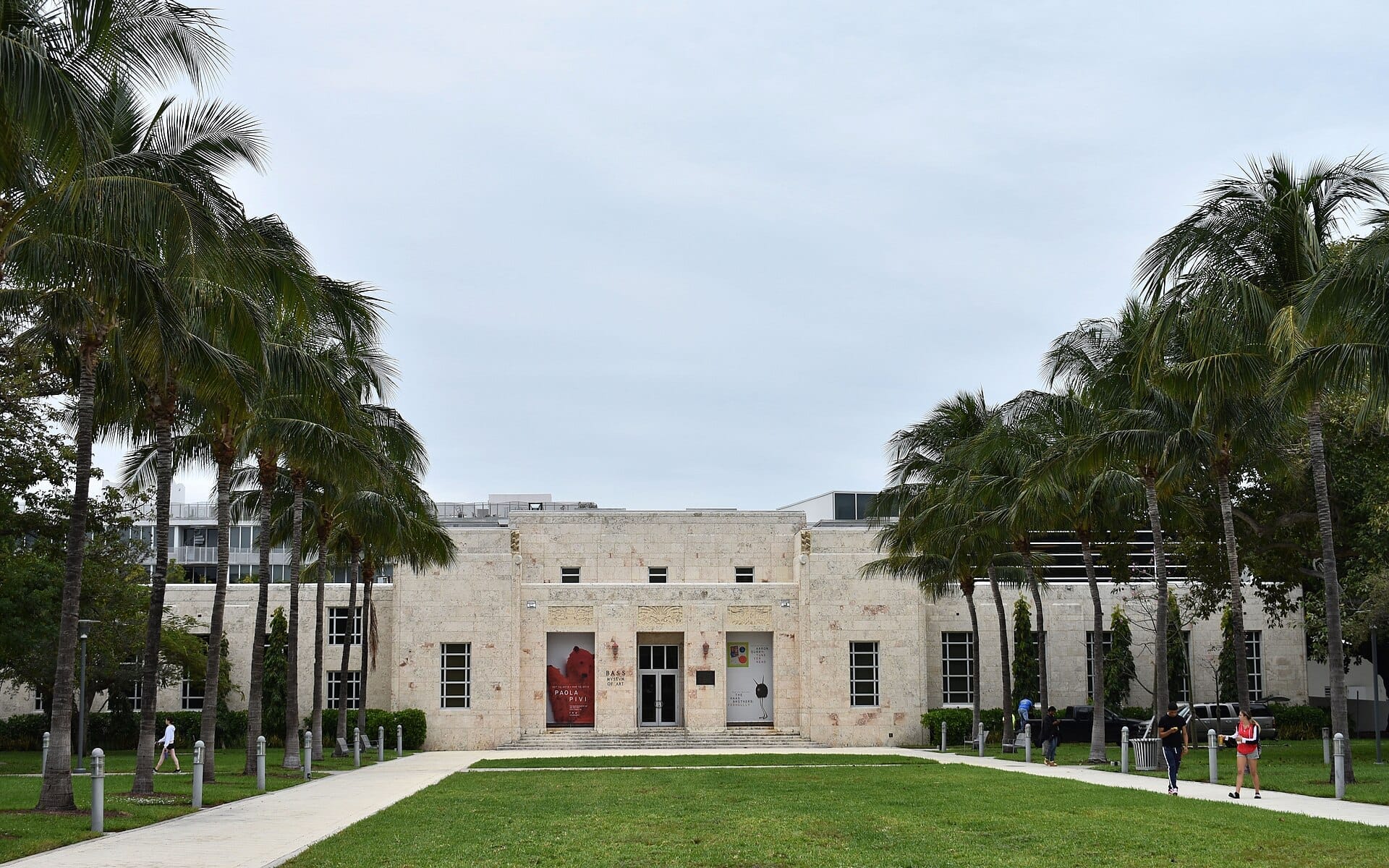
The Bass Museum of Art, now publicly branded simply as The Bass, sits on Collins Avenue in the heart of Miami Beach's civic center, roughly two blocks from the ocean. It is a municipally operated art museum, founded in 1963 and opened to the public in 1964, after John and Johanna Bass donated their private collection to the City of Miami Beach. What makes it unusual is the building itself: a 1930s coral-rock Art Deco structure designed by architect Russell Pancoast, who also happened to be John Bass's son-in-law. That original structure is often described as an early dedicated public exhibition space for visual art in South Florida.
The museum closed in 2015 for a significant renovation and reopened to the public on October 8, 2017 with expanded gallery space and a refreshed identity. The rebranding from 'Bass Museum of Art' to the simpler 'The Bass' signals the institution's ongoing pivot toward contemporary and experimental programming, though the permanent collection still anchors the experience with European Old Masters, Gothic sculpture, and decorative arts from the Bass donation.
ℹ️ Good to know
Opening hours vary by source. The museum is generally open Wednesday through Sunday from 12 pm to 5 pm, with Monday and Tuesday closed. Hours and any extended Art Week schedules should be confirmed directly at thebass.org before you visit.
The Building: Why the Architecture Matters
Before you step inside, stop and look at the facade. The Pancoast-designed building reads as restrained Deco: smooth coral keystone cladding, bas-relief panels framing the entrance, and a horizontal emphasis that was entirely characteristic of Miami Beach civic architecture in the late 1930s. The material is locally quarried oolite limestone, the same stone used in many older Miami Beach buildings, which gives the exterior a slightly textured warmth that poured concrete never achieves.
In the context of the surrounding neighborhood, the building stands in quiet contrast to the louder Streamline Moderne hotels a few blocks south along Ocean Drive. If you want to understand how this fits into the broader architectural story of the area, the Art Deco Historic District walk is an ideal complement to a Bass visit — it covers the district's most celebrated blocks and gives you the vocabulary to read buildings like this one.
The 2017 renovation added a modern glass-and-steel extension at the rear, visible once you enter the lobby. It is sympathetic rather than dramatic, providing climate-controlled gallery space for large-scale contemporary works without competing with the Pancoast exterior. The transition between the two eras of architecture is one of the more honest moments in the building: you move from warm stone and low ceilings into tall white gallery walls with natural light above.
Tickets & tours
Hand-picked options from our booking partner. Prices are indicative; availability and final rates are confirmed when you complete your booking.
Everglades admission ticket with airboat ride and wildlife show
From 24 €Instant confirmationFree cancellationKey West day trip with glass bottom boat ride
From 110 €Instant confirmationFree cancellationEverglades airboat ride with Biscayne Bay boat tour and transportation
From 67 €Instant confirmationFree cancellationGrand Bahama tour with optional Pig Beach visit
From 309 €Instant confirmationFree cancellation
What You Will Find Inside
The permanent collection spans European paintings from the 15th through 17th centuries, including Flemish and Dutch works, alongside Gothic and Renaissance sculpture and ecclesiastical textiles. These are genuine historical objects, not reproductions, and the scale of the donation for a small beachside city was remarkable for 1964. The works are displayed in the historic wing, where lower ceilings and slightly dimmer lighting suit the age of the pieces.
The contemporary programming, which now dominates the museum's public identity, rotates through solo and group exhibitions focused on living artists engaging with themes of identity, ecology, technology, and urbanism. Scale tends toward the ambitious: video installations, large-format photography, and sculptural interventions are common. The quality is uneven in the way rotating contemporary programming always is, but the curatorial ambition is evident.
For travelers already interested in Miami's broader contemporary art scene, The Bass is a useful anchor point. It operates in a different register from the warehouse-scale installations of Wynwood Walls or the encyclopedic collection at the Pérez Art Museum Miami on the bay. The Bass is smaller and more focused, which makes it easier to absorb in a single visit without fatigue.
How the Experience Changes by Time of Day
Midday on a weekend brings the most visitors, particularly in winter months when South Beach is at peak tourist density. The galleries are small enough that even moderate crowds can feel congested around popular installations. Arriving at opening time on a weekday is markedly quieter: the low hum of climate control, the slight echo of footsteps on gallery floors, and the absence of competing voices allows you to sit with individual works rather than navigate around groups.
The outdoor courtyard, a compact space between the historic building and the modern extension, is best in the morning before the full Miami sun reaches overhead. By early afternoon in summer, it can feel uncomfortably hot for lingering. In the dry-season months from November through April, the same courtyard is genuinely pleasant at midday, with the coral-stone walls casting short shadows and the air still tolerable.
💡 Local tip
During Miami Art Week in early December, The Bass extends its hours and often debuts new exhibitions timed to the international art crowd. Crowds increase substantially, but so does the energy and programming. If you are visiting for Art Basel, the museum is worth building into your itinerary.
Practical Walkthrough: Getting There and Getting In
The museum is at 2100 Collins Avenue, a street that runs the length of Miami Beach parallel to Ocean Drive and one block west of it. Many South Beach hotels are within roughly a 10 to 20 minute walk. The Miami Beach Trolley's Collins route stops on or near Collins Avenue and is free to ride, making it a practical option if you are staying further south along the strip.
If arriving by car, street parking exists on Collins Avenue and surrounding blocks but fills quickly during peak hours and on weekends. Metered parking garages are available within a few blocks. Ride-hail drop-off directly on Collins Avenue is the most straightforward option if you are coming from elsewhere on the beach.
Admission for non-Miami Beach residents is approximately US$15, making this among the more affordable cultural experiences in the city. Miami Beach residents enter free with proof of residency. The museum has confirmed a commitment to accessibility and has verified accessibility information available through the Greater Miami Convention and Visitors Bureau; visitors with specific mobility requirements should contact the museum in advance or consult thebass.org for current details.
⚠️ What to skip
Ticket prices and opening hours are subject to change. Always verify current information at thebass.org before visiting, especially around holidays and during special events.
Photography, Context, and Honest Expectations
Photography policies vary by exhibition at The Bass. Many contemporary installations prohibit photography or restrict it to personal use without flash. Assume restrictions unless signage says otherwise, and check with front-of-house staff when in doubt. The Pancoast facade exterior is unrestricted and photographs beautifully in morning light, when the coral stone picks up a warm golden cast.
An honest note on expectations: The Bass is not a major encyclopedic museum and should not be evaluated as one. The permanent collection, while historically significant for Miami, is modest in scale. The contemporary programming is the stronger draw, and its quality depends entirely on what is showing during your visit. Check the current exhibition schedule online before you go — if the current show aligns with your interests, this is genuinely worthwhile. If the programming does not interest you, the architecture and the reasonable admission price still make a brief visit easy to justify.
Travelers with a full week in Miami will find the museum fits naturally into a South Beach afternoon, particularly paired with a walk through the Lincoln Road Mall a few blocks north, or combined with the nearby Miami Beach Botanical Garden for a full half-day of culture in the city center.
Insider Tips
- Check the current exhibition at thebass.org before visiting. The contemporary shows rotate regularly and vary considerably in scale and subject. A quick look takes two minutes and ensures you are not disappointed by a show outside your interests.
- The museum's ground-floor lobby occasionally has free printed exhibition guides that go deeper than the standard wall labels. Pick one up at the desk before entering the galleries rather than doubling back.
- Early December is the best time to visit if you want the museum at its most energized. The Bass participates in Miami Art Week programming and often opens special exhibitions or performances timed to the international art crowd.
- The building exterior is worth examining slowly from the Collins Avenue sidewalk. The bas-relief panels flanking the entrance doors depict stylized figures and are easy to walk past without noticing. They are among the more refined decorative details on any civic building in Miami Beach.
- If you are visiting with children, ask at the front desk about current family programming. The Bass periodically runs workshops and interactive components alongside main exhibitions, and these are not always prominently advertised.
Who Is The Bass Museum of Art For?
- Contemporary art travelers who want a focused, non-exhausting museum experience
- Architecture and Art Deco enthusiasts exploring Miami Beach's civic buildings
- Visitors during Miami Art Week looking for a quieter alternative to fairs and large institutions
- Budget-conscious travelers: at around US$15, this is still a relatively good-value cultural stop
- Rainy afternoon seekers needing an indoor cultural anchor in the South Beach area
Nearby Attractions
Other things to see while in South Beach:
- Art Deco Historic District
The Miami Beach Art Deco Historic District preserves more than 800 historic buildings along Ocean Drive, Collins Avenue, and Washington Avenue, making it one of the world's largest concentrations of Art Deco architecture. Listed on the National Register of Historic Places in 1979, the district is free to explore on foot and rewards visitors at every hour of the day.
- Española Way
Conceived in the early 1920s as an artists' colony and largely completed by 1925, Española Way is a roughly two-block pedestrian stretch in South Beach where Spanish Revival architecture, open-air restaurants, and a quieter pace of life offer a genuine contrast to the Ocean Drive scene. Admission is free and the street is open around the clock.
- Jewish Museum of Florida–FIU
Occupying two landmark synagogue buildings from 1929 and 1936 at 301 and 311 Washington Avenue, the Jewish Museum of Florida–FIU tells the story of Jewish life in Florida across more than 250 years. The 1936 building alone, designed by Art Deco master Henry Hohauser, is worth the visit for its copper dome and 80 stained-glass windows.
- Lincoln Road Mall
Lincoln Road Mall is an eight-block pedestrian promenade running through the heart of Miami Beach, flanked by over 200 shops, restaurants, galleries, and cafés. Redesigned in the late 1950s by architect Morris Lapidus, it is often cited as one of the earliest open-air pedestrian malls in the United States. Free to enter and open around the clock, it offers a very different experience at 9 a.m. than it does at 10 p.m.