Sunnybrook Park: Toronto's Best Urban Wilderness
Sunnybrook Park is one of Toronto's largest and most underappreciated green spaces, offering off-leash dog areas, wooded ravine trails, open meadows, and equestrian facilities, all free of charge. It draws a loyal mix of dog owners, trail runners, cyclists, and anyone who simply needs to breathe somewhere that doesn't feel like a city.
Quick Facts
- Location
- 1132 Leslie St, Toronto, ON — in the Don Valley ravine system, at the northwest corner of Eglinton Avenue East and Leslie Street
- Getting There
- TTC bus to Leslie stop, approximately 7-minute walk to park entrance
- Time Needed
- 1 to 3 hours depending on trail distance and activities
- Cost
- Free — no admission fee
- Best for
- Dog owners, trail runners, cyclists, families, and anyone who finds High Park too crowded
What Is Sunnybrook Park?
Sunnybrook Park occupies a generous stretch of the Don Valley ravine system in Toronto's midtown-east, sitting between the affluent Bridle Path neighbourhood to the north and the quieter residential streets of Leaside to the south. Unlike the more photogenic or centrally located parks that dominate Toronto tourism content, Sunnybrook operates largely as a neighbourhood institution, relied upon by the people who actually live near it rather than visitors checking items off a list.
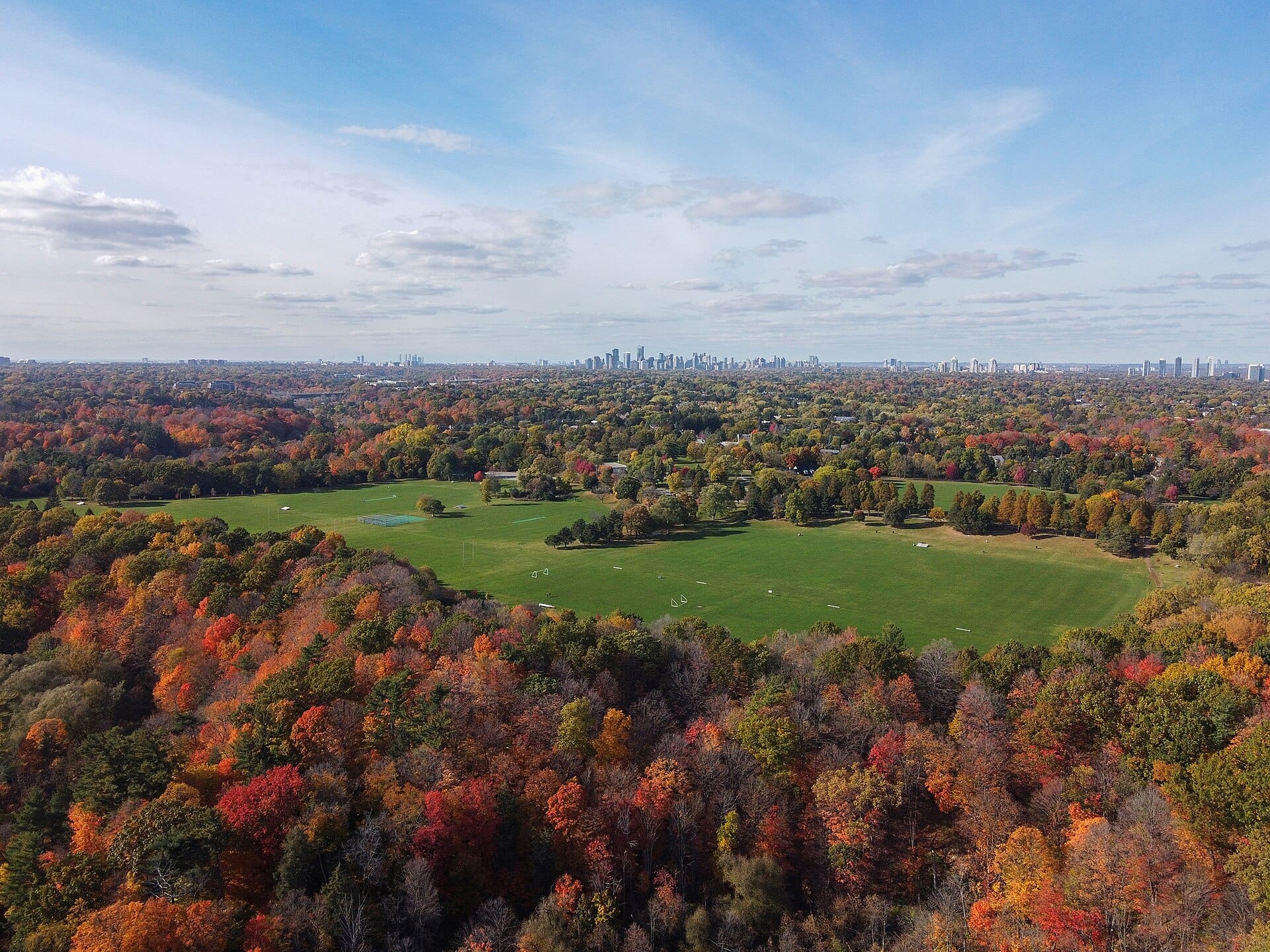
That is part of what makes it genuinely rewarding. The park holds a fenced, large off-leash dog area, multi-use trails through mature tree cover, open grassy meadows, a stable that offers equestrian programming, and access points into the broader ravine trail network. There is no single dramatic landmark to photograph and share. The draw is the feeling of being somewhere unexpectedly wild within a city of nearly three million people.
ℹ️ Good to know
Sunnybrook Park is open 24 hours and charges no admission. There are no locked gates or timed entry systems. Parking is available on-site.
The Off-Leash Area: The Park's Social Core
The fenced off-leash dog area is the busiest part of Sunnybrook for a significant portion of the day. Early mornings, particularly between 7 and 9 a.m., see the heaviest concentration of dog owners. The atmosphere during these hours is genuinely social: dogs sprint across the open sections, owners stand in loose clusters talking, and the noise is a mix of barking, laughter, and the general controlled chaos of a dozen animals who have just been let off their leads.
The City of Toronto designates the off-leash area as a formal Dogs Off-Leash Area (DOLA), and it permits commercial dog walkers, which means groups of four to six dogs arriving in vans is a common sight on weekday mornings. If you are visiting with your own dog and prefer a quieter experience, late afternoon on a weekday is noticeably calmer than weekend mornings.
The fencing is sturdy and the enclosure large enough that dogs actually get meaningful exercise, which is not always the case at smaller urban off-leash areas. Bring water in warm months; there are water sources available but not always conveniently located near the off-leash sections.
Tickets & tours
Live prices and dates from our booking partner. If you book, we may earn a commission at no extra cost to you.
Toronto Old Town: Dark Side Exploration Game and Tour
From 12 €Instant confirmationFree cancellationLEGOLAND Discovery Centre Toronto tickets
From 16 €Instant confirmationFree cancellationToronto 'Little Canada' entrance tickets
From 27 €Instant confirmationFree cancellationNiagara Falls evening tour with boat, dinner and Illumination Tower
From 77 €Instant confirmationFree cancellation
Trails and Terrain: What to Expect on Foot or Bike
The trail network within and around Sunnybrook connects to the broader Don Valley ravine system, which means a visitor with time and decent footwear can follow paths far beyond the park's formal boundaries. Within the park itself, trails range from paved multi-use paths suitable for cycling and strollers to unpaved dirt tracks through wooded sections where the canopy is dense enough to block out surrounding urban noise.
The meadow areas in the central section of the park are particularly good in late spring and early summer when the grass is long and the tree lines are in full leaf. For context on how Sunnybrook fits into Toronto's wider trail infrastructure, the Toronto ravines hiking guide covers the connected network in detail, including routes that begin at or pass through this park.
Cycling is permitted on the paved paths and is a practical way to move through the park. Trail runners use the softer unpaved tracks regularly, and the terrain has enough gentle undulation to make it more interesting than running on flat city streets. Bring trail shoes if you plan to venture off the paved sections, especially after rain when the dirt paths become slippery and rutted in places.
⚠️ What to skip
After significant rainfall, the lower-lying trail sections near the creek can flood or become deeply muddy. Waterproof footwear is worth having in spring and during wet autumn periods.
How the Park Changes Through the Day and Year
Early morning is the most atmospheric time to visit. The light filters through mature deciduous trees, the air smells of damp grass and soil, and the park belongs almost entirely to dog walkers and the occasional early runner. By mid-morning on weekends, families arrive with strollers and children, and the meadow areas fill with picnics and informal games through the afternoon.
In autumn, roughly mid-October through early November, the park offers colour that rivals anything in the city. The Don Valley ravine setting means you are looking across whole hillsides of orange, yellow, and red maple, which is dramatically different from a flat city park where you simply stand among individual trees. This is the one time of year when Sunnybrook makes a genuine argument for a specific visit timed around the season.
Winter is quieter but still used. Cross-country skiing and snowshoeing on the trails are possible after significant snowfall, and the park has a different character entirely when snow covers the meadows and the creek is partially frozen. For broader seasonal advice on visiting Toronto, this seasonal guide to Toronto covers what each month looks like across the city.
Getting There: Transit, Driving, and Parking
The park's address is 1132 Leslie Street, Toronto. The closest TTC transit stop is Leslie Station on Line 4 Sheppard or the Leslie Street bus stops near Eglinton Avenue East, with the Leslie Street stops approximately a 7-minute walk from the main entrance area. Transit access is functional but not as straightforward as reaching parks served directly by subway. If you are coming from downtown without a car, budget extra time for the connection.
Driving is practical, and the park has on-site parking, which is a genuine advantage over denser urban parks where street parking is scarce. On weekend mornings the parking area near the off-leash section fills quickly, typically by 9 a.m. in warmer months. Arriving before 8:30 a.m. solves this reliably. Weekday visits present no parking difficulty at most hours.
For broader context on moving around Toronto, the getting around Toronto guide explains TTC routes, transit passes, and practical navigation across the city.
Accessibility and Facilities
The paved sections of the park and the main parking area are wheelchair accessible. The wheelchair-accessible car park makes this a realistic option for visitors with mobility requirements who have access to a vehicle. The unpaved trail sections are not accessible by wheelchair and can be uneven underfoot, particularly after wet weather.
Washroom facilities are available within the park, though availability outside of peak season or hours may vary. The equestrian centre on site, Sunnybrook Stables, offers riding programs and is a separate facility with its own operational details worth checking directly if that is a specific interest.
Photography at Sunnybrook
The park is not a go-to destination for architectural or landmark photography, but it offers strong opportunities for nature and documentary photography. The autumn canopy reflected in the creek channels is genuinely striking. Early morning light through the meadow sections in summer creates long golden shadows across the grass. Dog owners tend to be relaxed about having their animals photographed in the off-leash area, though it is courteous to ask.
If photography of Toronto's natural and green spaces interests you broadly, the guide to Toronto's best parks identifies which parks suit which type of visit and photography subject.
Who Will Not Enjoy Sunnybrook Park
Visitors looking for a programmed experience with facilities, food vendors, or a clear visual payoff will likely feel underwhelmed. There are no cafes inside the park, no art installations, no viewpoints with skyline panoramas, and no entry experience that frames what you are about to see. The park rewards patience and repeated visits more than a single purposeful trip.
Anyone with an aversion to dogs should be aware that the off-leash area is prominent and active, and off-leash dogs are present in significant numbers. On busy weekend mornings the sound and energy of the dog area dominates the nearest sections of the park. The park is large enough that distance solves this, but it is worth knowing in advance.
Insider Tips
- Arrive before 8:30 a.m. on weekend mornings to secure parking near the off-leash area and experience the park before the main crowd arrives.
- The trail connection into the broader Don Valley ravine network begins near the park's lower sections. If you follow it north for 20 to 30 minutes you reach markedly wilder terrain with almost no other people on weekday mornings.
- Mid-October is the single best week to visit for autumn colour. The ravine setting amplifies the foliage effect dramatically compared to flat parkland.
- The meadow sections in the centre of the park are the least-used areas and offer genuine quiet even on busy weekend afternoons. Most visitors cluster near the off-leash area and parking lot.
- If you are combining this visit with nearby Evergreen Brick Works, both sites connect loosely via ravine trail, making a half-day of outdoor exploration practical without a car.
Who Is Sunnybrook Park For?
- Dog owners who want a large, properly fenced off-leash area with room for dogs to actually run
- Trail runners and cyclists looking for unpaved routes away from traffic
- Families with children who want open meadow space and tree cover without crowds
- Nature photographers focused on autumn foliage or wildlife in an urban ravine setting
- Visitors who have already done the main tourist circuit and want to see how Toronto residents actually use their city
Nearby Attractions
Combine your visit with:
- Aga Khan Museum
The Aga Khan Museum in Toronto is one of North America's only institutions dedicated to the arts of Muslim civilizations. Housed in a purpose-built building designed by architect Fumihiko Maki, it holds over 1,200 masterpieces spanning 14 centuries. Whether you spend 90 minutes or a full afternoon, the experience rewards curiosity at every turn.
- The Village at Black Creek (Black Creek Pioneer Village)
The Village at Black Creek is a fully realized open-air living history museum in northwest Toronto, where around 40 restored historic buildings, heritage breed livestock, and costumed interpreters recreate rural Ontario life from the 1800s. Operated by the Toronto and Region Conservation Authority, it offers a rare, tactile experience of pre-industrial Canada that few urban attractions can match.
- Blue Mountain & Collingwood
Perched on the Niagara Escarpment above Georgian Bay, Blue Mountain and Collingwood form Ontario's most accessible four-season resort destination. Whether you come for winter skiing, summer hiking, or a weekend in the pedestrian village, the area rewards visitors who plan around the season.
- Canada's Wonderland
Canada's Wonderland is the country's largest amusement park, located in Vaughan just north of Toronto. With 18 roller coasters, more than 200 attractions, and a 20-acre water park, it's a full-day commitment that rewards planning. Here's how to make the most of it.
Planning a trip? Discover personalized activities with the Nomado app.