Spiaggia di Is Arutas: The Beach Made of Quartz, Not Sand
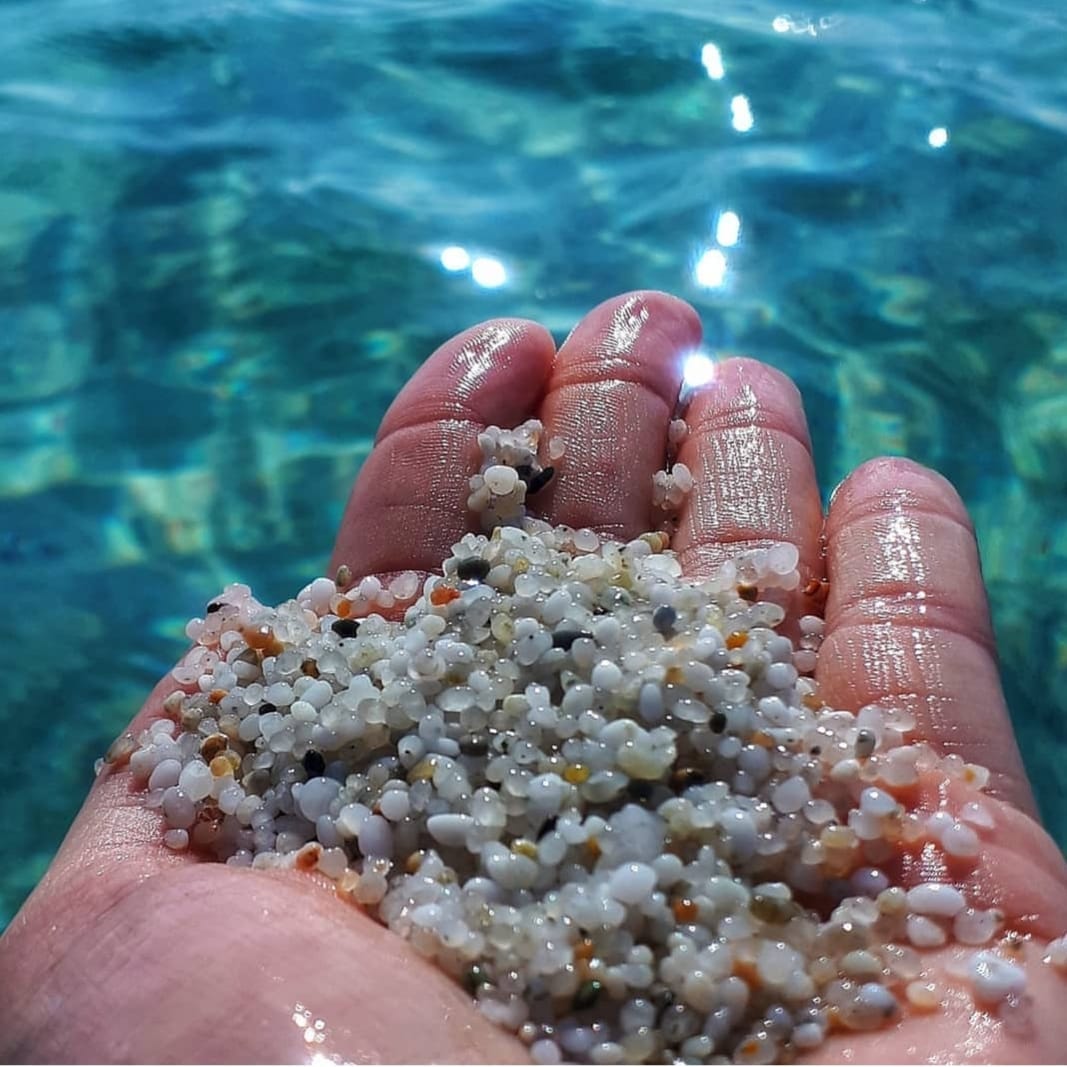
Spiaggia di Is Arutas is a protected crescent beach on Sardinia's Sinis Peninsula where the shoreline is composed of tiny rounded quartz grains in shades of white, pink, and grey — not conventional sand. Access is free, but strict environmental rules apply. A car is almost essential to get here.
Quick Facts
- Location
- Comune di Cabras, Sinis Peninsula, Province of Oristano, West Sardinia
- Getting There
- Car via SP6–SP7–SP59 from Cabras (~20 min) or Oristano (~30 min). Seasonal bus 430 from Oristano (~50 min, verify timetables)
- Time Needed
- Half day minimum; a full day with a picnic is ideal
- Cost
- Beach access free. Parking approximately €7.50–€10/day (seasonal, verify locally)
- Best for
- Geology enthusiasts, snorkellers, photographers, couples, off-season explorers
- Official website
- www.sardegnaturismo.it/it/esplora/arutas
What Makes Is Arutas Different from Every Other Beach in Sardinia
Most beaches reward you with sand. Spiaggia di Is Arutas rewards you with something stranger and more beautiful: a crescent of rounded quartz grains stretching for several kilometres, each one roughly the size and shape of a grain of rice, in a palette of white, pale pink, light grey, and translucent cream. Walking barefoot here produces a faint crunching sound quite unlike any conventional beach. The grains shift differently underfoot, firmer and more distinct than sand, and after a swim they dry on your skin in visible clusters rather than a fine coating.
The beach sits within the Area Marina Protetta "Penisola del Sinis – Isola di Mal di Ventre", a protected marine zone on Sardinia's central-west coast. That designation matters practically: removing even a handful of the quartz grains is illegal and enforced. The name Is Arutas is commonly interpreted in Sardinian as "the caves", a reference to the rocky formations that frame both ends of the bay rather than anything underground.
⚠️ What to skip
Do not remove quartz grains, shells, or any natural material from Is Arutas. The beach is inside a marine protected area and fines apply. This is not a guidebook formality — bag checks have been reported at the parking area exit during peak season.
Is Arutas is located in the Comune di Cabras on the Sinis Peninsula, an area that also contains the ancient Phoenician-Roman site of Tharros and several important coastal wetlands. If you're planning a day in this part of Sardinia, the beach pairs naturally with a morning at the Tharros archaeological site, which sits just a few kilometres south on the same peninsula. The wider Oristano and Sinis Peninsula region is chronically undervisited relative to its quality, making it one of the more rewarding corners of the island for travellers who do their research.
The Beach at Different Times of Day
In the early morning, before 9am, Is Arutas has a completely different character. The light comes in at a low angle from the east, catching the translucent quartz and making the shoreline glitter faintly. The water shifts from deep turquoise at the centre of the bay to a pale aquamarine near the shore, and the only sounds are the low wash of small waves and whatever birds are working the scrubby macchia vegetation along the headlands. At this hour in shoulder season, you may have the bay largely to yourself.
By mid-morning in July and August, the access road becomes congested and the paid parking area fills quickly. The beach itself, while not small, concentrates visitors along a relatively narrow strip because the sea bottom shelves steeply. That steep drop is worth noting: the water gets deep within a few strokes, which makes it excellent for adults who want to swim immediately but unsuitable for young children or weak swimmers without close supervision.
Late afternoon is a second window of quality. From around 4pm onward, light-seekers and families with young children begin to pack up, the shadow of the headland to the west creeps across part of the beach, and the colours of both the quartz and the water intensify in the lower sun. Photographers in particular find this hour rewarding: the contrast between the pale shore and the deep blue of the open sea reads well in both wide shots and close-up macro work on the grains themselves.
Tickets & tours
Hand-picked options from our booking partner. Prices are indicative; availability and final rates are confirmed when you complete your booking.
Vineyard Guided Tour and 7 Wine Tasting in Palau
From 84 €Instant confirmationFree cancellationFull-Day Sailboat Tour in La Maddalena Archipelago from Cannigione
From 112 €Instant confirmationFree cancellationHiking excursion to the Devil's Saddle
From 35 €Instant confirmationFree cancellationExcursion to the Archaeological site of Nora
From 70 €Instant confirmationFree cancellation
The Quartz Shore: Geology and Protected Status
The quartz grains at Is Arutas are the product of millions of years of erosion from the Sinis Peninsula's geological substrate. Unlike silica sand, which is the product of finely broken quartz and other minerals, the grains here are unusually pure and coarser, having been tumbled and rounded by wave action over an extended period. The range of colours — white, rose, grey, and occasional flashes of violet — reflects variations in mineral composition across the source rock.
The beach is part of the Area Marina Protetta "Penisola del Sinis – Isola di Mal di Ventre", established to safeguard one of the most ecologically significant stretches of Sardinia's western coast. The posidonia oceanica seagrass meadows visible beneath the surface in calmer conditions are a key indicator of water quality; Sardinia's waters generally rank among the clearest in the Mediterranean, and Is Arutas is no exception. The absence of river inputs along this stretch of coast means suspended sediment is minimal, which explains the extraordinary transparency of the water even after moderate wave action.
ℹ️ Good to know
The posidonia seagrass meadows you can see through the water are protected by EU law as well as Italian national regulations. Anchoring boats directly over them is prohibited. Snorkellers are welcome to observe them from above.
Getting to Is Arutas and Navigating the Area
A car is the practical choice for the vast majority of visitors. From Oristano, the drive takes approximately 30 minutes following the route through Cabras and then along the SP6, SP7, and SP59 provincial roads. The signage on the Sinis Peninsula has improved in recent years, but the roads narrow considerably in the final few kilometres and passing oncoming vehicles on the single-track sections requires patience. Do not arrive in a large campervan expecting easy parking — the access road and turning areas are tight.
Public transport is technically possible. Bus line 430 from Oristano serves the Is Arutas area and takes around 50 minutes, but the service is seasonal and frequency is low. Before committing to this option, verify current timetables directly with ARST, the regional bus operator, as schedules change between summer and off-season. If you're travelling without a car and staying in Oristano, a taxi or ride-share to the beach followed by a pre-arranged pickup is a more reliable approach than depending on the return bus.
Parking costs approximately €7.50–€10 per day, with seasonal variation. The lot fills early on summer weekends — arriving after 10am in August means a real risk of finding no space. There is a small campsite, Camping Is Arutas, adjacent to the beach, which provides a base for those wanting more than a day visit. For a broader overview of transport logistics across the island, the getting around Sardinia guide covers car hire, buses, and seasonal ferry connections in detail.
What to Bring and How to Prepare
The quartz grains are harder on beach towels and swimwear than conventional sand. Bring a towel you don't mind getting scratched up, and shake everything out thoroughly before packing it away. Flip-flops or water shoes are more useful here than on a sandy beach because the grains are granular enough to accumulate in footwear but coarse enough to feel rough under prolonged barefoot walking on the dry upper beach.
Shade is limited. The headlands at either end of the crescent provide minimal shadow for most of the day. If you're visiting between June and September, bring a beach umbrella, high-factor sunscreen, and more water than you think you need. The nearest town is Cabras, roughly 13 kilometres away, so resupply options at the beach itself are limited to whatever a seasonal kiosk may be operating.
Snorkelling gear is worth packing. The steep shelving of the sea floor means the water is quickly deep and clear, and the posidonia meadows in the bay support a variety of small fish. Visibility on calm days can exceed 15 metres. The bay is relatively sheltered from dominant westerly swells by the headlands, so the sea is swimmable on more days than exposed north-facing beaches on the same peninsula.
When to Visit: Honest Seasonal Advice
Is Arutas is impressive enough to draw a crowd, and in July and August it draws a large one. If your priority is experiencing the beach rather than sharing it with a few hundred other people, the most rewarding windows are late May to mid-June and September to early October. Sea temperatures are swimmable during both periods — the Mediterranean warms quickly along this coast and remains above 20°C well into October. The September in Sardinia guide outlines why the shoulder season often outperforms the peak weeks for this type of destination.
Winter visits are possible and have their own appeal for landscape photography — the empty beach in low winter light, the quartz catching muted colour, the macchia green and wet after autumn rain — but water temperature drops significantly and swimming is uncomfortable for most visitors. Facilities will be closed. The beach itself remains accessible.
Wind is a factor that guidebooks often skip. The Sinis Peninsula is exposed to the Mistral, the strong north-westerly wind that affects the western coast of Sardinia. When the Mistral is running, Is Arutas can be unpleasant: the quartz grains become airborne and abrasive, the sea turns rough, and there is nowhere to shelter on the beach itself. Check a local weather forecast specifically for wind before making the drive.
💡 Local tip
Check wind forecasts — not just temperature — before visiting. The Sinis Peninsula is exposed to the Mistral. A forecast above 20 knots from the north or northwest means the beach will be uncomfortable regardless of sunshine.
Who Should Reconsider This Beach
Is Arutas is not well-suited to families with toddlers or early non-swimmers. The sea floor drops steeply with no shallow paddling zone, and the quartz surface of the beach is less forgiving than sand for children playing at the water's edge. Travellers with limited mobility face a double obstacle: the access road and parking area have uneven surfaces, and the beach itself has no documented wheelchair-accessible infrastructure. Verify current facilities with local operators before making the journey.
If you're primarily looking for a beach with full facilities — sunbed rental, beach bars, water sports hire, lifeguards — Is Arutas in its natural state will disappoint. Seasonal kiosks may operate in summer but the beach remains fundamentally undeveloped by design. That restraint is exactly what makes it worth visiting for the right traveller, and exactly what makes it the wrong choice for another.
Insider Tips
- Arrive before 9am in peak season or you risk finding the narrow access road queued and the parking lot full. The early light on the quartz is also dramatically better for photography than midday.
- Bring a macro lens or use your phone's portrait mode for close-up shots of the quartz grains in shallow water — the colours and translucency are one of the most photogenic details of the whole beach, but most visitors walk straight past them.
- Combine Is Arutas with a late-afternoon visit to the Stagno di Cabras, the large lagoon north of Cabras town, where flamingos feed regularly. It adds minimal driving time and the contrast between the two landscapes is striking.
- The quartz grains get into everything. Keep a spare bag for wet swimwear and shake out towels before putting them in the car. Grains in car upholstery are remarkably persistent.
- If the beach is crowded, walk to the northern headland and look down from the rocks. The view of the full crescent from elevation is one of the best compositions on the peninsula, and you'll often find yourself alone up there.
Who Is Spiaggia di Is Arutas For?
- Travellers who prioritise water quality and clarity over beach amenities
- Snorkellers and free-divers looking for clean Mediterranean water with posidonia meadows
- Photographers, particularly those interested in geology, colour, and coastal landscapes
- Couples or independent travellers in shoulder season who want a uncrowded experience
- Anyone combining a Sinis Peninsula day trip with the Tharros archaeological site
Nearby Attractions
Other things to see while in Oristano & the Sinis Peninsula:
- Giants of Mont'e Prama (Cabras Museum)
The Giants of Mont'e Prama are Nuragic stone statues discovered near Cabras in 1974 — carved warriors, archers, and boxers currently dated to roughly 900–750 BCE. Displayed at the Civic Archaeological Museum “Giovanni Marongiu” in Cabras (with additional sculptures in Cagliari), they represent one of the most significant archaeological finds in the entire Mediterranean world.
- Lago Omodeo
Lago Omodeo is the largest artificial reservoir in Sardinia, formed by damming the Tirso River and stretching almost 30 km² across the central-western interior of the island. Its layered history, from a record-breaking 1924 dam to a torpedo attack in 1941 to a 100-metre replacement inaugurated in 1997, makes it far more than a scenic viewpoint. Entry is free, access requires a car, and the reward is a landscape that most coastal-focused visitors never see.
- Nuraghe Losa
Standing on the basalt plateau of Abbasanta in central-western Sardinia, Nuraghe Losa is a remarkably well-preserved trilobed nuraghe dating back to the 14th century BC. With its massive central tower, three surrounding bastions, and a sprawling village complex covering 3.5 hectares, this is one of the most complete and legible Nuragic sites on the island — and one of the few that rewards visitors who take the time to climb inside.
- Pozzo Sacro di Santa Cristina
The Pozzo Sacro di Santa Cristina, near Paulilatino in the Oristano province, is one of the best-preserved sacred wells of the Nuragic civilization, dating to around the 11th century BC. Its keyhole-shaped staircase descends into the earth with architectural precision that still puzzles researchers. This is not a site you pass through quickly — it rewards slow attention.