Sliema Promenade: The Seafront Walk That Shows You Two Sides of Malta
Stretching roughly 3 to 5 kilometres along the northeastern coast of Malta, the Sliema Promenade connects Tigné Point to Balluta Bay with unbroken sea views, historic watchtowers, and one of the island's best vantage points toward Valletta. It is free, open around the clock, and accessible by bus or ferry.
Quick Facts
- Location
- Sliema seafront, from Tigné Point to Balluta Bay, Malta
- Getting There
- Bus routes along Tower Road; Valletta–Sliema ferry to nearby Strand
- Time Needed
- 1–2 hours for the full walk; longer if you stop to swim or eat
- Cost
- Free; no admission required
- Best for
- Morning joggers, evening strollers, photography, casual sightseeing
What the Sliema Promenade Actually Is
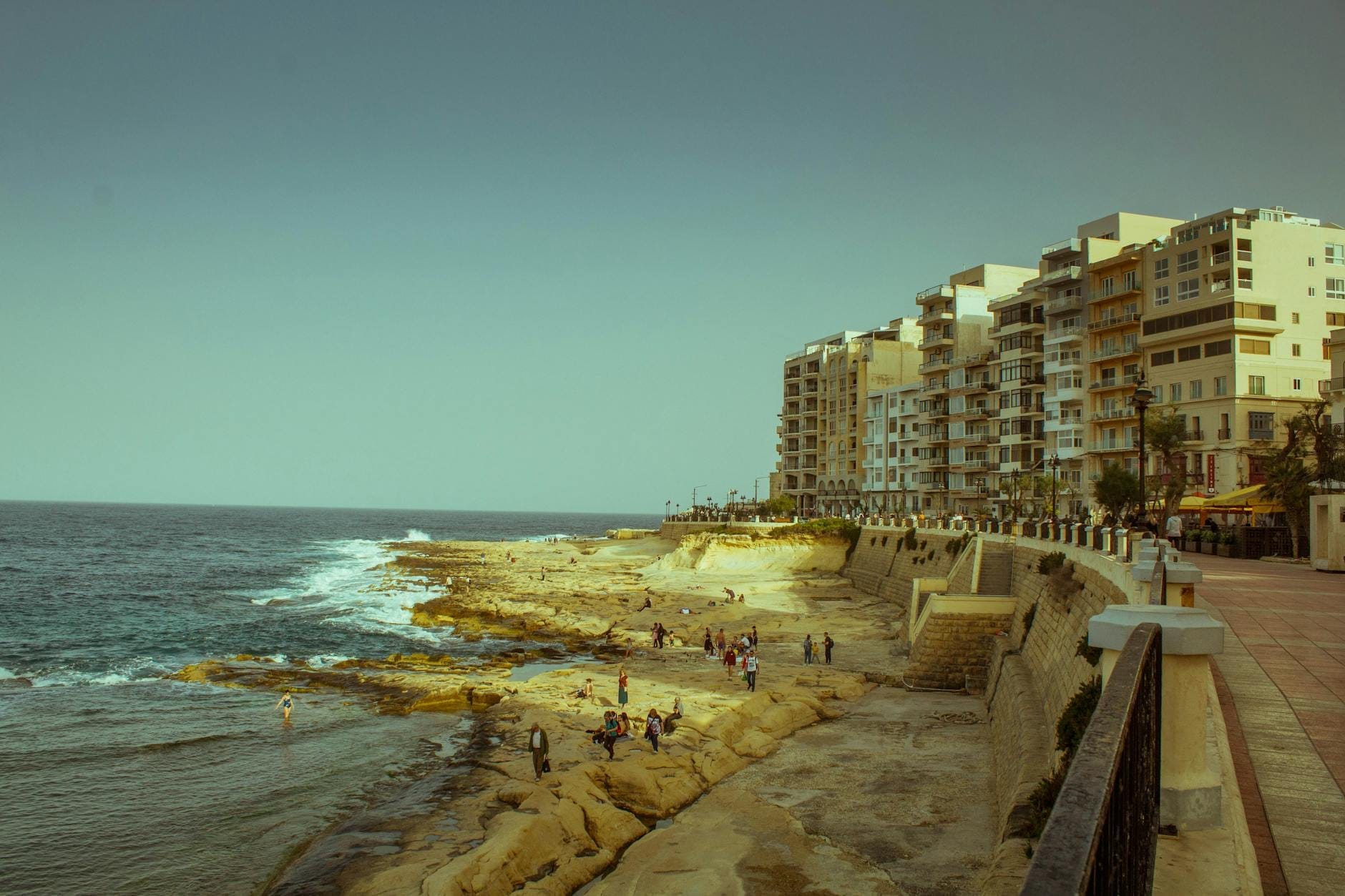
The Sliema Promenade, officially known as the Sliema Front, is a flat, open-air seafront walkway that follows the rocky northeastern coastline of Malta from Tigné Point in the south to Balluta Bay at its northern end, where Sliema blends into St. Julian's. The walk covers roughly 3 to 5 kilometres depending on which segments you include, and it is entirely free and open 24 hours a day, every day of the year.
It is not a manicured European boulevard with formal gardens. It is an honest urban promenade: wide enough for joggers, cyclists, and strollers to coexist, lined with concrete benches worn smooth from years of use, and punctuated by low rock shelves where locals spread towels in summer. The sea to your left is the Mediterranean at its most ordinary and most beautiful, depending on the light and the hour.
💡 Local tip
Arrive before 8am on a weekday morning to have long stretches almost entirely to yourself. By 10am in summer, the walkway fills with locals exercising, tourists heading toward the ferry, and children heading to swimming spots.
The Walk from Tigné Point to Balluta Bay
Most visitors start at the Tigné Point end, partly because the ferry from Valletta drops you near the Strand, just a few minutes' walk away. From here, the view back across Marsamxett Harbour toward Valletta is one of the more arresting in Malta: the Baroque dome of the Basilica of Our Lady of Mount Carmel sits above the skyline, and on clear mornings the honey-coloured fortifications of the capital catch the low sun with remarkable intensity.
As you head north along Tower Road, the promenade opens up and the architecture on your right begins to tell Sliema's history. The town grew from a modest fishing settlement around 1855 into one of Malta's most fashionable residential addresses by the early 20th century. Evidence of that era survives in the Sliema and St. Julian's streetscape: Palazzo Capua, a 19th-century neoclassical palace, still stands on the waterfront, and further along you will notice Balluta Buildings, a rare and well-preserved art deco apartment block dating from 1927 that frames Balluta Bay with theatrical curves and ornamental detailing.
Scattered along the route are several of the De Redin watchtowers, a network of coastal lookout points built between 1658 and 1659 under Grand Master Martin de Redin during the Knights' rule of Malta. Eight of the original towers survive across the island. The ones visible from the promenade are modest in scale but carry considerable historical weight: they were built specifically to relay visual signals across the coastline, forming an early warning system against Ottoman naval activity.
Tickets & tours
Hand-picked options from our booking partner. Prices are indicative; availability and final rates are confirmed when you complete your booking.
City Sightseeing hop-on hop-off bus tour of Gozo
From 20 €Instant confirmationFree cancellationThe Malta Experience Audio-Visual Show and La Sacra Infermeria Tour
From 20 €Instant confirmationFree cancellationLuggage Storage in Malta
From 6 €Instant confirmationFree cancellation6-day heritage and attractions pass in Malta
From 80 €Instant confirmationFree cancellation
How the Experience Changes by Time of Day
Early morning is the most local hour. Before 8am, you will share the walkway primarily with Maltese residents: retirees in tracksuits walking at pace, dog owners, and the occasional serious runner. The air carries a salt smell that is noticeably stronger than at midday, and the sea surface is often glassy in July and August. The light at this hour is warm and directional, ideal for photography.
By mid-morning in the summer months, the promenade becomes a thoroughfare. Families claim the flat rock platforms for swimming, vendors set up near the busier sections, and the cafes and kiosks along the route begin to fill. It is still perfectly pleasant, but the quality of quiet disappears. Midday in July and August is when the promenade is at its least comfortable for walking: the exposed limestone and concrete retain heat, there is almost no shade, and the ambient temperature frequently reaches 32°C or higher.
Late afternoon and sunset are the promenade's signature hours. From around 5pm onward, the entire walkway comes to life with a cross-section of Maltese society: teenagers sitting on the railings, couples eating ice cream, older men playing cards on benches. The sky over the Valletta skyline can turn dramatic shades of orange and pink, and the harbour lights begin to reflect on the water. In terms of atmosphere, the hour before and after sunset is when the Sliema Promenade is at its most genuinely appealing.
⚠️ What to skip
Between June and September, midday sun on the promenade is intense with minimal shade. Bring sun protection, and consider saving the full walk for morning or late afternoon.
Swimming and the Rocky Coastline
The promenade does not have a sandy beach. Most of the swimming access is from flat limestone rock shelves that descend directly into the sea. These spots are designated and widely used by locals, and many have iron ladders bolted into the rock for entry and exit. The water is clear and typically calm, especially in the sheltered sections between Tigné Point and the midpoint of the walk.
For visitors expecting a beach holiday, this is worth knowing in advance. The rock swimming is perfectly comfortable once you are in the water, but it requires some care getting in and out, and it is not suitable for very young children without close supervision. Those looking for sandy shores nearby should consider Mellieha Bay or Golden Bay on the northern part of the island.
If you are exploring Malta's broader coastline, the promenade gives you a ground-level sense of how the island's limestone edge actually looks up close, which is useful context before diving trips or coastal hikes. For more on the island's coastal experiences, the best beaches in Malta guide covers the full range of options.
Getting There and Moving On
The most enjoyable way to arrive from Valletta is by ferry. The Valletta to Sliema ferry crossing takes roughly 10 minutes and deposits you at the Sliema Ferry Landing near the Strand, putting you within a short walk of the promenade's southern end. Ferries run frequently throughout the day and the fare is minimal. This approach also gives you a water-level view of the Valletta fortifications that no land route can match.
Buses running along Tower Road connect Sliema with the rest of Malta's public transport network. Malta Public Transport operates over 100 routes across the island, and Sliema is one of the better-served areas. For a full overview of how to get around, the getting around Malta guide is a practical starting point.
The promenade's northern end at Balluta Bay flows naturally into St. Julian's, making it easy to continue a half-day walk into that area's restaurant and cafe strip, or further toward Paceville. In the other direction, a walk south through Gzira connects to the Three Cities ferry crossing for those interested in continuing their exploration of the Grand Harbour area.
Practical Notes: Accessibility, Photography, and What to Bring
The walkway surface is wide, consistently paved, and largely flat, making it accessible for pushchairs and wheelchairs along most of its length. Some sections immediately adjacent to the rock swimming areas have uneven surfaces, but the main walking path itself is well-maintained. Benches appear regularly, which is useful for those who want to walk at a slower pace or stop to take in the views.
For photography, the most productive positions are at the Tigné Point end for wide harbour shots with Valletta as the backdrop, and at Balluta Bay for the art deco Balluta Buildings facade. Sunrise and the hour before sunset produce the most usable light. Midday sun flattens the limestone tones and creates harsh shadows on the older architectural details.
There are no formal facilities such as lockers or changing rooms along the promenade itself, though cafes and hotels along Tower Road have public restrooms. Bring water if you are walking the full length in summer. For context on how the promenade fits into a broader Sliema visit, the things to do in Malta overview includes several nearby attractions worth combining into a single half-day.
ℹ️ Good to know
Independence Gardens, a seafront green space near the centre of the promenade, has benches, shade trees, and a children's playground. It is a useful rest stop, especially with young children.
Honest Assessment: Who Will Love It and Who Might Not
The Sliema Promenade is genuinely good at what it does: a flat, accessible, free seafront walk with real historical texture and one of the best views of the Valletta skyline available from ground level. It is at its best for early risers, casual walkers, photography enthusiasts, and anyone who wants to observe Maltese daily life rather than just its monuments.
Travellers on a tight itinerary who are primarily interested in Malta's historical depth may find the promenade pleasant but not essential. The island's real density of historical experience lies in sites like the Hal Saflieni Hypogeum and the fortified streets of Mdina's Old City. The promenade is a complement to those experiences, not a replacement for them.
Visitors expecting Mediterranean glamour on the level of Nice or Dubrovnik's Stradun will find Sliema's front more modest in finish. Parts of the waterfront are slightly tired, with older apartment blocks and commercial signage competing with the better preserved historical sections. That is part of its authenticity, but it is worth knowing.
Insider Tips
- Walk from Tigné Point toward Balluta Bay rather than the reverse: you will have the Valletta skyline in front of you for most of the approach, which is the more impressive direction.
- The Valletta ferry is the best way to start the walk: the 10-minute crossing gives you a harbour view that rivals anything on the promenade itself, and it deposits you directly at the southern end of the route.
- Balluta Buildings at the northern end of the walk are significantly more photogenic than most guidebook photos suggest. Look for the curved facade with ornamental ironwork details at ground level, best captured in the hour before sunset.
- The flat rock platforms used for swimming have iron entry ladders and are cleaned regularly by the local council. They are the same spots Maltese families have used for generations, and using them costs nothing.
- In winter (December to February), the promenade is almost entirely quiet on weekday mornings and can feel like a different place entirely: cool, grey-green sea, strong winds on exposed sections, and an atmosphere closer to a working coastal town than a tourist destination.
Who Is Sliema Promenade For?
- Morning walkers and joggers who want a flat, sea-facing route with minimal traffic
- Photographers targeting the Valletta skyline from across the water
- Visitors arriving by ferry from Valletta who want a gentle introduction to Sliema
- Families with pushchairs or strollers looking for an accessible, free outdoor activity
- Travellers combining a half-day walk with lunch or dinner in the St. Julian's restaurant strip
Nearby Attractions
Other things to see while in Sliema & St. Julian's:
- Paceville
Paceville is the beating heart of Malta's nightlife scene, a compact district in St. Julian's where around 40 bars and clubs, a casino on a historic peninsula, a public beach, and a shopping complex coexist within a handful of streets. It's not about architecture or culture — it's about energy, and it delivers that from dusk until well past dawn.
- Spinola Bay
Spinola Bay sits at the heart of St. Julian's, where traditional painted luzzu fishing boats bob in still water just metres from busy restaurant terraces. It's free, accessible around the clock, and surprisingly easy to combine with the wider Sliema-St. Julian's promenade walk.