Shibuya Sky: What the 229-Meter Rooftop Above Shibuya Actually Looks Like
Perched atop Shibuya Scramble Square at roughly 229 meters, SHIBUYA SKY is one of Tokyo's few truly open-air observation decks. The rooftop strips away the glass barriers that define most city observatories, leaving you exposed to the wind and the full scale of the Tokyo skyline. Here is what to know before you go.
Quick Facts
- Location
- Shibuya Scramble Square, 2-24-12 Shibuya, Shibuya City — floors 14, 45, 46 and rooftop
- Getting There
- Shibuya Station (JR, Tokyo Metro, Tokyu, Keio lines) — directly connected to Scramble Square
- Time Needed
- 60–90 minutes; allow extra time for queues on weekends or at sunset
- Cost
- Web tickets: ¥2,700 (until 14:59) / ¥3,400 (from 15:00); counter tickets: ¥3,000 (until 14:59) / ¥3,700 (from 15:00). Closed January 1 (New Year’s Day).
- Best for
- Sunset and night cityscape photography, first-time Tokyo visitors, architecture enthusiasts
- Official website
- www.gotokyo.org/en/spot/1749/index.html
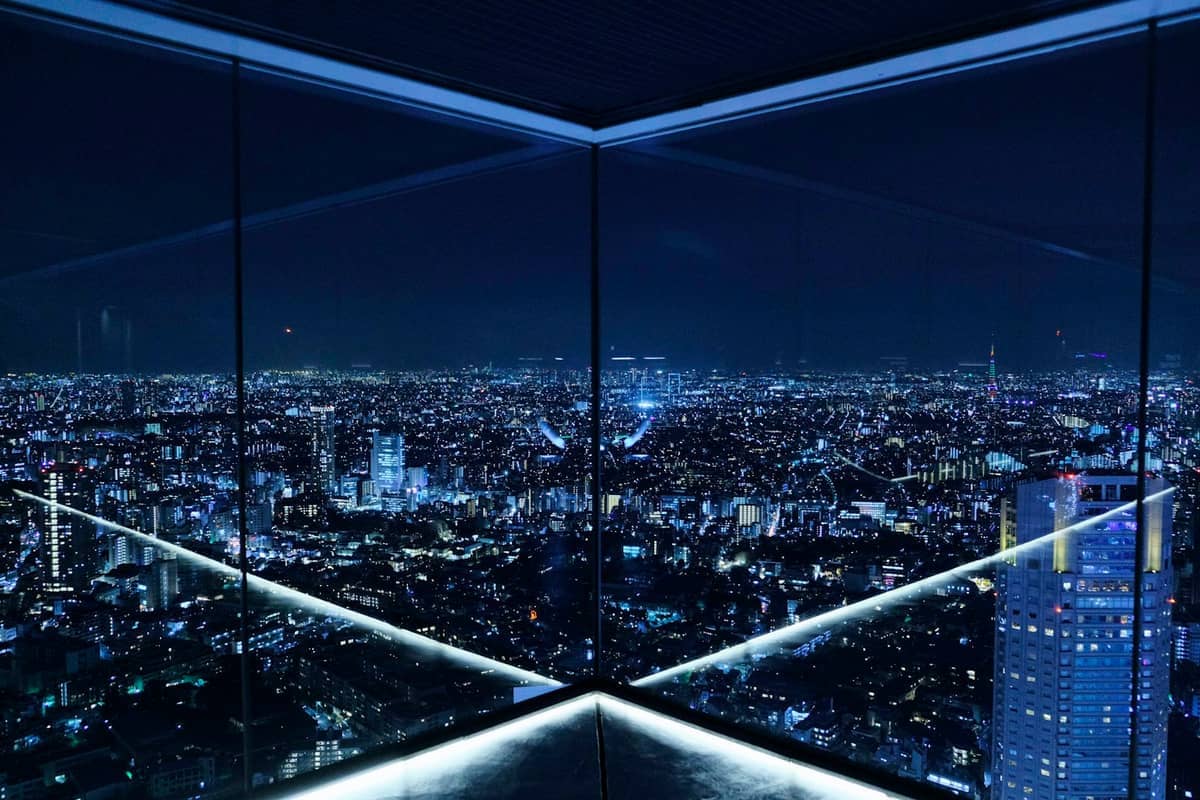
What Shibuya Sky Actually Is
SHIBUYA SKY (渋谷スカイ) is the observation facility inside Shibuya Scramble Square, the tallest building in the Shibuya district at approximately 229 meters. Unlike the enclosed glass platforms at Tokyo Tower or the indoor decks of some competitor observatories, the signature feature here is an open-air rooftop: no glass walls, no roof, just wind and a steel mesh safety surround that is low enough not to obstruct your sightlines.
The experience is spread across three levels. You enter and buy tickets on the 14th floor, ascend through an exhibition space on floors 45 and 46 that uses digital projections and spatial design to build anticipation, and then emerge onto the rooftop terrace. The curatorial sequence is deliberate: by the time you step outside, the scale of Tokyo below registers as a genuine shock.
💡 Local tip
Book web tickets in advance, especially for the 15:00-onward slot. The premium pricing (¥3,400 vs ¥2,700) exists because late-afternoon and sunset visits are the most popular, and tickets do sell out on weekends and during cherry blossom season.
The View: What You See and Where
From the rooftop, the first thing most visitors orient toward is Shibuya Crossing directly below. You are high enough that the famous scramble intersection looks like a circuit board, pedestrians reduced to slow-moving pixels. On clear days, the view extends northwest to the Shinjuku skyscraper cluster and, with good visibility, southwest toward Yokohama Bay.
On exceptionally clear days in winter, Mount Fuji is visible to the west, sitting behind the lower ranges of the Tama Hills. This is not guaranteed on any given visit — Tokyo's urban haze and seasonal cloud cover frequently obscure it — but from late November through February the chances are highest. If Fuji views are a priority, check the morning forecast before booking your session, and consider pairing this with the Tokyo Metropolitan Government Building's free observatory, which also faces west.
The 360-degree sweep is genuinely unobstructed on the rooftop. Looking east, you pick out Tokyo Skytree rising from the Sumida flatlands. Looking south, the bay and Odaiba are visible on clear days. The density of the city is the real revelation: from this altitude you understand, in a way you cannot from street level, that Tokyo's built environment extends in every direction until it meets water or mountains.
Tickets & tours
Hand-picked options from our booking partner. Prices are indicative; availability and final rates are confirmed when you complete your booking.
Meiji Shrine, Imperial Palace, Asakusa and Tokyo Skytree Entry
From 34 €Instant confirmationFree cancellationBar-hopping night tour of Shibuya
From 61 €Instant confirmationFree cancellationAsakusa history tour and Skytree exploration
From 112 €Instant confirmationFree cancellationShibuya Food Tour
From 163 €Instant confirmationFree cancellation
How the Experience Changes Through the Day
Morning visits (opening at 10:00 and closing at 22:30) are the quietest. The light is cooler and softer, crowds are thin, and you can move freely around the rooftop perimeter. If you are a photographer who prefers even light without harsh shadows or lens flare, this is the window to target. The air is also typically clearer in the morning before the city's atmospheric haze builds.
The midday period is the least interesting visually. Harsh overhead light flattens the cityscape, and the deck fills with tour groups. If you can only visit between 11:00 and 14:00, lower your expectations for photography but accept that the structural views remain impressive regardless of light conditions.
Sunset is the peak experience, and the pricing reflects it. From roughly 30 minutes before sunset, the western sky shifts through orange and amber, Shinjuku's towers silhouette against the fading light, and the city below begins to illuminate. The transition from dusk into full night, with Tokyo's grid of streetlights and building illumination spreading across the basin, is genuinely dramatic. Expect a crowd at the western rail during this window.
⚠️ What to skip
The open-air rooftop is exposed to wind, and on gusty days the experience becomes uncomfortable quickly. In winter, temperatures up here drop sharply after dark. Bring a layer regardless of the season — even in August, the wind at 229 meters is cooler than at street level.
Photography on the Rooftop
The absence of glass is the single biggest advantage Shibuya Sky has over most Tokyo observation decks. There is no reflection, no distortion, no need to press your lens against a pane. You can shoot freely with wide-angle, telephoto, or standard lenses without fighting the building's architecture.
Tripods and selfie sticks are not permitted on the rooftop. For long-exposure night shots, you will need to work with handheld stabilization or a beanbag braced against the mesh surround. The mesh itself has small enough apertures that shooting through it with a telephoto is possible without the grid appearing in frame, though it takes positioning.
Drone operation is prohibited, as is any equipment that extends above the safety surround. The interior exhibition floors have their own photo-friendly installations that reward a few minutes of attention before you ascend.
Getting There and Navigating the Building
Shibuya Scramble Square is directly connected to Shibuya Station, one of Tokyo's major rail interchanges served by JR lines (including the Yamanote Line), Tokyo Metro, Tokyu, and Keio Inokashira Line. You do not need to exit the station to reach the building's lower floors. Signage inside Scramble Square is bilingual. If you are arriving from elsewhere in Tokyo, the Tokyo transit network makes Shibuya one of the easier major destinations to reach from any direction.
The SHIBUYA SKY ticket counter and entrance are on the 14th floor. Take elevators inside Scramble Square up to 14, complete your check-in, and then follow the designated route through the exhibition floors before the high-speed elevator takes you to the 45th floor. The total vertical transit from 14 to the rooftop is rapid and forms part of the designed experience.
Accessibility: the building has elevator access throughout, and the 14th-floor entrance and indoor exhibition areas are navigable by wheelchair. The rooftop has an open-air perimeter and some variation in floor surface; visitors with specific mobility concerns should check current conditions directly with the venue before booking.
Shibuya Sky in Context: Is It Worth the Price?
Tokyo has several competing observatories at different price points. The Tokyo Metropolitan Government Building in Shinjuku offers free observation from a comparable height. Tokyo Skytree reaches significantly higher but charges more and uses fully enclosed glass decks. Mori Art Museum's Sky Deck in Roppongi Hills combines contemporary art access with an outdoor deck. Each has a different character.
What Shibuya Sky offers specifically is the open-air experience at a central, easy-to-reach location, with Shibuya Crossing as the foreground anchor of the view. The ¥2,700 to ¥3,700 price range sits in the middle of Tokyo's observatory market. For visitors who prioritize the physical sensation of standing in open air above the city, and who want Shibuya's particular geography as their vantage point, the price is reasonable. For visitors primarily interested in height alone, or who are happy with glass-enclosed platforms, alternatives exist at lower or similar cost.
If you are putting together a broader Tokyo itinerary and want to understand how this fits into a first visit, the guide to the best views in Tokyo compares the main observation options across the city.
The Surrounding Area
Shibuya Scramble Square sits at the heart of one of Tokyo's most layered commercial districts. After descending from the observatory, the area directly around Shibuya Crossing is worth a few minutes on foot for the ground-level contrast with the aerial view you just had. The scramble intersection looks entirely different from street level: louder, more chaotic, and kinetic in a way the rooftop view cannot convey.
Harajuku and Omotesando are a short walk or single metro stop to the north, if you want to extend the afternoon. The Harajuku-Omotesando corridor transitions from youth street fashion to high-design architecture within ten minutes of walking, providing a useful counterpoint to Shibuya's commercial density.
Who Might Want to Skip This
Travelers with a fear of heights or significant sensitivity to wind and open exposure should reconsider, particularly for the rooftop portion. The indoor exhibition floors are enclosed, but the primary selling point is entirely open air at 229 meters.
Budget travelers who have already visited a free observatory, or who are prioritizing time over scenery, may find the entry cost hard to justify for a 60-to-90-minute visit. The attraction is genuinely good, but it does not offer educational content, cultural immersion, or dining at a level that extends its value beyond the view itself.
On overcast or rainy days, the experience is significantly diminished. Visibility drops, the city loses its visual texture, and the open-air rooftop becomes cold and uncomfortable. Check the forecast before booking, and if the weather is uncertain, opt for a morning ticket rather than an expensive evening slot.
Insider Tips
- Web tickets are cheaper than counter tickets by ¥300 at either time slot, and they also let you reserve a specific entry window. Book online if you can — it is generally easier to manage changes than to find counter availability on a busy weekend.
- The 45th and 46th floor indoor exhibition areas are darker and use projection lighting. If you wear glasses, give your eyes a minute to adjust before trying to photograph the installations — the auto-exposure on phone cameras tends to overexpose the dark interiors.
- For the clearest Fuji views, visit on a winter morning after a cold front has passed through. Wind from the northwest typically clears the atmospheric haze that obscures the western horizon on warmer or calmer days.
- The rooftop has hammock-style suspended loungers that are popular and go fast on busy days. If you want to use one, move toward them immediately after ascending rather than doing a full perimeter walk first.
- The 14th-floor entry area has a cafe and a gift shop with Shibuya Sky merchandise. Prices are as expected for a tourist facility, but the viewing angle from the indoor lounge on this floor is genuinely good for a no-pressure, seated view of the city while you wait for your rooftop time slot.
Who Is Shibuya Sky For?
- First-time Tokyo visitors who want a comprehensive spatial orientation to the city
- Photographers targeting the golden-hour to night-sky transition over Tokyo
- Travelers who find enclosed observatories claustrophobic and want genuine open-air exposure
- Couples looking for an elevated, atmospheric evening location
- Architecture enthusiasts wanting to read the Tokyo skyline from above
Nearby Attractions
Other things to see while in Shibuya:
- Hachiko Statue
Standing just outside Shibuya Station's Hachiko Exit, the Hachiko Memorial Statue is a small bronze figure with an outsized presence in Tokyo's cultural life. Free to visit at any hour, it marks the exact place where a dog named Hachiko waited for his owner for nearly a decade — and where millions of travelers now pause, photograph, and arrange to meet.
- Shibuya Crossing
Shibuya Scramble Crossing is a free, open-air spectacle where up to a few thousand people cross simultaneously from five directions every few minutes. Whether you join the flow or watch from above, it delivers one of Tokyo's most visceral urban moments.