Shakespear Regional Park: Beaches, Birds, and Big Views at Auckland's Northern Edge
Perched at the tip of the Whangaparāoa Peninsula about 50 kilometres north of central Auckland, Shakespear Regional Park packs roughly 500 hectares of farmland, coastal forest, sheltered beaches, and open headland into a single day trip. Entry is free, wildlife is genuinely abundant, and the gulf views stretch to Rangitoto and beyond.
Quick Facts
- Location
- Shakespear Road, Army Bay, Whangaparāoa, Auckland
- Getting There
- By car: SH1 to Silverdale, then Whangaparāoa Road to the park entrance. Auckland Transport buses serve the peninsula daily — check AT for current routes and timetables before you go.
- Time Needed
- 2–5 hours; a full day if you swim, picnic, and walk multiple tracks
- Cost
- Free general entry. Overnight car parking: NZ$7. (Prices as of February 2026 — verify before visiting.)
- Best for
- Families, birdwatchers, swimmers, coastal walkers, and anyone wanting a full-day nature escape close to Auckland
What Shakespear Regional Park Actually Is
Shakespear Regional Park occupies the entire eastern tip of the Whangaparāoa Peninsula, a finger of land that juts northeast into the Hauraki Gulf. The Auckland Regional Authority purchased the land in 1967, and it has since grown into a park within a 500-hectare open sanctuary that includes adjoining land. The peninsula position means you get two distinct coastal personalities in one park: the calmer, sandy western bays face the inner gulf and are good for swimming, while the exposed eastern headland catches the full force of the Pacific and rewards walkers with panoramic views.
What sets this park apart from most urban-fringe green spaces is the Shakespear Open Sanctuary, a predator-fenced area within the park that supports populations of kiwi, kākāriki, tūī, pāteke (brown teal), and other native species. You are not entering a zoo — this is a functioning ecological restoration project where encountering a little-spotted kiwi at dusk is genuinely possible, particularly near the sanctuary boundary tracks.
ℹ️ Good to know
Vehicle gates open at 6am and close at 9pm during daylight saving, and at 7pm outside daylight saving. If you plan to stay late for wildlife spotting or sunset, plan your drive out accordingly — you cannot move your car once the gate closes.
The Beaches: Te Haruhi Bay and Army Bay
Te Haruhi Bay is the park's most popular beach and for good reason. The arc of pale sand faces northwest into the sheltered inner gulf, which keeps the water calm and relatively warm by Auckland standards — comfortable for swimming from around November through to March. On weekday mornings in summer, the beach is quiet enough that you can hear the tūī calling from the pohutukawa trees at the sand's edge. By early afternoon on a sunny weekend, families fill the grass picnic area behind the beach and the car park starts to feel strained.
Army Bay, on the park's western edge, has a more rugged feel. The beach is longer and less sheltered, with a gravel and sand mix underfoot rather than the fine sand of Te Haruhi. It attracts fewer visitors, which makes it the better choice if you want space. The pohutukawa canopy along both bays blooms crimson in December and January, which is worth timing a visit around if you can.
Accessibility to the beach itself is limited. The Auckland Council notes that Te Haruhi and Okoromai bays have limited mobility access to beachside grass picnic areas, but no formed path reaches the sand. Prams can reach the grassed areas. If you need specific access arrangements, contact Auckland Council before visiting.
Tickets & tours
Live prices and dates from our booking partner. If you book, we may earn a commission at no extra cost to you.
Luggage Storage in Auckland
From 5 €Instant confirmationFree cancellationNew Zealand West Coast discovery tour
From 100 €Instant confirmationFree cancellation13,000ft skydiving experience in Auckland
From 195 €Instant confirmationFree cancellationDiscover Auckland City Tour
From 88 €Instant confirmationFree cancellation
Walking Tracks: From Easy Loops to Clifftop Headlands
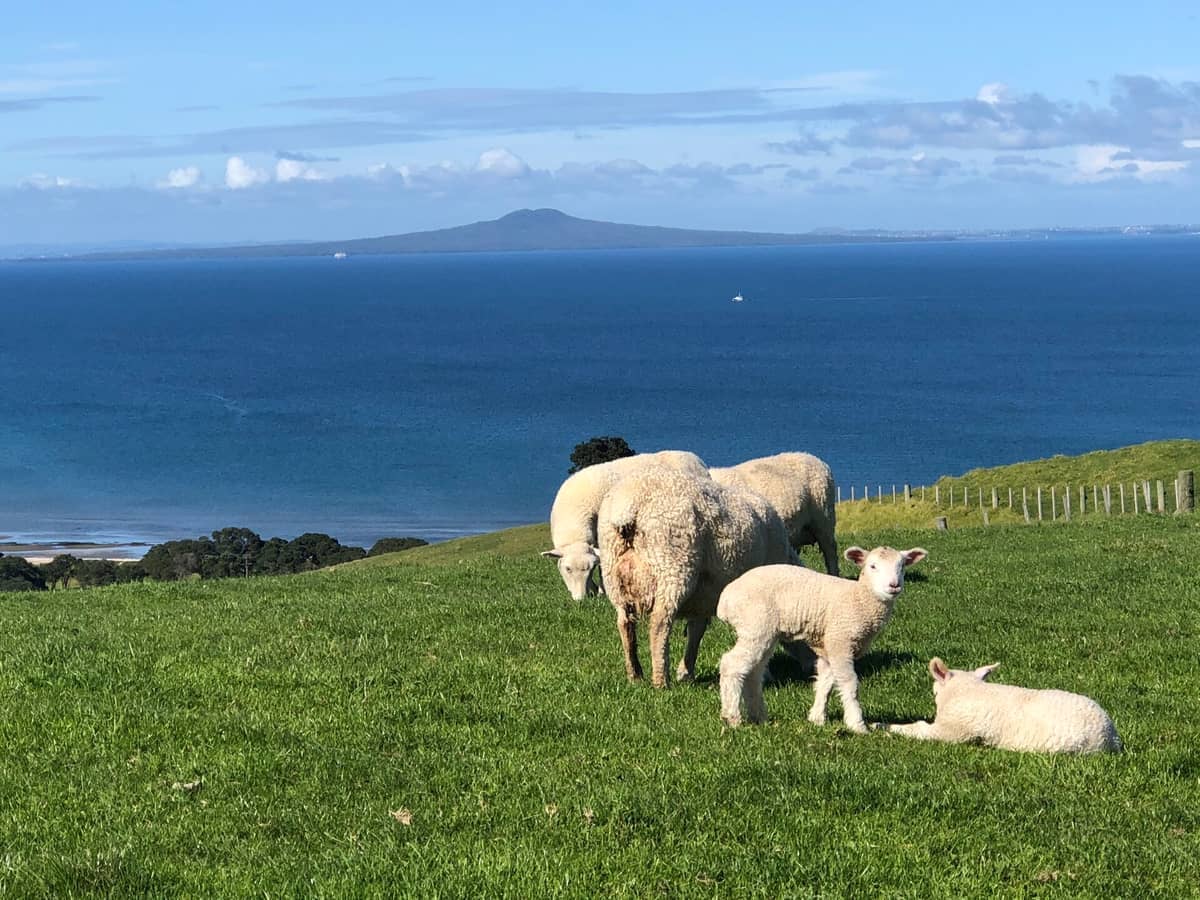
The park has a network of marked walking tracks ranging from short, flat loops around the bays to longer ridgeline routes across the headland. The most rewarding walk for views is the track that climbs from Te Haruhi Bay to the eastern cliffs overlooking the open Hauraki Gulf. On a clear day, you can pick out Rangitoto Island to the south, the Coromandel Peninsula across the water, and, if conditions are right, the jagged outline of Great Barrier Island further out. The track surface is mostly grassed farm track and compacted dirt — manageable in good footwear, but slippery after rain.
The interior of the park feels different to the coast: open pasture dotted with mature pōhutukawa and kānuka, with the kind of silence that is increasingly rare this close to Auckland city. Walkers regularly encounter wētā, skinks, and various seabirds on the clifftop sections. For context on how this compares to other walks in the region, the best hikes in Auckland guide covers the full range of options across the city, from volcanic summits to coastal ridge routes.
Allow at least 90 minutes for the main headland loop if you walk at a moderate pace. Shorter out-and-back tracks from the car park to the bay can be done in 20 minutes. Download or print the Auckland Council park map before you go — mobile data can be unreliable at the peninsula tip.
💡 Local tip
Wear footwear with grip. Grass tracks across the headland can become genuinely slippery after even light rain, and some sections near the cliffs are steep. Jandals (flip-flops) are fine for the beach but not for the ridge walks.
Wildlife and the Open Sanctuary
The Shakespear Open Sanctuary is one of the Auckland region's more ambitious ecological restoration projects. Predator fencing across the peninsula’s narrowest point protects the eastern portion of the park, allowing native bird populations to recover and breed without the pressure of rats, stoats, or cats. The result is audible before it is visible: the dawn chorus here is noticeably louder and more varied than in most suburban or urban-fringe parks, with kererū (wood pigeon), tūī, and pīwakawaka (fantail) common sightings throughout the day.
Little-spotted kiwi are present in the sanctuary, though sightings require patience and luck. Your best chance is at dusk, on the quieter tracks away from the main beach area, after most day visitors have left. The park management asks that you keep dogs out of the sanctuary zone and stay on marked tracks to protect nesting birds. Pāteke (brown teal) can sometimes be seen near the wetland areas; this is one of New Zealand's rarest waterfowl, so a sighting is worth noting.
If wildlife-watching drives your visit, it is worth comparing Shakespear with other sanctuaries accessible from Auckland. Tiritiri Matangi Island — reachable by ferry from Gulf Harbour, which is just down the road from the park — is an open sanctuary with even higher bird density and guided options, and is often easier for guaranteed close-up encounters. The two make a natural pairing on the same trip north.
Getting There and Timing Your Visit
The most practical way to reach Shakespear Regional Park is by car. From central Auckland, take the Northern Motorway (SH1) to Silverdale, then follow Whangaparāoa Road along the full length of the peninsula to the park entrance at Army Bay. The drive takes roughly 40 minutes from the city centre, depending on traffic. Whangaparāoa Road is a single main artery with no alternate route, so on summer Saturdays, congestion can add meaningful time in both directions.
Auckland Transport buses serve the Whangaparāoa Peninsula daily. Check the Auckland transport guide and the AT journey planner for current routes and connection times before you travel — routes and timetables change periodically, and the peninsula is at the outer edge of the network.
Timing matters more here than at most Auckland parks. Weekday mornings between 9am and noon are the quietest windows, with the car park rarely filling and the beaches largely empty. Summer weekends between noon and 3pm are the most crowded period by a significant margin. For wildlife and photography, early morning and late afternoon light is also superior to the harsh midday sun that bleaches the colour out of the gulf water.
⚠️ What to skip
Auckland's weather can shift quickly. The headland is fully exposed to westerly and southerly changes, and what starts as a sunny morning can turn cold and windy by early afternoon. Bring a layer and, if you plan to swim, check the forecast before driving the full length of the peninsula.
Picnicking, Camping, and Staying Overnight
Shakespear has good facilities for a day out: sheltered picnic areas behind Te Haruhi Bay with tables and grass, toilets near the main car park, and cold outdoor showers for rinsing off after swimming. There are no cafés or food vendors inside the park, so bring everything you need. The nearest shops are back along Whangaparāoa Road toward Gulf Harbour.
Overnight camping is available at the park. The Auckland Council lists an NZ$7 fee for overnight car parking, separate from any camping fees that may apply. If you are considering camping, verify current availability and any booking requirements directly with Auckland Council before arriving, as capacity can be limited in peak season.
Is Shakespear Worth the Drive?
For visitors staying in central Auckland with limited time, Shakespear is a long day to justify — the drive is nearly an hour each way, and the experience, while genuinely good, competes with closer options. If you have only one or two days, Rangitoto Island or a walk on the Coast to Coast Walkway delivers a strong nature hit without the same time commitment.
Where Shakespear earns its reputation is for visitors with a car, a full day, and an interest in combining swimming, walking, and genuine wildlife observation in a single location. It is also consistently less crowded than Rangitoto on a per-hectare basis, and the free entry makes it one of the better-value full-day parks in the Auckland region. Families with young children tend to find it particularly well-suited: the beach is safe, the flat tracks near the bay are pram-accessible, and there is enough space that children can run freely.
Those who are primarily after dramatic coastal scenery rather than wildlife should also consider the Auckland west coast beaches, where the wild Tasman surf and black iron-sand beaches offer a very different kind of coastal experience.
Insider Tips
- Arrive before 9am on summer weekends to secure a shaded picnic table near Te Haruhi Bay. By 11am the best spots are consistently taken and the car park is filling.
- The park is worth combining with a ferry to Tiritiri Matangi Island on the same day trip north — Gulf Harbour ferry terminal is only a few minutes' drive from the park entrance. Book the ferry in advance in summer.
- For the best chance of seeing kiwi, walk the sanctuary boundary tracks in the 30 minutes before and after dusk, move slowly, and keep voices low. It is not guaranteed, but the conditions here are among the more accessible in the greater Auckland area.
- The pohutukawa trees along both bays bloom in December and early January. The beach in that window is genuinely spectacular, and the combination of red flowers and blue gulf water photographs particularly well in morning light.
- There is no mobile signal in parts of the park. Screenshot or download the Auckland Council park map PDF before you leave home.
Who Is Shakespear Regional Park For?
- Families wanting a safe, free swimming beach with space and facilities
- Birdwatchers and wildlife enthusiasts interested in native species in an open sanctuary setting
- Day-trippers from Auckland with a car who want coastal walking and swimming in one location
- Photographers targeting pohutukawa-in-bloom coastal shots in December and January
- Campers looking for an affordable overnight base on the Whangaparāoa Peninsula
Nearby Attractions
Other things to see while in North Shore:
- Long Bay Regional Park
Long Bay Regional Park, known in Māori as Oneroa (long expanse of sand), stretches across 160 hectares of coastline on Auckland's North Shore. Free to enter, easy to reach by car, and suited to everything from a morning walk to a full-day family outing, it is one of the region's most practical and rewarding outdoor destinations.
- Takapuna Beach
Takapuna Beach Reserve is one of Auckland's most accessible and well-serviced urban beaches, sitting just across the harbour from the city centre on the North Shore. With calm water, a flat sandy shoreline, good amenities, and an easy bus connection from the CBD, it rewards both casual day-trippers and locals looking for a reliable swim.
Planning a trip? Discover personalized activities with the Nomado app.