Seurasaari Island and Open-Air Museum: Helsinki's Living Piece of Finnish History
Seurasaari is a forested island about 15 minutes from central Helsinki, accessible year-round for free. From mid-May to mid-September, the Seurasaari Open-Air Museum brings together historic wooden farmsteads, manor houses, and cottages relocated from across Finland. Outside museum season, the island functions as a quiet nature escape popular with locals.
Quick Facts
- Location
- Seurasaari, 00250 Helsinki (approx. 15 min drive from city centre)
- Getting There
- Bus routes serve the Seurasaari stop; check HSL for current numbers and schedules
- Time Needed
- 2–3 hours for island + museum; 1 hour for island walk only
- Cost
- Island: free year-round. Museum (15 May–15 Sep): adults €14/€13 webshop; reduced tickets €10/€9 webshop; under 18s free. Verify current prices at kansallismuseo.fi before visiting
- Best for
- Finnish cultural history, nature walks, families, midsummer celebrations
- Official website
- www.kansallismuseo.fi/en/seurasaarenulkomuseo
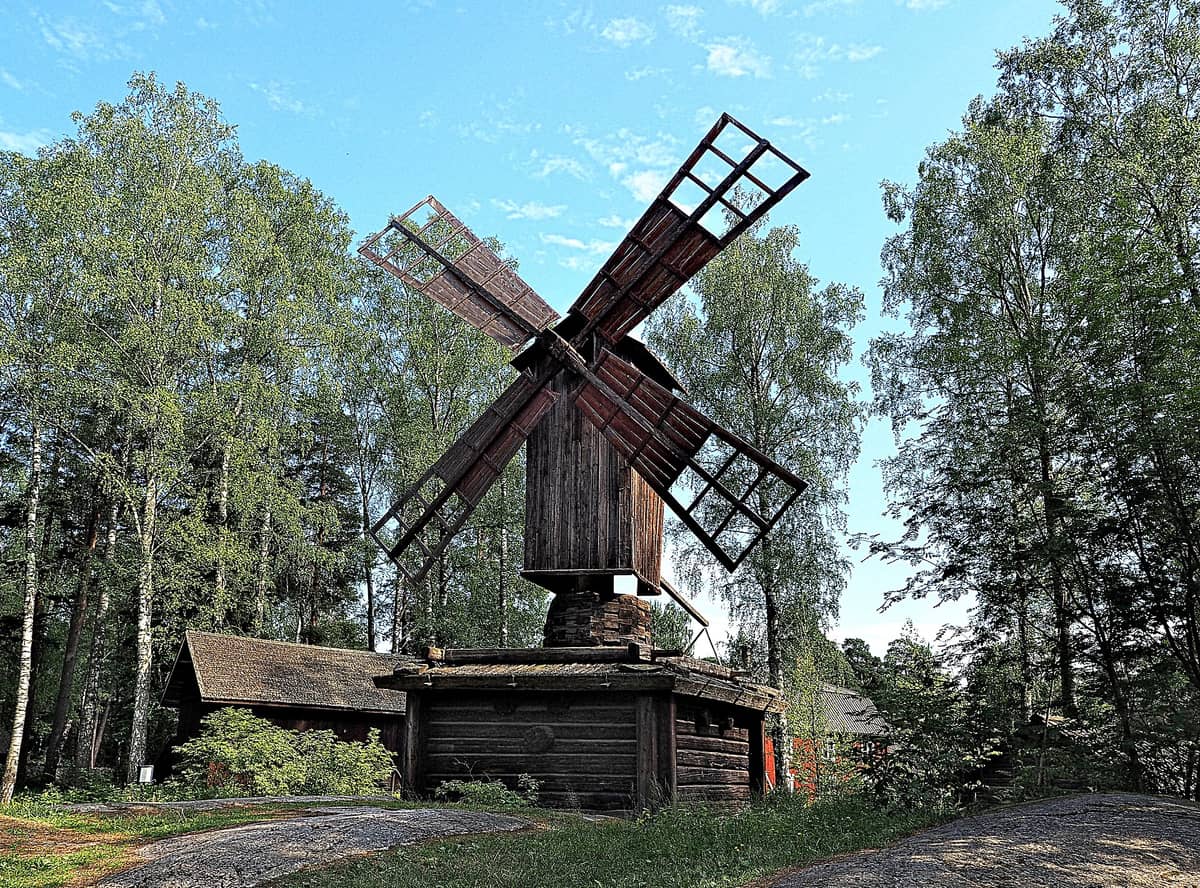
What Seurasaari Actually Is
Seurasaari is a forested island in the western coastal fringe of Helsinki, connected to the mainland by a wooden footbridge. The island serves two distinct purposes depending on the time of year. From late spring through mid-September, it is home to the Seurasaari Open-Air Museum (Seurasaaren ulkomuseo), one of Finland's oldest open-air museums, operated by the National Museum of Finland. Outside that window, the island reverts to what Helsinki residents actually use it for: a place to walk through birch and pine forest, spot wildlife, and decompress from the city.
The open-air museum consists of historic Finnish wooden buildings relocated here from different parts of the country, spanning roughly the 17th to early 20th centuries. Farmsteads, manor buildings, a church, workers' cottages, and a fisherman's cabin have all been reassembled on the island with their original furniture and tools. It is less a themed experience and more a quiet archive of how Finns actually lived before industrialization.
ℹ️ Good to know
The island itself is free to enter year-round. Museum admission is charged only during the seasonal opening period (15 May to 15 September). Ticket prices vary by source and may have changed: verify the current fee at kansallismuseo.fi before you go.
The Open-Air Museum: What You'll See
The buildings are scattered across the island rather than arranged in a single corridor, so the visit feels more like a slow exploration than a directed tour. You arrive at a farmstead and step inside to find a sleeping loft, a smoke sauna, and wooden implements hung exactly as they would have been used. The interiors smell faintly of aged timber and dried herbs. Some buildings have costumed guides who demonstrate traditional crafts; others are simply unlocked and left for you to explore at your own pace.
The scale of individual structures is striking for a northern European vernacular architecture. These are not grand buildings. A farmer's main house from the 18th century might be four low-ceilinged rooms with small windows, designed to retain heat rather than admit light. Standing inside, the logic of the design becomes immediately legible in a way that a photograph cannot convey.
The church on the island is used for actual weddings during the summer season, which means you may arrive to find it temporarily closed for a ceremony. This is not a drawback so much as a reminder that the museum treats these buildings as living structures, not relics. For context on how Finnish architectural traditions developed, the Museum of Finnish Architecture in central Helsinki makes a logical companion visit.
Tickets & tours
Hand-picked options from our booking partner. Prices are indicative; availability and final rates are confirmed when you complete your booking.
Helsinki Beautiful Canal Route, archipelago cruise
From 26 €Instant confirmationFree cancellationHelsinki Panorama Sightseeing Bus Tour With Audio Guide
From 35 €Instant confirmationFree cancellationHelsinki Pasila Street art district tour with a local
From 99 €Instant confirmationFree cancellationSurvival suit floating experience
From 125 €Instant confirmationFree cancellation
The Island in Different Seasons
Seurasaari looks completely different depending on when you visit. In early June, the birch canopy is that particular pale green that lasts only a few weeks in Finnish spring. Wildflowers edge the paths. Squirrels are visible at close range. The air carries the faint resinous smell of pine bark warming in the sun. On a weekday morning in May, it is genuinely quiet: you may walk fifteen minutes between other visitors.
By midsummer, the island draws large crowds for the Juhannus (Midsummer) bonfire celebrations, one of the most attended public events on the island. The bonfire is lit on the shore, and the event draws families and tourists. If you are specifically interested in the museum buildings rather than the event, this is not the weekend to come.
In autumn, after the museum closes on 15 September, the island becomes almost exclusively a local park. The forest turns amber and rust. Mushroom foragers move through the undergrowth. The footbridge and coastal paths stay open. This off-season version of Seurasaari is calmer and, in its own way, more revealing of how Helsinki residents actually use green space in their city.
Winter visits are possible but require appropriate preparation. Paths can be icy, and the island is dark by mid-afternoon in December and January. Those interested in the wider geography of Helsinki's waterfront islands should read the Helsinki islands guide for a broader overview of what each island offers across different seasons.
Getting There and Getting Around
The island is accessible on foot via a wooden pedestrian bridge from the mainland. HSL bus 24 serves a stop near the bridge; check the HSL journey planner for the current timetable, as these are subject to change. From the city centre, the journey takes roughly 15 to 20 minutes by bus. The area around the bridge has limited car parking, which fills quickly on sunny summer weekends.
The footpaths across the island are wide and relatively flat in the main areas around the museum, making them manageable with a pram. However, the open-air museum itself is described as only partly accessible for wheelchair users, given the uneven terrain around historic structures and the interiors of older buildings. If full accessibility is a requirement, contact the National Museum of Finland directly before your visit to confirm which areas are reachable.
💡 Local tip
Wear shoes with grip. The wooden bridges and steps around some museum buildings can be slippery when wet, and forest paths away from the main route are unpaved.
Practical Walkthrough: How a Visit Unfolds
Cross the bridge and you are immediately in the forest. The museum entrance and ticket point are a short walk from the bridge; look for signage as you enter. The museum provides a map showing the locations of the main buildings. A full loop through all the structures takes between 90 minutes and two hours at a measured pace, more if you stop to read the information panels or speak with the costumed guides.
There is a café on the island that operates during museum season. Bring water regardless, particularly in warm weather, as the café may have queues on busy days. The island has toilet facilities near the main entrance area.
If you are building a full day around the western part of Helsinki, Seurasaari pairs well with a visit to the Sibelius Monument in Töölö, which is roughly 10 minutes by bus in the direction of the city centre. Both are outdoors-oriented and low-cost, making the combination sensible for those following a free or low-budget Helsinki itinerary.
Photography and What to Expect Visually
The island is photogenic in a restrained way. The buildings are unpainted or naturally weathered grey-brown timber, set against green or golden forest depending on the season. Early morning light in June is exceptional: soft, long-angled, and there are almost no other visitors before 10am. Midday in July is less rewarding photographically, with flat overhead light and more foot traffic.
Interior photography inside the museum buildings is generally permitted, though some structures have low light levels and no artificial lighting. A phone camera will struggle; a camera with a wide aperture lens performs significantly better. The coastal edges of the island offer open water views toward other parts of the Helsinki shoreline and are worth the short detour from the main museum path.
⚠️ What to skip
The Midsummer (Juhannus) bonfire weekend draws very large crowds. If your goal is a quiet visit to the museum buildings, avoid this specific weekend. Check the National Museum of Finland website for the exact date each year.
Who Should Reconsider Visiting
Seurasaari is not a high-stimulation destination. Visitors expecting interactive exhibits, multimedia installations, or the density of content found at a place like the Ateneum Art Museum will find the pacing slow and the information relatively sparse. The buildings themselves are the exhibit, and appreciating them requires some prior interest in vernacular architecture or Finnish social history. Children who are engaged by exploring old houses and outdoor space tend to enjoy it; children who need structured activity may not.
Mobility-limited visitors should research accessibility in advance, as noted above. Those visiting Helsinki for only one or two days should weigh whether the journey out to the island is the best use of limited time compared to the concentration of major attractions in the city centre.
Insider Tips
- Arrive before 10am on a weekday in June or early July. The morning light through the birch canopy is exceptional, and the museum buildings are yours almost entirely for the first hour.
- The church on the island hosts real weddings during summer. Check the National Museum of Finland's calendar if you specifically want to see inside, as it closes during ceremonies.
- The forest paths that circle the island's perimeter, away from the museum buildings, are where locals actually walk. These coastal trails offer quiet water views and take about 30–40 minutes to complete at a gentle pace.
- Squirrels on Seurasaari are unusually unafraid of people and will approach if you are still. This is genuinely entertaining for children and has nothing to do with feeding them.
- If you visit in autumn after the museum closes, the island is free, empty, and at its most atmospheric for forest walking. September and early October are particularly good for foliage.
Who Is Seurasaari Island For?
- Travelers with genuine interest in Finnish vernacular architecture and rural history
- Families with children who enjoy exploring outdoor spaces and old buildings
- Photographers looking for timber architecture and forest light outside the city centre
- Anyone in Helsinki for more than two days wanting to balance city-centre attractions with a quieter, greener experience
- Visitors planning to attend the Juhannus Midsummer bonfire event
Nearby Attractions
Other things to see while in Helsinki Waterfront & Islands:
- Helsinki Zoo (Korkeasaari)
Helsinki Zoo, known in Finnish as Korkeasaari Zoo, sits on its own island a short ferry ride from the city centre. One of the oldest zoos in the world, it operates year-round with a full day of wildlife, rocky island terrain, and sea views thrown in.
- Lonna Island
Just 1.5 kilometres from the city shore, Lonna Island packs a public sauna, waterfront restaurant, and sweeping Gulf of Finland views into roughly 150 metres of Baltic rock. It runs seasonally, the crowd is refreshingly local, and the ferry ride alone reframes the city.
- Pihlajasaari Island
Pihlajasaari is a traditional recreational island in Helsinki's southern archipelago, reachable by a short ferry ride from the city waterfront. Known for its sandy beaches, smooth granite outcrops, and pine-shaded paths, it offers one of the most accessible slices of Finnish island nature within the capital.
- Seurasaari Open-Air Museum
The Seurasaari Open-Air Museum transplants over a century of Finnish countryside life onto a wooded island just minutes from central Helsinki. Traditional farmsteads, manor buildings, and craftsmen's cottages relocated from across Finland create a living archive of rural architecture — surrounded by birch forest and rocky shoreline.