Seurasaari Open-Air Museum: Finland's Rural Past on a Forest Island
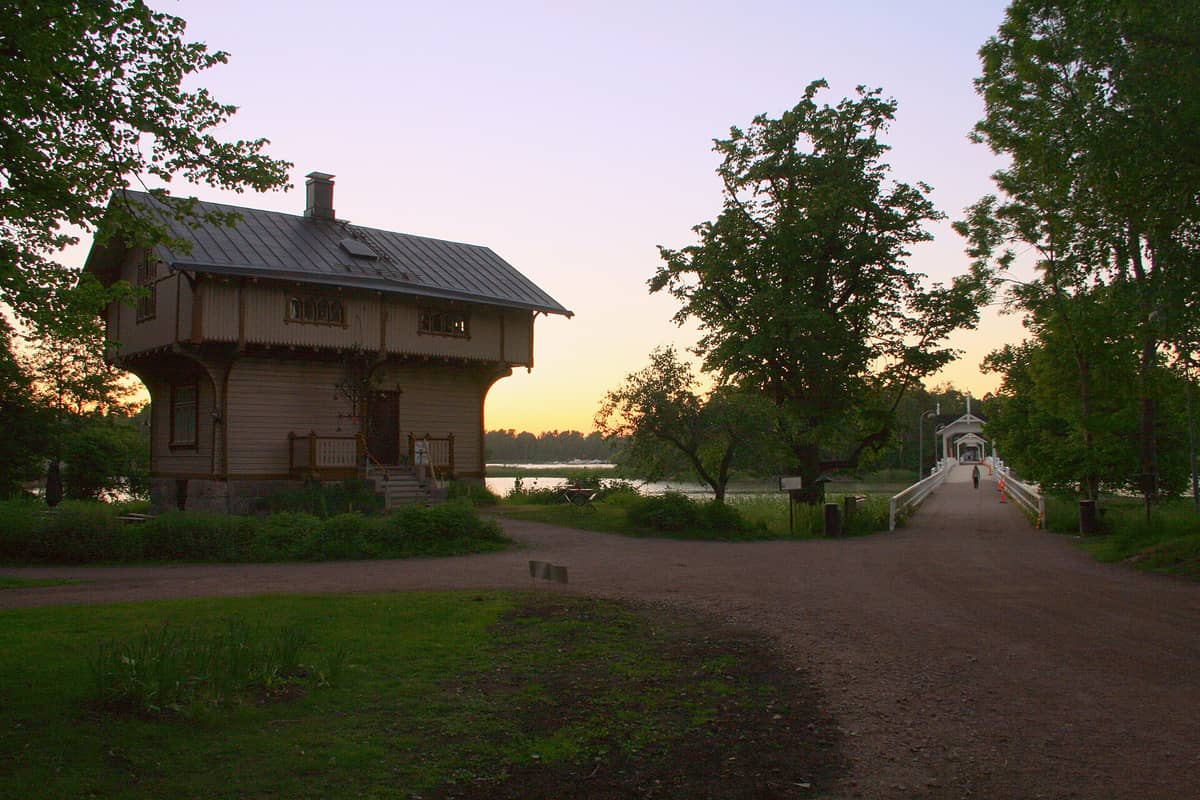
The Seurasaari Open-Air Museum transplants over a century of Finnish countryside life onto a wooded island just minutes from central Helsinki. Traditional farmsteads, manor buildings, and craftsmen's cottages relocated from across Finland create a living archive of rural architecture — surrounded by birch forest and rocky shoreline.
Quick Facts
- Location
- Seurasaarentie 15, 00250 Helsinki (Seurasaari Island, approx. 4 km west of city centre)
- Getting There
- Bus 24 from Kamppi to Seurasaari terminus, then a short walk across the pedestrian bridge to the island
- Time Needed
- 1.5 to 3 hours, depending on pace and guided tour availability
- Cost
- From 14 € (adult) / 10 € (concession) / children 0 €. Verify current prices at the official site.
- Best for
- Finnish history, outdoor walks, families with children, architecture enthusiasts, midsummer celebrations
- Official website
- www.kansallismuseo.fi/en/seurasaarenulkomuseo
What Is the Seurasaari Open-Air Museum?
The Seurasaari Open-Air Museum opened in 1909 under the direction of the National Museum of Finland. The concept was straightforward but ambitious: gather historic wooden buildings from different regions and eras of Finland, carefully dismantle and transport them, and reassemble them on the sheltered forests of Seurasaari Island. The result is a collection of more than 80 structures that document Finnish rural life from the 18th to the early 20th centuries.
The official Finnish name is Seurasaaren ulkomuseo. The buildings range from simple timber farmsteads and smoke saunas to a wooden church, a manor house, fishermen's cottages, and various agricultural outbuildings. None of them were built here. Every structure was relocated from somewhere else in Finland, making the island itself an act of preservation as much as exhibition.
ℹ️ Good to know
The museum is seasonal: open annually from 15 May to 15 September. The forested island is accessible year-round as a public nature area, but the buildings are only open and interpreted during the museum season. Always confirm exact dates and hours at kansallismuseo.fi before visiting.
The Island Setting: More Than a Backdrop
Seurasaari Island is connected to the mainland by a single pedestrian footbridge. The crossing takes thirty seconds, but the transition it creates is real. The road noise of Helsinki drops away almost immediately once you're on the island's forest paths. The terrain is rocky and uneven underfoot, covered with Scots pine and birch, with occasional glimpses of the Gulf of Finland visible through the tree trunks.
The island is home to a small population of semi-wild squirrels that have been fed by visitors for generations. They are conspicuously comfortable around people, which children reliably find delightful. In summer, the air on the island carries the scent of pine resin and old timber, and the wooden buildings warm slowly in the morning sun before cooling again toward evening. Seagulls call from the shoreline rocks.
The island is part of Helsinki's broader network of green coastal spaces. If you want to understand how the city relates to its water and islands, reading the Helsinki islands guide before your visit gives useful context. Seurasaari is a nature destination in its own right, used by local joggers and families even outside museum season.
Tickets & tours
Hand-picked options from our booking partner. Prices are indicative; availability and final rates are confirmed when you complete your booking.
Helsinki Beautiful Canal Route, archipelago cruise
From 26 €Instant confirmationFree cancellationHelsinki Panorama Sightseeing Bus Tour With Audio Guide
From 35 €Instant confirmationFree cancellationHelsinki Pasila Street art district tour with a local
From 99 €Instant confirmationFree cancellationSurvival suit floating experience
From 125 €Instant confirmationFree cancellation
The Buildings: What You Actually See
Walking through the museum is not like walking through a conventional indoor exhibition. There is no single prescribed route. Paths branch through the forest between structures, and you can follow your own sequence. Some buildings are locked and viewed only from the exterior. During museum season, a selection of the most significant structures are open, and guides in period dress sometimes demonstrate traditional crafts inside.
The smoke sauna is one of the most evocative structures on the island. These low, blackened interiors with no chimney flue were the dominant type in rural Finland for centuries, used for bathing, drying food, and even childbirth. Standing inside a reconstructed smoke sauna gives a more immediate sense of Finnish rural life than any text display. The wooden church, transplanted from Karuna in southwestern Finland, was built in 1685–86 and is the oldest building on the site. Its weathered grey timber planks and simple interior are striking in their austerity.
The manor building and the farmstead complexes show the layered social geography of pre-industrial Finland: the difference in timber quality, room size, and window placement between a landowning family's house and a tenant farmer's dwelling is legible in the buildings themselves, without any label explaining it.
💡 Local tip
Check the museum's event schedule for the current season. Guided tours in English run periodically and cover buildings that may otherwise be closed to independent visitors. The midsummer celebrations at Seurasaari are among the largest in Finland and draw significant crowds, so plan accordingly.
When to Visit: Time of Day and Season
Weekday mornings, particularly in June before the school holidays peak, are the quietest. By mid-morning on a summer weekend the paths fill with families, and the ferry day-trippers who combine Seurasaari with other Helsinki island visits arrive in waves around midday. If you want the buildings largely to yourself and the light low and directional for photography, aim for arrival at opening time.
Late afternoon in August has its own character: the angled light catches the texture of the log walls at a low angle, and the crowds thin considerably after 15:00. The smell of the birch forest intensifies as temperatures drop toward evening. The museum closes at 17:00 during the core summer season (1 June to 31 August), so a 14:00 arrival gives a comfortable two to three hours.
If you are visiting Helsinki in summer specifically, the Seurasaari midsummer bonfire celebration (Juhannuskokko) is one of the city's signature outdoor events. The Helsinki in summer guide covers the full calendar of seasonal events worth building a trip around.
Getting There and Getting Around
Bus 24 runs from Kamppi in the city centre directly to the Seurasaari terminus. The journey takes roughly 15 to 20 minutes depending on traffic. From the bus stop, the footbridge to the island is a 5-minute walk along a waterfront path. There is no car access to the island itself, and parking near the bridge is limited.
The island's terrain is forested and uneven. Gravel paths connect the main buildings, but some areas involve gentle slopes and exposed tree roots. Comfortable, closed-toe shoes are strongly recommended. The paths are not consistently wheelchair accessible throughout the island, though the museum provides accessibility information directly: contact seurasaari@kansallismuseo.fi or call +358 29 533 6912 before visiting if mobility is a concern.
The museum sits in Helsinki's western waterfront island cluster. Nearby, Lonna Island and Pihlajasaari Island offer different island experiences that can be combined into a full day on the water.
Photography and Practical Preparation
The museum is an excellent photography subject. The combination of weathered dark timber, pale birch bark, and dappled forest light produces naturally high-contrast scenes. Early morning and late afternoon provide the most texture in the log walls. Interior shots inside open buildings are possible but often dark; a wide aperture or high ISO setting helps without flash.
There is a small café on the island during the museum season, but options are limited. Bring water, especially on warm summer days when the forest paths can feel humid and still. There are picnic benches near the shore. No large bag storage is available on-site.
Helsinki's summers run warm but can shift quickly. For a full weather picture that helps you plan clothing and gear, the Helsinki weather guide is worth reading. Layers are useful even in July; the island's shoreline gets a sea breeze that drops the felt temperature noticeably.
Honest Assessment: Is It Worth the Trip?
For visitors with a genuine interest in Finnish history, vernacular architecture, or pre-industrial rural life, the Seurasaari Open-Air Museum is one of the more rewarding experiences in Helsinki. The quality of the buildings is high, the island setting is genuinely pleasant, and the overall experience is unhurried in a way that most of Helsinki's central attractions are not.
Visitors who do not have much appetite for historical context and are primarily looking for active entertainment may find two hours of walking among old wooden houses slow-paced. The museum does not have the density of interpretation that a large indoor museum provides: if buildings without extensive labelling leave you unmoved, the experience may feel thin. It is worth being honest that this is a relatively quiet, contemplative attraction rather than a dynamic one.
If you are trying to decide between Helsinki's many museums, the best museums in Helsinki overview gives a practical comparison of options across different interests and budgets.
Insider Tips
- The museum grounds remain accessible as a public nature park year-round, even when the museum is closed. A winter walk across the footbridge into the snow-covered forest, with the wooden buildings visible through the trees, is atmospheric in a way the summer crowds do not replicate.
- Arrive at opening time on a weekday in early June. The seasonal guides tend to be most present and most talkative at this point in the season, before the school holiday volume picks up.
- The wooden church from Karuna is the oldest building on the site and is easy to walk past without realising its age. Look for the information post near the entrance and budget time to stop inside if it is open.
- Bus 24 can fill quickly on warm summer weekends. If you miss one, the next departure is usually within 10 to 15 minutes, but check the HSL app for real-time information before heading to the stop.
- The squirrels on Seurasaari are unusually approachable, but feeding them is prohibited on museum grounds. Watch from a short distance instead of offering food.
Who Is Seurasaari Open-Air Museum For?
- Travellers with an interest in Finnish rural history, vernacular architecture, or Scandinavian folk culture
- Families with children who benefit from open outdoor space combined with something structured to explore
- Photographers looking for weathered timber, natural light, and forest settings away from urban backdrops
- Visitors in Helsinki during midsummer who want to experience the traditional Juhannuskokko bonfire celebration
- Anyone who wants a slower, quieter half-day away from the city centre without leaving Helsinki
Nearby Attractions
Other things to see while in Helsinki Waterfront & Islands:
- Helsinki Zoo (Korkeasaari)
Helsinki Zoo, known in Finnish as Korkeasaari Zoo, sits on its own island a short ferry ride from the city centre. One of the oldest zoos in the world, it operates year-round with a full day of wildlife, rocky island terrain, and sea views thrown in.
- Lonna Island
Just 1.5 kilometres from the city shore, Lonna Island packs a public sauna, waterfront restaurant, and sweeping Gulf of Finland views into roughly 150 metres of Baltic rock. It runs seasonally, the crowd is refreshingly local, and the ferry ride alone reframes the city.
- Pihlajasaari Island
Pihlajasaari is a traditional recreational island in Helsinki's southern archipelago, reachable by a short ferry ride from the city waterfront. Known for its sandy beaches, smooth granite outcrops, and pine-shaded paths, it offers one of the most accessible slices of Finnish island nature within the capital.
- Seurasaari Island
Seurasaari is a forested island about 15 minutes from central Helsinki, accessible year-round for free. From mid-May to mid-September, the Seurasaari Open-Air Museum brings together historic wooden farmsteads, manor houses, and cottages relocated from across Finland. Outside museum season, the island functions as a quiet nature escape popular with locals.