SEA LIFE Porto: Portugal's First Underwater Tunnel and What to Expect
SEA LIFE Porto is a family aquarium on the Atlantic coastline in Matosinhos, featuring 31 tanks, Portugal's first underwater tunnel spanning over 500,000 litres of water, and a seaside park setting beside the historic Castelo do Queijo. It opened in 2009 and remains one of the few purpose-built aquarium attractions in northern Portugal.
Quick Facts
- Location
- Rua Particular nº 1 Castelo do Queijo, Porto
- Getting There
- Bus lines 203, 205, 500, or 502 stop at Castelo do Queijo; nearest metro access is via Casa da Música with a bus connection
- Time Needed
- 1.5 to 2.5 hours
- Cost
- Adults approx. €19 / Children (3–12) approx. €14 — verify at visitsealife.com/porto before visiting
- Best for
- Families with children, rainy-day visits, ocean-curious travellers
- Official website
- www.visitsealife.com/porto/en
What SEA LIFE Porto Actually Is
SEA LIFE Porto is a compact indoor aquarium operated by Merlin Entertainments, the same group behind SEA LIFE venues across Europe. It opened on 15 June 2009, covers approximately 2,200 m² of indoor floor space, and sits beside a landscaped park of over 3,500 m² on Porto's Atlantic-facing coastline. The address puts it directly adjacent to the Castelo do Queijo, the 18th-century coastal fortress at Praça de Gonçalves Zarco in Porto.
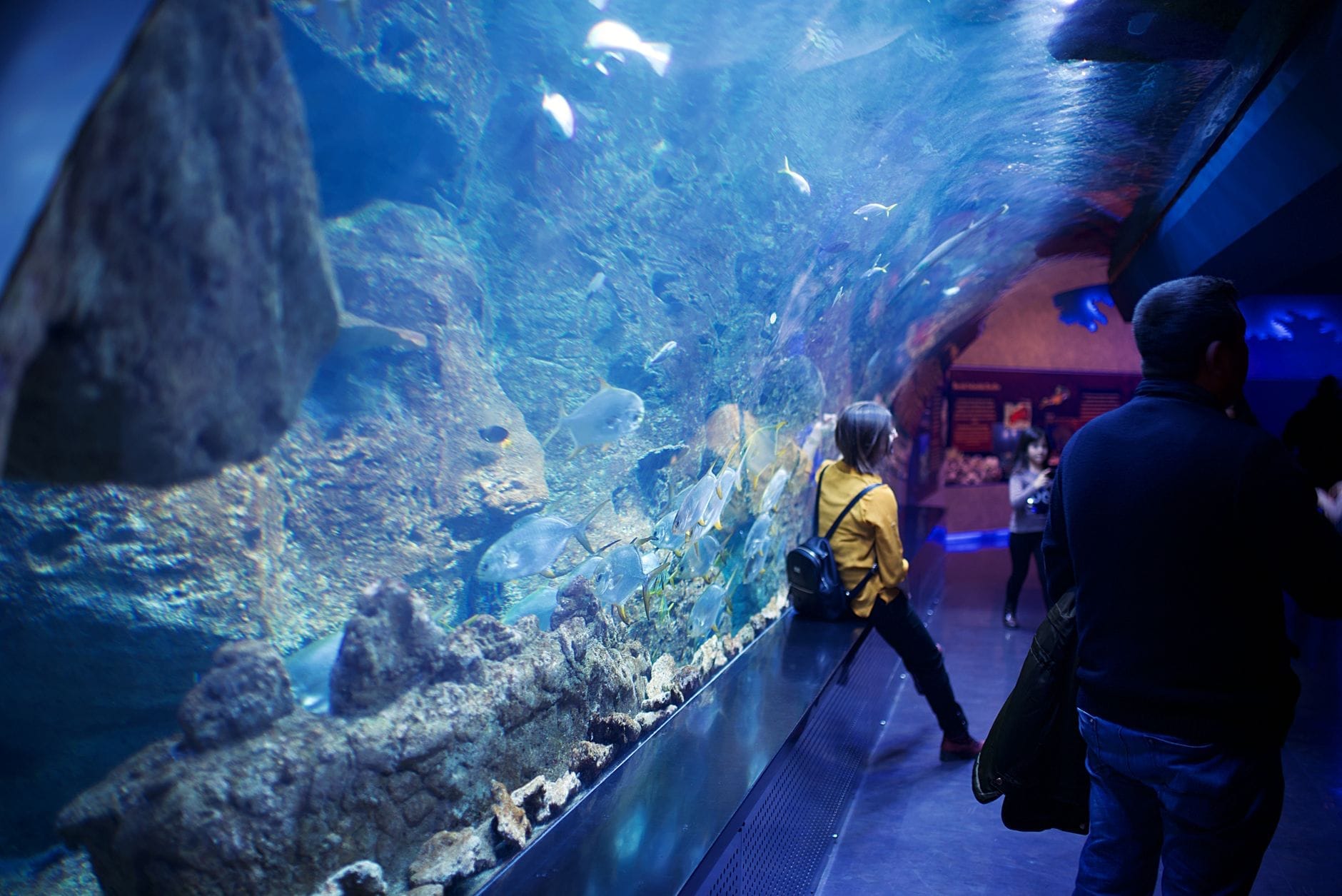
The attraction is home to 31 aquariums and claims Portugal's first underwater tunnel, a glass walkway that passes through a tank holding over 500,000 litres of water. That tunnel is genuinely the centrepiece: rays glide overhead, sharks pass at eye level, and the lighting shifts from blue to a deeper grey as you move through. For children, it tends to produce a predictable reaction somewhere between wide-eyed silence and complete chaos.
💡 Local tip
Buy tickets online through the official site before you arrive. Walk-up prices at the desk can be higher, and on school holiday weekends the queue can stretch past the car park. Booking ahead also lets you choose a timed entry slot.
The Experience Inside: Zone by Zone
The visit is mostly linear, which removes any navigational confusion but also means the flow moves at a pace set by the crowd rather than your own curiosity. From the entrance, the path leads through progressively larger tanks, starting with smaller freshwater and rock pool exhibits before building toward the main ocean displays.
The touch pools are usually a highlight for younger visitors. Depending on staff schedules, there are supervised sessions where children can handle starfish and anemones, though the timing is not guaranteed and varies by day. The tank lighting throughout is low and blue-toned, which gives the space a calm atmosphere but makes it harder to photograph clearly without adjusting your phone settings to compensate for the darkness.
The underwater tunnel arrives roughly two-thirds of the way through the circuit. It is not a long tunnel in absolute terms, but the scale of the tank above and around it is enough to hold attention for several minutes. Sharks, rays, and large reef fish share the water. There is a moving walkway, though many visitors step off to stand still and watch. The glass is thick and clear, and unlike some older aquarium tunnels, the surface is largely free of scratches or algae buildup.
Tickets & tours
Hand-picked options from our booking partner. Prices are indicative; availability and final rates are confirmed when you complete your booking.
Peneda Geres park full-day tour from Porto
From 100 €Instant confirmationFree cancellationPorto historical center and the best viewpoints on a tuk-tuk
From 39 €Instant confirmationFree cancellationPorto 48 hours hop-on hop-off bus tour
From 22 €Instant confirmationFree cancellationSecret Porto walking tour
From 35 €Instant confirmationFree cancellation
Setting and Location: The Castelo do Queijo Coastline
The location on the Matosinhos seafront is genuinely one of the better aspects of a visit. The surrounding park opens to Atlantic sea views, and on a clear day the Castelo do Queijo fortress next door provides a striking backdrop. Arriving by bus, you'll walk past the fortress and along a coastal path, catching the sound of Atlantic surf before you even reach the entrance.
Matosinhos itself is worth more than a passing glance. The seafront promenade connects southward toward Foz do Douro, and the municipality is well known among locals for its seafood restaurants clustered around the port area. If you're combining SEA LIFE with a meal, the Matosinhos seafront promenade is an easy pre or post-visit walk, and the beaches at Matosinhos Beach are a ten-minute walk north.
The outdoor park area around SEA LIFE is free to enter and functions as a pleasant open space even if you're not going inside. On weekday mornings it is quiet enough to hear the sea clearly. On summer weekend afternoons, the park fills with families eating packed lunches, so plan to arrive early if you want the peaceful version.
Practical Details: Getting There and Opening Hours
SEA LIFE Porto does not have a direct metro station. The nearest metro access is at Casa da Música (and, depending on your starting point, other Porto metro stations), and the most straightforward public transport option is bus. Lines 203, 205, 500, and 502 stop close to the aquarium. Journey times from central Porto vary but typically run 20 to 40 minutes depending on traffic and boarding point.
By ride-hailing app, the address (1ª Rua Particular do Castelo do Queijo) tends to resolve correctly in both Uber and Bolt. The drop-off point lands you directly in front of the park entrance. Driving yourself is possible, but street parking along this stretch of the Matosinhos coast is competitive on weekends.
Opening hours are Monday to Friday 10:00 to 18:00, and Saturday, Sunday, and public holidays 10:00 to 19:00. Last admission is typically 45 minutes before closing. Hours change during Portuguese public holidays and school vacation periods, so check the official site before making the trip. Arriving at opening time on a weekday is consistently the quietest option.
ℹ️ Good to know
Ticket prices are subject to change. As a general reference, adult admission is around €19 and children (ages 3–12) around €14 when booked online, but confirm current prices on visitsealife.com/porto before visiting.
Photography, Lighting, and What to Bring
The interior lighting is almost entirely artificial and kept deliberately dim to reduce stress on the marine life. That means phone cameras will often default to slow shutter speeds and produce blurry images of moving fish unless you switch to a dedicated low-light or night mode. For the underwater tunnel specifically, turn off your camera flash entirely: it reflects off the glass and results in white-out images.
The outdoor park area has far better natural light and is underused as a photography setting. The fortress wall of Castelo do Queijo behind the park entrance makes for a strong compositional backdrop in the morning when the sun is still to the east.
There is no strict dress code. The interior is climate-controlled year-round, so the aquarium works as a reliable rainy-day option in Porto's wet winter months. Bring a layer if you run cold, as the water tanks keep temperatures slightly cooler than the outside air.
Who Gets the Most Out of It
SEA LIFE Porto is not a large or comprehensive aquarium by European standards. Visitors who have been to the Oceanarium in Lisbon will find this significantly smaller in both scale and diversity of species. That comparison is worth making honestly: the Lisbon Oceanarium is one of the largest in Europe; SEA LIFE Porto is a mid-sized commercial attraction. For adults travelling without children and with limited days in Porto, the time might be better spent at places like the Serralves Museum or exploring the Palácio da Bolsa in the historic centre.
That said, for families with children under about 12, SEA LIFE Porto delivers a solid two-hour visit without the logistical demands of a full-day trip. It pairs naturally with a walk along the Matosinhos coast and a seafood lunch nearby, making it a logical anchor for a day away from Porto's crowded historic centre. If you're planning more broadly, the guide to Porto with kids covers several complementary options in the same coastal area.
Visitors with mobility considerations will find the interior accessible: pathways are wide, the circuit is largely flat with ramps where needed, and the format as a family attraction means prams and pushchairs are common. That said, confirm specific accessibility services such as companion tickets or wheelchair loans directly with SEA LIFE before visiting.
⚠️ What to skip
School groups visit frequently on weekday mornings, particularly from late September through June. If you arrive between 10:00 and 12:00 on a school day, the tunnel and touch pool areas can feel chaotic. Arriving after 14:00 on the same days is noticeably calmer.
Combining SEA LIFE with the Surrounding Area
The Matosinhos neighbourhood rewards a longer visit beyond the aquarium walls. The Parque da Cidade, Porto's largest urban park, is a short distance south and makes a natural continuation for families who want outdoor space after the indoor visit. Heading north along the coast leads directly to Matosinhos Beach, one of the most accessible Atlantic beaches from central Porto.
If you're treating this as part of a wider Porto itinerary rather than a standalone trip, it fits reasonably into a half-day that starts on the coast and then moves back toward the city centre via the waterfront. The full Porto attractions guide can help you sequence the day sensibly.
Insider Tips
- The moving walkway inside the underwater tunnel is easy to step off — do so, and spend a few minutes standing still. The shark and ray movement patterns become much easier to follow once you stop moving yourself.
- Weekday afternoons between 14:00 and 16:00 consistently offer the lightest crowds. If you can't avoid a weekend, arrive within the first 30 minutes of opening before tour groups and families from further afield arrive.
- The outdoor park is free to enter and open year-round. Even if you decide not to buy aquarium tickets after arriving, the park with its Atlantic views and Castelo do Queijo backdrop is worth the bus trip.
- Check the official site for any active promotional offers or combined tickets before paying full price at the desk. Bundle deals with other Merlin attractions occasionally appear, particularly outside peak season.
- If you're visiting with a child who is anxious about closed or dark spaces, walk through the park entrance first and let them see the sea and open sky. The inside of the aquarium is dim and enclosed, and a few minutes outdoors beforehand helps calibrate expectations.
Who Is SEA LIFE Porto For?
- Families with children aged 3 to 12 looking for a structured, indoor half-day activity
- Rainy-day visitors who need a weather-proof option on Porto's Atlantic coast
- Travellers combining a Matosinhos seafood lunch with an afternoon attraction
- First-time visitors to Portugal who haven't yet seen a large aquarium
- Anyone staying in Foz do Douro or Matosinhos who wants a nearby activity without crossing into the city centre
Nearby Attractions
Other things to see while in Matosinhos:
- Matosinhos Beach
Praia de Matosinhos is the closest major beach to Porto — a long, wide stretch of golden Atlantic sand backed by one of Portugal's most celebrated seafood dining strips. Free to access, open year-round, and a short metro ride from central Porto, it draws surfers, swimmers, Sunday lunchers, and evening walkers in equal measure.
- Matosinhos Seafront Promenade
The Matosinhos seafront promenade runs for roughly 4 kilometres along Praia de Matosinhos, Porto's largest and most accessible beach. Free to visit and open around the clock, it draws surfers at dawn, families at noon, and sunset walkers in the evening. This is where Porto residents actually go to breathe.
- Piscina das Marés (Leça Swimming Pools)
Designed by Álvaro Siza Vieira and inaugurated in 1966, Piscina das Marés in Leça da Palmeira is a rare example of a swimming complex classified as a National Monument. Built into the Atlantic shoreline at Matosinhos, the pools merge poured concrete and natural rock in a composition so understated it barely interrupts the horizon.