Parque da Cidade do Porto: Inside Portugal's Largest Urban Park
Covering 83 hectares on Porto's Atlantic edge, Parque da Cidade do Porto is Portugal's largest urban park. Designed by landscape architect Sidónio Pardal and inaugurated in 1993, it offers approximately 9.5 kilometres of walking paths, open meadows, lakes, and quiet woodland — all free to enter and largely unknown to visitors staying in the historic centre.
Quick Facts
- Location
- Boavista / Atlantic edge of Porto, near Avenida da Boavista
- Getting There
- Porto Metro Line A/B/C/E to Casa da Música, then STCP bus 205 or taxi westward; or Line B to Antero de Quental.
- Time Needed
- 1.5 to 3 hours depending on route
- Cost
- Free entry
- Best for
- Morning walks, families, joggers, anyone needing a break from cobblestones
- Official website
- naturebasedsolutions.porto.pt/en/nbs/porto-city-park
What Parque da Cidade Actually Is
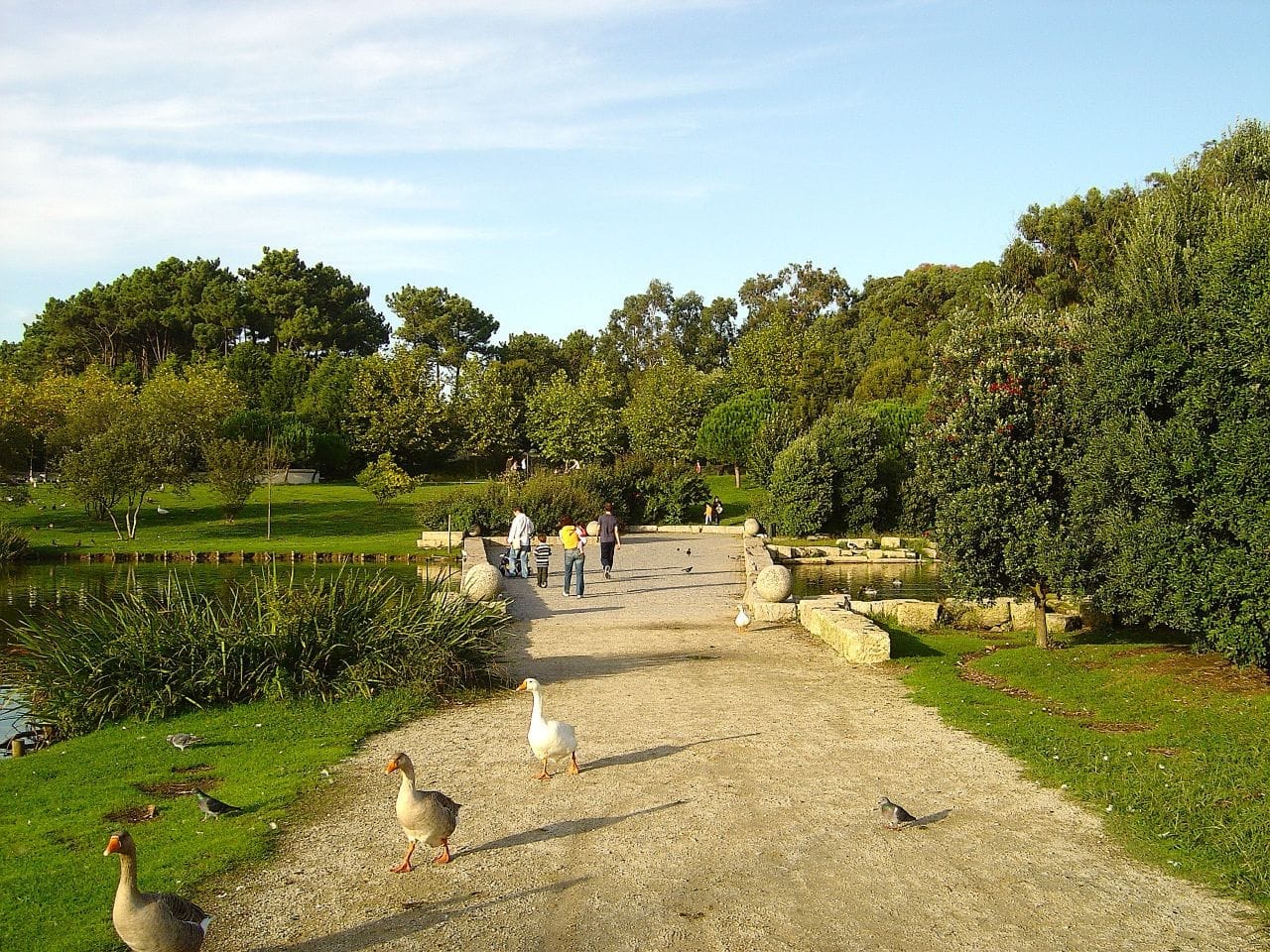
Parque da Cidade do Porto (Porto City Park in English) is Portugal's largest urban park, covering 83 hectares in the city's Atlantic quarter. It was inaugurated in 1993, designed by landscape architect Sidónio Pardal, and stretches from the residential streets near Boavista all the way toward the seafront. That scale matters: this is not a manicured square or a small riverside garden. It is a proper park, with distinct ecosystems, a lake network, open meadows, dense woodland corridors, and approximately 9.5 kilometres of paths weaving through all of it.
Most visitors to Porto never come here. The historic centre, the port wine lodges across the river in Vila Nova de Gaia, and the riverfront naturally absorb touring time. That makes Parque da Cidade feel remarkably quiet by contrast, even on weekday afternoons when Porto's other green spaces have started to fill. On weekend mornings you will find joggers, families with pushchairs, elderly residents doing their daily circuit, and locals walking dogs. By midday it quietens again. There are almost no souvenir sellers, no ticket booths, and no queue.
ℹ️ Good to know
Admission is free at all times. There are no gates or ticketed zones within the park. Bring water, especially in summer, as refreshment options inside the park are limited.
The Landscape: What You Actually See
The park does not have a single focal point. It rewards exploration rather than a straightforward route. Entering from the northern edge near Rua Cidade de Salerno, the first impression is of wide grassy clearings bordered by pines and eucalyptus. The air carries a faint resinous smell from the trees, a noticeable contrast to the salt and diesel of the lower city. Underfoot, the main paths are surfaced and easy to follow; the permeable soil beside them keeps the ground relatively dry even after rain, though some of the informal tracks through the woodland get muddy after a wet spell.
The lakes are the park's most photogenic feature. They sit at different elevations, connected by gentle watercourses, and attract waterfowl year-round. In early morning, low light catches the surface of the water through the treeline, and the park is almost entirely silent at that hour. By contrast, the open meadow sections feel exposed and bright in summer afternoon sun. If you visit in August without shade planning, the middle hours between noon and 3pm are genuinely uncomfortable in those open areas.
The southern boundary of the park reaches toward the coast and the mouth of the Douro. Depending on exactly where you exit, you can connect on foot to the seafront promenades of Foz do Douro. On clear days, the Atlantic horizon appears through gaps in the dune vegetation near the park's seaward edge, and the sound of breaking waves becomes audible before you can see the water.
The park's proximity to the coast also makes it a natural extension of a longer walk: combining it with Jardim do Passeio Alegre in Foz do Douro gives you a full half-day of green space and seafront without entering the tourist centre at all.
Tickets & tours
Hand-picked options from our booking partner. Prices are indicative; availability and final rates are confirmed when you complete your booking.
Serralves All-Access Pass
From 24 €Instant confirmationFree cancellationSantiago de Compostela Full-Day Tour
From 79 €Instant confirmationFree cancellationPeneda Geres park full-day tour from Porto
From 100 €Instant confirmationFree cancellationPorto historical center and the best viewpoints on a tuk-tuk
From 39 €Instant confirmationFree cancellation
Morning vs. Afternoon: How the Experience Changes
Early morning, roughly 7am to 9am, is the park at its most local. The light is soft, the paths are damp with dew or overnight rain, and the birdsong is genuinely loud in the woodland sections. This is when you understand why Sidónio Pardal's design was praised for creating genuine ecological value rather than just recreational infrastructure. The park functions as a wildlife corridor, and the bird activity in those first hours reflects that.
Late morning through early afternoon brings families, school groups in term time, and the occasional tourist who has deliberately sought the park out. The atmosphere is social but unhurried. Benches around the lakes fill up. This is also when any refreshment kiosks that operate inside the park are most likely to be active, though their hours are inconsistent and should not be relied upon for a proper meal.
Late afternoon, from around 4pm to sunset, is another good window, particularly in spring and autumn when the low sun catches the tree canopy. In summer, an evening visit when temperatures drop is preferable to any midday slot. Winter afternoons can be grey and genuinely cold near the coast, and the park feels exposed in northwest wind. Rain is always possible in Porto from October through April; the woodland sections provide partial cover, but there is nowhere to properly shelter if a serious Atlantic rainstorm arrives.
⚠️ What to skip
Winter visits can be damp and windy, especially toward the seafront edge of the park. Waterproof footwear and a wind layer are useful from October through March.
Getting There: Transit and Walking Routes
Parque da Cidade sits in Porto's Boavista quarter, west of the city centre along Avenida da Boavista. It is not a short walk from the historic centre, making transit the practical choice unless you are already staying in the western part of the city.
Several Porto Metro lines (A, B, C, and E) serve Casa da Música station, which is the closest major metro stop to the park's eastern side. From there, a bus or a roughly 20-minute westward walk along Avenida da Boavista takes you to the park's main access points. Alternatively, Metro Line B stops at Antero de Quental, which is closer to the northern entrance. Ride-hailing apps including Uber and Bolt operate in Porto and can be a convenient option for the return journey if you exit on the seaward side.
If you are staying near Foz do Douro or Matosinhos, the park is accessible from the coastward end, which can be reached on foot from the seafront promenades. This western approach is the less obvious entry point but gives you the most dramatic sense of the park's scale as you move inland from the Atlantic edge.
Historical and Ecological Context
The park was inaugurated in 1993, making it relatively recent in the history of a city whose recorded urban fabric dates back to medieval times. Sidónio Pardal, the landscape architect behind the design, created a space that prioritises ecological function alongside leisure. The park's soil management, permeable surfaces, and planting strategy have since been cited by the City of Porto as a nature-based solution for urban water management and urban heat island mitigation.
At 83 hectares, it is formally recognized as the largest urban park in Portugal. That distinction is worth taking seriously: this is not a manicured English-style garden nor a formal French parterre. It is a working green lung for a dense Atlantic city, designed with environmental performance in mind from the outset. The mix of planted woodland, open meadow, and connected water bodies creates habitat variety across a relatively compact area.
For visitors interested in Porto's broader relationship with public space and architecture, the park pairs interestingly with the Serralves Park, located nearby in Boavista, which offers a more formal garden design around the contemporary art museum. The two parks are different in character and both worth visiting if you have a full day in the western part of the city.
Photography and Practical Notes
The park photographs well in soft light, particularly around the lakes and in the morning woodland sections. The open meadow areas in full summer sun tend toward overexposed foregrounds and blown-out skies, so early or late light makes a significant difference. Autumn colour in the deciduous sections provides some of the most interesting texture. There are no particularly famous or iconic shots here, which is partly the point: this is a place to photograph what you find rather than to recreate a known image.
Accessibility across the main surfaced paths is reasonable for pushchairs and for visitors who cannot manage rough terrain. However, the secondary woodland tracks are uneven and some lake edges have no formal barrier. The park is not fully audited for wheelchair access in official sources, so visitors with specific mobility requirements should plan conservatively and stick to the main path network.
If you are building a broader itinerary around Porto's western districts, the Boavista neighbourhood offers several other points of interest within walking distance, including the Serralves Museum of Contemporary Art and Casa da Música. A full day in this part of the city can be structured without touching the historic centre at all, which is worth considering during peak summer months when the Ribeira and Livraria Lello areas become very crowded.
💡 Local tip
Wear comfortable shoes with grip. The main paths are surfaced, but the most rewarding routes through the woodland and around the lakes involve some uneven ground. Trainers or light hiking shoes work better than sandals or city shoes.
Who Should Skip This
Travelers on a short visit to Porto with only one or two days should prioritise the historic centre, the Ribeira waterfront, and the port wine lodges in Vila Nova de Gaia before committing time to this park. It is not the kind of attraction that delivers a concentrated narrative or a single unmissable experience. It is green space, quiet, and scale. If those things are not what you are looking for from a city trip, this will feel like a detour.
Similarly, if your interest is specifically in formal gardens or horticultural display, Palácio de Cristal Gardens in the city centre offers a more structured and visually concentrated experience, including views over the Douro. Parque da Cidade is better suited to visitors who want to understand how Porto's residents actually use their city on an ordinary day.
Insider Tips
- Enter from the northern edge near Rua Cidade de Salerno on a weekday morning for the quietest and most local experience. By 9am, most joggers have finished their circuits and the park is genuinely peaceful.
- The lakeside benches on the main central lake fill up on sunny weekend afternoons. If you want one, arrive before 11am or after 4pm.
- Combine the park with a westward walk to the seafront at Foz do Douro. The park's southern boundary connects to coastal paths, and you can complete a full Atlantic-edge loop without backtracking.
- There are very few reliable food or drink options inside the park. Bring your own supplies, especially water in summer months, rather than assuming a kiosk will be operating.
- The park looks unremarkable on maps but the internal path network is genuinely confusing without a rough idea of your direction. Note which entrance you came in through and keep the general compass direction in mind — west takes you toward the sea, east takes you back toward Boavista.
Who Is Parque da Cidade For?
- Joggers and cyclists wanting a flat, traffic-free route in a city that is mostly hilly and cobbled
- Families with young children who need open space and lawns rather than steep streets and crowds
- Visitors staying multiple days who want to see how Porto's residents actually spend their leisure time
- Photographers looking for soft-light natural scenes away from the heavily photographed historic centre
- Travelers sensitive to crowds who want a genuine pause from the intensity of the tourist circuit
Nearby Attractions
Other things to see while in Boavista:
- Casa da Música
Casa da Música is Porto's most architecturally striking building and one of Europe's most respected concert halls. Designed by Dutch architect Rem Koolhaas and completed in 2005, it anchors the Boavista district with a jagged white concrete form that looks as radical today as it did on opening day. Whether you come for a guided tour or a live performance, the building rewards close attention.
- Mercado Bom Sucesso
Mercado Bom Sucesso is a renovated early-1950s market hall in Porto's Boavista district, now operating as a gourmet food court alongside a traditional fresh produce market. Entry is free, hours run late into the evening, and the mix of Portuguese food stalls and design-conscious interior makes it a useful stop for both eating and exploring the western side of the city.
- Serralves Museum of Contemporary Art
The Serralves Museum of Contemporary Art is a major cultural institution in Porto, housed in a landmark building designed by Pritzker Prize-winning architect Álvaro Siza Vieira. Set within an 18-hectare estate in the Boavista district, the complex pairs rotating contemporary art exhibitions with a restored Art Deco villa and a designed park.
- Serralves Park
Parque de Serralves is an 18-hectare estate in western Porto combining formal Art Deco gardens, ancient woodland, a traditional farm, and a canopy walkway. Part of the broader Serralves Foundation complex, the park rewards slow walkers who take time to move through its shifting landscapes rather than rush to a single highlight.