Serralves Park, Porto: The City's Most Rewarding Green Escape
Parque de Serralves is an 18-hectare estate in western Porto combining formal Art Deco gardens, ancient woodland, a traditional farm, and a canopy walkway. Part of the broader Serralves Foundation complex, the park rewards slow walkers who take time to move through its shifting landscapes rather than rush to a single highlight.
Quick Facts
- Location
- Rua de Dom João de Castro 210, 4150-417 Porto — Boavista district, western Porto
- Getting There
- STCP buses serve the park; route 504 connects Boavista/Casa da Música to nearby stops, and taxi or Uber/Bolt are also practical from central Porto
- Time Needed
- 2–4 hours for the park alone; half a day if combining with the museum and villa
- Cost
- Park-only tickets €15; all-sites ticket €24. Verify current discounts at serralves.pt
- Best for
- Families, architecture lovers, slow walkers, photography, and escaping city noise
- Official website
- www.serralves.pt/en/
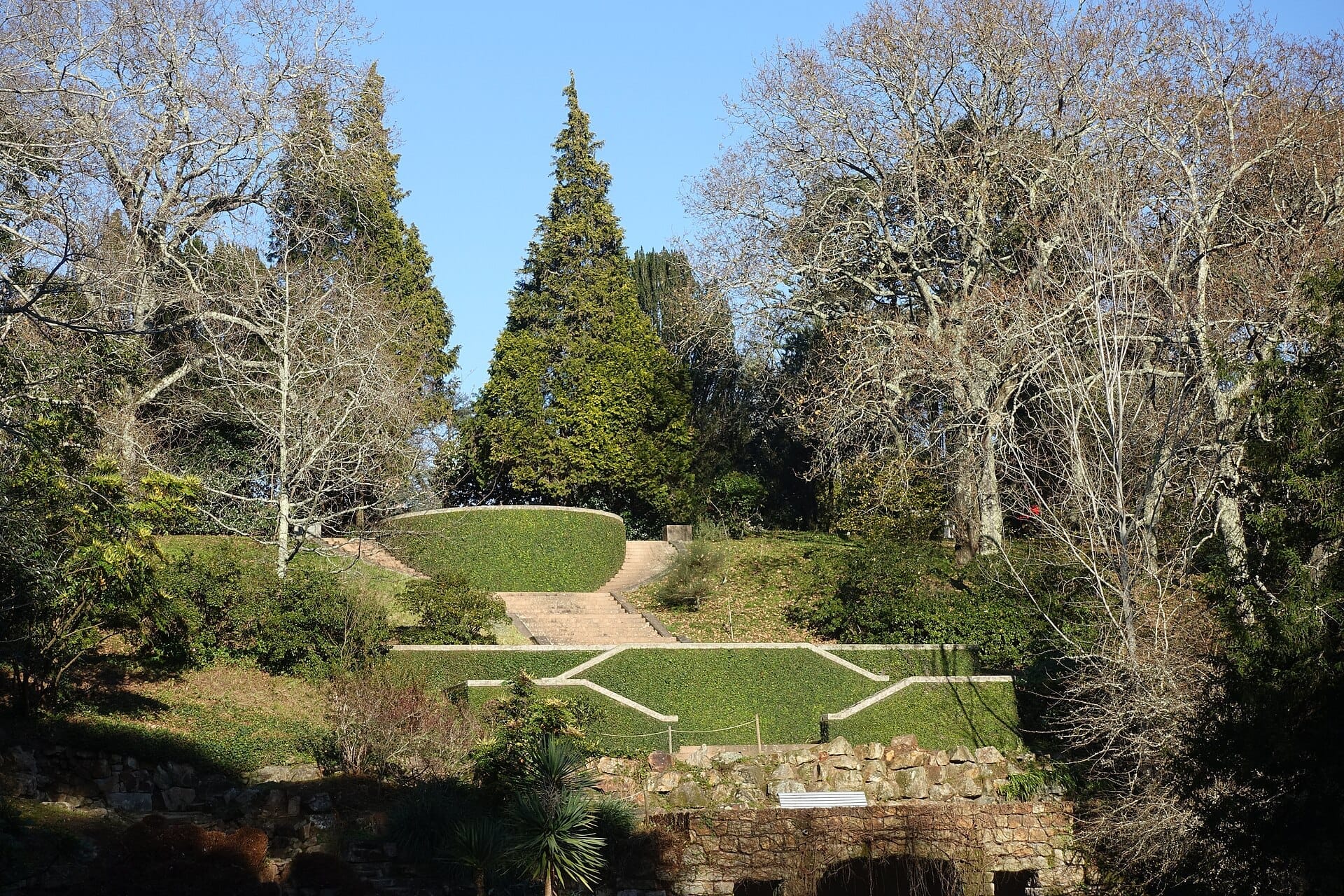
What Serralves Park Actually Is
Parque de Serralves is a carefully maintained estate, now publicly accessible, that belongs to the Serralves Foundation — Porto's principal contemporary art institution. The 18-hectare grounds wrap around two heritage buildings: the pink Art Deco Casa de Serralves villa (completed in the late 1930s) and the modernist Serralves Museum, designed by Álvaro Siza Vieira and inaugurated in 1999. The park itself opened to the public in 1987, predating the museum, and was further developed between 2001 and 2006.
What makes the estate genuinely interesting is its layering. Within one continuous walk you cross formal Deco parterres planted with box hedges and symmetrical flower beds, enter dense woodland where oaks and other native trees create near-darkness at midday, pass through a working farm with chickens and kitchen gardens, and can now climb an elevated canopy walkway. These zones feel distinct enough that the transition between them reads as deliberate, almost theatrical.
ℹ️ Good to know
Ticket options: A park-only ticket covers the grounds and Treetop Walk. A combined ticket adds the Serralves Museum and Casa de Serralves villa. If contemporary art interests you at all, the combined ticket is better value — the museum alone justifies the extra cost.
The Landscape in Detail: Moving Through the Estate
The formal gardens closest to the Casa de Serralves villa set the estate's visual tone immediately. The geometry is strict: clipped hedgerows frame gravel paths, and the planting is seasonal, so the colour palette shifts depending on when you visit. In late spring, roses and wisteria are prominent and the smell is noticeably sweet along the terrace nearest the house. In autumn, the herbaceous borders thin out and the structural bones of the design become more visible — which has its own appeal.
Moving away from the villa, the estate opens into an intermediate zone of lawns and specimen trees before the woodland closes in. The change in sound is immediate: birdsong replaces the faint hum of Boavista traffic, and the light drops several levels. The woodland paths are unpaved and occasionally uneven, so flat, closed shoes are more practical than sandals, particularly after rain. The ground stays damp longer than you might expect.
The Quinta (traditional farm) area is easy to miss if you follow only the main loop, but it is worth the short detour. It operates as a working farm rather than a static exhibit — there are vegetable gardens, composting areas, and livestock. Children respond to this section reliably. Adults who follow the park's information panels here get the clearest explanation of how the estate functioned historically as a private agricultural holding.
Tickets & tours
Hand-picked options from our booking partner. Prices are indicative; availability and final rates are confirmed when you complete your booking.
Serralves All-Access Pass
From 24 €Instant confirmationFree cancellationEntrance tickets to Serralves Park in Porto
From 15 €Instant confirmationFree cancellationSantiago de Compostela Full-Day Tour
From 79 €Instant confirmationFree cancellationPeneda Geres park full-day tour from Porto
From 100 €Instant confirmationFree cancellation
The Treetop Walk: Worth the Ticket or Not?
The Treetop Walk is an elevated timber walkway that lifts visitors into the canopy of the woodland section. The structure is well-engineered and feels solid underfoot, though anyone with a real sensitivity to heights will notice the exposed sections.
Photographically, the walkway offers angles through the canopy that are genuinely unusual and difficult to replicate at ground level. At mid-morning, when light filters through the leaf cover, the effect is particularly good. In full summer at noon, the light flattens out and the canopy provides welcome shade rather than dramatic photography conditions.
💡 Local tip
The Treetop Walk operates on scheduled guided visits rather than free-roaming access. Check the session times on the Serralves website before you arrive — sessions can fill up, especially on weekends and during school holidays.
Time of Day: When to Arrive and Why It Matters
Weekday mornings between opening and noon are the quietest window. The formal gardens near the villa are nearly empty, the gravel paths are freshly raked, and the light is at its best angle for the pink stucco facade of the Casa de Serralves. If you want photographs of the house without people in them, Tuesday through Thursday before 10:30 is your realistic window.
Weekend afternoons in summer draw more visitors, particularly families with children and groups. The park is large enough that it never feels genuinely crowded, but the Treetop Walk sessions will be fuller and the cafe near the museum will have a queue. The gardens handle crowds better than the woodland paths, which are narrow enough that passing someone going the other direction requires stepping aside.
Winter visits are underrated. The park stays open through the cold months, admission is the same price, and the bare-tree woodland has a starkness that the leafy summer version lacks. Rain is a real possibility from November through February, and the unpaved paths can become muddy. A compact umbrella and waterproof footwear are practical investments for a winter visit.
The Serralves Museum and Villa: Should You Add Them?
The Serralves Museum is one of the most architecturally significant contemporary art institutions in Portugal. Álvaro Siza Vieira's building uses natural light with the precision of someone who spent decades thinking about how northern Portuguese light behaves — which he did. If you have any interest in how a building can frame both art and landscape simultaneously, the museum alone rewards the price of the combined ticket. For a broader sense of Porto's contemporary cultural life, the best museums in Porto guide covers how Serralves fits into the city's wider offering.
The Casa de Serralves villa is a different experience from the museum: smaller, more intimate, and directly connected to the Art Deco gardens through its terrace and ground-floor rooms. The interior design and period furnishings are well-preserved and help explain why the formal garden geometry feels so intentional — the entire estate was conceived as a unified composition in the 1930s. Visitors interested in Portuguese decorative arts will find the house more rewarding than those expecting contemporary exhibitions.
Getting There: Practical Transit Information
Serralves sits in the Boavista district, Serralves sits in Porto's Boavista area, west of the historic centre. City buses run along or near Rua Dom João de Castro and connect to Boavista's main rotunda, which is a central node in Porto's bus network. Taxi and ride-hailing apps (Uber and Bolt both operate in Porto) provide a direct, straightforward journey from central areas.
The park does not have a metro station immediately adjacent. The nearest metro lines serve Boavista's rotunda area, which is walkable. If you are combining Serralves with a broader western Porto itinerary — including Foz do Douro or Parque da Cidade — a taxi or bus makes more sense than navigating back to the metro.
💡 Local tip
Residents in Portugal receive discounted entry. If you are spending multiple days in Porto and plan to use a city card for transport and attractions, verify whether Serralves is included in your specific card tier before purchasing. If you are spending multiple days in Porto and plan to use the card for transport and attractions, verify that Serralves is included in your specific card tier before purchasing.
Photography, Accessibility, and Limitations
For photography, the estate offers several reliable compositions: the pink facade of the Casa de Serralves against clipped hedgerows, the long axial views through the formal parterres, canopy light through the Treetop Walk, and the Siza Vieira museum's white walls against the surrounding green. A standard 24–70mm equivalent range covers most situations well. Morning light on the east-facing villa facade is warmer and more interesting than afternoon direct sun.
Physical accessibility across the full estate is uneven. The formal gardens and museum building have paved surfaces and organized access. The woodland paths and farm area are not fully wheelchair-friendly, particularly after wet weather. The Serralves Foundation can provide specific accessibility information directly; it is worth contacting them before visiting if mobility is a concern.
Who might want to skip Serralves: visitors with very limited time in Porto who are prioritizing the riverfront and wine lodges in Vila Nova de Gaia will find the journey to western Porto a significant detour. The park is genuinely excellent, but it requires a half-day commitment to experience properly, and it sits outside the natural walking circuit of central Porto. If your Porto itinerary is under two days, prioritize the historic centre and consider Serralves on a longer trip.
For those with more time, a 3-day Porto itinerary can comfortably accommodate a Serralves half-day alongside the city's central highlights.
Insider Tips
- The park-only ticket is sufficient if you plan to focus on the gardens and Treetop Walk, but the combined ticket is worth considering: the Siza Vieira museum building is remarkable even on days when the exhibition is not particularly compelling.
- Serralves hosts an annual open weekend called 'Serralves em Festa' (Serralves in Celebration), typically in late spring or early summer, when the estate stays open through the night with live performances and art installations. It is one of Porto's most distinctive cultural events and the park takes on a completely different character after dark.
- The estate cafe and restaurant are serviceable but not exceptional. For a better meal, cross into the Boavista neighbourhood: there are several restaurants within 10 minutes' walk that serve proper Portuguese food at reasonable prices.
- The woodland section has several unofficial side paths that branch off the main loop. Following them does not lead to anything hidden, but they reduce foot traffic and make the woodland feel genuinely more isolated. Worth trying if you visit during a busy period.
- The formal gardens closest to the villa are most photogenic in the early morning, but the Treetop Walk's canopy light peaks around mid-morning when the sun is high enough to filter through the leaves without creating harsh shadows. Plan your sequence accordingly.
Who Is Serralves Park For?
- Families with children, especially for the farm area and the novelty of the Treetop Walk
- Architecture and design enthusiasts interested in Portuguese Art Deco and the Álvaro Siza Vieira museum building
- Photographers looking for composed garden and canopy shots away from Porto's crowded riverfront
- Visitors who want a genuine half-day break from urban sightseeing without leaving the city
- Anyone extending a Porto trip to three or more days who has already covered the main central attractions
Nearby Attractions
Other things to see while in Boavista:
- Casa da Música
Casa da Música is Porto's most architecturally striking building and one of Europe's most respected concert halls. Designed by Dutch architect Rem Koolhaas and completed in 2005, it anchors the Boavista district with a jagged white concrete form that looks as radical today as it did on opening day. Whether you come for a guided tour or a live performance, the building rewards close attention.
- Mercado Bom Sucesso
Mercado Bom Sucesso is a renovated early-1950s market hall in Porto's Boavista district, now operating as a gourmet food court alongside a traditional fresh produce market. Entry is free, hours run late into the evening, and the mix of Portuguese food stalls and design-conscious interior makes it a useful stop for both eating and exploring the western side of the city.
- Parque da Cidade
Covering 83 hectares on Porto's Atlantic edge, Parque da Cidade do Porto is Portugal's largest urban park. Designed by landscape architect Sidónio Pardal and inaugurated in 1993, it offers approximately 9.5 kilometres of walking paths, open meadows, lakes, and quiet woodland — all free to enter and largely unknown to visitors staying in the historic centre.
- Serralves Museum of Contemporary Art
The Serralves Museum of Contemporary Art is a major cultural institution in Porto, housed in a landmark building designed by Pritzker Prize-winning architect Álvaro Siza Vieira. Set within an 18-hectare estate in the Boavista district, the complex pairs rotating contemporary art exhibitions with a restored Art Deco villa and a designed park.