Casa da Música Porto: Inside Rem Koolhaas's Architectural Landmark
Casa da Música is Porto's most architecturally striking building and one of Europe's most respected concert halls. Designed by Dutch architect Rem Koolhaas and completed in 2005, it anchors the Boavista district with a jagged white concrete form that looks as radical today as it did on opening day. Whether you come for a guided tour or a live performance, the building rewards close attention.
Quick Facts
- Location
- Avenida da Boavista 604-610, Boavista, Porto
- Getting There
- Metro: Casa da Música station (Lines A, B, C, E, and V); multiple STCP bus lines
- Time Needed
- 1–2 hours for a guided tour; longer if attending a concert
- Cost
- Guided tours from approx. €12.50; Porto Card gives 50% discount. Verify prices before visiting.
- Best for
- Architecture fans, classical and contemporary music lovers, design-curious travelers
- Official website
- casadamusica.com/en
What Casa da Música Actually Is
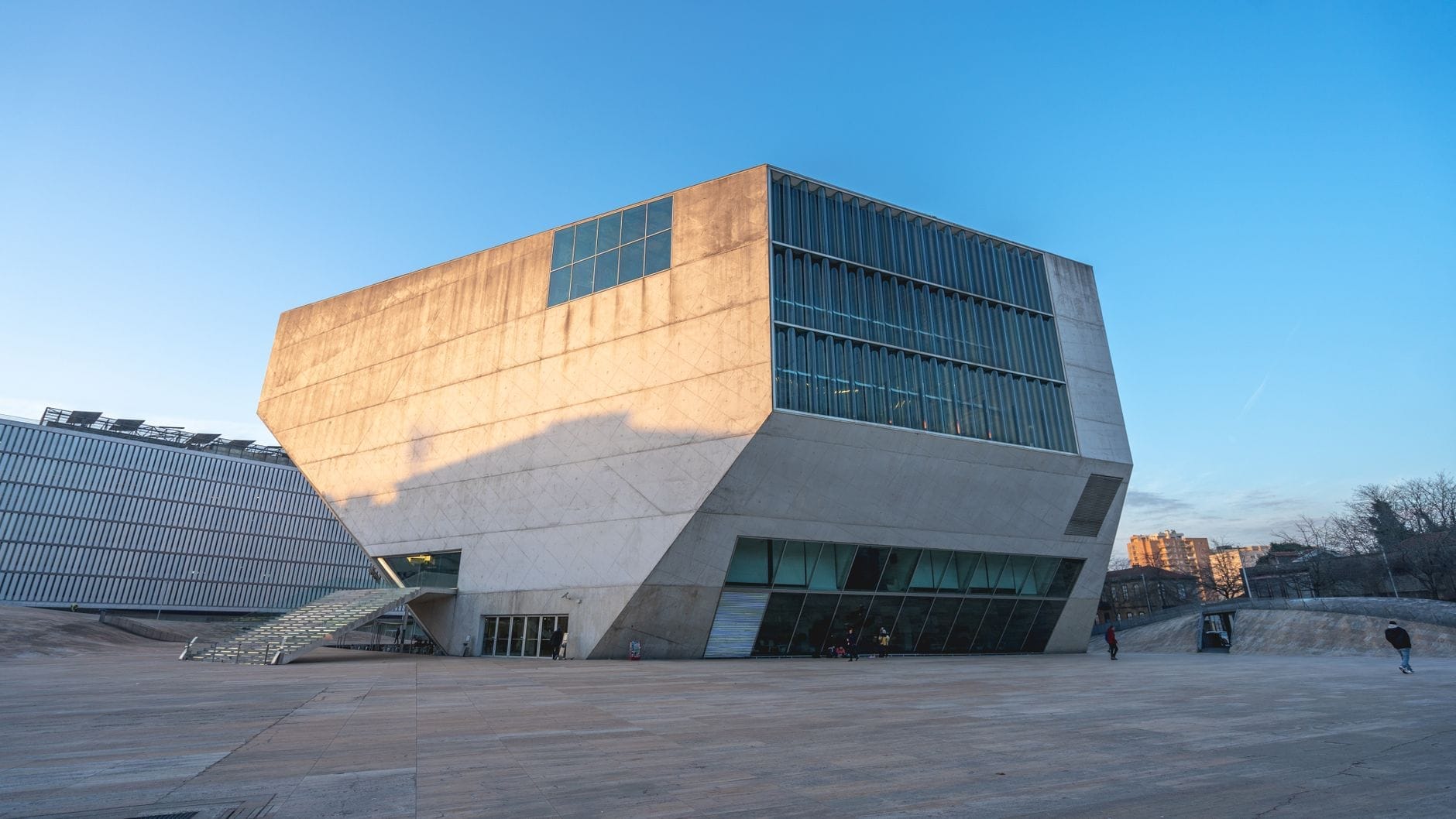
Casa da Música, Portuguese for House of Music, is Porto's principal concert hall and one of the most discussed pieces of contemporary architecture in Europe. It sits at the western edge of the Rotunda da Boavista, a major traffic roundabout that also serves as an informal civic square. The building does not ease into its surroundings. It lands on its site like a displaced geological formation, a faceted white concrete polyhedron tilted at an angle that makes it look as if it arrived from somewhere else entirely.
Dutch architect Rem Koolhaas of the Office for Metropolitan Architecture (OMA) designed the building, with construction running from 1999 to 2005. Conceived as part of Porto 2001 – European Capital of Culture, it was ultimately inaugurated in 2005 after construction delays. The Grand Auditorium at its core seats around 1,300 people and is considered acoustically exceptional. Smaller performance spaces, rehearsal rooms, educational facilities, and a rooftop restaurant complete the programme.
💡 Local tip
Guided tours run regularly and are the best way to access parts of the building not open to concert-goers. Book in advance through the official website, especially on weekends, when tour slots fill up.
The Architecture: What Makes This Building Worth Studying
From outside, the building reads as a single irregular solid. There are no curves, no ornamental details, and no visible entrance canopy. The facade is clad in white concrete panels, punctuated by two enormous glass walls at either end of the Grand Auditorium. These glazed surfaces, which Koolhaas described as windows for the city, mean that musicians and audiences can see out onto Porto during a performance, and passersby can glimpse the stage from the street at night. It is a deliberately anti-monumental gesture that subverts the usual relationship between a concert hall and its public.
Move around the building and the geometry shifts unexpectedly. Surfaces that appear flat from one angle reveal slight tilts and cuts from another. The main entrance is recessed under an overhang at street level, easy to miss if you approach from the wrong side. The plaza surrounding the structure is paved in large stone slabs and largely open, which means morning light hits the concrete facade cleanly and afternoon shadow patterns transform the texture of the walls. Photographers who arrive around 10am on a clear day will find the eastern face sharply defined against the sky.
If you are already interested in Porto's architectural range, pairing this visit with a walk through the Boavista district gives useful contrast. The area around Casa da Música contains both Soviet-era memorial architecture at the Rotunda and sleek contemporary office towers, which makes Koolhaas's building feel less isolated and more like part of an ongoing urban conversation about what Porto wants to look like.
Tickets & tours
Hand-picked options from our booking partner. Prices are indicative; availability and final rates are confirmed when you complete your booking.
Casa da Guitarra Porto fado show
From 15 €Instant confirmationFree cancellationSerralves All-Access Pass
From 24 €Instant confirmationFree cancellationSantiago de Compostela Full-Day Tour
From 79 €Instant confirmationFree cancellationPeneda Geres park full-day tour from Porto
From 100 €Instant confirmationFree cancellation
The Guided Tour: What You Actually See Inside
The interior is where the building becomes genuinely surprising. The public lobby is cool, low-lit, and lined in cork and wood, materials that absorb sound and give the entry sequence an unexpectedly domestic quality after the blunt exterior. Staircases twist through the building at angles that seem slightly wrong until you understand the geometry. The experience of moving through the structure is disorienting in a way that feels intentional rather than careless.
Guided tours lead visitors into the Grand Auditorium, where the acoustic design becomes visible in the arrangement of wooden wall panels and the absence of parallel surfaces. The two glass end walls that define the exterior identity of the building are even more arresting from inside. Standing on the stage and looking through the western glass wall toward Boavista's skyline, the usual separation between performance and city collapses. Tours also typically include the smaller Sala VIP, a more intimate hall tiled entirely in blue and white azulejos designed by artist Joana Vasconcelos, which creates an almost surreal decorative contrast with the building's otherwise severe concrete palette.
The azulejo work inside Casa da Música connects to a much older Porto tradition. If that decorative language interests you, Porto's relationship with ceramic tile runs deep through the city's identity; the Porto azulejo tiles guide covers the history and the best places to see it across the city.
ℹ️ Good to know
Tour prices at the time of research were approximately €12.50 for a standard guided visit and €15.00 for a tourist visit, with a 50% discount for Porto Card holders. Confirm current prices at casadamusica.com/en/ before booking, as these may change.
Attending a Performance: A Different Kind of Visit
A guided tour shows you the building. A concert inside it shows you why the building exists. The resident Orquestra Sinfónica do Porto Casa da Música performs a regular programme throughout the year, with the main symphonic season running from autumn through spring. The programming ranges from orchestral classics to contemporary composition, with occasional jazz, world music, and experimental work. Ticket prices vary substantially by event and seat category; check the official website for the current season.
Evening performances change the building's relationship with the city in a visible way. The glass end walls, which read as transparent voids during the day, become illuminated panels after dark. From the Rotunda da Boavista, the warm glow through the glass makes the auditorium interior visible from outside, reversing the daytime dynamic. If you are in Porto on a concert evening and not attending, it is worth walking past at night just to see this effect.
For travelers building a broader cultural itinerary, consider how this fits with Porto's other serious arts institution. The Serralves Museum is roughly 2 kilometres to the west and offers contemporary art alongside a remarkable modernist park. Both can be combined into a half-day cultural route through western Porto.
Getting There and Practical Details
The Metro station named Casa da Música serves Lines A, B, C, E, and F, placing it on five of Porto's metro services. This makes it one of the most accessible points in the city by public transport, and arriving by metro is straightforward from anywhere in central Porto. From São Bento or Trindade stations, the journey typically takes under 10 minutes. Multiple STCP bus routes also serve the Rotunda da Boavista stop directly outside.
Public visiting hours generally run daily from 10:00 to 20:00, with Sundays and public holidays sometimes closing at 18:00. Note that these are general building access hours and may differ from tour departure times or event schedules. If you are planning around a specific concert or guided tour, confirm the slot directly with the venue.
If you are arriving in Porto for the first time and planning to cover several paid attractions, review the getting around Porto guide before you go. The Porto Card bundles public transport with discounts at attractions including Casa da Música and can represent genuine savings depending on your itinerary.
⚠️ What to skip
Accessibility information for Casa da Música is not independently verified here. For step-free access, lift availability, and assisted visit arrangements, contact the venue directly or check the official website before your visit.
Is It Worth Your Time?
Casa da Música is not a place you wander into and absorb passively. Without a tour, the public areas of the building are limited, and the architectural ambition is hard to grasp from the lobby alone. Visitors who invest in a guided tour consistently report it as one of their most memorable Porto experiences. Visitors who simply walk past, take a photograph of the exterior, and move on tend to find it underwhelming, a large concrete shape on a roundabout.
Travelers with no particular interest in architecture or music will probably prefer to spend equivalent time in the Ribeira, at the Palácio da Bolsa, or exploring the city's historic churches. But for anyone who finds contemporary design genuinely interesting, or who wants to attend a serious musical performance in an extraordinary acoustic space, this building delivers at a level that few attractions in Porto match.
If you are still building your Porto itinerary and weighing priorities, the Porto 2-day itinerary places Casa da Música in context alongside the city's other major draws, which helps with realistic time planning.
Insider Tips
- Book guided tours online rather than buying walk-in tickets. Weekend morning slots often sell out, and the online booking system lets you select a language-specific tour.
- The rooftop area offers views across Boavista that are genuinely different from Porto's more famous river panoramas. Ask on your tour whether the rooftop terrace is accessible that day, as it is not always included.
- If you are attending a concert, arrive 20 minutes early and spend time in the lobby rather than waiting outside. The interior materials and spatial transitions repay slow attention before the hall fills.
- The building reads very differently at night. If you are not attending a performance, a short walk past the Rotunda after dark to see the illuminated glass walls costs nothing and takes five minutes from the metro station.
- Porto Card holders get 50% off guided tour admission. If you are visiting multiple paid attractions in one or two days, the card can offer good value; verify current pricing before purchasing.
Who Is Casa da Música For?
- Architecture and design enthusiasts who want to see serious contemporary building up close
- Classical music and contemporary performance audiences looking for a world-class acoustic venue
- Travelers combining cultural depth with western Porto's museum district
- Design students and professionals interested in OMA's spatial approach
- Evening visitors who want a high-quality cultural experience beyond bar-hopping
Nearby Attractions
Other things to see while in Boavista:
- Mercado Bom Sucesso
Mercado Bom Sucesso is a renovated early-1950s market hall in Porto's Boavista district, now operating as a gourmet food court alongside a traditional fresh produce market. Entry is free, hours run late into the evening, and the mix of Portuguese food stalls and design-conscious interior makes it a useful stop for both eating and exploring the western side of the city.
- Parque da Cidade
Covering 83 hectares on Porto's Atlantic edge, Parque da Cidade do Porto is Portugal's largest urban park. Designed by landscape architect Sidónio Pardal and inaugurated in 1993, it offers approximately 9.5 kilometres of walking paths, open meadows, lakes, and quiet woodland — all free to enter and largely unknown to visitors staying in the historic centre.
- Serralves Museum of Contemporary Art
The Serralves Museum of Contemporary Art is a major cultural institution in Porto, housed in a landmark building designed by Pritzker Prize-winning architect Álvaro Siza Vieira. Set within an 18-hectare estate in the Boavista district, the complex pairs rotating contemporary art exhibitions with a restored Art Deco villa and a designed park.
- Serralves Park
Parque de Serralves is an 18-hectare estate in western Porto combining formal Art Deco gardens, ancient woodland, a traditional farm, and a canopy walkway. Part of the broader Serralves Foundation complex, the park rewards slow walkers who take time to move through its shifting landscapes rather than rush to a single highlight.