Jardim do Passeio Alegre: Porto's Quiet Garden at the Edge of the Douro
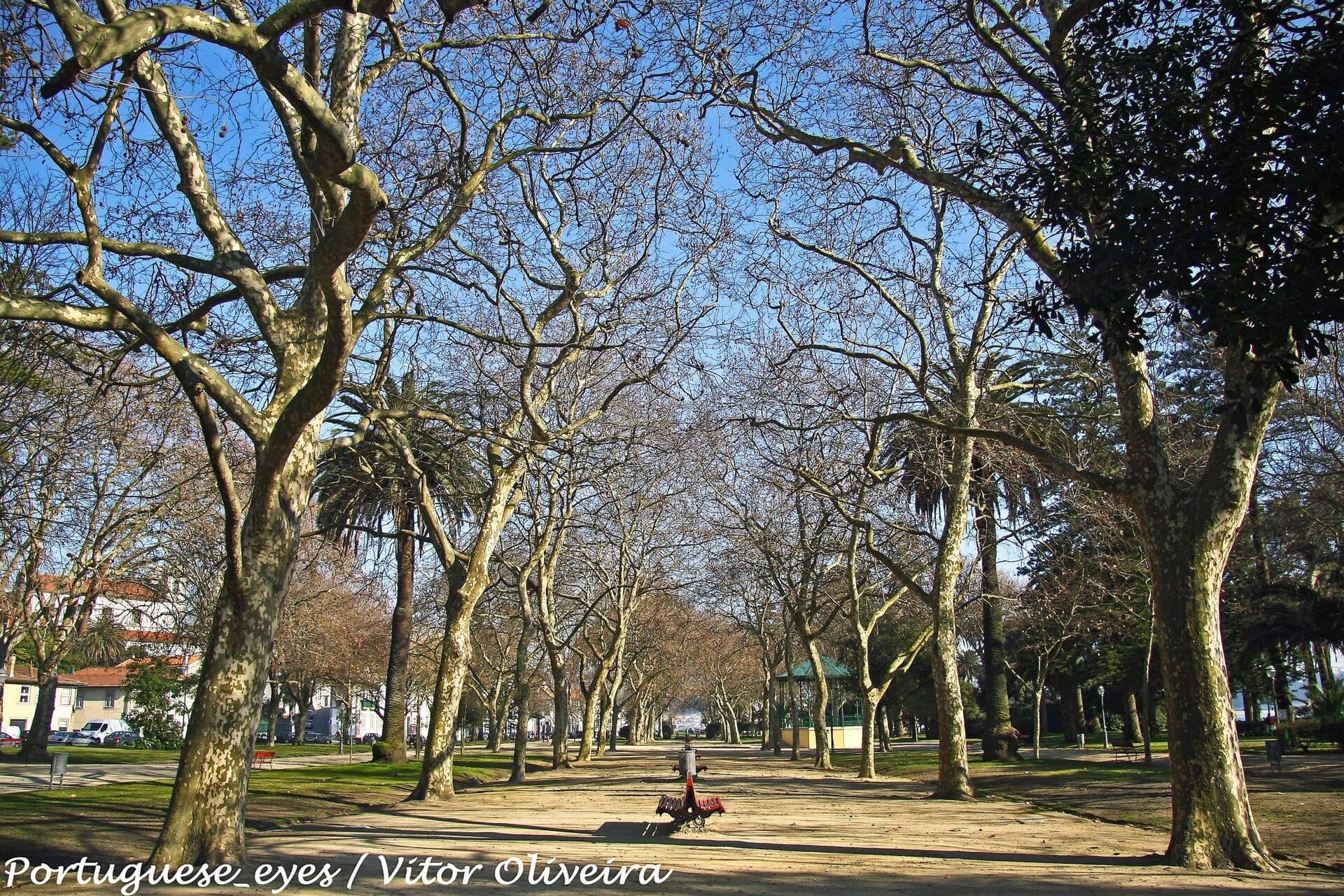
Laid out in romantic style at the end of the 19th century, Jardim do Passeio Alegre sits at the mouth of the Douro in Foz do Douro. Free to enter and served by Porto's historic tram line, it carries real architectural history — including two obelisks by Nicolau Nasoni and a fountain salvaged from the Convent of São Francisco — within one of the least crowded green spaces in the city.
Quick Facts
- Location
- Rua do Passeio Alegre, Foz do Douro, Porto
- Getting There
- Historic Tram Line 1 terminus; STCP Bus 500
- Time Needed
- 45 minutes to 1.5 hours
- Cost
- Free entry
- Best for
- Slow walks, architectural details, families, couples, tram riders
- Official website
- visitporto.travel/poi/5cd04b48f979e000016c560c
What Is Jardim do Passeio Alegre?
Jardim do Passeio Alegre is a free public garden at the western tip of Porto, positioned where the Douro River finally empties into the Atlantic Ocean. It occupies the Foz do Douro district — a quieter, more residential stretch of the city that most visitors only reach if they follow the tram line or a riverside walk to its logical end. The garden opens 24 hours a day and requires no ticket.
It is not a grand formal park in the manner of a capital city showpiece. It is something more personal: a nineteenth-century romantic garden with shaded alleys, benches facing the water, and a collection of architectural elements that carry more history than their modest setting suggests. For anyone who has spent time in Porto's more famous squares, this garden offers a noticeably different register — quieter, greener, and far less photographed.
💡 Local tip
Historic Tram Line 1 terminates right at the garden entrance. Riding the tram from the Infante stop along the Douro riverbank and stepping off here is one of the most atmospheric ways to arrive — and makes the journey itself part of the experience.
The Architecture and History You Should Actually Look At
The garden was built at the end of the 19th century in the romantic landscape style fashionable across Europe at the time. The designer, Emile David, also worked on Porto's Crystal Palace gardens — which explains a certain family resemblance in the curving paths, the mixture of ornamental and shade trees, and the placement of decorative structures within the green space.
The most historically significant features are easy to walk past without realizing what you are looking at. Two obelisks inside the garden are the work of Nicolau Nasoni, the Italian-born architect who shaped so much of Porto's Baroque character in the 18th century, including the Clérigos Tower. Nasoni's obelisks being repurposed in a garden two centuries after his death is a small, strange piece of the city's continuity — the kind of detail that rewards visitors who slow down.
The central fountain was originally from the Convent of São Francisco, a structure intrinsically connected to Porto's religious and civic heritage. You can visit the Igreja de São Francisco before or after the garden to see the broader architectural context from which the fountain came.
The small building that looks like an alpine chalet — a romantic villa from the late 19th century — now functions as a café. It was historically a meeting place for Porto's intellectual circles, and the building retains that slightly anachronistic, deliberately picturesque quality that the romantic style intended. The public bathrooms in the garden are also worth noting: they are decorated with Art Nouveau tiles and English ceramic fixtures, which is an unusual combination and oddly charming.
Tickets & tours
Hand-picked options from our booking partner. Prices are indicative; availability and final rates are confirmed when you complete your booking.
Serralves All-Access Pass
From 24 €Instant confirmationFree cancellationSantiago de Compostela Full-Day Tour
From 79 €Instant confirmationFree cancellationPeneda Geres park full-day tour from Porto
From 100 €Instant confirmationFree cancellationPorto historical center and the best viewpoints on a tuk-tuk
From 39 €Instant confirmationFree cancellation
How the Garden Feels at Different Times of Day
In the morning, between opening at 08:00 and around 10:00, the garden is almost entirely given over to locals. Dog walkers circle the paths at pace. Older residents occupy the benches in the sun. The café in the chalet opens and coffee drinkers take the terrace chairs facing the river. The light at this hour comes from the east, slanting through the tree canopy, and there is a particular quality of stillness that midday erases.
By midday in summer, the garden fills with families and visitors who have combined it with the nearby Foz beaches. The paths can feel busier, though they never approach the density of a city-centre attraction. The shade of the older trees becomes genuinely useful when afternoon temperatures climb.
Late afternoon is the most atmospheric hour. The Douro mouth catches the western light directly, and the river surface takes on a copper color that photographers will recognize as worth waiting for. The bandstand, which occupies a central position in the garden, looks its best at this time. Visit on a weekend afternoon and there is occasionally live music or a community gathering near the bandstand, though this is informal and not a programmed fixture you can plan around.
ℹ️ Good to know
The garden is currently listed as open 24 hours a day. In summer, sunset in Porto can fall late in the evening, so the golden-hour river views are easily accessed both from inside the garden and from the surrounding Foz promenade.
Getting Here: The Tram and the Riverside Walk
Arriving by historic Tram Line 1 is genuinely recommended, not just as a nostalgic gesture. The tram runs along the Douro riverbank from Infante station, passing through the lower city before reaching Foz do Douro, and the Jardim do Passeio Alegre is its western terminus. The ride takes roughly 30 minutes end to end and costs a standard fare — verify current prices before travel as Andante fares are subject to revision.
STCP Bus 500 also serves the garden directly. Buses connect Foz do Douro to central Porto with more frequency than the tram, making this the faster option if the tram has a long wait. Check current STCP schedules, as frequencies vary by time of day and season.
On foot or by bicycle, the garden is a natural endpoint for a riverside walk from the Ribeira. The route follows the Douro all the way to the Atlantic, passing Cais da Ribeira and the lower city before arriving in Foz. The full walk takes around an hour at an easy pace and provides a continuous reading of the river from the old port district to the ocean.
What Surrounds the Garden
The Foz do Douro neighborhood around the garden is one of Porto's more comfortable residential areas, with wide pavements, seafood restaurants, and direct access to Foz do Douro beaches. The beach immediately adjacent to the garden is Praia do Molhe, a narrow strip of sand at the river mouth, which is very different in character from the open Atlantic beaches a little further north.
The café inside the garden (in the 1874 chalet) serves coffee and light snacks. If you want a more substantial meal before or after visiting, the streets immediately north and east of the garden have a range of restaurants oriented toward locals — fresher menus and lower prices than the central tourist corridors.
💡 Local tip
The public toilets inside the garden are among the more interesting in Porto from a design perspective, featuring Art Nouveau tiles and English ceramic fixtures. They are also genuinely functional and clean — useful to know before a beach walk or tram journey.
Is It Worth the Trip from Central Porto?
The honest answer depends on what kind of traveler you are. Jardim do Passeio Alegre is not a major destination on its own. Its Nasoni obelisks, its fountain from the Convent of São Francisco, and its 1874 chalet are genuinely interesting, but they require a curiosity about architectural and horticultural history to register as highlights rather than background. A visitor who finds ornamental gardens pleasant but historically unremarkable will spend 30 minutes here and feel satisfied, not transformed.
The garden earns its place in an itinerary most naturally when combined with a tram ride along the Douro, a walk along the Foz promenade, or an afternoon at the nearby beaches. In that context, it is a graceful stopping point rather than a standalone destination, and that is not a criticism. Porto's rhythm rewards exactly this kind of slow, connective exploration.
If you are planning a full day in the western part of the city, combining the garden with the Palácio de Cristal gardens — also designed with Emile David's influence in mind — makes for a coherent afternoon around Porto's 19th-century landscape design tradition.
Who should consider skipping it: visitors on a single-day itinerary who have not yet seen the Ribeira, Livraria Lello, or the port wine lodges across the river should prioritize those first. The garden is best appreciated with a sense of how the rest of Porto feels, so that its quietness reads as contrast rather than absence.
Insider Tips
- The tram from Infante station to the garden terminus is worth riding in both directions — the return journey eastward gives you a different view of the Douro and the hillside above the river. Buy a round-trip or use an Andante card.
- On weekday mornings before 10:00, you will have most of the garden to yourself. This is the best time to photograph the obelisks, bandstand, and chalet without people in frame.
- The fountain at the center of the garden came from the Convent of São Francisco. If you are visiting the Igreja de São Francisco in the historic center on the same trip, noting the architectural connection gives the fountain more meaning than it would otherwise have.
- The area directly north of the garden along Avenida do Brasil leads to a flat coastal promenade. It is one of the better walking and cycling routes in Porto and largely unknown to first-time visitors.
- The café inside the chalet terrace faces the river and catches afternoon sun. It fills up on weekends, so arrive before 15:00 if you want an outdoor table.
Who Is Jardim do Passeio Alegre For?
- Travelers who arrived by tram and want a calm endpoint before returning through the city
- Couples looking for a quieter riverside setting away from the crowded Ribeira
- Families with children who benefit from open paths, a café, and accessible toilets before or after a beach visit
- Architecture and history enthusiasts interested in Nasoni's work and 19th-century Portuguese landscape design
- Photographers targeting late-afternoon light at the Douro mouth
Nearby Attractions
Other things to see while in Foz do Douro:
- Foz do Douro Beaches
At the mouth of the Douro River, where the river meets the Atlantic, Foz do Douro offers a cluster of sandy beaches within Porto's city limits. Free to access, flanked by a neo-classical promenade, and served by the historic tram line, these beaches are a genuine local fixture rather than a tourist set piece.