Historic Tram Line 1 (Linha 1): Porto's Riverside Heritage Tram
Porto's Linha 1 is the city's most celebrated heritage tram route, tracing the north bank of the Douro River from the medieval Ribeira waterfront to the Atlantic-facing gardens of Foz do Douro. The ride takes roughly 20 minutes each way aboard beautifully restored vintage tramcars, offering uninterrupted river views from wooden seats that have carried passengers since the late 19th century.
Quick Facts
- Location
- Ribeira to Foz do Douro, Porto — eastern terminus at Infante stop near Igreja de São Francisco
- Getting There
- Board at Infante stop (Ribeira waterfront); accessible on foot from São Bento railway station
- Time Needed
- 25–30 min one way; 1–2 hours if you ride both directions and explore Foz do Douro
- Cost
- Approx. €6.00 per single ride (each direction charged separately); verify current fares with STCP before travelling
- Best for
- Scenic Douro River views, heritage travel, photographers, families with older children
- Official website
- www.stcp.pt
What Is Linha 1 and Why Does It Matter?
Historic Tram Line 1, known locally as Linha 1 or the Eléctrico do Porto, is one of only three surviving heritage tram routes in Porto, all operated by STCP (Sociedade de Transportes Colectivos do Porto). While most cities eventually retired their old tramcars for buses or metro trains, Porto kept a handful of routes running as working heritage lines rather than converted museum pieces. Linha 1 is the longest and most scenic of these survivors.
The route runs entirely along the north bank of the Douro River, from the Infante stop in Ribeira near the old city centre, through Alfândega and Massarelos, all the way to Passeio Alegre at the river mouth in Foz do Douro. Porto's tram system dates to the late 19th century, and the vehicles still in service are genuine vintage tramcars with polished wooden interiors, narrow doors, and hand-operated bells. This is not a replica. These machines are the real thing, and the full one-way journey now takes closer to 30–40 minutes depending on conditions.
ℹ️ Good to know
Linha 1 operates daily with trams running approximately every 20 minutes, generally between about 09:00 and 20:00 in summer. In winter, last departures are earlier in the evening. Check current timetables at stops or on the STCP website before you plan your return journey.
The Ride Itself: What to Expect at Street Level
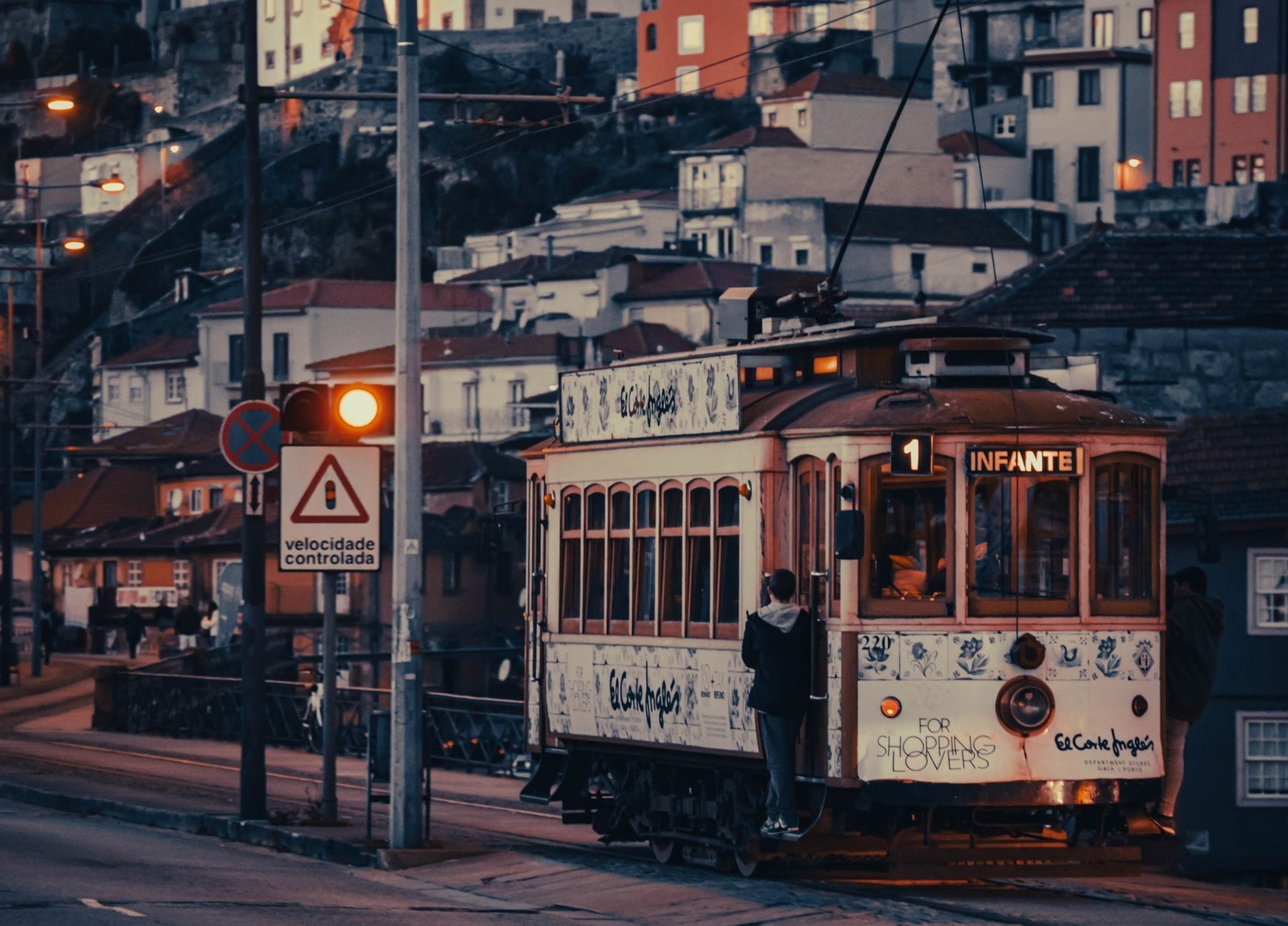
Boarding at the Infante stop puts you at one of the most atmospheric departure points in Porto. The stop sits within easy walking distance of the Igreja de São Francisco and the Cais da Ribeira waterfront, where the old city's narrow lanes spill down to the river. The tram track runs right along the riverside road, and in the minutes before departure you can watch the yellow car sitting against a backdrop of tile-fronted buildings and the Dom Luís I Bridge arching across the Douro.
Once moving, the tramcar shakes and rattles in a way that modern transport simply does not. The wooden benches are firm, the windows open fully if the driver allows it, and the smell of old iron and warm wood fills the cabin. Outside, the Douro stays with you for the entire journey. The view shifts from the dense medieval textures of Ribeira through the quieter riverside quays of Massarelos and eventually opens up as the city loosens its grip and the Atlantic begins to feel close.
The full one-way journey takes around 25–35 minutes without disruptions, though delays are not unusual during busy tourist season when large groups board slowly or photographers stop to photograph the tram at designated spots. Experienced riders take this in stride. The pace is part of the appeal.
Tickets & tours
Hand-picked options from our booking partner. Prices are indicative; availability and final rates are confirmed when you complete your booking.
Peneda Geres park full-day tour from Porto
From 100 €Instant confirmationFree cancellationPorto historical center and the best viewpoints on a tuk-tuk
From 39 €Instant confirmationFree cancellationPorto 48 hours hop-on hop-off bus tour
From 22 €Instant confirmationFree cancellationSecret Porto walking tour
From 35 €Instant confirmationFree cancellation
How the Experience Changes by Time of Day
Early morning departures, roughly from opening until around 10:30, offer the cleanest experience. The riverside road is quieter, the light on the Douro is low and gold, and you are likely to share the car with commuters and dog walkers rather than tour groups. The tram feels genuinely functional at this hour rather than theatrical.
Midday and early afternoon are peak hours. Queues at the Infante stop can stretch back along the pavement in July and August, and full cars are common. If you arrive to find the tram completely packed, waiting 20 minutes for the next one is almost always worth it over standing in the aisle for the whole journey. The wooden interiors are warm in direct sun, so a crowded midsummer car at noon is genuinely uncomfortable.
Late afternoon, from around 16:00 onward, is the sweet spot for photography. The Douro catches the western light and the bridge throws long shadows across the water. Crowd levels drop slightly from the midday peak, and the tram's yellow paintwork photographs exceptionally well against the pinks and ochres of the riverside buildings.
💡 Local tip
Ride from Infante to Passeio Alegre in the late afternoon, spend 30–45 minutes in the gardens, then take the return tram back toward Ribeira as the sun drops over the river mouth. You get the best light in both directions.
The Route's Landmarks and the Neighbourhoods You Pass Through
Leaving Infante, the tram passes close to the Alfândega customs house, a substantial Neo-Romanesque building that now functions as a congress and exhibition centre. The section between Alfândega and Massarelos runs along a quiet riverside road that most visitors never walk, which gives the tram a slightly exploratory quality: you are seeing parts of the riverbank that the main tourist circuit skips. The Dom Luís I Bridge is clearly visible from this stretch, framing the view back toward Gaia.
As the tram reaches the Foz do Douro end, the urban density softens. The final stop at Passeio Alegre places you at the entrance to the Jardim do Passeio Alegre, a formal garden at the river mouth where the Douro meets the Atlantic. The smell of saltwater arrives before the sea is visible. It is a genuinely rewarding end to the journey, particularly if you follow the path to the water's edge.
Practical Information: Tickets, Boarding, and Getting There
Tickets for Linha 1 are purchased on board directly from the driver or conductor, not at machines or metro barriers. Note that the Andante card used for Porto's metro and buses is not accepted on heritage trams: you pay separately for each ride. A reported single-ride fare is approximately €6.00 per direction, meaning a round trip costs around €12.00, but fares are set by STCP and should be confirmed before travel as they are updated periodically.
The eastern Infante terminus is the most practical starting point for visitors staying in central Porto. It is roughly a 10–15-minute walk from São Bento railway station through the Ribeira streets, and close to several major central attractions. If you are coming from Boavista or the northern parts of the city, the metro to Aliados and then a walk down toward the river is a reliable approach.
⚠️ What to skip
The historic tramcars use steep entry steps with narrow doors. Passengers with pushchairs, wheelchairs, or significant mobility limitations will find boarding very difficult. There is no low-floor alternative on this heritage line.
Photography from inside the tram is straightforward: sit on the right-hand side when travelling from Infante toward Foz for unobstructed river views. For exterior shots of the tram itself, several photographers position themselves along the route near the Massarelos stretch or at the Passeio Alegre terminus. The tram also passes near the Cais da Ribeira at the Infante end, which gives a useful landmark for context shots.
Is It Worth Your Time?
Linha 1 is a legitimate working heritage tram, not a tourist gimmick on a circular loop. The fact that it runs a useful route between the old city and Foz do Douro means you can fold it into a day's exploration rather than treating it as a standalone activity. That said, the experience is defined by the quality of the car you board, the crowd level, and the light. On a grey November morning in a nearly empty tram, it is quietly wonderful. On a crowded August afternoon with standing passengers and no air circulation, it is considerably less enjoyable.
Travellers who prioritise efficiency over atmosphere may find the 20-minute journey and the slow pace frustrating, particularly if the tram is delayed. The ride is also not the best primary way to see Porto's most celebrated sights: for the full scope of the city's architecture and history, a structured Porto walking tour covers more ground. But as a sensory experience with genuine historical roots and one of the better river views in the city, Linha 1 earns its place on most itineraries.
Visitors with significant mobility limitations should be aware that the vintage tramcars are not accessible by modern standards. The steep boarding steps and narrow doors make entry genuinely challenging, and there is no adapted alternative on this route. This is worth knowing before making the trip to the stop.
Insider Tips
- Board at Infante rather than mid-route stops: you are guaranteed a seat and get the full journey. Attempting to board at intermediate stops in high season often means watching a full tram roll past.
- The return journey from Passeio Alegre toward Ribeira in the late afternoon gives you a different perspective on the route: the city's hillside buildings catch the western light and look entirely different from the inward direction.
- If you want an exterior photograph of the tram against a clean riverside background, position yourself along the quiet Massarelos stretch before the tram reaches the Foz end. This section of the route has less tourist foot traffic and a cleaner sightline to the water.
- A multi-ride tram ticket or 2-day historic tram pass covers all three heritage tram lines (Line 1, Line 18, and Line 22) and is worth considering if you plan to ride more than twice. Verify current products and pricing with STCP as fares are updated periodically.
- In winter, check the seasonal timetable before planning your return trip. Last departures from Passeio Alegre are earlier in the evening and are easy to miss if you linger too long in the Foz do Douro gardens.
Who Is Historic Tram Line 1 (Linha 1) For?
- Photographers looking for heritage transport shots against the Douro River backdrop
- Travellers combining a Ribeira visit with exploration of Foz do Douro in a single afternoon
- Families with older children who can manage the boarding steps and appreciate the novelty of vintage trams
- First-time visitors to Porto wanting a slow, scenic introduction to the city's riverside geography
- Anyone with an interest in 19th-century urban transport history and pre-motor-age city infrastructure
Nearby Attractions
Other things to see while in Ribeira:
- Cais da Ribeira
Cais da Ribeira is Porto's historic riverside promenade along the north bank of the Douro, part of the UNESCO World Heritage-listed centre. Free to walk, lined with colourful buildings and boat tour kiosks, it is one of Portugal's most recognisable urban waterfronts.
- Casa do Infante
Casa do Infante stands on Rua da Alfândega in the heart of Porto's Ribeira district, occupying a site that has been central to the city's life since the Roman period. Built as a royal customs house in 1325 and later named for Prince Henry the Navigator, traditionally regarded as having been born here in 1394, it now operates as a unit of the Museu do Porto, housing archaeological remains and centuries of civic records beneath one roof.
- Dom Luís I Bridge
The Ponte Dom Luís I is a double-deck iron arch bridge spanning the Douro River between Porto's Ribeira quarter and Vila Nova de Gaia. Open 24 hours a day and free to cross on foot, it rewards visitors with sweeping river views from both its road-level walkway and its elevated metro deck, 45 metres above the water.
- Douro River Cruise
A Douro River cruise transforms Porto's skyline into a living panorama of medieval towers, port wine lodges, and six iron bridges. Whether you take a 50-minute sightseeing loop or a multi-day voyage into the Alto Douro Wine Region, the river gives you a perspective on Porto and its surroundings that no viewpoint on land can match.