Jardins do Palácio de Cristal: Porto's Most Overlooked Green Space
Perched above the Douro on the western edge of Cedofeita, the Jardins do Palácio de Cristal are a sprawling public park with panoramic river views, manicured gardens, and a surprisingly peaceful atmosphere — all free to enter. This guide covers what to expect at different times of day, how to get there, and the history behind the name.
Quick Facts
- Location
- Rua D. Manuel II, Porto
- Getting There
- Bus lines 200, 201, 207, 302, 303, 501, 601
- Time Needed
- 45 minutes to 1.5 hours
- Cost
- Free entry
- Best for
- Views of the Douro, peaceful walks, photography, families
What Are the Jardins do Palácio de Cristal?
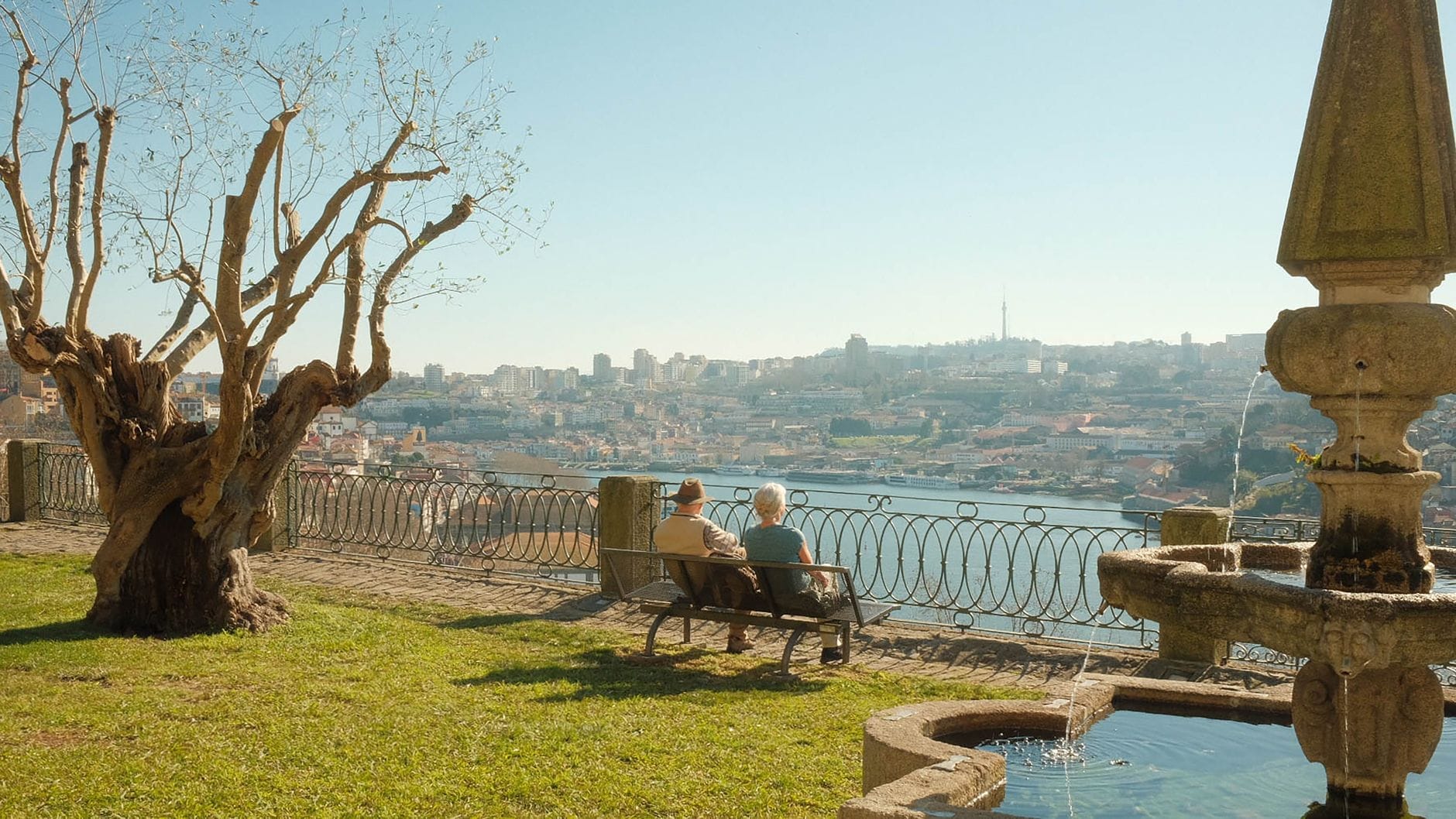
The Jardins do Palácio de Cristal sit on a plateau above the Douro River along Rua D. Manuel II, roughly a 15-minute walk west of the city centre. The name translates literally as Crystal Palace Gardens, though no palace made of crystal exists here today. What you find instead is a large, well-maintained municipal park: lawns, pergolas draped in flowering vines, shaded allées, a small lake, fountains, and multiple terraced viewpoints facing south over the Douro and, on a clear day, Vila Nova de Gaia on the opposite bank.
The park has several resident peacocks that wander the paths freely. They are not a novelty act — they roost in the trees, call loudly in the early morning, and occasionally block the main walkways. First-time visitors are often startled by how close the birds approach. Children find this excellent. Adults find it either charming or mildly alarming, depending on temperament.
ℹ️ Good to know
Opening hours: 08:00–21:00 (April–September) and 08:00–19:00 (October–March). Entry is free. The gardens are managed by Porto City Council.
The History Behind the Name
The original Palácio de Cristal was a large iron-and-glass exhibition hall built in 1865 to host Porto's first international industrial exhibition. Modelled on the Crystal Palace in London, it was an ambitious piece of Victorian engineering: a ribbed dome of cast iron framing large glass panels, designed to flood the interior with natural light. The structure hosted industrial fairs, concerts, and public events for nearly a century.
In 1951, the building was demolished to make way for the Pavilhão Rosa Motta, a sports and events arena that still stands in the park today. The loss of the original palace is one of Porto's most debated architectural decisions. The dome that replaced it is functional but unglamorous. What remains of the 19th-century ambition is the gardens themselves: the park layout, the terracing, and the viewing platforms that frame that extraordinary southern prospect over the Douro valley.
For a deeper look at Porto's architectural history, the Palácio da Bolsa in the Ribeira district offers a well-preserved example of the same mid-19th-century civic ambition that produced the original crystal pavilion.
Tickets & tours
Hand-picked options from our booking partner. Prices are indicative; availability and final rates are confirmed when you complete your booking.
Serralves All-Access Pass
From 24 €Instant confirmationFree cancellationSantiago de Compostela Full-Day Tour
From 79 €Instant confirmationFree cancellationPeneda Geres park full-day tour from Porto
From 100 €Instant confirmationFree cancellationPorto historical center and the best viewpoints on a tuk-tuk
From 39 €Instant confirmationFree cancellation
The View: What You Actually See
The park's southern edge drops sharply toward the river, and several terraced viewpoints give unobstructed sight lines across the Douro. The perspective is different from the more famous viewpoints closer to the old town: here, you are further west, looking across to the hills of Gaia and catching glimpses of the estuary where the river begins to widen toward the Atlantic. On clear mornings, the water reflects the sky in a way that makes the panorama feel disproportionately large for a city park.
The light shifts dramatically across the day. Morning visits, particularly between 08:00 and 10:00, offer soft east-facing light and almost no other visitors. The lawns are damp with dew, the peacocks are active, and the air carries a faint smell of wet earth and flowering shrubs. By midday in summer, the stone paths radiate heat and the park fills with picnicking families, students, and tourists working off lunch. Late afternoon brings the most photogenic conditions: the sun tracks west, the Douro glitters, and the shadows on the garden pergolas lengthen into something almost cinematic.
💡 Local tip
For the best photographs of the Douro views, arrive between 17:00 and 19:00 in summer when the light is low and warm. The south-facing terraces are in direct sun at this hour.
Practical Walkthrough: Getting Around the Park
The gardens occupy a hillside plot, which means there is an elevation change across the site. The upper entrance from Rua D. Manuel II deposits you near the Pavilhão and the main formal garden areas. From there, paved paths lead south and downhill toward the viewpoint terraces. The descent is gradual on the main routes but can be steep on some of the more direct paths between levels. Flat, closed-toe shoes are more practical here than sandals if you plan to explore beyond the main central path.
The park also contains the Biblioteca Municipal Almeida Garrett, a public library housed in a low modern building on the western side. It is easy to miss if you stick to the central lawn, but worth noting if you need a cool, quiet space on a hot afternoon. The café adjacent to the central pavilion has outdoor seating and serves coffee and light snacks — reliable for a mid-visit break, though seating is limited during peak hours.
Accessibility across the main central paths is reasonable for wheelchairs and pushchairs, as these are paved and relatively wide. The hillside terraces and some of the garden sub-areas involve steps or steep gradients that are not accessible. There is no official accessibility guarantee published by the city, so visitors with specific mobility requirements should check with the city council directly before planning around those sections.
Getting There: Transit and Directions
The gardens are served by several bus routes including lines 200, 201, 207, 302, 303, 501, and 601, as listed by Porto City Council. The site is walkable from the central areas of Porto in roughly 15 to 20 minutes on foot, making it easy to fold into a broader walking day. For those already in the Cedofeita district, the park is particularly close. There is no metro station directly adjacent; the nearest metro stops require a short additional walk or bus connection.
If you are building a full-day route, the gardens pair naturally with a visit to the nearby Serralves Museum and its own landscaped grounds, about 2 km further west. Alternatively, walking east from the gardens brings you toward Rua D. Manuel II and eventually down into the Ribeira waterfront in about 25 minutes.
⚠️ What to skip
There is limited paid parking along Rua D. Manuel II. Driving to the park during weekend afternoons in summer is not recommended — the streets around the park fill quickly and there is no dedicated visitor car park.
Weather, Seasons, and When to Visit
Porto's climate is oceanic: mild, damp, and changeable. The gardens are exposed on their southern side, which means wind can cut across the viewpoint terraces even on otherwise warm days. In winter, the lawns are often soggy and the views can be obscured by low cloud sitting over the Douro. The park is still open and used by locals year-round, but a wet January morning here requires a tolerance for grey skies and puddles.
The most reliable months are May, June, and September. This aligns with Porto's broader seasonality: see the best time to visit Porto guide for a fuller picture. In August, the gardens are at their most crowded, particularly on weekends, when Porto's population and summer tourists converge on any outdoor green space. The heat also tends to bleach the colours from the flowerbeds and dry out the lawns.
Spring is when the gardens are at their most photogenic: the rose pergolas are in bloom, the grass is a deep green, and the Douro catches the cleaner spring light. If you have flexibility in your Porto dates and the gardens are a priority, aim for late April or early May.
Who Should and Who Should Not Visit
The Jardins do Palácio de Cristal work well for travelers who want a break from Porto's historic centre without leaving the city. The free entry, the absence of a ticketing queue, and the open space make it a useful reset between museum visits and restaurant reservations. Families with children respond strongly to the peacocks and the open lawns where children can run without obstacle.
Visitors on very tight schedules who are primarily here for Porto's architectural landmarks may find the gardens less essential than the São Bento Railway Station or the Igreja de São Francisco. The gardens do not contain exhibits, historic interiors, or curated experiences — they are a park. If your primary measure of value for an attraction is density of cultural content per hour, this may feel slow.
Travelers with significant mobility limitations should also be aware that the terrain is uneven in places and the viewpoint terraces involve steps. The main paths are manageable but the site is not fully flat.
Insider Tips
- The peacocks tend to congregate near the central fountain area in the mornings before the park fills up. If you want photographs of the birds without other visitors in frame, arrive before 09:00.
- The southwest corner of the park has a small terrace viewpoint that most visitors miss because it requires a short detour off the main central path. It offers a slightly different angle on the Douro than the main miradouro and is almost always quiet.
- The library, Biblioteca Municipal Almeida Garrett, is open to the public and has toilet facilities — useful to know since public toilets in the park itself are not always easy to find.
- The gardens are included in several free walking tour routes that depart from the city centre. If you want context about the original 1865 crystal palace and its demolition, joining one of these tours adds considerably to the visit.
- In summer, the evening closure at 21:00 means you can catch sunset from the viewpoint terraces inside the park — the Douro faces roughly southwest, so the sky over Gaia turns orange well before closing time.
Who Is Palácio de Cristal Gardens For?
- Travelers wanting a free, quiet outdoor break from Porto's busier historic centre
- Families with young children who need open space and something unexpected (the peacocks deliver)
- Photographers looking for an alternative Douro panorama away from the crowded Ribeira viewpoints
- Morning walkers who want the park largely to themselves between 08:00 and 09:30
- Anyone building a half-day walking route through Cedofeita toward Serralves
Nearby Attractions
Other things to see while in Cedofeita:
- Jardim Botânico do Porto
Spread across about 4 hectares on the historic Campo Alegre Estate in Cedofeita, the Jardim Botânico do Porto is one of the city's most rewarding green spaces. Entry is free, the layout is genuinely beautiful, and the crowds are a fraction of what you'll find at Porto's headline attractions.
- Porto Jewish Museum
The Porto Jewish Museum (Museu Judaico do Porto) is a thoughtfully designed institution inaugurated in 2019, tracing nearly two millennia of Jewish presence in Portugal. Linked to the historic Kadoorie Mekor Haim Synagogue, it covers everything from medieval communities to the Inquisition, exile, and the remarkable modern revival of Porto's Jewish community. Visits are arranged in advance through the Jewish Community of Porto.