Foz do Douro Beaches: Porto's Atlantic Coastline, Explained
At the mouth of the Douro River, where the river meets the Atlantic, Foz do Douro offers a cluster of sandy beaches within Porto's city limits. Free to access, flanked by a neo-classical promenade, and served by the historic tram line, these beaches are a genuine local fixture rather than a tourist set piece.
Quick Facts
- Location
- Western Porto, at the mouth of the Douro River, Foz do Douro parish
- Getting There
- Tram Line 1 to Passeio Alegre; multiple bus lines serve the Foz area
- Time Needed
- 2–4 hours for a casual visit; a full afternoon if you plan to swim and walk the promenade
- Cost
- Free admission; sunshade rental available on some sections of the beach
- Best for
- Beach walks, Atlantic swimming, sunset watching, families, and escaping the city centre
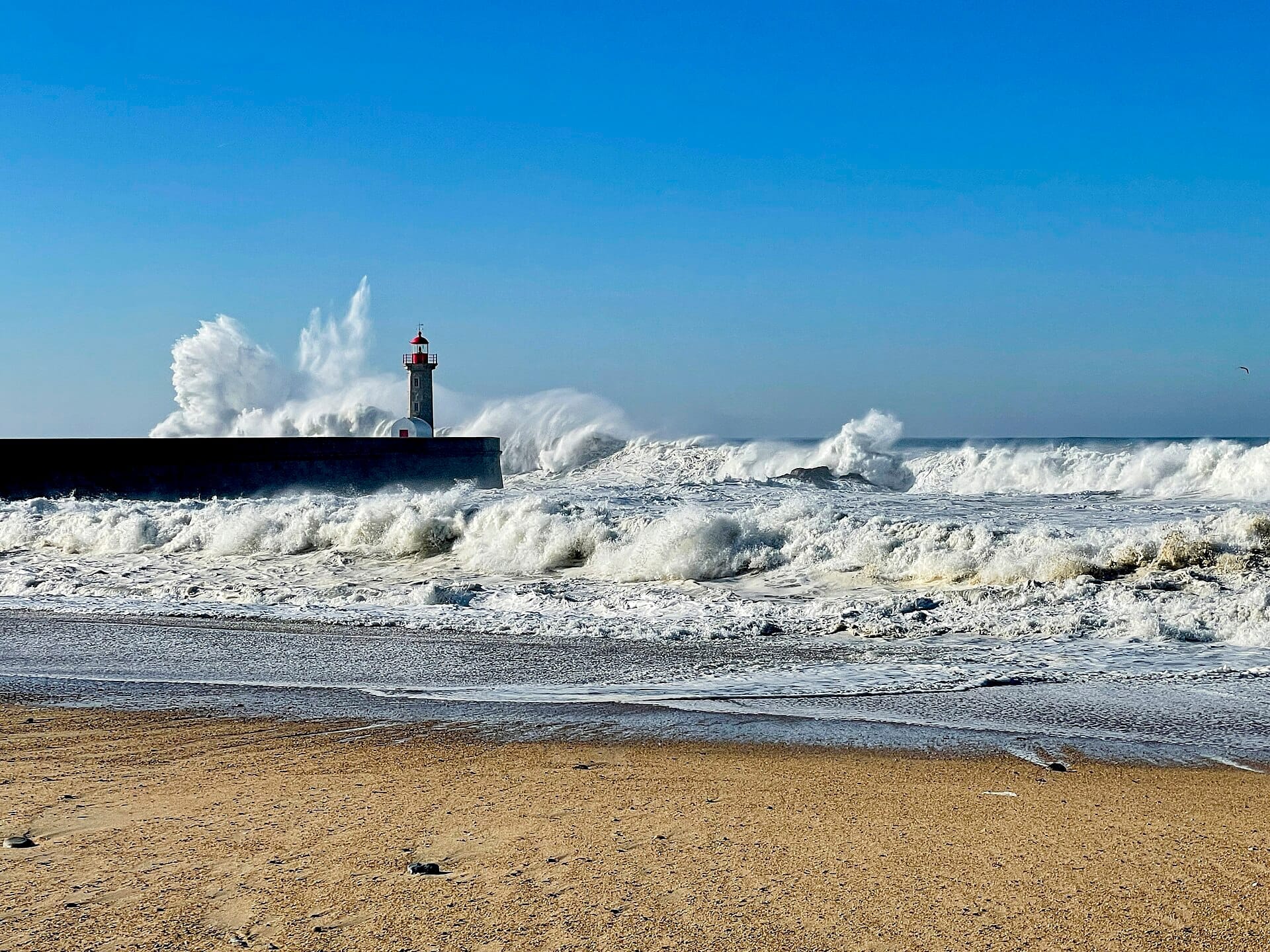
What Foz do Douro Actually Is
Foz do Douro, which translates roughly as 'mouth of the Douro', is the westernmost parish of Porto city, sitting at the point where the river finally opens into the Atlantic Ocean. It became an official parish in 1836 and has functioned ever since as the city's coastal escape. The beach cluster here prominently features Praia dos Ingleses and Praia da Luz, among several others such as Praia do Carneiro and Praia de Gondarém, each separated by rocky outcrops and retaining walls, giving the area a patchwork quality rather than one continuous strip of sand.
Praia dos Ingleses ('Beach of the English') is the most cited of the three, with roughly 86 metres of fine-grained sand sheltered between stone groins. The name likely reflects the historical presence of British merchants in Porto, whose influence also shaped the city's port wine trade. Praia do Ourigo lies along the oceanfront a short walk south from Jardim do Passeio Alegre and is one of the easier beaches to reach by tram, often favoured by families with young children.
ℹ️ Good to know
These are public beaches with no ticket booths or timed entry. They are open year-round, but lifeguard coverage and amenities such as sunshade rental operate seasonally, primarily in summer. Check current flags before swimming: the Atlantic here carries real rip currents and variable swell.
The Beach Experience, Hour by Hour
In the early morning, before 9am, the beaches at Foz do Douro are almost entirely given over to locals. Joggers trace the promenade path. Dog walkers pick their way across the wet sand as the tide recedes. The light at this hour is striking: the Atlantic reflects a low, diffuse glow that turns the water pale silver, and the distant silhouette of the Douro's north jetty cuts a clean line across the horizon. The smell of salt and seaweed is strongest here, carried on a cool onshore breeze that can feel sharp even in July.
By mid-morning on a summer weekend, the mood shifts. Families arrive with bags, umbrellas, and inflatables. The bar and restaurant facilities near the beach fill up. Sunshade rental stalls open. The sand is fine but not especially deep on the smaller beaches, so prime spots near the waterline go quickly. If you want space, aim for a weekday morning between June and August, or visit in May or September when the water is still swimmable but the crowds thin considerably.
Late afternoon is arguably the best time for a non-swimming visit. The sun tracks west and slightly south, hitting the water at an angle that makes it flash and shift colour. The rocks that bookend each beach stretch dry out and warm through the afternoon, and many visitors simply sit on them rather than the sand itself. By early evening, the beach begins to empty, and the promenade fills with walkers taking the classic Foz do Douro sunset stroll.
Tickets & tours
Hand-picked options from our booking partner. Prices are indicative; availability and final rates are confirmed when you complete your booking.
Porto old town and riverside bike tour
From 0 €Instant confirmationFree cancellationSmall group tour in Douro Valley from Porto
From 145 €Instant confirmationFree cancellationPrivate Douro Valley 4x4 full-day tour with wine tasting
From 295 €Instant confirmationFree cancellationDouro Valley day tour from Porto with lunch, wine tasting, and cruise
From 125 €Instant confirmationFree cancellation
The Pérgola da Foz and the Promenade
Running along the seafront above the beaches is the Pérgola da Foz, a neo-classical covered walkway built in the 1930s. It is an unusual piece of civic architecture: a long arcade of white columns with a pergola roof, oriented to face the ocean and designed for exactly the kind of unhurried evening walk that still happens here daily. The structure is not grand in the way of Porto's historic monuments, but it is specific to this neighbourhood in a way that few things are, and it appears in virtually every photograph taken along this stretch of coast.
The promenade connects the beach area with the Jardim do Passeio Alegre, a formal garden at the Douro's mouth that makes a logical starting or ending point for a coastal walk. From the garden, you can look upriver toward the city, or turn seaward to watch container ships and fishing boats navigating the river bar. The combination of river mouth, open Atlantic, and a functioning garden all within a few hundred metres makes this corner of Porto unusually rich for a short walk.
Getting There: Tram, Bus, and on Foot
The most atmospheric way to reach the beaches is on Tram Line 1, Porto's historic yellow tram that runs along the Douro riverfront from Infante all the way west to Passeio Alegre. The journey takes around 25 minutes from the Ribeira area and deposits you directly at the garden adjacent to the beach cluster. It runs on a limited but regular schedule; check STCP's current timetable before planning your day around it, as delays and short-service runs are not uncommon.
Several bus routes also serve the Foz area from central Porto, including connections from Boavista and Aliados. Taxis and ride-hailing apps (Uber and Bolt are both active in Porto) are reliable options if you prefer door-to-door travel. Driving is possible, but parking on summer weekends requires patience; the neighbourhood's narrow streets were not designed for car-dependent tourism.
On foot from the city centre, Foz do Douro is a long but walkable distance, roughly 5 kilometres from Ribeira along the riverside path. This route, while appealing on paper, passes through some uneven and occasionally poorly lit stretches. It works well as a one-way walk with a tram or bus return.
💡 Local tip
If you are combining the beaches with a riverside walk, start at Ribeira in the morning, follow the north bank of the Douro westward, and arrive at Foz in time for lunch. Return by tram or bus to avoid retracing the full route.
Swimming, Safety, and What the Atlantic Demands
The Atlantic Ocean at Foz do Douro is not the same mild sea you find on Portugal's southern Algarve coast. The water temperature in summer sits in the 17–19°C range, which feels brisk rather than warm. Waves are generally moderate at the sheltered beaches here, but the river mouth creates unpredictable currents, particularly near the jetties. Green and yellow flags indicate safe or cautious swimming conditions; red means no bathing. These flags are enforced when lifeguards are on duty, which is seasonal.
VisitPortugal confirms that the beaches here have accessibility facilities, security and surveillance in season, sunshade rental, outdoor parking, and both bar and restaurant access nearby. For families or visitors who need accessible beach entry, this is one of the few beaches within Porto city limits that has confirmed facilities in this category.
⚠️ What to skip
Do not swim near the Douro river mouth jetties, regardless of flag colour. Currents at the bar are strong and unpredictable. The main swimming beaches are positioned further along the coast from the jetty structure.
When to Visit and Who This Suits
May, June, and September are the months that consistently offer the best balance of weather and manageable crowds. The sea in May is cold but the beach is uncrowded and the light is exceptional. September keeps much of summer's warmth in the air while the tourist numbers drop. July and August bring full beach conditions, the complete set of amenities, and the longest queues. For context on the broader seasonal picture across Porto, the best time to visit Porto guide covers the tradeoffs in more detail.
For visitors who want more beach than Foz do Douro's compact sandy pockets can offer, the beaches at Matosinhos to the north are a practical comparison. Matosinhos has significantly longer stretches of open sand and is served by the Metro directly, making it easier to access from the city centre. Foz do Douro wins on atmosphere and proximity to Porto's residential character; Matosinhos wins on scale and surf conditions.
Visitors who have no interest in the ocean may still find the Foz do Douro neighbourhood worth the trip for its cafe culture, quality of the evening light, and the Pérgola walk alone. This is one of Porto's more affluent and photogenic residential areas, and simply walking its streets between the ocean and the Douro estuary is a distinct experience from anything the city centre offers.
Photography Notes and What to Bring
The best photography at Foz do Douro happens at the golden hour before sunset, when warm light hits the white columns of the Pérgola from the west and reflects off the wet sand. The rocky outcrops between beaches are ideal elevated positions for shooting the surf without needing anything longer than a standard lens. Early morning offers cleaner backgrounds, fewer people, and better colour in the water.
Bring water and sunscreen even in spring: the seafront offers little natural shade away from the Pérgola, and the Atlantic wind can mask how much sun you are absorbing. Flip-flops are adequate footwear on the sandy beaches, but the promenade sections and rock areas benefit from closed shoes. If you plan to stay for sunset, the temperature drops quickly once the sun goes down, even in summer.
Insider Tips
- Weekday mornings in June or September give you near-empty beaches with full lifeguard coverage and open facilities. This is the sweet spot most visitors miss by arriving in August.
- The Pérgola da Foz is far more photogenic from the beach level looking up than from walking through it. Descend to the sand and look back toward the structure for the cleaner composition.
- If you arrive by tram, do not get off at the last stop immediately. Ride to the very end at Passeio Alegre for the best starting point, then walk north along the promenade to cover all three beaches in one direction.
- Praia do Ourigo, being closest to the Jardim do Passeio Alegre, gets shade from the garden trees in the late afternoon. If you are sensitive to sun, this beach gives you a natural exit into shade without packing up entirely.
- The bar and restaurant facilities near the beaches are used by Porto locals as regular lunchtime spots, not just beach add-ons. Sitting there without going to the beach at all is entirely normal and gets you a waterfront table without needing a reservation.
Who Is Foz do Douro Beaches For?
- Families with young children looking for calm, monitored water and accessible facilities
- Walkers and photographers who want coastal scenery within Porto's city limits
- Visitors who want a genuine local neighbourhood experience away from the historic centre
- Travellers combining a Douro riverfront walk with an Atlantic beach finish
- Anyone seeking a free, low-effort half-day out of the city centre without leaving Porto
Nearby Attractions
Other things to see while in Foz do Douro:
- Jardim do Passeio Alegre
Laid out in romantic style at the end of the 19th century, Jardim do Passeio Alegre sits at the mouth of the Douro in Foz do Douro. Free to enter and served by Porto's historic tram line, it carries real architectural history — including two obelisks by Nicolau Nasoni and a fountain salvaged from the Convent of São Francisco — within one of the least crowded green spaces in the city.