Sausalito: San Francisco's Bay-Side Escape Worth the Short Trip
Sausalito is a small waterfront city in Marin County, directly north of San Francisco across the Golden Gate Bridge. With bay views, a walkable main street, houseboat communities, and easy ferry access, it makes a compelling half-day excursion from the city, though it rewards those who understand what it is and isn't.
Quick Facts
- Location
- Marin County, California, just north of San Francisco across the Golden Gate Bridge
- Getting There
- Golden Gate Ferry from the Ferry Building (Embarcadero); by car via US-101 over the Golden Gate Bridge; by bike over the bridge
- Time Needed
- 2 to 4 hours for a solid visit; can be extended to a full day
- Cost
- No admission to the town; ferry tickets and individual venues charge separately
- Best for
- Bay views, a slow waterfront walk, browsing independent shops, and arriving by ferry
- Official website
- www.sausalito.gov
What Sausalito Actually Is
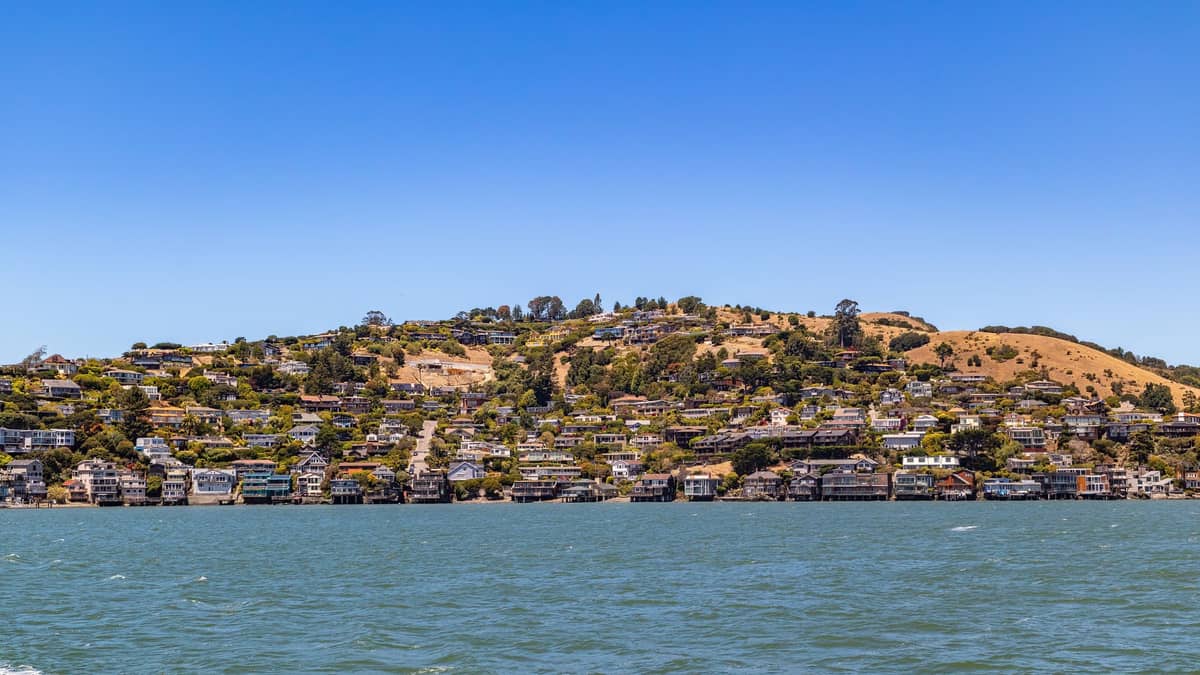
Sausalito is not an attraction in the conventional sense. There are no gates, no tickets, no single landmark that defines the visit. It is a small, incorporated city in Marin County with a permanent population of around 7,300 people, sitting on a hillside above San Francisco Bay. Its streets, waterfront, and public areas are accessible at any hour without charge. What draws visitors is the cumulative effect: the bay light hitting the hills in the afternoon, the mix of independent galleries and seafood restaurants along Bridgeway, the improbable colony of floating homes moored in Richardson Bay, and the view back toward San Francisco and its skyline from across the water.
The name comes from Spanish, derived from the word for a small willow grove. Spanish naval officer Juan Manuel de Ayala used a version of the name in the 18th century to describe the freshwater springs and willows he found here. The Coast Miwok people had been living in the area long before that. Sausalito was incorporated as a city on September 4, 1893, and its character today is shaped by decades of layering: fishing and maritime industries, a World War II shipbuilding boom that brought tens of thousands of workers to the area, a postwar bohemian period when artists, writers, and nonconformists settled in the waterfront community, and eventually the gentrification that turned it into one of the most expensive zip codes in California.
ℹ️ Good to know
Sausalito is often described as 'the Mediterranean of the West Coast.' The comparison is useful shorthand for the hillside setting, mild climate, and water-facing terraces, but don't expect Mediterranean warmth. Bay Area fog and wind can make Sausalito noticeably cooler than San Francisco's inland neighborhoods, even on clear days.
Getting There: The Ferry Is the Point
There is a reason every Sausalito guide leads with the ferry. Arriving by boat from San Francisco reframes the entire visit. Golden Gate Ferry operates service from the Ferry Building on the Embarcadero to Sausalito. The crossing takes roughly 30 minutes and offers unobstructed views of the Golden Gate Bridge, Alcatraz, and the San Francisco skyline. On clear days, the light across the bay is extraordinary. On foggy mornings, the bridge dissolves into gray-white cloud and the crossing feels like moving through something older and quieter.
Current ferry schedules and ticket prices are set by Golden Gate Ferry and Blue & Gold Fleet and change seasonally, so verify before you go at the respective operator websites. As a general orientation: adult one-way ferry fares are typically in the mid-teens (around $14–$15), in a range that makes the trip far more economical than many Bay Area activities. If you plan to return by ferry as well, buy your return ticket before boarding, since the Sausalito terminal can be slower to process last-minute purchases on busy weekends. For context on the broader ferry network around San Francisco Bay, see the San Francisco ferry guide.
Arriving by bike is a legitimate alternative and particularly popular on weekends. The route goes over the Golden Gate Bridge, down through the Marin Headlands or via a dedicated path, and into Sausalito from the north end of the waterfront. It is a demanding ride with some elevation, especially on the Marin side, but the payoff is real. You can then load your bike onto the ferry for the return crossing. Driving is the least interesting option: parking in Sausalito is limited and metered in the main waterfront area, and the approach through US-101 offers nothing the ferry doesn't do better.
Tickets & tours
Hand-picked options from our booking partner. Prices are indicative; availability and final rates are confirmed when you complete your booking.
Muir Woods and Sausalito guided tour with transportation
From 82 €Instant confirmationFree cancellationMuir Woods and Sausalito guided tour from San Francisco
From 77 €Instant confirmationFree cancellationRedwoods and Wine Country combo tour with wine tasting
From 161 €Instant confirmationFree cancellationSausalito one-way ferry ticket from San Francisco
From 13 €Instant confirmationFree cancellation
The Waterfront and Bridgeway: What You'll Actually Walk
The main pedestrian spine is Bridgeway, a street that runs parallel to the water for most of the town's length. It is narrow, often crowded on weekend afternoons, and lined with the kind of mix you find in expensive small towns: art galleries that range from serious to tourist-grade, independent restaurants, cafes, a few clothing and housewares shops, and some ice cream and snack spots that exist solely for day visitors. None of this is unique to Sausalito. What makes Bridgeway worth walking is what's on the other side of it: the bay, the docks, the changing quality of light on the water, and occasional views framed between buildings back toward San Francisco.
Early mornings on Bridgeway are genuinely quiet. Locals walk dogs, cafes are setting up, and the waterfront has a functional, lived-in quality that disappears by 11am on any Saturday from April through October. If you arrive on a weekday morning ferry, you may have stretches of the waterfront path essentially to yourself. By early afternoon on weekends, the ferry landing area fills with groups and the main restaurant stretch becomes a queue-management exercise. This is not a reason to avoid Sausalito, but it is important context for timing your visit.
💡 Local tip
Walk south along the waterfront path past the ferry landing toward the marina. Most visitors head north toward the main restaurant cluster immediately. The southern stretch near the yacht harbor is quieter, with better unobstructed views of the bay and fewer crowds.
The Houseboat Community: Richardson Bay
Sausalito's floating home community is one of the most distinctive residential landscapes in the United States. More than 400 permanent floating homes are moored in Richardson Bay at the northern end of town, in a neighborhood called Waldo Point Harbor and the surrounding docks. These are not vacation rentals or novelty accommodations. They are permanent homes, many of them elaborate structures built on floating platforms over decades. Some are tidy and conventional, indistinguishable from a modest bungalow except for the water beneath them. Others are extraordinary: multi-story constructions with rooftop decks, gardens, sculptures, and architectural details that reflect the artistic and countercultural history of the community.
The houseboat community developed in the postwar period when artists and free spirits colonized the abandoned shipyard infrastructure along the waterfront. It was not always a placid arrangement: there were legal battles, evictions, and periods of significant tension between the floating home residents and city authorities through the 1970s and 1980s. Today, the community is established, regulated, and expensive. Slips are in high demand. Visitors can walk along Gate 6 Road off Bridgeway to see the docks from public areas. This requires going beyond the main tourist zone, which is exactly why it's worth doing. The smell of salt water and marine paint, the sound of water against hulls, and the sheer oddness of a neighborhood that floats are sensory details you won't get anywhere else in the Bay Area.
The Bay Model Visitor Center
One attraction in Sausalito that tends to be underused by visitors is the Bay Model Visitor Center at 2100 Bridgeway. Operated by the U.S. Army Corps of Engineers, it houses a massive hydraulic scale model of San Francisco Bay and the Sacramento-San Joaquin Delta, built in the 1950s to study tidal patterns and the effects of proposed engineering projects on the estuary. The model covers over an acre of warehouse floor and was used for actual hydrological research for decades before being decommissioned as a research tool. It remains operational and is open to visitors.
The Bay Model is free to enter and genuinely educational. It is also housed in one of the original World War II shipbuilding structures, which gives the space an industrial scale and historical weight. The center includes exhibits on the history of the bay, the shipbuilding era, and the Miwok people who inhabited the region before European contact. Opening days and hours change seasonally, so verify with the visitor center before making this a primary reason for the trip. That said, it adds considerable substance to a Sausalito visit that might otherwise feel like lunch and a stroll.
ℹ️ Good to know
The Bay Model Visitor Center is currently closed on Sundays, Mondays, and Tuesdays and may have reduced hours outside summer. Check the U.S. Army Corps of Engineers website for current hours before visiting: www.spn.usace.army.mil
Views, Light, and Weather: What the Experience Depends On
Sausalito's appeal is substantially weather-dependent. On a clear day with the bay flat and the light coming across from the east in the morning, or glowing warm in the late afternoon, the town earns every piece of praise it receives. The views from the waterfront back toward San Francisco are among the best in the Bay Area, with the skyline sitting low and sharp across the water. On a gray, windy day in June or July, when the marine layer sits heavy over everything and the wind off the bay cuts through any light jacket, the same walk feels considerably less magical.
San Francisco's summer, particularly June through August, is the season of maximum fog and wind. September and October are statistically the warmest and clearest months in the Bay Area, making them the best window for a Sausalito visit. The best time to visit San Francisco guide has more detail on seasonal patterns across the region.
Layers are not optional. Even in September, the ferry crossing can be cold, and the waterfront in the early morning or evening drops temperature quickly. The hills above town block the prevailing wind in some spots, so moving off the waterfront onto the residential streets above can feel noticeably warmer. Wear-wise: comfortable walking shoes are important because the town's gradient means even a short detour from Bridgeway puts you on a slope.
Who This Trip Is and Isn't For
Sausalito works very well as a half-day ferry trip, as an extension of a Golden Gate Bridge walk, or as a relaxed lunch destination with bay views. It pairs naturally with a visit to the Ferry Building Marketplace on the San Francisco side, since both involve the Embarcadero ferry terminal. It also fits well within a broader day trip from San Francisco, especially combined with a stop in the Marin Headlands or a visit to Muir Woods.
Visitors who arrive expecting dramatic single-site attractions will be disappointed. There is no equivalent of Alcatraz or the de Young Museum here. The town does not have a concentrated cultural district or a festival calendar that draws people for specific events. What it has is coherence: a small, walkable place that looks good from the water and feels like a different world from the urban density of San Francisco, which you can see clearly from the other side of the bay.
People who won't get much from Sausalito: those on a single-day San Francisco itinerary who have not yet seen the city's own major landmarks; visitors who dislike outdoor walking in variable weather; anyone who needs a structured, ticketed experience to feel they've done something. The town can also feel too polished and too expensive to provide what some visitors want from a 'local' Bay Area experience. Sausalito is wealthy, well-maintained, and self-aware about its own appeal. That is precisely what makes it pleasant to some and hollow to others.
⚠️ What to skip
Accessibility on the main waterfront and Bridgeway is generally manageable for wheelchair users and those with mobility limitations. The residential streets above the waterfront are steep and largely inaccessible without significant difficulty. The Bay Model Visitor Center is accessible. Confirm specifics with individual venues before your visit.
Insider Tips
- Take the first or second morning ferry from the Ferry Building rather than waiting for mid-morning departures. The 8am or 9am crossing is less crowded, the light is better for photography, and you arrive before the tour groups hit the waterfront.
- The restaurant terraces on the water side of Bridgeway get competitive for lunch seating from noon onward on weekends. If you want a table with a bay view, either arrive before 11:30am or be willing to wait. Alternatively, pick up food from a deli or cafe and eat on the waterfront benches near the ferry landing.
- Walk north on Bridgeway past the main commercial strip to Gate 6 Road to reach the houseboat docks. This requires about 15 extra minutes each way but shows you a side of Sausalito that the standard tourist route completely misses.
- If you plan to cycle over the Golden Gate Bridge and into Sausalito, check the bridge's pedestrian and cycling access hours, which vary by day of week and season. The return ferry accepts bikes, which removes the need to cycle back.
- For the best view of Sausalito itself, rather than from it, take the ferry return in late afternoon when the western light hits the hillside houses. The town reads as a coherent Mediterranean-style composition from the water in a way you cannot appreciate standing inside it.
Who Is Sausalito For?
- Travelers who want a half-day escape from San Francisco without driving far
- Anyone crossing the Golden Gate Bridge by bike who wants a destination at the other end
- Couples looking for a waterfront lunch with bay views
- First-time Bay Area visitors with at least three days who have already seen the city's core landmarks
- Photography-focused visitors who want bay panoramas and houseboat architecture
Nearby Attractions
Combine your visit with:
- 16th Avenue Tiled Steps
The 16th Avenue Tiled Steps Project is a community-made mosaic staircase of 163 steps stretching through San Francisco's Golden Gate Heights neighborhood (a sub-area of the Inner Sunset), depicting a journey from the ocean floor to the night sky. It's free, photogenic, and connects to one of the city's best lesser-known hilltop viewpoints.
- Angel Island State Park
Angel Island State Park sits in the middle of San Francisco Bay, offering miles of hiking trails, layers of military and immigration history, and 360-degree views of the city skyline, Marin headlands, and beyond. Getting there requires a ferry, which is part of the appeal — the island feels removed from city life, even though San Francisco is visible the entire time.
- Asian Art Museum of San Francisco
One of the largest Asian art collections in the Western world, housed in a transformed Beaux-Arts landmark at Civic Center. From ancient Chinese bronzes to contemporary Southeast Asian installations, the museum rewards careful visitors who know what to look for.
- UC Berkeley Campus
The University of California, Berkeley sits on a hillside above San Francisco Bay, offering free access to striking Beaux-Arts architecture, landmark museums, and open green spaces. A short BART ride from San Francisco, it rewards curious visitors with history, intellectual energy, and some of the best campus scenery in the country.