San Diego Zoo Safari Park: What to Expect Before You Go
Located 30 miles north of San Diego near Escondido, the San Diego Zoo Safari Park puts you inside vast open-range habitats shared by rhinos, giraffes, and endangered species from across Africa and Asia. It operates on a fundamentally different scale than a traditional zoo, and understanding that difference is the key to getting the most from your visit.
Quick Facts
- Location
- 15500 San Pasqual Valley Road, Escondido, CA 92027 — approx. 30 miles north of downtown San Diego, off State Route 78
- Getting There
- Most visitors drive; no direct transit from downtown San Diego. Rideshare (Uber/Lyft) available. Paid parking is available on-site.
- Time Needed
- 4 to 7 hours for a full visit; at least half a day recommended
- Cost
- 1-Day Pass prices vary by date and age group; verify current USD amounts at sdzsafaripark.org/tickets before visiting
- Best for
- Families, wildlife photographers, conservation-focused travelers, and anyone who has already done the San Diego Zoo
- Official website
- sdzsafaripark.org
What the Safari Park Actually Is (And How It Differs from a Zoo)
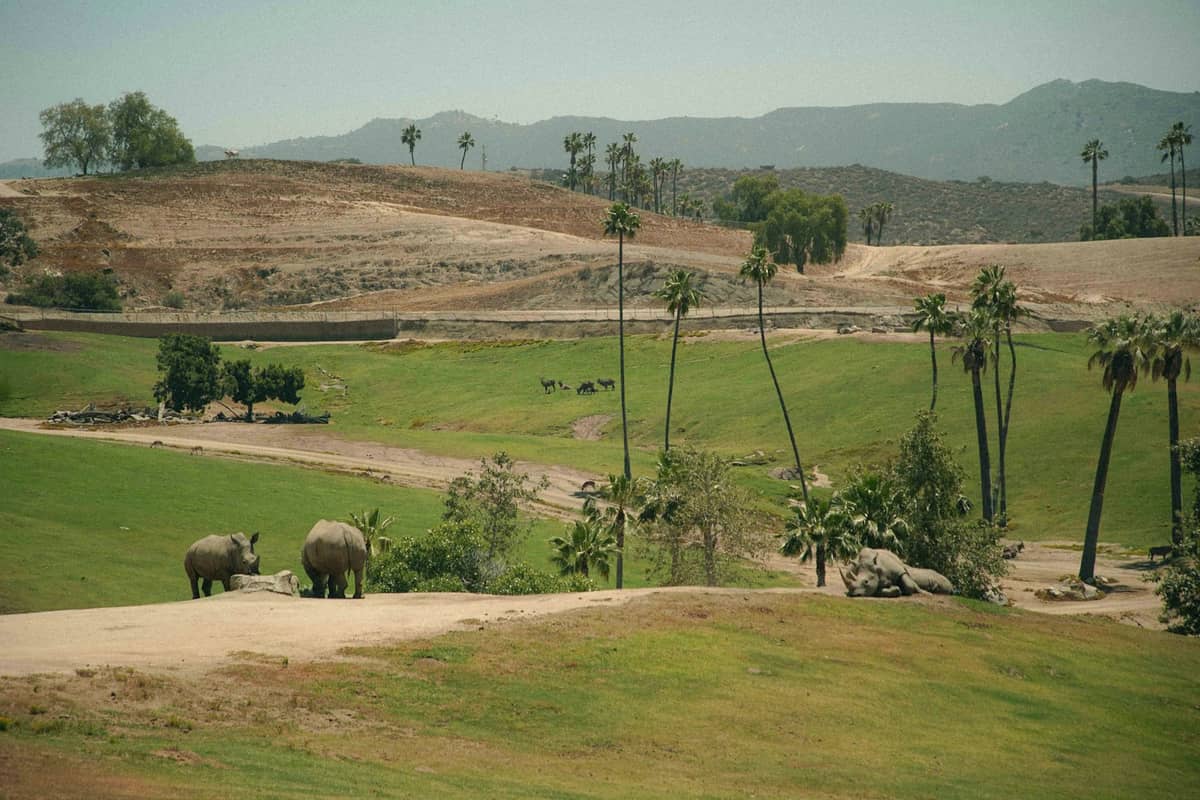
The San Diego Zoo Safari Park is not a zoo with a rebranding effort. It is a 1,800-acre wildlife sanctuary where large animals move through landscapes that mirror their native range conditions. When you stand at the Africa Tram rail and watch a crash of white rhinos graze alongside giraffes and oryx at a distance of perhaps 40 meters, the spatial logic of what you're seeing is genuinely different from what a conventional zoo offers.
The park opened on May 10, 1972, originally as the San Diego Wild Animal Park, and was conceived from the start as a conservation-breeding facility rather than a public exhibit. That mission still drives the operation today. It is run by San Diego Zoo Wildlife Alliance, a nonprofit that operates the park as a sister site to the San Diego Zoo in Balboa Park. Where the Zoo in Balboa Park is urban, compact, and walkable in a few hours, the Safari Park is spread across dry chaparral terrain in the San Pasqual Valley, favoring animals that need space, specifically those adapted to arid and semi-arid environments.
ℹ️ Good to know
The park is open every day of the year, including all holidays, rain or shine. Hours vary seasonally, so check the official calendar at sdzsafaripark.org before you go, as opening and closing times shift between summer and winter months.
If you're deciding between the two San Diego Zoo Wildlife Alliance properties, the guide on San Diego Zoo vs. Safari Park breaks down the differences in detail. In short: for toddlers and guests with limited mobility, the Zoo may be more manageable; for teens, adults, and families with older children, the Safari Park offers a harder-to-replicate experience.
The Africa Tram: The Centerpiece Experience
The Africa Tram is included in standard admission and runs on a loop through the East Africa and Asian Savanna field exhibits, covering the heart of the open-range habitat. The journey takes roughly 25 to 30 minutes, and the proximity to animals depends entirely on where the herds have chosen to be that morning. On most mornings, the southern white rhino population positions itself near the water sources, and it is common to pass within a bus-length of animals that weigh over 2,000 kilograms.
The tram runs throughout the day, but early morning departures tend to produce the best animal activity. Animals are more mobile before the midday heat settles into the valley, and the light is more favorable for photography. By 11:30am on warm days, much of the herd has retreated to shade, making the afternoon tram experience noticeably quieter in terms of visible animal behavior.
💡 Local tip
Aim for the first or second tram of the morning. The right side of the tram car typically offers better sightlines across the main savanna field, though positions shift as the tram turns. Bring a zoom lens if photography matters to you — the 200mm or equivalent range is genuinely useful here.
Walking the Park: What You'll Find Beyond the Tram
The walkable sections of the Safari Park are organized into distinct habitat zones: Africa Rocks, the Gorilla Trail, Lemur Walk, the Tiger Trail, and the Condor Ridge exhibit among others. Africa Rocks is one of the more recent major additions, replicating rocky coastal and savanna biomes with African penguins, baboons, and meerkats in well-designed enclosures that use natural topography effectively.
Gorilla Trail winds through a landscape of ferns and boulders that feels genuinely different from the open savanna sections. The terrain here is shadier and more enclosed, and the gorilla habitat is set back from the path with good viewing platforms. Note that Gorilla Trail and World Gardens are listed by the park as areas with more challenging terrain for guests with mobility limitations.
Condor Ridge is easy to overlook but represents one of the park's most significant conservation contributions. The California condor program here has been central to the recovery of a species that was down to 27 individuals in the wild in 1987. Interpretive signage explains the breeding program with enough detail to make the viewing feel meaningful rather than incidental.
The Safari Park makes a natural complement to other wildlife and outdoor experiences in the region. If you're building an itinerary, the San Diego with kids guide includes practical pairings across multiple days.
How the Experience Changes by Time of Day and Season
The Safari Park sits inland in the San Pasqual Valley, roughly 30 miles from the coast, which means it operates in a meaningfully different climate from San Diego's beachside neighborhoods. In summer, afternoon temperatures regularly climb above 90°F (32°C) in the valley. Shade is available in some sections but not throughout, and the exposed path between exhibits can feel taxing between noon and 3pm. Comfortable, breathable clothing and sun protection are not optional here — they are practical necessities.
In contrast, morning visits between 9am and 11am are cooler, the animals are active, and the park is less crowded. By mid-afternoon on weekends and during school holidays, the main pathways near the tram boarding area and the African Village plaza fill up substantially. If you arrive at opening time, you can complete the tram ride and visit the priority exhibits before most day-trippers have arrived.
Fall and spring offer the most comfortable conditions for extended walking. September and October in particular see temperatures drop from summer highs while maintaining dry weather, and crowd levels ease after Labor Day. Winter visits are feasible and occasionally excellent for animal activity since cooler temperatures keep animals more mobile throughout the day, though some seasonal programming may be reduced.
⚠️ What to skip
San Diego's coastal 'June Gloom' fog pattern does not significantly affect the Safari Park, which sits inland. However, afternoon heat in summer is a serious consideration for families with young children or anyone with heat sensitivity. Plan accordingly: early start, ample water, and sun protection.
Getting There: The Honest Transit Picture
The Safari Park's location in Escondido is a genuine logistical consideration. There is no direct public transit link from downtown San Diego to the park entrance. Most visitors drive via Interstate 15 north toward Escondido, then exit onto State Route 78 east. On-site parking is paid (about $20 per vehicle; members typically park free). That is still a practical advantage for families traveling with gear, strollers, or large groups. The drive from downtown San Diego takes approximately 35 to 50 minutes depending on traffic, with I-15 prone to congestion during weekend mornings.
Rideshare services including Uber and Lyft operate in the area and can drop off and pick up at the park entrance, though pickup availability at closing time — when large crowds exit simultaneously — can be inconsistent. If you plan to use rideshare for the return trip, allow buffer time or book in advance.
For travelers without a car, the getting around San Diego guide covers regional transit options and car rental logistics that may help with planning.
Add-On Experiences and What They Cost Extra
Standard admission covers the Africa Tram and all walking exhibits, but the park offers a range of premium add-ons at additional cost. These include behind-the-scenes safari experiences, zip-line tours over the African field exhibits, and animal encounter programs. The zip line in particular, which crosses over the open savanna habitat at height, provides a perspective on the scale of the enclosures that the tram cannot. Availability for these programs is limited and booking in advance through the official site is strongly recommended, as they sell out on peak days.
The park also offers cart safaris and caravan safaris that take small groups into the field exhibits in ways the standard tram does not. These cost considerably more than base admission but represent genuinely different access. Families with a specific interest in rhino conservation or close-range photography may find them worthwhile. Check current pricing and availability directly at sdzsafaripark.org, as the lineup and pricing of these experiences changes periodically.
Accessibility and Practical Logistics
The main pathways through the Safari Park are paved and accessible, and the park describes itself as fully accessible with the exception of Gorilla Trail and World Gardens, which involve more challenging terrain. Manual wheelchairs are available to rent near the entrance on a first-come, first-served basis, as are Electronic Conveyance Vehicles (ECVs). Rental prices are listed by the park at USD 16 for a manual wheelchair and USD 60 for an ECV, though these figures should be verified before your visit as they are subject to change.
The Africa Tram has accessible boarding and seating. Limited-service accessibility shuttles are available for guests with mobility-related needs who need to move between distant sections of the park. For specific questions about accessibility accommodations, the park’s dedicated accessibility contacts are 619-231-1515 after 8:30 a.m. PDT or accessibility@sdzwa.org.
Families planning a broader itinerary that includes both the Safari Park and other San Diego attractions may find the San Diego amusement parks guide and the overview of the San Diego Zoo in Balboa Park useful for comparison and sequencing.
Insider Tips
- Arrive at opening time and go directly to the Africa Tram boarding area before visiting any walking exhibits. The first tram of the day consistently offers the most active animal behavior, and there is rarely a wait.
- The park's membership (San Diego Zoo Wildlife Alliance membership) covers entry to both the Safari Park and the San Diego Zoo and can pay for itself in two visits. If you're planning to visit both properties on the same trip, it may be worth pricing against two-day individual tickets.
- Bring your own food and water. The park has dining options, but the main food venues near the African Village plaza get very long lines between 11:30am and 1:30pm. A packed lunch eaten at a shaded picnic table before the crowd peaks will save both time and money.
- The Lorikeet Landing feeding station is a low-key highlight that many visitors skip in favor of the tram. Small nectar cups cost a nominal fee and the birds land directly on your arms and hands — a memorable 10-minute detour worth the stop.
- If you're visiting in summer, wear closed-toe shoes with grip. Parts of the trail to Africa Rocks and the Gorilla Trail involve uneven paving and slight inclines, and open sandals become uncomfortable over a full day of walking on hot pavement.
Who Is San Diego Zoo Safari Park For?
- Families with children aged 5 and older who can walk significant distances and engage with interpretive content
- Wildlife and nature photographers who want open-range, naturalistic shooting conditions rather than traditional enclosure settings
- Travelers with a specific interest in conservation biology and breeding programs for endangered species
- Repeat visitors to the San Diego Zoo looking for a genuinely different wildlife experience on the same trip
- Groups visiting during fall or spring who want a full outdoor day activity with manageable temperatures and thinner crowds
Nearby Attractions
Combine your visit with:
- Anza-Borrego Desert State Park
Anza-Borrego Desert State Park stretches across more than 600,000 acres of Colorado Desert in eastern San Diego County, making it one of the largest state parks in the United States. From spring wildflower carpets to ancient slot canyons and some of the darkest skies in Southern California, it rewards visitors who plan carefully and respect the terrain.
- Border Field State Park
Border Field State Park occupies the southwestern corner of the continental United States, where Pacific surf meets the U.S.–Mexico border fence. It offers coastal wetlands, a historic marble boundary monument, and views toward Friendship Park — the U.S.-side gathering space has been closed since 2020, so confirm current access before you go.
- Cedar Creek Falls
Cedar Creek Falls is a backcountry waterfall deep inside Cleveland National Forest, reached by a strenuous 6-mile round-trip hike from Ramona. A mandatory day-use permit keeps crowds manageable, but you'll earn every step of the descent into this rugged gorge. This guide covers the permit process, trail conditions, safety warnings, and what to realistically expect.
- Chicano Park
Chicano Park is a National Historic Landmark tucked beneath the San Diego–Coronado Bridge in Barrio Logan, where more than 80 monumental murals cover the concrete pillars of a freeway overpass. Free to enter and open daily, it is one of the most culturally layered outdoor spaces in the American Southwest.