Riga National Zoological Garden: What to Know Before You Visit
Founded in 1912, Riga Zoo is the oldest zoo in the Baltic States, set in the leafy Mežaparks district beside Lake Ķīšezers. With around 400 animal species and a genuine park atmosphere, it works well for families and anyone looking to spend half a day away from the city centre.
Quick Facts
- Location
- Meža prospekts 1, Mežaparks, Riga (LV-1014)
- Getting There
- Tram or bus to Mežaparks stop; check Riga public transport for current routes
- Time Needed
- 2.5 to 4 hours for a thorough visit
- Cost
- Adults €15, children 4–17 €8, under 4 free, students/seniors €10
- Best for
- Families with children, nature breaks from sightseeing, rainy-day backup plans
- Official website
- rigazoo.lv
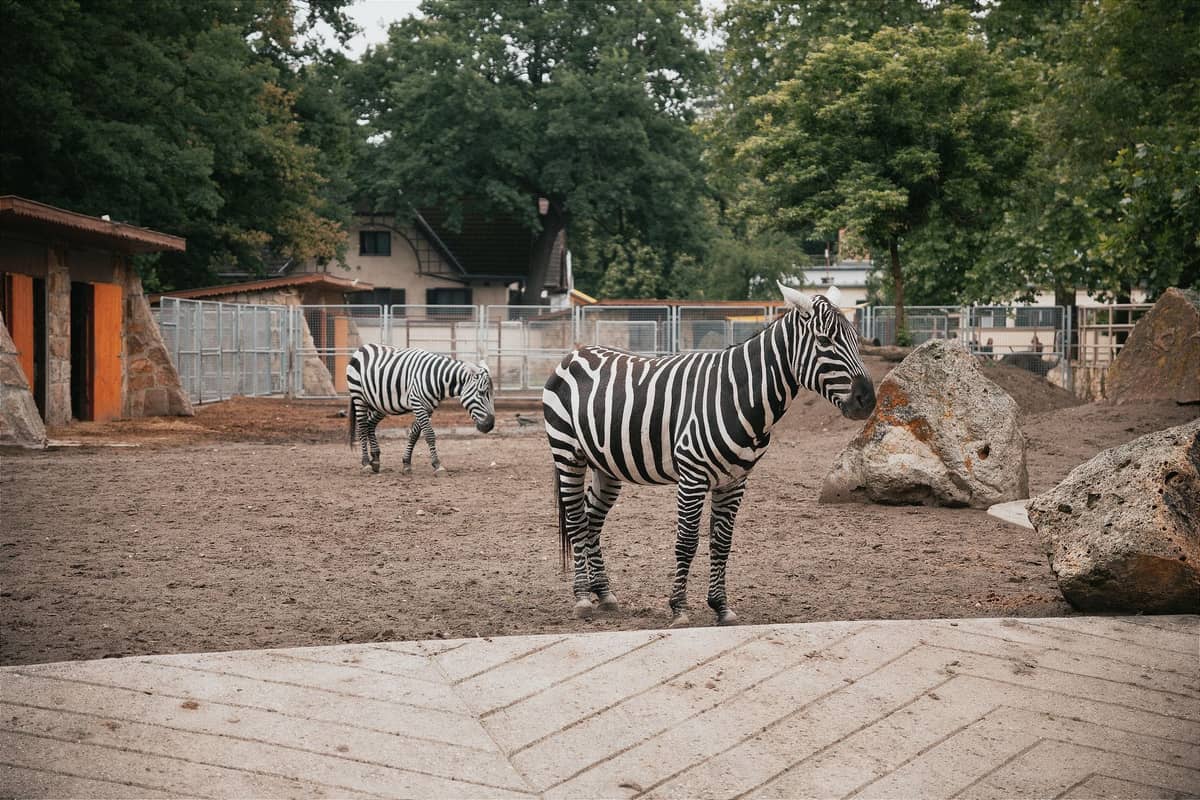
What Is Riga Zoo and Why Does It Matter
Riga National Zoological Garden, known locally as Rīgas Nacionālais zooloģiskais dārzs, holds a distinction few European zoos can claim: it opened in 1912, making it the oldest zoo in the Baltic States. That age shows in the layout. The grounds feel more like a landscaped park than a purpose-built animal facility, which gives the visit a different character from newer, more clinical zoo designs.
The zoo sits in the Mežaparks district, a quiet residential neighbourhood on the southern shore of Lake Ķīšezers. The surrounding forest and water give the setting a calm, unhurried quality that many city-centre attractions simply cannot offer. If you have children in tow, or if you just want a genuine half-day of green space with some wildlife thrown in, this is a reasonable use of your time.
ℹ️ Good to know
Opening hours at Riga Zoo change between summer and winter seasons. Always check the official site at rigazoo.lv before visiting, as the zoo's hours are not fixed year-round.
History: Over a Century of Operation
The zoo's founding in 1912 places it in a remarkable period of civic ambition in Riga. The city was then under Russian imperial rule and growing rapidly as an industrial and commercial hub. Like many European cities of the era, Riga developed its zoo as part of a broader effort to build public institutions alongside parks, museums, and concert halls.
The First World War and the upheaval that followed closed the zoo for many years, and it reopened in 1933 under the society 'Latvijas Zooloģiskais dārzs', formally registered on 19 December 1933, during Latvia's first period of independence. The zoo survived the Soviet occupation, and by November 1992 it had joined the European Association of Zoos and Aquaria (EAZA). That same December it received its current designation as a national zoological garden.
Membership in EAZA is an accurate description. It means the zoo participates in coordinated breeding programmes for threatened species and adheres to welfare and management standards set across the European zoo community. For visitors, the practical effect is a collection that has been shaped by conservation logic, not just crowd appeal. If you want to understand more about Latvia's approach to heritage and national institutions, the best museums in Riga guide covers additional context on how the city curates its public collections.
Tickets & tours
Hand-picked options from our booking partner. Prices are indicative; availability and final rates are confirmed when you complete your booking.
Canal boat sightseeing tour in Riga
From 13 €Instant confirmationArt and culture walking tour of Riga with a local
From 66 €Instant confirmationFree cancellationSelf-guided discovery walk in Riga - the essential old town and its secrets
From 30 €Instant confirmationFree cancellationExclusive private guided tour of Riga's architecture with a local
From 175 €Instant confirmationFree cancellation
The Collection: What You Will Actually See
The zoo houses around 400 animal species. The range covers mammals, birds, reptiles, amphibians, and invertebrates drawn from multiple continents. Larger mammals, including big cats and bears, tend to draw the most sustained attention from visitors, while the bird collection is broader than most casual visitors expect.
The park-like terrain means enclosures are spread across a considerable area. You will do real walking here, on paths that wind through mature trees with occasional views toward Lake Ķīšezers. Wear comfortable shoes. The ground is mostly gravel and compacted earth, which can become muddy after rain. In wet weather, some areas may feel less pleasant to navigate, though the tree canopy provides partial cover.
There is no single route that guarantees you see everything efficiently. First-time visitors often underestimate the size and spend their first hour at the entrance area before realising there is far more beyond it. Pick up a map at the entrance gate and identify the two or three sections that matter most to your group before you start walking.
How the Experience Changes Through the Day
Morning visits, particularly on weekdays, are noticeably quieter. Animals tend to be more active in the cooler early hours, especially during summer when midday temperatures can make many species retreat to shaded areas of their enclosures. Arriving close to opening time on a weekday gives you the best chance of seeing predatory cats pacing, birds vocalising, and staff carrying out feeding routines without competing with school groups for sightlines.
Weekend afternoons in summer bring significantly larger crowds, particularly families with young children. The noise level rises, queues form at the ticket counters, and some enclosure viewing areas get congested. If a weekend visit is your only option, aim to arrive right at opening time rather than mid-morning.
Winter visits have their own appeal for visitors who do not mind the cold. The grounds are peaceful, crowds are sparse, and some northern-climate species are notably more active in low temperatures. The trade-off is reduced daylight and the possibility that certain areas or facilities operate on reduced winter hours. Check the official site for current winter opening times before planning a cold-season visit.
💡 Local tip
For the calmest experience with the most active animals, visit on a weekday morning in spring or early autumn. Summer weekday mornings also work well. Avoid Saturday and Sunday afternoons in July and August if crowds are a concern.
Getting There: Transit and Access
The zoo's address is Meža prospekts 1, and it is reachable by public transport to the Mežaparks area. Riga's public transport network covers this route, though specific line numbers and timetables should be verified through the city's current transport information before your visit, as routes and frequencies change.
If you are combining the zoo with time in the Mežaparks neighbourhood itself, note that the area is one of Riga's more pleasant green districts. The nearby Mežaparks park extends along the lakeshore and offers walking paths that make a natural addition to a zoo visit, particularly for visitors who want to extend the day outdoors without returning to the city centre immediately.
The zoo's grounds are set on outdoor paths in a park environment. Terrain and surface quality vary across the site, and visitors with mobility requirements are advised to contact the zoo directly before visiting. The contact details listed on the official site are info@rigazoo.lv and +371 67 518 409.
Tickets, Costs, and Practical Logistics
Admission is priced at €15 for adults, €8 for children aged 4 to 17, and free for children under 4. Students with a valid student card and seniors with a pensioner's card pay €10. Family tickets and Baltic family card offers are also available with specific pricing listed on the admission page at rigazoo.lv/en/admission/. Off-season prices may differ from these figures.
At these price points, the zoo is not among Riga's cheapest activities. If budget is a priority, compare it against free or low-cost alternatives covered in the free things to do in Riga guide before committing. For families with several children, the family ticket options are worth calculating against individual prices at the admissions page.
There are food and drink options on site, but bringing your own snacks and water is sensible for a visit of three or more hours, particularly with children. The zoo's grounds are large enough that returning to the entrance area mid-visit adds meaningful walking time.
⚠️ What to skip
Check rigazoo.lv/en/admission/ before visiting to confirm whether advance booking is available or recommended during peak summer weekends. Check rigazoo.lv/en/admission/ before visiting to confirm whether advance booking is available or recommended during peak summer weekends.
Photography, What to Bring, and Limitations
Photography is generally practical throughout the grounds. The park setting and natural light filtering through the tree canopy create workable conditions for animal shots, though glass panels and mesh on some enclosures can interfere with autofocus. A longer focal length lens helps with enclosures where animals keep their distance. Early morning light in summer is particularly good along the paths near the lake edge.
The zoo is a solid choice for families, particularly those with children between roughly 3 and 12. Younger children respond to the accessible scale and the variety of animals. Older teenagers and adults without a specific interest in zoology may find the visit rewarding but not deeply engaging beyond two hours. The grounds are attractive, but the zoo does not offer the same level of interpretation infrastructure as some newer European facilities.
Visitors primarily focused on Riga's architectural heritage or cultural history should note that the zoo represents a deliberate detour from the city's most celebrated sights. The Riga Old Town walking tour and the House of the Blackheads in the historic centre offer a very different but equally valid way to spend the same half-day. The zoo works best as a complement to those experiences across a multi-day visit, not as a replacement.
Insider Tips
- Arrive within the first 30 minutes of opening on any weekday. Animal activity peaks in the morning cool, and you will have enclosure viewing areas largely to yourself.
- Pick up a printed map at the entrance gate immediately. The grounds are larger than they appear from the entrance, and without a map it is easy to spend too long in the first section and run short of time for the rest.
- If you are visiting with young children, the sections nearest the entrance see the highest foot traffic and tend to be the noisiest. Moving deeper into the park fairly quickly gives children a calmer experience where they can actually observe animals without competition from crowds.
- The Mežaparks neighbourhood around the zoo is calm and residential. After your visit, the lakeshore paths of Mežaparks park are an easy extension for anyone who wants to decompress further before heading back into the city.
- Seasonal ticket prices differ between summer and off-season periods. If you are visiting outside the main season, confirm current admission rates at rigazoo.lv/en/admission/ rather than budgeting based on summer figures.
Who Is Riga Zoo For?
- Families with children aged 3 to 12 looking for a structured half-day activity
- Travellers spending three or more days in Riga who want variety beyond the historic centre
- Visitors interested in conservation-focused zoo collections with EAZA-standard management
- Anyone seeking green space and fresh air at a distance from the city centre
- Winter visitors who appreciate quiet, uncrowded outdoor experiences
Nearby Attractions
Combine your visit with:
- Āgenskalns Market
Āgenskalns Market (Āgenskalna tirgus) has anchored the left bank of the Daugava since 1898. Its architect-designed red-brick pavilion, restored in 2022, now blends a working food market with cafés, a bar, and a regular vintage and design market — all free to enter.
- Daugava River Promenade
The Daugava River Promenade stretches along the right bank of the Daugava from the edge of Old Town southward through the Ķengarags suburb. It is free, open around the clock, and offers some of the most unobstructed views of Riga's skyline, the wide river, and the left bank's quieter residential district. Whether you walk it at sunrise or cycle it on a summer evening, the promenade gives the city a different scale entirely.
- Ethnographic Open-Air Museum of Latvia
Spread across 87 hectares of pine forest on the shore of Lake Jugla, the Ethnographic Open-Air Museum of Latvia preserves rural Latvian building traditions in one walkable landscape. Founded in 1924 and open to the public since 1932, it is one of the oldest open-air museums in Europe. Allow at least half a day.
- Kalnciema Quarter
A restored complex of 18th and 19th-century wooden buildings on the left bank of the Daugava, Kalnciema Quarter hosts a popular Saturday market, summer concerts, and independent cafés. It offers a quieter, residential counterweight to Old Town's stone and crowds.