Queen Elizabeth Park: Vancouver's Hilltop Garden with 360° City Views
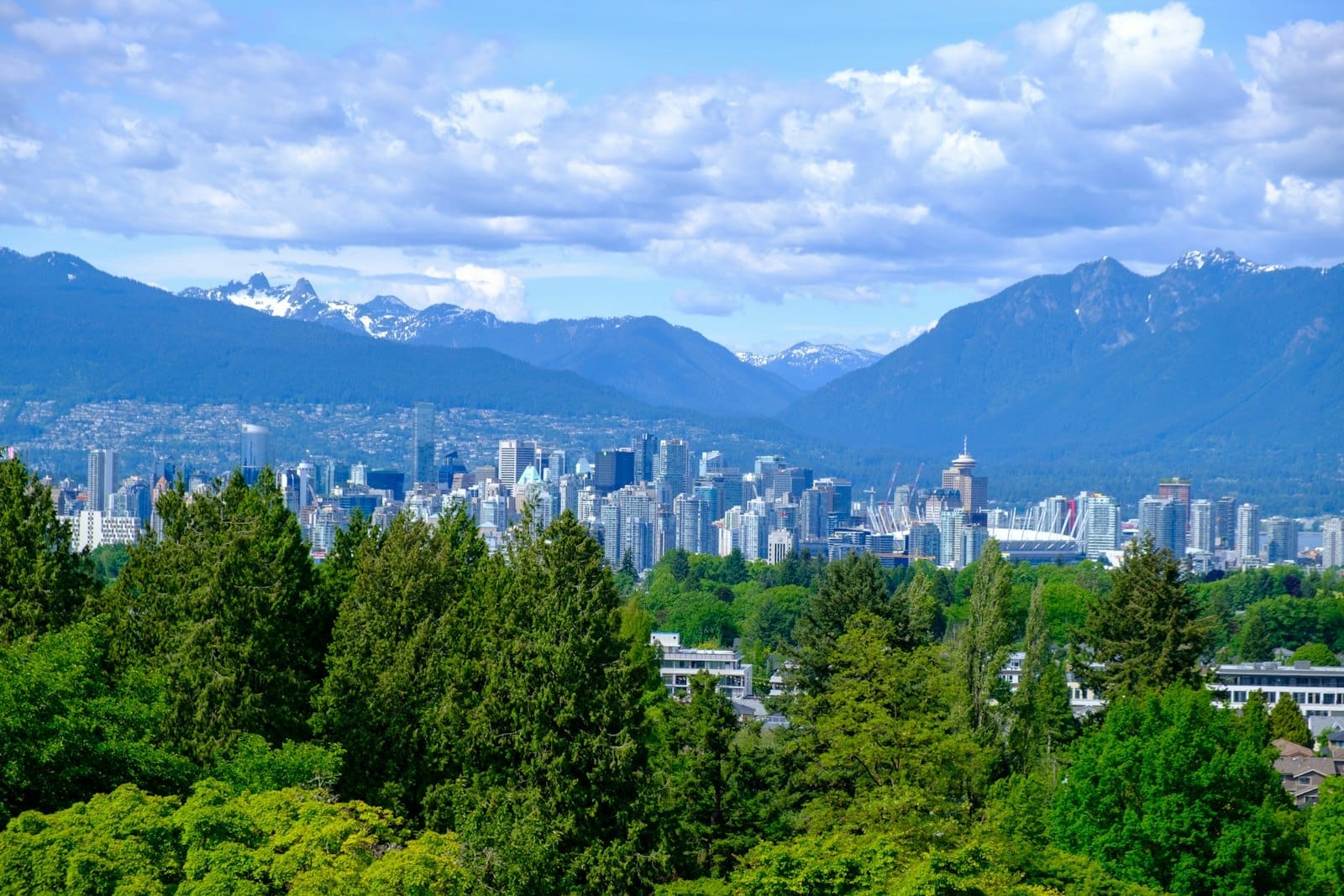
Perched atop Little Mountain, the highest point in the City of Vancouver, Queen Elizabeth Park combines manicured gardens, open lawns, and former quarry pits transformed into stunning sunken gardens. Entry to the park is free, and the panoramic views of the downtown skyline backed by the North Shore mountains are among the most photographed in the city.
Quick Facts
- Location
- 4600 Cambie St, Vancouver, BC (at 33rd Avenue and Cambie Street)
- Getting There
- King Edward Station (Canada Line SkyTrain), approx. 10-minute walk south to the park
- Time Needed
- 1.5 to 3 hours for the park; add 45 minutes for the Bloedel Conservatory
- Cost
- Park entry is free. Bloedel Conservatory charges a separate admission fee (verify current price before visiting)
- Best for
- Panoramic city views, garden photography, wedding visits, relaxed outdoor walks
- Official website
- vancouver.ca/parks-recreation-culture/queen-elizabeth-park.aspx
About Queen Elizabeth Park
Queen Elizabeth Park occupies the summit and slopes of Little Mountain, which at roughly 125 metres above sea level is the highest point within the City of Vancouver proper. The park covers approximately 51 hectares (130 acres) and sits in the Cambie Street corridor, about 6 kilometres south of downtown. It is not a wilderness park. This is a carefully designed civic green space, with paved paths, ornamental plantings, a pitch-and-putt golf course, and two former basalt quarry pits that were converted into sunken formal gardens. The overall effect is closer to a grand European public garden than to the raw Pacific forest you find at Pacific Spirit Regional Park or on the North Shore.
The park was developed in the 1930s after the City of Vancouver acquired Little Mountain, and it was officially named in honour of Queen Elizabeth (the Queen Mother) and King George VI following their 1939 royal visit to Canada. The quarry pits, once considered an eyesore, became the structural bones of the signature sunken gardens that most visitors come to see today.
ℹ️ Good to know
Park entry is free and the grounds are open daily from 6:00 AM to 10:00 PM. The Bloedel Conservatory at the summit charges a separate admission fee; verify the current price on the City of Vancouver website before visiting.
The Sunken Gardens: The Park's Centrepiece
The two quarry-turned-gardens on either side of the summit path are where most first-time visitors spend their time, and rightly so. The former quarry pits create a natural bowl effect, sheltering the plantings from wind and giving the gardens an unexpectedly intimate scale. You descend from the paved path into a lower level ringed with flowering annuals, ornamental trees, and sculpted hedges, with water features in some sections. Looking up from the garden floor, the rock faces of the old quarry walls form a dramatic backdrop.
Colour and composition change significantly across seasons. Spring brings tulips, cherry blossoms, and rhododendrons. Summer fills the beds with dahlias, roses, and begonias. Autumn introduces copper tones across the deciduous plantings. Winter is the quietest time visually, though the structure of the gardens remains clear, and the lawns often stay green through Vancouver's mild winters. For pure floral impact, late April through June is the strongest window.
If garden photography is your priority, Queen Elizabeth Park consistently ranks among the best spots in the city. For a broader look at Vancouver's curated green spaces, the botanical gardens guide for Vancouver covers how this park compares to options like the UBC Botanical Garden and VanDusen.
Tickets & tours
Hand-picked options from our booking partner. Prices are indicative; availability and final rates are confirmed when you complete your booking.
Grouse Mountain and Capilano Suspension Bridge Park tour
From 252 €Instant confirmationFree cancellationVancouver Art Gallery Tickets
From 19 €Instant confirmationFree cancellationVancouver Stanley Park cycling tour
From 56 €Instant confirmationFree cancellationWhistler, Shannon Falls and Sky Gondola tour from Vancouver
From 135 €Instant confirmationFree cancellation
The Summit Views: What You See and When It's Worth It
The flat summit area around the Bloedel Conservatory offers a 360-degree panorama that is genuinely impressive on a clear day. To the north, the downtown Vancouver skyline rises in front of the snow-capped Coast Mountains. To the west and east, the city's residential grid spreads out in both directions. On clear summer mornings, Mount Baker in Washington State is visible to the southeast. This is one of the few places in the city where you get a low-elevation but unobstructed overview of the full metropolitan layout.
The critical qualifier is weather. Vancouver's climate means overcast skies from October through March are the norm, not the exception. During those months, the mountains behind downtown may be partially or fully obscured by cloud. The view still reads well in overcast conditions, but if mountain backdrops matter to you, mid-June through September gives the highest probability of clear sightlines. Morning light from roughly 7:00 AM to 10:00 AM hits the downtown skyline from the east in a way that afternoon light does not replicate.
💡 Local tip
For the clearest mountain views behind the downtown skyline, aim for a morning visit in July or August, ideally a day or two after rain has cleared the air. The summit plaza around the Bloedel Conservatory is the best vantage point.
The Bloedel Conservatory
Sitting at the very top of the park, the Bloedel Conservatory is a triodetic dome greenhouse housing tropical and subtropical plants, along with free-flying exotic birds. The dome structure itself, built in 1969, is a product of mid-century modernist civic ambition and is locally recognized as an architectural landmark. Inside, the temperature and humidity shift noticeably from the outdoor Vancouver air, and the sound environment changes to a warm, close hum of birds and water.
The conservatory operates under a separate admission fee from the park and has its own opening hours. Verify current details directly with the City of Vancouver before visiting. For a deeper look at what the conservatory offers, see the dedicated Bloedel Conservatory guide.
Getting There and Moving Around the Park
The most straightforward transit option is the Canada Line SkyTrain to King Edward Station, which sits at Cambie Street and West 25th Avenue. From there, the main park entrance is roughly a 10-minute walk south along Cambie Street to West 33rd Avenue. The slope up to the summit adds another 5 to 10 minutes of walking. The path network is paved throughout the main visitor areas, which makes it manageable for strollers and generally accessible, though the gradient from the lower park to the summit is moderate and sustained.
By car, parking is available within the park off Cambie Street. The park is also reachable by Cambie Street buses. If you are combining this with a broader south Vancouver itinerary, Vancouver's public transit overview explains how the Canada Line connects this area to downtown and the airport.
Within the park, the main loop from the lower gardens up to the summit and back down can be done comfortably in under an hour at a relaxed pace. Most visitors who linger do so in the sunken gardens and at the summit viewpoint. There is also a pitch-and-putt golf course on the western slope that charges separate fees, with tee times available on a first-come, first-served basis.
Crowds, timing, and what to expect
Queen Elizabeth Park draws large crowds on weekend afternoons in spring and summer, particularly from late April through June when the gardens peak and when the park is a popular backdrop for wedding photography. On a sunny Saturday morning in May, it is not unusual to encounter multiple wedding parties in the sunken gardens simultaneously, with photographers directing poses near the flower beds. If you want the gardens without that context, a weekday morning before 10:00 AM is a different experience entirely.
The park has been a filming location over the years and remains a favourite for photographers, which means on weekends you may be navigating around tripods and reflectors in the most picturesque spots. This is not a problem, just worth knowing so you are not surprised. The summit area around the conservatory is more consistently busy than the lower slopes, which receive fewer casual visitors.
This is a park that rewards those who go early, go on weekdays, and treat the view as weather-dependent. It is sometimes described in promotional materials with a level of enthusiasm that can set expectations slightly above what overcast January delivers. In ideal conditions, the combination of manicured gardens, hilltop panorama, and the conservatory dome makes for a genuinely memorable Vancouver morning. In grey weather with flat light, the gardens are pleasant but not dramatic.
⚠️ What to skip
Vancouver's rain-heavy season runs October through March. During these months, expect wet paths, muted garden colours, and mountain views often obscured by low cloud. The park is still walkable, but the visual payoff is considerably lower than in summer.
Combining Queen Elizabeth Park with the Surrounding Area
The park sits in the Cambie Street corridor in the Mount Pleasant and Main Street neighbourhood, which has developed significantly in recent years with independent cafés, restaurants, and shops along Main Street a few blocks east. A visit to Queen Elizabeth Park pairs naturally with an afternoon on Main Street, particularly the stretch between 23rd and 30th Avenues.
For travelers putting together a broader Vancouver itinerary that includes parks and outdoor spaces, the Vancouver things to do guide provides context on how Queen Elizabeth Park fits relative to Stanley Park, the seawall, and other green spaces across the city.
Insider Tips
- Arrive before 9:00 AM on weekdays if you want the sunken gardens essentially to yourself. The wedding photography crews and tour groups arrive mid-morning and the crowds compound from there.
- The best photographic angle for the downtown-skyline-with-mountains composition is from the paved plaza on the north side of the Bloedel Conservatory dome, not from the garden level below.
- If the Bloedel Conservatory is your primary reason for visiting, check the City of Vancouver website for current hours before you go as operational hours have changed at various points and the dome may have limited availability.
- The pitch-and-putt course on the park's western slope charges a separate fee and is a local favourite on summer evenings. It is not widely advertised to tourists but offers an affordable, low-key way to extend a visit.
- The park's lower slopes and outer paths see far fewer visitors than the central garden and summit areas. Walking the perimeter gives you a greener, quieter experience that feels nothing like the busy summit on a summer weekend.
Who Is Queen Elizabeth Park For?
- Photographers looking for Vancouver's classic skyline-with-mountains shot
- Couples and families wanting a free, walkable outdoor space with clear paths and restrooms
- Visitors combining a garden visit with lunch or coffee along Main Street
- Travelers on a tight schedule who want one location that combines a view, a garden, and a paid indoor attraction (the conservatory)
- Those visiting Vancouver in spring who want to see ornamental cherry blossoms and tulips against a city backdrop
Nearby Attractions
Other things to see while in Mount Pleasant & Main Street:
- Bloedel Conservatory
Perched at the highest point in Vancouver inside Queen Elizabeth Park, the Bloedel Conservatory is a triodetic-domed greenhouse sheltering over 500 plant species and more than 100 free-flying exotic birds year-round. It rewards visitors with warmth, color, and birdsong regardless of what the weather is doing outside.
- Playland Amusement Park
Playland at the PNE is Vancouver's beloved seasonal amusement park, operating at Hastings Park in its current Playland form since the late 1950s. With dozens of rides ranging from toddler-friendly carousels to serious thrill machines, it draws families and ride enthusiasts from across the Lower Mainland every summer.
- Science World
Science World, operated by the ASTC Science World Society at 1455 Quebec Street, is Vancouver's hands-on science centre housed inside a 47-metre-high geodesic dome that has been a fixture of the city's skyline since Expo 86. From interactive exhibits and live science demonstrations to an OMNIMAX theatre, it draws curious minds of all ages and rewards visitors who arrive with a plan.