Portobello Beach: Edinburgh's Sandy Seaside Escape
Portobello Beach is Edinburgh's own stretch of coastline, a 2-mile sandy shore with a Victorian promenade, a string of independent cafés, and easy bus access from the city centre. Free to visit any time of year, it offers a completely different pace from the Royal Mile crowds.
Quick Facts
- Location
- 1 Promenade, Edinburgh EH15 2DX — about 3 miles east of the city centre
- Getting There
- Several Edinburgh bus routes serve Portobello; check Lothian Buses for current route numbers
- Time Needed
- 1–3 hours depending on pace; longer if you stop for food
- Cost
- Free — beach access is open 24/7 with no admission fee
- Best for
- Families, dog walkers, anyone needing a break from the Old Town
What Portobello Beach Actually Is
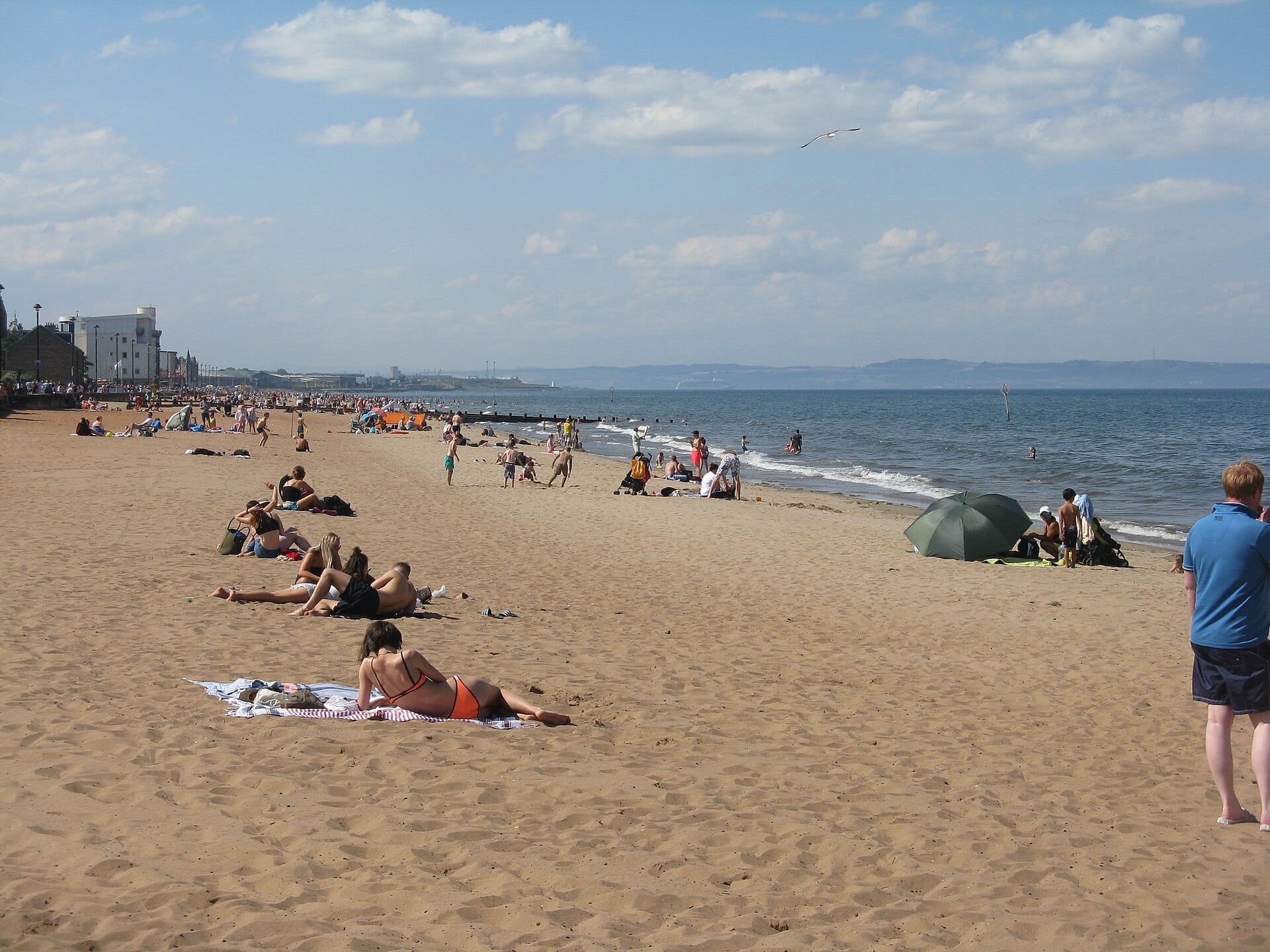
Portobello Beach is Edinburgh's seaside neighbourhood and the city's primary stretch of open coastline. Locals call it simply 'Porty'. The beach runs for approximately 2 miles along the Firth of Forth, backed by a promenade built in 1864 that remains the social spine of the neighbourhood. There are no entry gates, no ticket booths, and no closing time. It is genuinely free and genuinely open around the clock.
What surprises first-time visitors is how complete a seaside town Portobello feels within a major capital city. The promenade has ice cream shops, fish suppers, independent coffee roasters, and the occasional funfair in summer. Inland from the beach, Victorian terraces line wide streets. It is a working neighbourhood, not a tourist set piece, and that distinction matters for the kind of visit you have.
ℹ️ Good to know
Portobello is not a paid attraction. There is nothing to book. Just get on a bus heading east along the A1 corridor and walk to the seafront. Public toilets are available on the promenade.
The Beach Itself: Sand, Surf, and Firth Views
The sand at Portobello is a mixture of golden and pale grey, typical of East Lothian's coastline. At low tide, the beach widens considerably and reveals firm, walkable sand that stretches far enough to feel genuinely expansive. At high tide, the beach narrows, and waves can reach close to the promenade wall on stormy days. The water quality has improved significantly in recent decades, though the Firth of Forth is cold year-round, and swimming is the activity of the committed rather than the casual.
On a clear day, the views across the Firth reach to Fife and, in very good conditions, to the hills beyond. The horizon feels wide here in a way that is hard to find in other parts of Edinburgh. Windsurfers and open-water swimmers appear regularly. Dogs are permitted on sections of the beach, which partly explains why Portobello functions as a social hub even on grey winter mornings when nobody is pretending to sunbathe.
⚠️ What to skip
Check water quality and swimming safety information from Edinburgh Leisure or local signage before entering the sea. The Firth of Forth is cold even in August.
Tickets & tours
Live prices and dates from our booking partner. If you book, we may earn a commission at no extra cost to you.
West Highland Lochs, mountains and castles tour from Edinburgh
From 61 €Instant confirmationFree cancellationLoch Ness, Glen Coe and the Highlands tour from Edinburgh
From 66 €Instant confirmationFree cancellationDay Trip to Holy Island, Alnwick Castle and Northumbria from Edinburgh
From 60 €Instant confirmationFree cancellationLoch Ness Explorer Day Trip from Edinburgh
From 60 €Instant confirmationFree cancellation
How the Experience Changes Through the Day
Early mornings at Portobello belong to dog walkers, open-water swimmers, and runners doing the promenade loop. Before 9am on a weekday, you can walk the full length of the beach with very few other people around. The light from the east hits the water cleanly at this hour, and the promenade cafés begin their first service around 8am. The smell of coffee and the sound of surf mixing with the screech of herring gulls overhead is the texture of Portobello at its quietest.
From late morning onwards on warm days, particularly at weekends between May and September, the character shifts. Families arrive with picnic gear. The ice cream shops develop queues. The promenade becomes a slow-moving river of prams, cyclists, and groups spread across the full width. This is still enjoyable, but it is a different kind of visit — social rather than contemplative. Arrive before 10am on a summer weekend if you want the beach to yourself.
Winter visits have a particular atmosphere that is worth seeking out. On a cold, clear January afternoon, the light turns the Firth to hammered silver and the promenade is largely clear. Several cafés stay open year-round specifically because locals rely on them. Portobello in winter is not an endurance exercise — it is legitimately pleasant, provided you dress appropriately. Waterproof layers and sturdy shoes are practical requirements, not optional extras.
The Victorian Promenade and Neighbourhood Context
The promenade dates to 1864, built during the era when Edinburgh's middle classes were discovering the health benefits of sea air and cold bathing. Portobello had already existed as a coastal village long before that, reportedly taking its name from a sailor who settled here after the 1739 Battle of Portobello in the Gulf of Panama and named his cottage accordingly. The village grew into a resort town through the 18th and 19th centuries before being absorbed into the expanding city, now lying about 3 miles east of the city centre.
Walking the promenade today, the Victorian seafront architecture is still visible in the terraces that back onto it, though the overall atmosphere is more everyday than heritage-focused. It is worth checking current operating schedules separately, as it is run independently from the beach.
For historical context on how Edinburgh's various neighbourhoods developed, the guide to things to do in Edinburgh covers the city's broader geography and how areas like Portobello relate to the centre.
Getting There and Getting Around
Portobello sits about 3 miles east of the city centre, roughly a 15-minute bus ride from Princes Street. Lothian Buses operates several routes serving the area — confirm current route numbers on the Lothian Buses website or at bus stops on Princes Street before you travel, as routes and numbers are subject to periodic review. The journey is direct and uncomplicated. Taxis and rideshare apps also cover the route easily.
By bicycle, Portobello is accessible via the coastal path that connects through Leith and along the seafront. This is a low-traffic, relatively flat route that takes around 30 minutes from the city centre at a comfortable pace and is one of the more pleasant ways to reach the beach.
If you are planning a longer day along the coast, Cramond Beach on the western side of the city offers a contrasting coastal experience and makes for an interesting comparison.
💡 Local tip
If you are travelling with a pram or wheelchair, the promenade surface is level and well-maintained for most of its length. The sand itself is accessible from several ramp points. Public toilets are on the promenade.
Food, Cafés, and What to Expect on the Promenade
The promenade strip has a genuine concentration of independent food businesses rather than the chain-heavy setup you find near major tourist attractions. Coffee shops, fish and chip shops, ice cream vendors, and a few restaurants serving proper sit-down meals are all within a short walk of each other. Quality varies, and the best places tend to be slightly off the main drag on the side streets of the Portobello neighbourhood rather than directly on the promenade itself. Ask locally.
Summer weekends can mean short waits at the most popular spots. If you are visiting purely for the food rather than the beach, a weekday morning is considerably more relaxed. Several cafés open from around 8am and operate year-round, which makes Portobello a viable destination even in the colder months when the beach itself is not the draw.
Photography and the Light
Portobello faces roughly north-northeast across the Firth. This means the best photographic light comes in the morning, when the sun rises over the water and the beach is illuminated from a low angle. Golden hour here is genuinely golden rather than just a phrase. The promenade and its ornate Victorian lamp posts make strong foreground subjects. Late afternoon in summer produces interesting side light along the beach, and storm conditions — common in autumn and winter — produce dramatic sky textures against the grey water.
If dramatic city views and photography locations are a priority, Edinburgh's best viewpoints covers the full range of the city's panoramic spots, from Calton Hill to the Salisbury Crags.
Who Should Probably Look Elsewhere
Portobello Beach is not a Mediterranean resort. If you are visiting Edinburgh primarily to see its historic architecture and cultural institutions, Portobello is a pleasant but peripheral stop rather than an essential one. The beach has no ancient monuments, no museums on-site, and nothing specifically Edinburgh-specific beyond its geography. On cold, grey days with a strong easterly wind blowing in off the Firth, the promenade walk requires genuine weather tolerance.
Travellers on a tight one-day schedule in Edinburgh should prioritise the Edinburgh Castle and the Royal Mile before considering a trip east to Portobello. For those with more time, it slots well into a broader exploration of the city's less central areas.
Families looking for structured Edinburgh activities might also consider the Dynamic Earth science centre, which sits at the opposite end of the Royal Mile from the castle and offers a fully indoor, weatherproof option.
Insider Tips
- The outdoor pool (Portobello Outdoor Pool) is one of the few remaining heated outdoor pools in Scotland. Check its seasonal operating schedule separately before visiting — it is independently run and not guaranteed to be open on any given day.
- Weekday mornings before 10am are the best time for a quiet walk. Weekend afternoons in July and August can feel genuinely crowded by Edinburgh standards.
- The best coffee and food is often found a few streets back from the promenade on the residential side streets of Portobello rather than directly on the seafront strip.
- If you are cycling from the city centre, the route through Leith and along the coastal path is the most scenic option and avoids most traffic. It takes roughly 30 minutes at an easy pace from the foot of Leith Walk.
- Low tide reveals a significantly wider stretch of sand than high tide — if you want maximum walking room, check tide times before you go. The difference can be dramatic.
Who Is Portobello Beach For?
- Families with young children who need outdoor space and can handle changeable weather
- Dog owners looking for a long beach walk with a café stop at either end
- Photographers interested in coastal light, especially at sunrise or during storms
- Visitors staying more than two or three days who want to see a different, more residential side of Edinburgh
- Anyone who needs a half-day break from the intensity of the Old Town and the main tourist circuit
Nearby Attractions
Combine your visit with:
- Colinton Tunnel
The Colinton Tunnel is a 137-metre Victorian railway tunnel on the Water of Leith Walkway, transformed into Scotland's largest heritage mural. Inspired by Robert Louis Stevenson's poem 'From a Railway Carriage', it's free to visit, fully accessible, and open around the clock.
- Craigmillar Castle
Craigmillar Castle is a remarkably complete medieval ruin sitting on a low hill 3 miles southeast of Edinburgh's centre. Once a retreat for Mary, Queen of Scots, it rewards visitors with genuine history, sweeping city views, and crowds that are a fraction of Edinburgh Castle's.
- Cramond Beach & Island
A short bus or drive from the city centre, Cramond Beach leads to one of Edinburgh's most unusual free attractions: a tidal island in the Firth of Forth, reachable only during a narrow low-tide window. Sandy shores, wartime concrete pylons, and quiet woodland paths make this a world away from the Royal Mile.
- Edinburgh Zoo
Set across 82 acres of wooded hillside in western Edinburgh, Edinburgh Zoo is Scotland's largest wildlife attraction and home to over 2,500 animals. It holds a remarkable place in zoo history as the first zoo in the world to successfully house and breed penguins, and it remains the only UK zoo incorporated by royal charter.
Planning a trip? Discover personalized activities with the Nomado app.