Playa Ramírez: Montevideo's Urban Beach Next to Parque Rodó
Playa Ramírez is a free public beach on the Rambla Presidente Wilson, sitting at the edge of the Parque Rodó neighborhood and within easy reach of the city centre. It draws a wide cross-section of Montevideo life, from early-morning joggers to weekend families, and serves as a genuine local beach rather than a tourist spectacle.
Quick Facts
- Location
- Rambla Presidente Wilson, Parque Rodó, Montevideo
- Getting There
- Bus lines 128, 17, 199, 300 stop near the beach; walkable from Parque Rodó
- Time Needed
- 1–3 hours depending on season and purpose
- Cost
- Free. No entry fee.
- Best for
- Local atmosphere, sunset watching, casual swimming in summer
What Playa Ramírez Actually Is
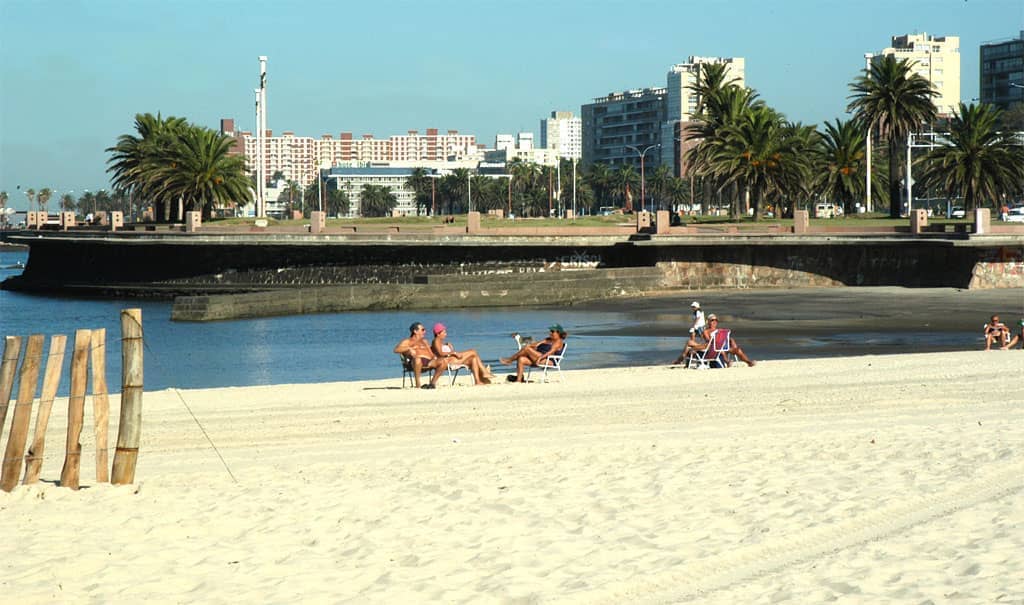
Playa Ramírez is a public urban beach running along the Rambla Presidente Wilson, between Juan D. Jackson and Avenida Julio María Sosa in the Parque Rodó area of Montevideo. It sits on the Río de la Plata, which here looks and behaves like an open sea: brown-tinted water (from river sediment, not pollution), modest waves, and a broad sandy shore. It is not a Caribbean postcard beach, and nobody who lives in Montevideo pretends otherwise. What it is instead is a genuine city beach: well-used, free, close to everything, and embedded in the daily rhythm of a neighborhood that combines a major park, university buildings, and residential streets.
Calling it "central" is not an overstatement. The beach sits roughly 2.5 km east of Plaza Independencia along the continuous coastal promenade, and it connects naturally to the broader Rambla that stretches in both directions. For visitors staying anywhere from Ciudad Vieja to Pocitos, Playa Ramírez is reachable on foot or by a short bus ride.
ℹ️ Good to know
The water at Playa Ramírez is part of the Río de la Plata estuary. Its characteristic brownish color comes from sediment carried by the Paraná and Uruguay rivers — not from contamination. Water quality is monitored by the Intendencia de Montevideo, which posts daily beach condition flags during summer.
How the Beach Changes Through the Day
Early mornings on Playa Ramírez belong to runners and dog walkers who use the Rambla as their circuit. The sand is largely empty before 9:00, and the light at that hour is low and clean, catching the water at an angle that makes the brown tones look almost golden. The air carries a mild, slightly brackish smell from the river. It is the quietest and most pleasant time to walk the shoreline without dodging towels.
By mid-morning on a summer weekend, the dynamic shifts completely. Families arrive with coolers and folding chairs, groups of teenagers spread across the sand, and the water fills with swimmers. The sound layer changes too: cumbia and reggaeton from portable speakers, children, vendors walking the shore. The beach reaches peak density between 12:00 and 17:00 in January and February, when temperatures regularly push past 28°C.
Afternoons in the shoulder seasons (March to May and September to November) are arguably the best time to visit. Crowds thin out, temperatures sit in the comfortable 18–22°C range, and the Rambla promenade draws an unhurried mix of cyclists, couples, and retirees. The sunset from this stretch of the Rambla, looking west toward the old city, is one of the better free views in Montevideo.
💡 Local tip
Lifeguard service generally operates Monday to Sunday, 08:00–20:00 during the official summer beach season. Outside those hours or outside summer, there is no supervised swimming. Check the flag system posted at the beach: green means safe conditions, yellow means caution, red means no swimming.
Tickets & tours
Live prices and dates from our booking partner. If you book, we may earn a commission at no extra cost to you.
Guided Tour with Wine Tasting Experience at Bouza Winery
From 68 €Instant confirmationFree cancellationAirport to Hotel or Hotel to Airport Transfer in Montevideo
From 47 €Instant confirmationFree cancellationTasting and Lunch at Bodega Pizzorno in Montevideo
From 115 €Instant confirmationFree cancellationPunta del Este full-day guided tour from Montevideo
From 47 €Instant confirmationFree cancellation
Setting and Surroundings
Playa Ramírez sits at the foot of the Parque Rodó neighborhood, which gives it a distinct character compared to the more residential beaches further east like Playa Pocitos. Behind the sand, the Rambla runs as a wide pedestrian and cycling promenade before giving way to tree-lined streets leading up to the park itself. The park contains a small amusement area, a boating lake, and open lawns that are frequently occupied by group barbecues on weekends.
The Rambla de Montevideo connects Playa Ramírez seamlessly westward toward the old city and eastward toward Pocitos and beyond. Many visitors combine a beach visit with a walk or cycle along this coastal route, which is flat, well-maintained, and one of the more pleasant ways to understand how Montevideo relates to its waterfront.
The neighborhood of Parque Rodó also puts several cultural institutions within walking distance. The Museo Nacional de Artes Visuales is a short walk inland, and the Parque Rodó park itself is immediately adjacent to the beach access points. This makes the area one of the more layered parts of the city for a half-day visit.
Swimming, Activities, and What the Beach Offers
The beach is sandy with a gradual entry into the water, which makes it suitable for families with children during supervised hours. The waves are generally mild compared to Atlantic-facing beaches, which means swimming conditions are usually calm rather than exciting for anyone looking for surf. In peak summer, the water temperature typically reaches around 22–24°C, which is comfortable for extended swimming.
Beyond swimming, the beach is used for beach volleyball, paddle, and general social gathering. Vendors operate along the shoreline and Rambla in season, selling drinks, snacks, and sunscreen. There are no lounger or umbrella rental operations here in the way you might find at a resort beach; most people bring their own gear. Basic public facilities including toilets are available near the beach during the summer season.
Outside summer, the beach is still used but mostly for walking and sitting rather than swimming. Winter temperatures (June to August) average roughly 8–14°C, which puts recreational bathing firmly off the table, but the Rambla walk remains pleasant on calm, mild winter days.
⚠️ What to skip
Playa Ramírez is an urban beach with some of the usual urban considerations. Keep valuables secured or unattended bags minimal, particularly in crowded summer conditions. The beach is well-attended and generally safe, but standard city-beach awareness applies.
Getting There and Practical Logistics
Several bus lines stop near Playa Ramírez, including routes 128, 17, 199, and 300, which connect the beach to different parts of the city. The stop is typically listed as Parque Rodó or Rambla Wilson depending on the route. Ride-hailing apps including Uber operate in Montevideo and are a straightforward option for direct access.
Cycling is one of the most practical ways to arrive if you are already on or near the Rambla. Montevideo has had a public bicycle system (Movete) based around Ciudad Vieja, and the flat coastal route makes the ride easy from central neighborhoods. For context on getting around the city more broadly, the guide to getting around Montevideo covers bus routes, cycling, and app-based transport in detail.
Parking near the Rambla exists but is limited and fills quickly on summer weekends. Arriving by bus or on foot from Parque Rodó is more reliable during those periods. The beach is accessible from the Rambla via multiple ramp and stair access points; the surface between the Rambla and the sand is generally flat and paved, though specific adapted infrastructure for mobility devices should be confirmed locally as conditions can vary.
When to Visit and Honest Expectations
Summer (December to February) is the high season for the beach itself, with warm water, long days, and a genuinely lively atmosphere. It is also when the beach is most crowded and the city is at its hottest. If you want to swim and be part of the social scene of a Montevideo summer afternoon, this is the right time.
Spring and autumn offer a more relaxed experience with fewer crowds and comfortable temperatures. These seasons are also among the better times to visit Montevideo generally; the best time to visit Montevideo guide breaks down the tradeoffs across the year for different types of travelers.
Travelers expecting a tropical-style beach will be disappointed. The water color, the river estuary setting, and the urban infrastructure surrounding the sand make clear that this is a city amenity rather than a destination beach. But for anyone spending time in Montevideo who wants to understand how locals use their waterfront, Playa Ramírez is exactly the right place to spend a few hours. It is honest, unpretentious, and genuinely part of the city's daily life.
Those traveling with children will find the beach manageable and the surrounding park area adds extra appeal; the broader guide to Montevideo with kids has additional suggestions for making the most of the Parque Rodó area.
Insider Tips
- The stretch of Rambla directly in front of Playa Ramírez at sunset faces roughly west-southwest, giving good light for photography over the water without the sun being directly in your eyes. Arrive 30–45 minutes before sunset for the best position.
- Weekday mornings in January are noticeably quieter than weekends despite it being peak summer. If you want the full summer atmosphere with more breathing room, a Tuesday or Wednesday morning visit before noon is significantly less crowded than any weekend slot.
- The bus routes serving Playa Ramírez also connect to the Mercado Agrícola and the city centre, making it easy to combine a beach morning with an afternoon elsewhere without backtracking. Ask locally or check the STM Montevideo transit app for current routes.
- Water quality flags change daily based on testing. If you are specifically planning to swim, check the Intendencia de Montevideo's beach monitoring page or look for the flag at the lifeguard post before entering the water.
- The amusement area inside adjacent Parque Rodó operates primarily on weekends and in summer. If you are visiting with young children who want rides after the beach, this is conveniently a five-minute walk from the sand.
Who Is Playa Ramírez For?
- Travelers who want to see how Montevideo locals actually use their waterfront rather than a curated tourist experience
- Families with children during summer, thanks to supervised swimming hours and the adjacent park
- Visitors combining a coastal walk along the Rambla with a longer half-day in the Parque Rodó area
- Budget travelers: the beach is free, the bus is affordable, and the surrounding park needs no entry fee
- Photographers interested in urban beach culture, Rambla life, and the particular quality of Río de la Plata light
Nearby Attractions
Other things to see while in Parque Rodó:
- Parque Rodó
Parque Rodó is a sprawling urban park in one of Montevideo's most livable neighborhoods, offering shaded paths, a central lake, an amusement area, and a location steps from the Río de la Plata. It draws a genuine cross-section of Montevideo life, from families on weekends to students from nearby universities on weekday afternoons.
Planning a trip? Discover personalized activities with the Nomado app.