Planetario de Madrid: Madrid's Affordable Window to the Universe
Tucked inside Parque Enrique Tierno Galván in the Arganzuela district, the Planetario de Madrid offers immersive dome projection shows and free exhibitions at some of the most accessible prices in the city. It's a solid choice for families, curious minds, and anyone who wants a break from the usual Madrid circuit.
Quick Facts
- Location
- Avenida del Planetario 16, Parque Enrique Tierno Galván, Arganzuela, Madrid
- Getting There
- Metro Line 6 – Méndez Álvaro (check for 2026 line closures); Cercanías C5/C10 – Méndez Álvaro; Buses 8, 102, 148, 152, 156
- Time Needed
- 1.5–2.5 hours (dome show + exhibitions)
- Cost
- Dome show: €3.60 adults, €1.65 children/seniors. Exhibitions: free
- Best for
- Families with children, astronomy enthusiasts, rainy-day plans, budget travelers
- Official website
- planetmad.es
What the Planetario de Madrid Actually Is
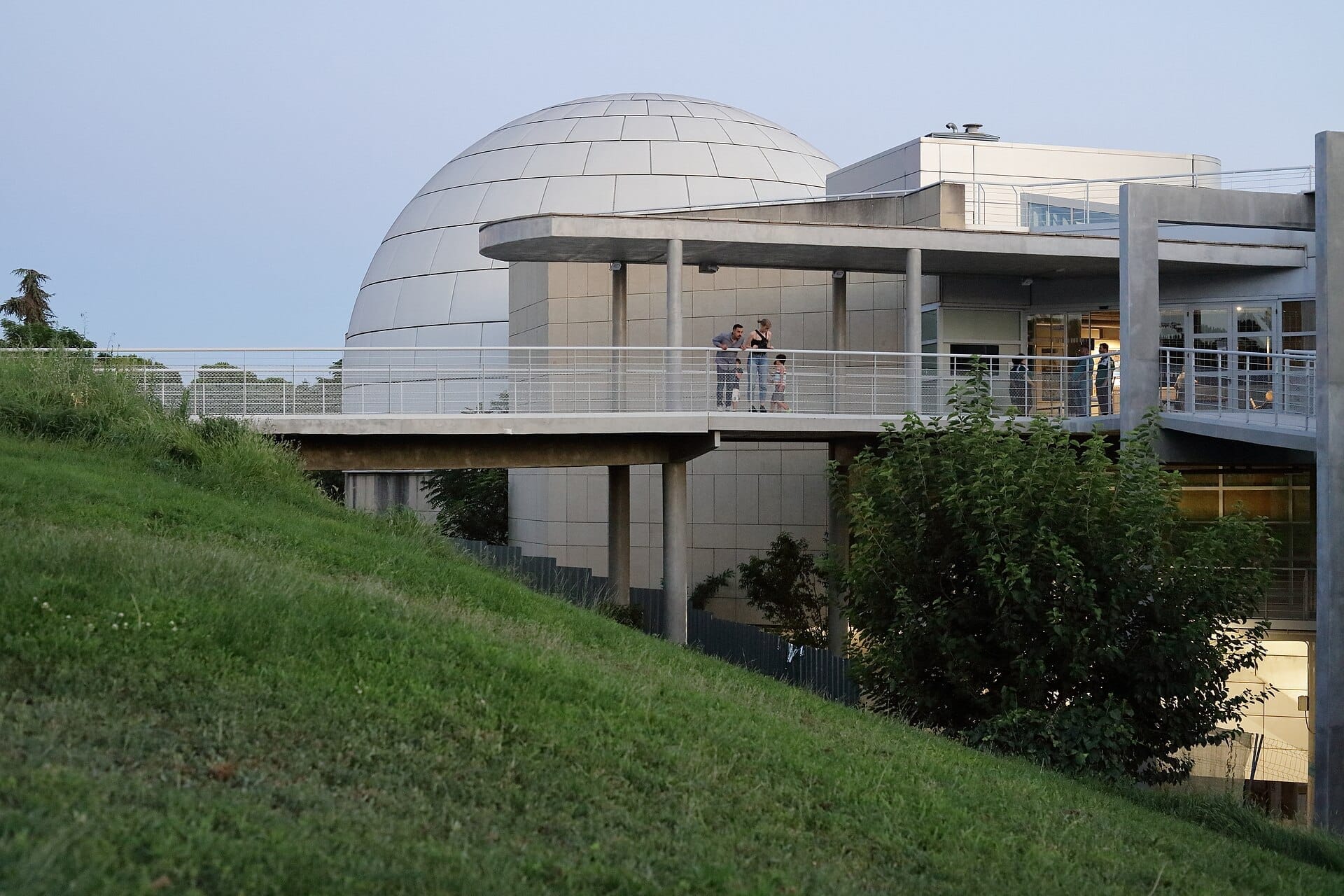
The Planetario de Madrid is a public astronomy centre operated by the city's Ayuntamiento and located within Parque Enrique Tierno Galván, a sprawling green space in the Arganzuela district. It opened on 29 September 1986 and underwent a significant technological and architectural renovation between 2016 and 2017, emerging with updated projection systems and a refreshed building. The dome itself measures 17.5 metres in diameter and seats 245 people, making it large enough to feel genuinely cinematic during a show.
The planetarium operates two types of content: dome projection sessions, which are ticketed, and ground-floor exhibition spaces, which are free. Exhibitions typically cover topics in astronomy, space science, and the history of observation. The dome shows vary by season and audience, with different programmes running during school terms versus school holidays and summer. On weekday mornings during term time, the venue is largely reserved for school groups, which means individual visitors are better served arriving during afternoon sessions or on weekends.
⚠️ What to skip
Once a dome projection has started, late entry is strictly not permitted. Arrive at least 10–15 minutes before your session begins. The ticket office closes before the centre itself, so don't leave purchasing until the last minute.
Getting There: Transit, Parking, and the Approach
The most straightforward approach is by Metro Line 6 to Méndez Álvaro, which deposits you within reasonable walking distance of the park entrance. However, Line 6 has planned maintenance closures scheduled for 2026, so check the Madrid Metro website before you travel. As an alternative, Cercanías suburban rail lines C5 and C10 also serve Méndez Álvaro station, connecting the planetarium to both Atocha and Chamartín. Several bus lines, including 8, 102, 148, 152, and 156, stop nearby as well.
If you're already spending time at Madrid Río, the riverside park and recreational corridor along the Manzanares, the planetarium makes a natural addition to the same afternoon. The two areas are close together in the broader Arganzuela corridor, and combining them gives the visit more weight.
Drivers will find regulated on-street parking (Zona Azul SER) around the park perimeter. Zone 25 is the closest meter. Parking here is generally easier than in the city centre, though spaces fill on weekend mornings. Cycling is also viable: the park sits near several of Madrid's established cycle paths along the river.
Tickets & tours
Hand-picked options from our booking partner. Prices are indicative; availability and final rates are confirmed when you complete your booking.
Royal Monastery of El Escorial and the Valley of the Fallen trip from Madrid
From 64 €Instant confirmationFree cancellationFlexible time Real Madrid: Bernabeu Stadium & Museum Entry
From 42 €Instant confirmationMuseum of Senses Madrid entrance ticket
From 19 €Instant confirmationAvila and Segovia full-day tour from Madrid
From 50 €Instant confirmationFree cancellation
The Dome Experience: What Happens Inside
When the lights dim inside the projection dome, the ceiling becomes a full-hemisphere sky. The shows use digital fulldome technology, projecting rendered starfields, planetary surfaces, and deep-space imagery across the curved interior. The effect is disorienting in the best possible way: the sense of scale shifts immediately once the programme begins. Sound plays a significant role too — narration in Spanish accompanies the visuals, so non-Spanish speakers should factor in a language barrier before purchasing tickets.
Sessions are programme-specific and not continuous: you buy a ticket for a particular show at a particular time, not a general entry. This matters practically because shows can sell out, particularly on weekends and during school holidays when families make up most of the audience. The range of programmes on offer at any time is usually small, often two or three different sessions covering different topics or targeted at different age groups. Check the current schedule on the official site before visiting.
💡 Local tip
The dome seating is reclining, which helps during longer shows, but the chairs can feel cool inside the climate-controlled space. A light layer is worth having, especially in summer when the contrast with outside temperatures is sharp.
Exhibitions: The Free Part Worth Checking
The ground-floor exhibition areas are free and open during general centre hours. These tend to feature displays on topics like the solar system, telescopes and astronomical instruments, and the science of observation. The level of explanation is generally accessible rather than technical, pitched at a broad audience including younger visitors. Even if you don't book a dome session, the exhibitions alone make a short stop worthwhile, particularly on a day when the park is already on your itinerary.
Visitors with an appetite for Madrid's broader scientific and natural history offerings might also consider the Museo de Ciencias Naturales, which covers natural history and palaeontology, or the Museo Arqueológico Nacional for a deeper cultural context. Both sit further north in the city and represent a different afternoon entirely, but together they make a case for Madrid's depth as a destination for curious travelers.
Hours, Prices, and Practical Limitations
The Planetario de Madrid is open Tuesday through Sunday, 10:00 to 13:45 and 17:00 to 19:45. It is closed on Mondays and on specific public holidays: 1 January, 6 January, 1 May, and 24, 25, and 31 December. The ticket office operates slightly shorter hours: 10:00 to 13:30 and 17:00 to 19:15. If you are arriving close to midday, note that the centre closes between approximately 13:45 and 17:00, which is the standard Spanish afternoon break. Arriving without accounting for this gap is one of the more common frustrations visitors mention.
Dome show tickets cost €3.60 for adults and €1.65 for children and visitors over 65, making this one of the most affordable ticketed cultural experiences in Madrid. Exhibitions are entirely free. For context: the low prices reflect the venue's public, educational mission rather than a lack of quality. The 2017 renovation brought the projection technology up to a standard comparable with many well-funded European planetariums.
If keeping costs low is a priority across your whole trip, the planetarium fits neatly into a broader strategy. The free things to do in Madrid guide covers other affordable options in the city, while the Madrid on a budget guide offers a more comprehensive planning framework.
ℹ️ Good to know
All dome show programmes are in Spanish. There is no simultaneous translation or English-language version at the time of writing. Non-Spanish speakers can still appreciate the visuals, but the narrative structure of the shows will be largely inaccessible without the language.
The Park Setting and When to Visit
Parque Enrique Tierno Galván, where the planetarium sits, is a large urban green space in a part of Madrid that sees far fewer tourists than the historic centre. Named after the popular mayor who was in office during Madrid's cultural revival in the 1980s, the park features open lawns, a small lake, and pathways that are well-used by local families and joggers. In spring and autumn the park is particularly pleasant in the afternoon, with mild temperatures and softer light. Summer middays are extremely hot at Madrid's 667-metre altitude, making early morning or evening visits far more comfortable.
A visit to the planetarium in the afternoon session (17:00 onward) pairs well with a walk through the park beforehand and a meal in the Legazpi area afterward. The neighbourhood is working-class and residential, without the tourist markups of areas closer to Puerta del Sol. Restaurants and bars on nearby streets offer good-value lunches and early dinners.
Accessibility and Practical Notes
The official website does not publish detailed step-free or wheelchair accessibility information. Visitors with specific mobility needs are advised to contact the venue directly before arriving: phone +34 91 467 34 61 or email buzon@planetmad.es. The park itself is generally flat and accessible, but the planetarium building's internal layout should be confirmed in advance.
Photography inside the dome during projections is not permitted, as it disrupts the show for other visitors. The exhibition areas are more permissive, but check with staff on arrival. The venue does not have a dedicated café or food service on site; bring water, particularly in summer.
Insider Tips
- The afternoon split schedule (10:00–13:45 and 17:00–19:45) catches many visitors off-guard. If you arrive at 14:00, you will find the doors closed. Plan for either a morning or evening session and treat the midday gap as an opportunity to explore the park or have lunch nearby.
- Weekend morning sessions during school holidays fill quickly with families. If you want a calmer atmosphere in the dome, the Tuesday or Wednesday afternoon session in non-holiday periods tends to draw a smaller, older audience.
- The official website at planetmad.es publishes the current programme schedule with session times and target age groups. Checking this before you visit is essential — there is no single fixed daily schedule, and sessions vary by week.
- Line 6 Metro closures were planned for parts of 2026. The Cercanías alternative (C5/C10 to Méndez Álvaro) is equally convenient and may actually be faster from Atocha, which is a common base for visitors staying in central Madrid.
- Combine the planetarium with the nearby Madrid Río riverfront park. The two areas are connected by walkable paths, and spending an hour along the river before or after your dome session makes for a full, unhurried afternoon well off the standard tourist routes.
Who Is Planetario de Madrid For?
- Families with children aged 6 and up, particularly for weekend afternoon dome sessions
- Budget-conscious travelers looking for a ticketed cultural experience under €4
- Visitors on a rainy or overcast afternoon who want an indoor activity away from the crowded museum district
- Astronomy enthusiasts or science teachers bringing groups to Madrid
- Travelers who want to see a part of Madrid that locals actually use, outside the historic centre
Nearby Attractions
Combine your visit with:
- Cuatro Torres Business Area
The Cuatro Torres Business Area is home to the four tallest skyscrapers in Spain, rising along the northern stretch of Paseo de la Castellana.
- Riyadh Air Metropolitano
The Riyadh Air Metropolitano is the modern home of Atlético de Madrid, one of Spain's most passionate football clubs. With a capacity of 68,456, a slick stadium tour, and a dedicated metro station at the door, it is a serious football experience for visitors with or without a match ticket.
- Parque El Capricho
Commissioned in 1787 by the Duchess of Osuna, El Capricho de la Alameda de Osuna is a 17-hectare historic garden in Madrid's Barajas district. Free to enter on weekends and public holidays, it pairs Romantic-era landscape design with an unexpected Civil War bunker hidden beneath its lawns.
- Parque Quinta de los Molinos
A 25-hectare historic estate park in the San Blas-Canillejas district, Parque Quinta de los Molinos draws Madrileños every February when hundreds of almond trees erupt into pink and white bloom. Free to enter year-round, it offers eucalyptus paths, kitchen gardens, and a cultural space well away from the tourist circuit.