Patkuli Viewing Platform: Tallinn's Quieter Panoramic Lookout
Perched on the edge of Toompea Hill in Tallinn's Old Town, the Patkuli Viewing Platform delivers a wide-angle panorama across the medieval rooftops and church spires of the lower town. Free to visit at any hour, it rewards early risers and evening wanderers alike with views that feel earned rather than handed over.
Quick Facts
- Location
- Rahukohtu tn 3b, Toompea Hill, Tallinn Old Town
- Getting There
- Walk up 157 Patkuli stairs from Toompark/Snelli pond, or approach via Old Town streets from Toompea (no stairs)
- Time Needed
- 15–30 minutes at the platform; allow extra time for the stairway climb
- Cost
- Free. No tickets, no booking required. Open 24 hours, year-round.
- Best for
- Panoramic photography, golden-hour views, escaping Old Town crowds
- Official website
- visitestonia.com/en/patkuli-viewing-platform
What Is the Patkuli Viewing Platform?
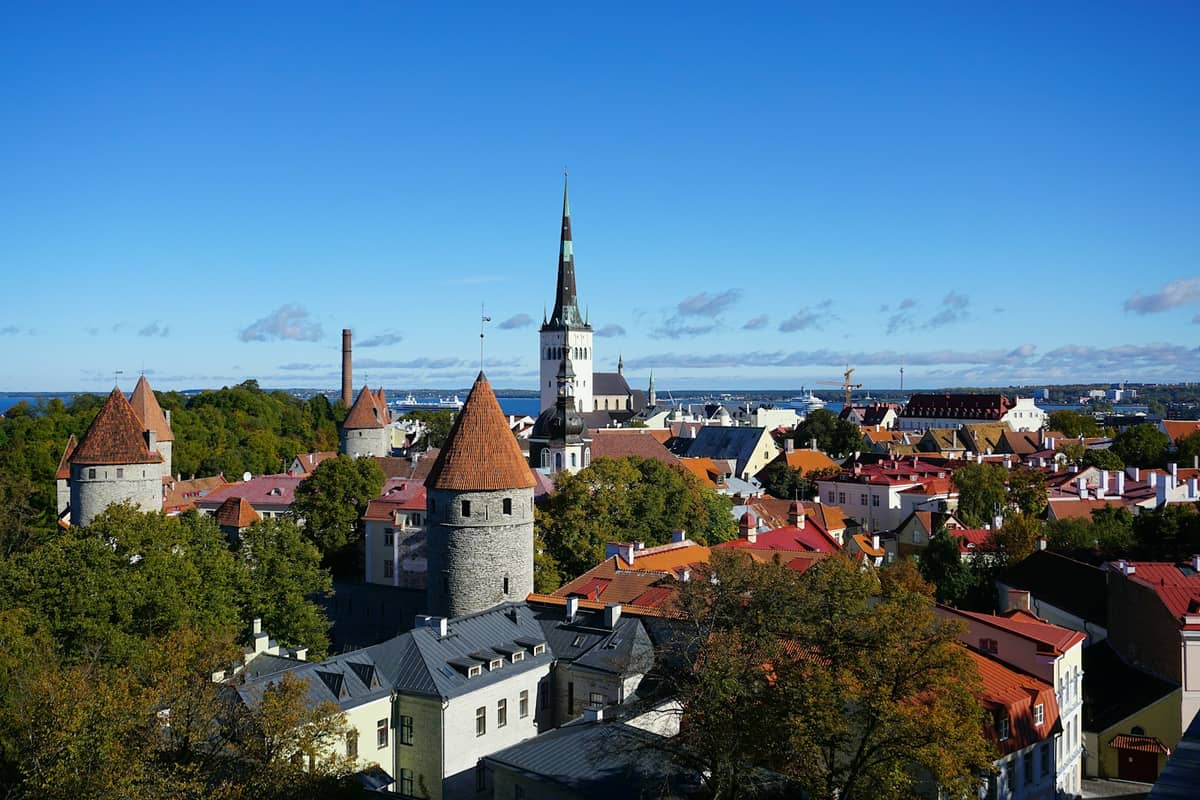
The Patkuli Viewing Platform is a public terrace on the western edge of Toompea Hill in Tallinn's Old Town. Standing high above the lower town, it frames an unobstructed sweep of Tallinn's medieval skyline: red-tile rooftops, the pointed spires of St. Olaf's and the Church of the Holy Spirit, fragments of the old city wall, and on clear days the distant shimmer of Tallinn Bay beyond the rooflines. There are no ticket booths, no opening gates, and no crowds queuing for wristbands. It is simply a public terrace, open at all hours, every day of the year.
The platform is one of several recognised viewpoints along Toompea Hill, but it occupies a different niche from the more famous Kohtuotsa Viewing Platform a few minutes' walk to the east. Kohtuotsa draws consistent coach-tour traffic and can feel like a ticketed attraction even though it is also free. Patkuli draws far fewer visitors at any given moment, partly because the stairway approach from below is less obvious, and partly because it sits slightly further from the Town Hall Square axis that most itineraries follow.
💡 Local tip
The platform is reachable without any stairs if you approach from within the Old Town via Toompea streets. This route uses historic cobblestones rather than the 157-step stairway, making it viable for those who prefer to avoid steps entirely — though the surface is uneven.
The View: What You Actually See
From the railing at Patkuli, the perspective is slightly different from most Toompea viewpoints. The platform looks north and northeast across the lower town, offering a layered composition: the green canopy of Toompark immediately below, then the compact medieval streetscape rising toward the spires, and finally the harbour cranes and bay in the far distance on clear days. The church towers create a natural skyline that is genuinely photogenic at almost any time of day.
What distinguishes Patkuli is the foreground. The Snelli pond and Toompark park sit directly at the base of the hill, so the view includes a band of greenery rather than just rooftops and asphalt. In late spring and summer, the trees below fill out into dense foliage that partially frames the lower town. In winter, bare branches open up the sightlines further, and a light snowfall transforms the lower town's rooftops into something that looks lifted from a Central European illustration. If you are interested in the full range of Tallinn's best lookouts, the guide to Tallinn's best viewpoints covers the trade-offs between each platform in detail.
Tickets & tours
Hand-picked options from our booking partner. Prices are indicative; availability and final rates are confirmed when you complete your booking.
Self-guided Discovery Walk of Tallinn city contrasts beyond the medieval walls
From 26 €Instant confirmationFree cancellationTallinn's art and culture tour with a local
From 62 €Instant confirmationFree cancellationHistorical walking tour of Tallinn with a local
From 599 €Instant confirmationFree cancellationIntroductory walking tour of Tallinn with a local guide
From 109 €Instant confirmationFree cancellation
The Patkuli Stairway: History and the Climb Up
The Patkuli stairway, which connects the platform to Toompark and Snelli pond below, was constructed in 1903. It descends 157 steps through a wooded cutting in the limestone escarpment of Toompea Hill, shaded by tall trees that keep it cool even on warm summer days. The stairway and platform are named after Friedrich von Patkul, a Baltic German nobleman whose family name is woven into several layers of Old Tallinn's administrative and architectural history.
The stairs themselves are a pleasure to use outside of peak summer hours. The treads are stone, worn smooth in the centre from more than a century of foot traffic, and flanked by iron railings that have been repaired and repainted over the decades without entirely losing their early-20th-century feel. Descending toward Toompark on a quiet morning, with birdsong from the trees and the city barely audible below, is genuinely one of the more atmospheric short walks available in central Tallinn.
⚠️ What to skip
The 157 steps of the Patkuli stairway are not suitable for wheelchairs, pushchairs, or anyone with significant mobility limitations. The stone surface can also be slippery after rain or during icy conditions in winter. In those conditions, handrails are essential and descent requires care.
If you are walking up from the lower town, the stairway entrance is at Toompark, near the Snelli pond. The climb is moderate rather than taxing — 157 steps with landings at intervals — and most visitors in reasonable health complete it in under five minutes. At the top, the platform opens immediately. For historical context on the medieval layout of this part of the city, the Tallinn medieval history guide explains how Toompea Hill functioned as a fortified upper town, administratively and physically separate from the merchant lower town for much of its history.
How It Changes by Time of Day
Mornings before 9am are reliably quiet. At that hour the platform may be empty or shared with only one or two other visitors, and the light from the east catches the church spires at a low angle that makes them glow against a pale sky. The air at this hour still carries the coolness of night, and Toompark below is usually misty in the summer months, which adds a soft-focus layer to the view from above.
Midday in summer brings the most foot traffic, though Patkuli never reaches the shoulder-to-shoulder density that the Kohtuotsa platform can experience during peak season. Even at noon in July, there is usually enough space at the railing to photograph without a stranger's elbow in frame. The direct overhead light at this hour flattens the medieval roofscape somewhat; it is functional for documentation but less interesting photographically.
The evening window, roughly one to two hours before sunset in summer, is arguably the most rewarding time to visit. The warm directional light catches the weathered copper of church roofs and the red tile of the lower town from the side, creating strong contrasts. In midsummer, when sunset in Tallinn comes very late, the sky remains bright well past 10pm, and the platform attracts a small scattering of visitors who come specifically to watch the light shift over the rooftops. Winter evenings work differently: the city lights below come on early, and the platform offers a composed view of the illuminated spires and snow-covered rooftops that no filtered photograph quite replicates.
Practical Walkthrough: Getting There and Around
The most direct approach from the Old Town's main axis is to walk up through Toompea via Pikk jalg or Lühike jalg streets and then navigate the Toompea plateau to Rahukohtu street. The platform sits at the western edge, signposted near Rahukohtu 3b. This route involves no stairway and is the recommended option for those with mobility considerations, though the cobblestones are uneven throughout. Tallinn's Toompea Castle and the Alexander Nevsky Cathedral are both on the same plateau and can be visited in the same short walk.
From the lower town, the most atmospheric approach is via the Patkuli stairway: enter Toompark from the Falgi tee side, follow the path toward Snelli pond, and look for the stone stairway entrance rising into the trees on the hill's western face. The platform is at the top. This route pairs naturally with a walk through Danish King's Garden and the section of the old city wall below Toompea, which adds meaningful historical texture to what might otherwise be a brief detour.
There is no on-site parking, and driving to the platform itself is impractical given Old Town's restricted vehicle access. Tallinn's public transport network runs buses and trams to stops near the edge of the Old Town, from which the platform is a 10 to 15 minute walk. Tallinn's historic core is compact enough that most visitors on foot will reach Patkuli as part of a wider Old Town loop rather than as a standalone destination.
💡 Local tip
Photography tip: for the most useful compositions, shoot from the far ends of the platform railing rather than the centre. The angled perspectives from the corners capture the layering of rooftops and spires more effectively than the straight-on central view, which can compress the depth of the scene.
The Verdict: Is It Worth the Stop?
Patkuli is worth including in any Old Town visit that already takes you up to Toompea Hill, which most itineraries do. As a standalone destination requiring a special trip, it is harder to justify unless you are specifically chasing a particular quality of light for photography, or unless you want a quiet place to sit with the view rather than the crowd.
If you only have time for one viewpoint, the Kohtuotsa platform offers a slightly more central panorama and may be marginally more rewarding as a single choice. But if your Old Town walking route already passes through Toompea, the few extra minutes to reach Patkuli are well spent. The combination of the stairway, the wooded descent to Toompark, and the view at the top creates a short but genuinely satisfying sequence that feels more like discovering the city than ticking a list.
Who might skip it: visitors with limited time who are already planning to hit Kohtuotsa or the tower of St. Olaf's Church will see comparable or superior views from those points. Anyone with knee problems should be aware that the stairway descent can be hard on joints, particularly on slick stone in wet weather. The platform itself is small, with minimal seating, and offers nothing beyond the view: no cafe, no information panels, no shelter.
Insider Tips
- Arrive before 8:30am in summer if you want the platform to yourself. Even in peak July, the early morning window sees almost no visitors — the Tour groups that pack Toompea by mid-morning have not yet mobilised.
- The stairway down to Toompark is shadier and cooler than the open streets of Toompea in summer heat. If you need a break from the midday sun, the tree-covered stairway descent to Snelli pond offers genuine relief.
- Combine the visit with a loop through the city wall section below Toompea. The wall towers and the base of Toompea Hill create a completely different angle on the medieval fortifications than anything visible from the platform above.
- In winter, the platform is rarely gritted or salted. Wear shoes with grip if there has been any overnight frost — the stone railing area and the top steps of the stairway can be genuinely icy.
- The Snelli pond at the base of the stairway is a quiet local spot with benches and ducks. If you have children or simply want to extend the walk, the pond and Toompark together make a relaxed 20-minute add-on after the descent.
Who Is Patkuli Viewing Platform For?
- Photographers looking for a less crowded Toompea viewpoint with good morning and evening light
- Walkers building a full Toompea Hill loop that takes in the stairway, city wall, and multiple viewpoints
- Visitors who want a free, unhurried panorama without jostling for railing space
- Travellers on a budget who want the full Old Town skyline experience at zero cost
- Winter visitors seeking the illuminated medieval roofscape without summer crowds
Nearby Attractions
Other things to see while in Tallinn Old Town:
- Alexander Nevsky Cathedral
Rising above Toompea Hill with five gilded onion domes and a facade that dominates every Old Town panorama, Alexander Nevsky Cathedral is Tallinn's most visually assertive building. Built between 1895 and 1900, it remains an active Orthodox place of worship and a window into the city's layered Russian and Estonian history.
- Danish King's Garden
Tucked into the western slope of Toompea hill, the Danish King's Garden is a small, free public park woven into Tallinn's medieval fortifications. Open around the clock and steps from the Old Town's main streets, it offers a rare moment of calm alongside ancient towers and stone walls with an 800-year-old backstory.
- Fat Margaret
Fat Margaret (Paks Margareeta) is a squat, round cannon tower that has guarded the northern gate of Tallinn's Old Town since the early 16th century. Today it houses the Estonian Maritime Museum, with exhibits on seafaring history and a rooftop terrace overlooking the harbour. It is one of the few surviving medieval structures in Tallinn where you can explore both the architecture and a well-curated permanent collection under the same roof.
- Freedom Square
Freedom Square sits at the southern edge of Tallinn Old Town, anchoring the city's civic identity with the striking War of Independence Victory Column. Open around the clock and free to enter, it serves as a gathering point for national celebrations, winter markets, and everyday Tallinn life.