Parque Natural Chicaque: The Cloud Forest Day Trip Bogotá Deserves
Parque Natural Chicaque sits southwest of Bogotá in the Andean highlands, protecting a rare cloud forest ecosystem at elevations between 2,100 and 2,700 meters. It is one of the most accessible stretches of genuine wilderness near the Colombian capital, offering marked trails, endemic wildlife, and the kind of deep forest quiet that the city cannot provide.
Quick Facts
- Location
- Variante La Mesa–Soacha, near San Antonio del Tequendama, Cundinamarca — approx. 30–40 min southwest of Bogotá
- Getting There
- Weekend shuttle from Bogotá (8,000 COP/person); private car or taxi also common. No direct TransMilenio route.
- Time Needed
- Half day minimum; full day recommended for longer trails
- Cost
- Approx. 25,000 COP adults; 20,000 COP children (5–17) and seniors (65+). Verify current rates at chicaque.com.
- Best for
- Hikers, nature photographers, families with older children, anyone seeking genuine forest immersion near Bogotá
- Official website
- www.chicaque.com
What Parque Natural Chicaque Actually Is
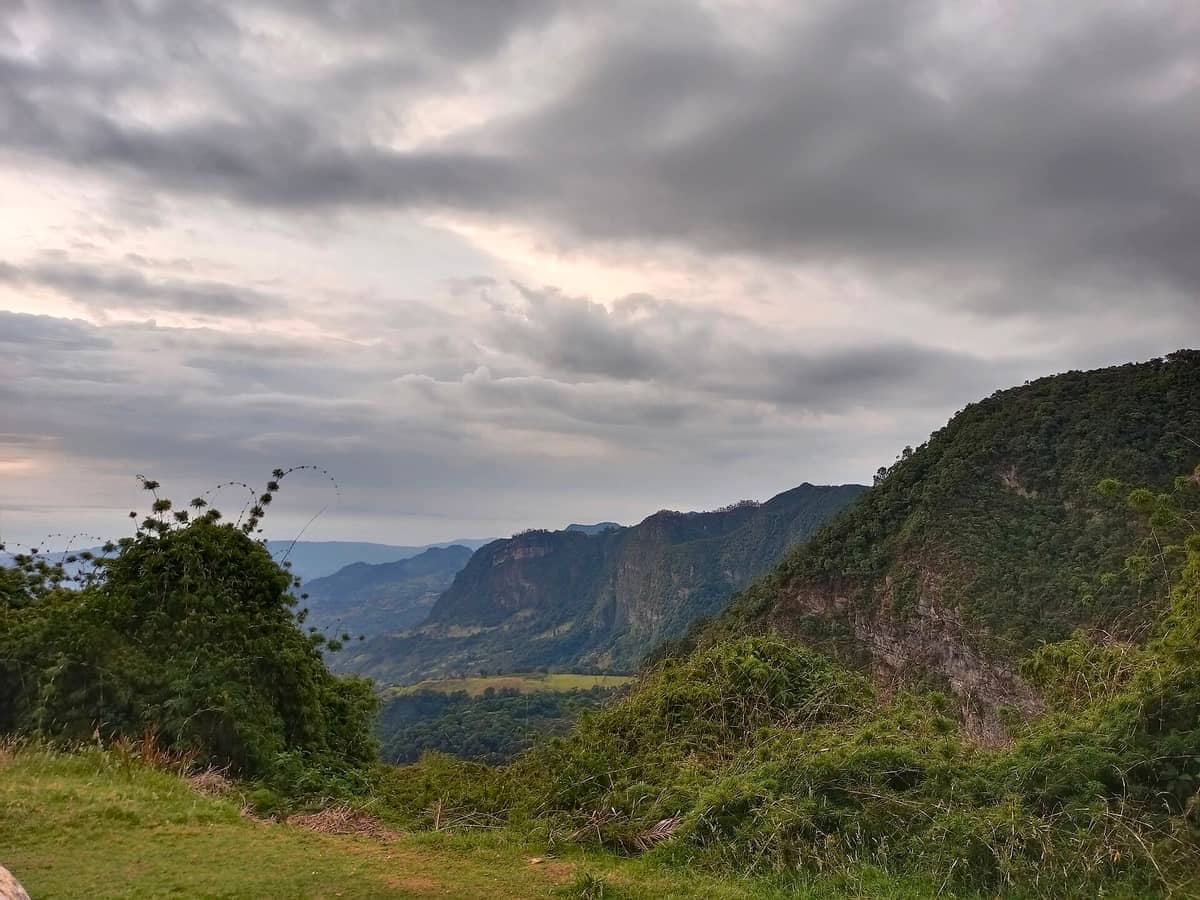
Parque Natural Chicaque is a privately managed nature reserve protecting a cloud forest — bosque de niebla in Spanish — in the Andean foothills southwest of Bogotá. The park spans elevations from roughly 2,100 to 2,700 meters above sea level, placing it within the same altitude band as the capital itself, but in a landscape the city replaced long ago with concrete and asphalt.
Cloud forests at this elevation are defined by near-constant moisture: mist rolls through the canopy for much of the day, mosses cover every surface, and the air carries a cool, organic dampness that smells like wet earth and decomposing leaves in the best possible way. This is not a manicured botanical garden. The trails are real forest paths, the roots are exposed, and the terrain is steep in places. That is the point.
For context on how this fits into a wider Bogotá itinerary, see our guide to day trips from Bogotá, which covers several Cundinamarca escapes within a similar travel radius.
ℹ️ Good to know
The park is open every day of the year, including public holidays, from 08:00 to 16:30. Plan your descent back to the entrance with enough time to exit before closing — the hike back up takes time.
The Landscape: What You Will Actually See and Hear
The forest at Chicaque is dense and layered. The canopy closes overhead within the first few minutes of descending from the main entrance, and the shift in light is immediate: the sky narrows to small patches visible through interlocking branches draped in epiphytes, bromeliads, and hanging mosses. The understory is thick with ferns, and where streams cut through the hillside, the vegetation crowds the path to shoulder width.
Sound is one of the defining features. At dawn and in the early morning, the forest produces a steady layer of bird calls — tanagers, hummingbirds, and occasionally the alarm call of a coati moving through the undergrowth. By midday, when visitors are more numerous, the bird activity drops but the mist often thickens, softening the light and muffling footsteps on the trail. This is when photography of the forest interior becomes genuinely interesting: the diffuse light is flattering and the mist adds depth.
The trails descend into a ravine and climb back up, so every route involves both going down and coming back up through steep switchbacks. Mud is a factor after rain, which can happen at any time of year given the cloud forest's moisture cycle. Proper footwear is not optional here.
💡 Local tip
Wear trail shoes or light hiking boots with grip. Sandals and city sneakers are inadequate on wet, rooted terrain. Bring a waterproof layer even on sunny mornings — mist can arrive within an hour and temperatures drop quickly in the shade.
Tickets & tours
Hand-picked options from our booking partner. Prices are indicative; availability and final rates are confirmed when you complete your booking.
Candelaria walking tour
From 35 €Instant confirmationFree cancellationCoffee farm guided tour
From 114 €Instant confirmationFree cancellationZipaquira Salt Cathedral guided tour
From 86 €Instant confirmationFree cancellationBogota full-day bike rental
From 19 €Instant confirmationFree cancellation
How the Experience Changes Through the Day
Early arrival, ideally by 08:00 or 09:00, gives you the best chance of wildlife encounters and the quietest trails. Weekday mornings are dramatically calmer than weekends, when Bogotá families and school groups arrive in numbers. If you visit on a Saturday or Sunday, the difference in atmosphere between the 08:00 first entry and the 11:00 shuttle crowd is significant.
By late morning, the mist often settles in the lower sections of the park, which can be atmospheric or disorienting depending on your expectations. Visibility along some trails drops to a few dozen meters. This is the cloud forest behaving exactly as it should, but it does mean the views from clearings and overlook points disappear. If viewpoints matter to you, arrive early and move quickly to the higher elevation sections first.
Afternoons are quieter as day-trippers begin heading out, but the trail conditions in wet months can be slippery after a full day of foot traffic on clay soil. Plan to leave the forest interior by 15:00 to give yourself comfortable time to reach the exit before 16:30 closing.
Getting There: Logistics Without the Guesswork
The park sits on the Variante La Mesa–Soacha road near San Antonio del Tequendama in Cundinamarca, southwest of Bogotá. The drive from the city’s southern edge takes around 30 to 40 minutes depending on traffic and your departure point — southern Bogotá neighborhoods are significantly closer than northern ones like Usaquén or Chapinero.
On weekends and public holidays, the park operates a dedicated shuttle service from Bogotá, with departures around 07:15, 08:15, 09:15 and 10:15 from TransMilenio Terreros. The shuttle costs approximately 8,000 COP per person per trip, with children in arms traveling free. This is the most practical option for visitors without a car and worth booking in advance if you plan a weekend visit. On weekdays, the shuttle typically requires a prior reservation — contact the park directly to confirm.
Ride-hailing apps including Uber, Cabify, and Didi operate in Bogotá and can take you to the park entrance, though confirm the driver will travel outside the city. For general orientation on getting around the capital first, the getting around Bogotá guide covers app-based transport and TransMilenio in detail.
⚠️ What to skip
There is no wheelchair access at Parque Natural Chicaque. The terrain involves steep, uneven, and often muddy trails. The park is also not recommended for visitors with serious cardiac conditions or significant mobility limitations. This is a real forest, not a flat loop path.
Ecological and Cultural Context
Cloud forests of the Andean highlands are among the most biodiverse terrestrial ecosystems in the world by area. The moisture-laden air supports a disproportionate variety of plant species, particularly epiphytes — plants that grow on other plants rather than in soil — and the dense vegetation creates habitat layers that support species rarely found in drier forest types. Chicaque is not a large reserve by national park standards, but within its boundaries it preserves a functioning example of what the slopes around Bogotá would have looked like before large-scale deforestation.
The forests immediately surrounding Bogotá have been heavily cleared over centuries for agriculture and urban expansion, making intact cloud forest patches like Chicaque ecologically significant beyond their size. The park is privately managed, which has both advantages (consistent maintenance and visitor infrastructure) and limitations (the area protected is finite and surrounded by converted land).
If ecological context around Bogotá interests you, the Cerros Orientales — the forested hills visible from much of the city — represent another remnant of this highland ecosystem, accessible directly from urban Bogotá.
Photography, Practical Tips, and Who Should Skip This
The forest interior is a genuine photography environment, but it requires patience and the right expectations. The light is low and diffuse under the canopy, which means camera sensors work hard in automatic mode. A camera body that handles low light reasonably well — or a phone with a good night mode used manually — will produce better results than a point-and-shoot in auto. The mist creates natural depth and atmosphere in wide shots. Close-up work on mosses, lichens, and ferns rewards macro lenses or the portrait mode of a good phone camera.
Wildlife photography is possible but not guaranteed. The park has mammal and bird species, but forest animals are quieter and less visible than open-habitat species. Slow, quiet movement on the trails early in the morning gives you the best realistic chance of encounters. Do not expect the density of wildlife you might see in a Caribbean or Amazonian environment — cloud forest fauna tends toward the discreet.
Visitors who primarily want dramatic Andean viewpoints rather than forest immersion may be better served by Cerro de Monserrate or a day trip to Laguna de Guatavita, both of which offer exposed high-altitude landscapes. Chicaque rewards people who are comfortable in enclosed, humid forest environments and are not solely motivated by panoramic views.
Families with children under about eight years old should assess trail conditions honestly before visiting. The steeper sections are genuinely tiring for small children, and the mud can make footing unpredictable. Families with older, active children will generally find the park excellent: the trails are engaging, the environment is unusual, and there is enough variety to hold attention for a full half-day.
💡 Local tip
Bring your own food and water. The park has limited facilities for purchasing food on-site. Pack a lunch and at least 1.5 liters of water per person — you will be moving through humid terrain and the physical exertion of the trails is real, even at cool temperatures.
Insider Tips
- Weekday visits, particularly Tuesday through Thursday, reduce trail traffic to a fraction of weekend levels. If your schedule allows flexibility, a quiet weekday morning at Chicaque is a fundamentally different experience from a busy Saturday.
- The descending trails into the ravine are steeper and harder on knees than the return climb. Pace yourself downhill and take shorter steps on wet roots. Many visitors underestimate the return ascent and run low on energy.
- If mist is heavy when you arrive at the entrance, wait 20–30 minutes before descending. Cloud movement at this elevation can clear a trail corridor within half an hour, and a forest in partial mist is more interesting to walk through than one in thick fog.
- Book the weekend shuttle directly through the park's official website (chicaque.com) rather than through third-party tour aggregators, which often add margin without adding value. The park's own shuttle is well-organized and the most economical option.
- Layers are more useful than a single heavy jacket. The trail temperature varies noticeably between shaded ravine sections and any open clearings. A lightweight fleece under a waterproof shell gives you more control than one heavy coat that you cannot remove.
Who Is Parque Chicaque For?
- Hikers and trail walkers who want genuine forest terrain, not manicured paths
- Nature photographers looking for cloud forest light, mosses, epiphytes, and birdlife
- Bogotá visitors with a free half or full day who want contrast from the urban environment
- Families with older children (8+) comfortable on uneven, moderately strenuous trails
- Travelers interested in Andean cloud forest ecology and conservation
Nearby Attractions
Combine your visit with:
- Cascada La Chorrera
Cascada La Chorrera is Colombia's tallest waterfall, plunging approximately 590 metres through cloud forest on the road to Choachí, less than an hour east of Bogotá. The hike to reach it is a proper half-day commitment, not a gentle stroll, but the payoff is one of the most dramatic natural sights within day-trip distance of the capital.
- Catedral de Sal de Zipaquirá
Carved 180 meters beneath a working salt mine, the Catedral de Sal de Zipaquirá is one of South America's most extraordinary architectural achievements. This guide covers what to expect underground, how to get there from Bogotá, and whether the trip is worth your time.
- Jardín Botánico de Bogotá
The Jardín Botánico de Bogotá José Celestino Mutis is one of Colombia's most important living plant collections, spread across a flat, walkable campus that includes the striking Tropicario greenhouse complex. It is a calm, well-organized space that rewards visitors who enjoy botany, photography, and a break from the city's pace without leaving it.
- Laguna de Guatavita
Laguna de Guatavita is a circular crater lake in the Cundinamarca highlands and one of Colombia's most significant sacred sites. Associated with the Muisca El Dorado ritual, it sits 75 km northeast of Bogotá inside a protected forest reserve managed by CAR. Access is by mandatory guided walk only, making every visit a slow, deliberate encounter with both Andean ecology and pre-Columbian history.