Palazzo Vendramin-Calergi: Renaissance Palace, Casino, and Wagner's Last Home
Palazzo Vendramin-Calergi is one of the most architecturally significant buildings on the Grand Canal, a 16th-century Renaissance palace that has served as the home of Venice's municipal casino since 1959. It is also where composer Richard Wagner died in 1883, and a small Wagner Museum has been housed here since 1995.
Quick Facts
- Location
- Cannaregio 2040, Venice — facing the Grand Canal
- Getting There
- Vaporetto Lines 1 or 2 to San Marcuola stop
- Time Needed
- 1.5–3 hours for casino visit; allow extra for the Wagner Museum
- Cost
- Entrance fee applies; verify current pricing with Casino di Venezia before visiting
- Best for
- Architecture lovers, Wagner admirers, evening entertainment seekers
- Official website
- www.casinovenezia.it/en/venues/ca-vendramin-calergi
What Palazzo Vendramin-Calergi Actually Is
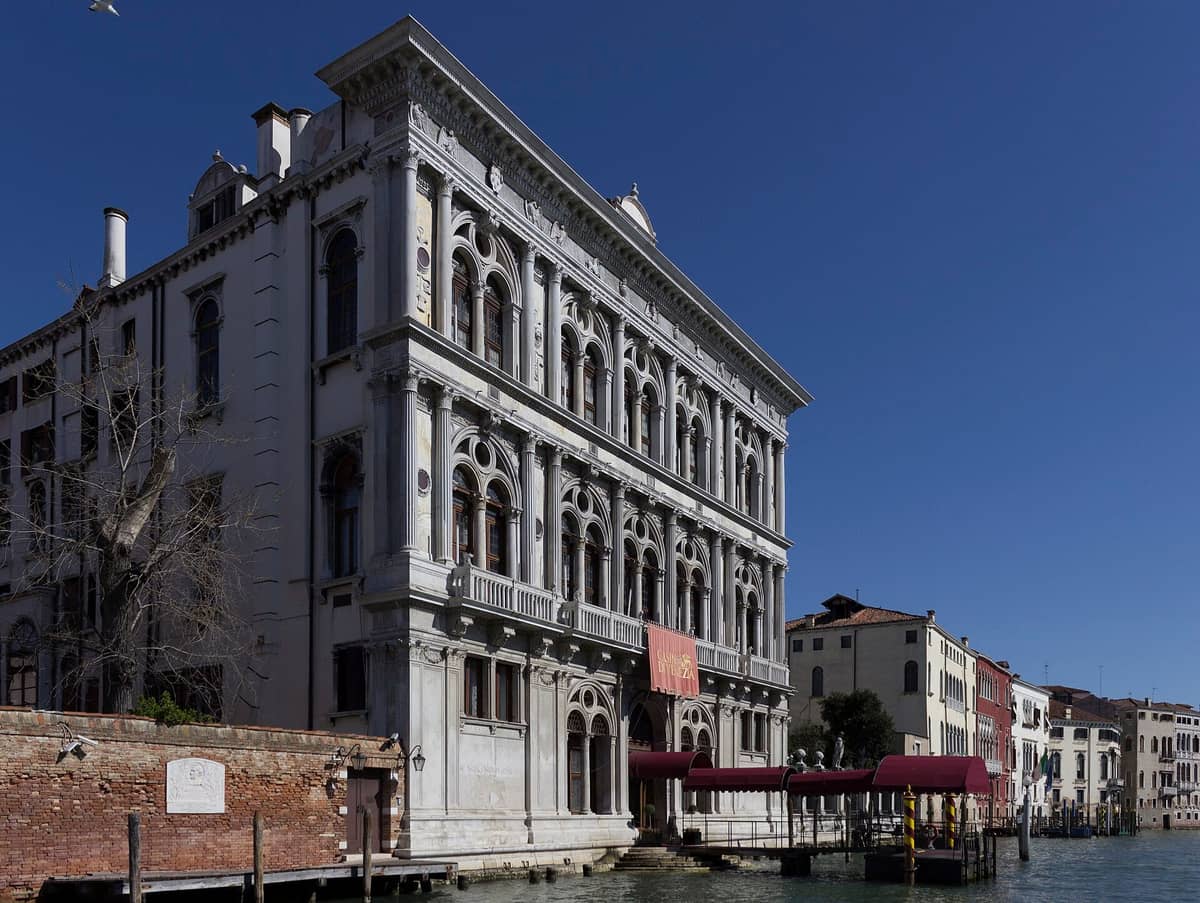
The Palazzo Vendramin-Calergi, also known as Ca' Vendramin Calergi, occupies a stretch of Grand Canal waterfront in Cannaregio that stops visitors mid-step. The facade is considered one of the first fully realized examples of Renaissance architecture in Venice, completed around 1509 by Mauro Codussi. Where most Venetian palaces layered Gothic arches and Byzantine ornament, Codussi drew on Roman classical proportion: round-headed double windows framed by paired columns, a white Istrian stone face that catches morning light and glows amber under evening illumination.
Today the building serves three overlapping purposes. It is a historic monument of genuine architectural importance. It is the weekend home of the Casino di Venezia, one of the oldest legal casinos in the world. And it contains a small but carefully curated museum dedicated to Richard Wagner, who spent his final months here and died within these walls in February 1883. Few buildings in Venice carry this concentration of history, culture, and active public use.
ℹ️ Good to know
The Casino di Venezia at Ca' Vendramin Calergi currently serves as the winter venue and is not open for regular gaming; check directly with the casino for up-to-date information on opening periods and hours, as schedules can change.
The Architecture: What Codussi Built and Why It Matters
Construction began in 1481 under the patronage of Andrea Loredan, with financing from Doge Leonardo Loredan, and the building took nearly three decades to complete. Mauro Codussi was the primary architect, and the result was unlike anything then standing on the Grand Canal. The facade is organized around a central loggia of triple-arched windows on each of its main floors, flanked by engaged columns and surmounted by a classical cornice. The geometry is tight, the proportions deliberate. This was not Gothic Venice adapting to Renaissance fashion; it was a full commitment to a new architectural language.
From the water, the palace presents an almost symmetrical composition that reads as unified even across its considerable width. The ground-floor arcade, once open to the canal, gave way to a piano nobile and a second residential floor above. Stone balconies project over the water at measured intervals. From the San Marcuola vaporetto stop, you get the best full-facade view, particularly in the late afternoon when low western light skims across the relief carving and sharpens every shadow.
The building sits within the Cannaregio sestiere, which contains some of the Grand Canal's most varied architecture. Walking here from Santa Lucia railway station along the canal fondamenta takes roughly 15 minutes and passes several other notable palaces, making this route worthwhile even before you reach the destination.
Tickets & tours
Hand-picked options from our booking partner. Prices are indicative; availability and final rates are confirmed when you complete your booking.
Doge's Palace skip-the-line tour
From 67 €Instant confirmationFree cancellationVenice Legends, Anecdotes and Ghost Stories Tour
From 35 €Instant confirmationFree cancellationGhosts and legends tour of Venice
From 29 €Instant confirmationFree cancellationSkip-the-line guided tour of Doge's Palace and Saint Mark's Basilica
From 106 €Instant confirmationFree cancellation
Richard Wagner and the Museum in His Rooms
Wagner arrived in Venice in the autumn of 1882, already seriously ill, accompanied by his wife Cosima and a circle of family and associates. The Vendramins rented him the mezzanine apartments of Ca' Vendramin Calergi. He died there on 13 February 1883, reportedly of a heart attack, while working at his desk. He was 69 years old. The connection between this palace and one of the 19th century's most influential composers gives the building a weight that extends well beyond its architectural credentials.
The Museo Wagner, established in 1995, is housed in the rooms where Wagner actually lived. The collection includes period furniture, letters, photographs, personal objects, and documents relating to his Venetian sojourn and his wider life and work. It is a small museum by Venice standards, but it is thoughtfully arranged and occupies rooms with actual historical continuity to the man. For anyone with even a passing interest in 19th-century European music or Romanticism more broadly, it adds significant value to a visit. Opening hours and access arrangements should be confirmed directly with the casino, as the museum operates within the broader palace complex.
The Casino Experience: Evening Inside the Piano Nobile
The Casino di Venezia operates gaming rooms on the upper floors of Ca' Vendramin Calergi when it functions as the winter venue; opening days and evening hours vary by season and should be confirmed in advance with the casino. Arriving by vaporetto at San Marcuola after dark and walking to the palace entrance on Calle Vendramin is a particular kind of experience: the canal-facing facade is lit against the black water, and the scale of the building becomes clearer at night than during the day when it competes with foot traffic and general sensory overload.
Inside, the casino occupies the principal rooms of the piano nobile, and the interiors retain decorative elements consistent with the palace's historic character: frescoed ceilings, ornate plasterwork, tall windows that in daylight would frame the Grand Canal. The gaming offer includes slot machines as well as table games. Dress code expectations exist, and guests should present identification at the entrance. The atmosphere skews toward a mixed international clientele, quieter and more intimate than a Las Vegas-style casino, though that is partly a function of the compressed opening schedule.
💡 Local tip
Smart-casual dress is expected. Bring a valid photo ID, as entry is restricted to adults and identification is checked at the door. The casino also offers the option of arriving by private water taxi directly to the canal entrance, which is worth considering if you want the full palazzo arrival experience.
Exact entry fees and gaming minimums are not listed transparently online and should be confirmed directly with Casino di Venezia. Budget-conscious travelers should note that the entrance fee is only the beginning of costs in a casino context.
Getting There and Practical Logistics
The most straightforward route is vaporetto Line 1 from Piazzale Roma or from Santa Lucia railway station to the San Marcuola Casinò stop; some Line 2 services do not stop here, so check current routes before using that line. Departures run approximately every 10 minutes on both lines. From the stop, the walk to the palace entrance on Calle Vendramin takes under five minutes. If you are arriving from the San Marco area, Line 1 from Rialto to San Marcuola adds around 10 minutes by water.
On foot from Santa Lucia station, the walk follows the canal-side fondamenta for approximately 800 metres. This is a pleasant daytime route that passes other Cannaregio canal architecture, but at night the fondamenta can be uneven and poorly lit in stretches, so sensible footwear matters. Venice cobblestones are routinely unforgiving on heels or worn soles.
For broader orientation in the area, the guide to getting around Venice explains the vaporetto network and ticketing options in detail.
⚠️ What to skip
Venice's acqua alta (high water) events can affect ground-floor access at points along canal-adjacent routes. Check tide forecasts if visiting in autumn or winter, and wear waterproof footwear as a precaution.
Seeing the Facade Without Going Inside
The exterior of Palazzo Vendramin-Calergi is freely visible from the Grand Canal and from Calle Vendramin without entering the building. If a casino visit is not your aim, the facade alone justifies a detour, especially from the water. The best view comes from a passing vaporetto, but the stop at San Marcuola also puts you close enough to appreciate the stonework and proportions at ground level.
Combining a stop here with a walk further into Cannaregio is a logical pairing. The Jewish Ghetto is a short walk east, and the area between the two contains some of the quieter, more residential character that sets Cannaregio apart from the concentrated tourist pressure of San Marco.
For photography, the canal-facing facade photographs best in early morning or late afternoon on clear days. The palace faces roughly south-southwest over the Grand Canal, so morning light comes from the left (east) and afternoon light from the right. Overcast days produce flatter, more evenly exposed images of the white Istrian stone facade without blown highlights.
Worth It?
Palazzo Vendramin-Calergi rewards visitors who come with at least one of three things: an interest in Renaissance architecture, a connection to Wagner's music and legacy, or a genuine intention to spend an evening at the casino. As a pure architectural spectacle, the exterior is outstanding and costs nothing to see. The casino adds a social and entertainment dimension that is genuinely distinctive, the combination of 16th-century rooms and table games is rare anywhere in Europe. The Wagner Museum fills a specific niche but fills it well.
Visitors expecting a freely accessible historic interior will be disappointed: the palace is not a general-admission museum and most interior spaces are tied to casino access. Families with children will find little here on casino evenings, given the adult-only entry requirements. Those visiting Venice on a tight itinerary and prioritizing more central landmarks might reasonably assign this a lower priority, but architecture enthusiasts or anyone curious about the depth of cultural layers Venice can pack into a single building will find it worth the trip to Cannaregio.
If you are building a broader itinerary around the Grand Canal's architectural highlights, see the Grand Canal overview and the Ca' d'Oro, another Renaissance-era palace on the same waterway with public museum access.
Insider Tips
- The San Marcuola vaporetto stop puts you directly in front of the casino water entrance. If you arrive by vaporetto Line 1 rather than on foot, you get the full Grand Canal arrival experience that the building was designed to project.
- The Wagner Museum is a separate visit from the casino and has its own access arrangements. If Wagner is your primary interest, contact the Casino di Venezia directly to confirm opening times for the museum, as they do not always coincide with casino gaming hours.
- Friday evenings tend to be quieter than Saturdays at the casino. If you want time to take in the interior architecture without heavy crowds, a Friday arrival closer to opening time is the better option.
- The facade looks dramatically different under evening artificial illumination compared to daytime. If you are here during the day for the neighborhood but plan to return for the casino, the contrast is worth experiencing.
- Calle Vendramin, the land-side approach, is easy to miss. From the San Marcuola stop, follow the signs for the casino rather than trying to navigate by general orientation, as the approach is not along the main tourist route.
Who Is Palazzo Vendramin-Calergi (Casino di Venezia) For?
- Architecture enthusiasts interested in the introduction of Renaissance design in Venice
- Wagner fans and classical music devotees wanting to see where he died and visit the dedicated museum
- Adults looking for an evening of gaming in a genuinely historic setting rather than a purpose-built casino
- Grand Canal watchers who want to see one of its most important facades up close from land as well as water
- Travelers exploring Cannaregio beyond the Jewish Ghetto who want a specific architectural anchor for the western end of the district
Nearby Attractions
Other things to see while in Cannaregio:
- Ca' d'Oro (Galleria Giorgio Franchetti)
Built for the Contarini family between 1421 and roughly 1430, the Ca' d'Oro is one of the finest Gothic palaces on the Grand Canal. It houses the Galleria Giorgio Franchetti, currently closed for renovation (closed to the public from early 2026, with a planned reopening in spring 2027 — verify at cadoro.org).
- Chiesa di Madonna dell'Orto
One of Venice's great Gothic churches, the Chiesa della Madonna dell'Orto sits quietly on the northern edge of Cannaregio. Free to enter, rich with Tintoretto canvases, and largely overlooked by day-trippers, it rewards anyone willing to walk beyond the Rialto circuit.
- Chiesa di Santa Maria dei Miracoli
Built between 1481 and 1489 by Pietro Lombardo, the Chiesa di Santa Maria dei Miracoli is a compact Renaissance masterpiece sheathed entirely in polychrome marble. Tucked into a quiet canal corner of Cannaregio, it rewards visitors who seek it out with some of the finest stone carving in Venice.
- Jewish Ghetto of Venice (Ghetto Ebraico)
Founded by decree in 1516, the Ghetto Ebraico di Venezia in Cannaregio is the oldest Jewish ghetto in the world. Today it holds five historic synagogues, a respected Jewish museum, active kosher restaurants, and one of Venice's most atmospheric campi, all within a compact seven-acre enclave that rewards slow, careful exploration.