Oscarsborg Fortress: The Island Fort That Changed Norwegian History
Rising from the waters of the Oslofjord south of Oslo, Oscarsborg Fortress is where Norwegian forces sank the German cruiser Blücher on 9 April 1940, buying the royal family and government critical hours to escape. Today the island is free to explore year-round, with a fortress museum, guided tours, and ferry connections from Drøbak.
Quick Facts
- Location
- Island in the Oslofjord, outside Drøbak — approx. 35 km south of Oslo city centre
- Getting There
- Bus from Oslo to Drøbak, then 5-min ferry from Sundbrygga. In summer, direct ferry from Aker Brygge (Oslo) to Oscarsborg
- Time Needed
- 3–5 hours including ferry crossings; combine with Drøbak for a full day
- Cost
- Fortress grounds: free. Museum: approx. NOK 100–140 adults. Ferry (return): NOK 120 adults, NOK 70 children, NOK 250 family. Guided tours: approx. NOK 200/person
- Best for
- History enthusiasts, WWII buffs, families, fjord day-trippers
- Official website
- www.forsvarsbygg.no/en/festningene/oscarsborg-fortress
Why Oscarsborg Matters
Most coastal fortresses are relics — impressive stone, faded purpose. Oscarsborg Fortress is different. On the night of 9 April 1940, its aging Krupp cannons and torpedo battery fired on the German cruiser Blücher as it advanced through the narrow Drøbaksundet strait to capture Oslo. The Blücher sank. That delay gave the Norwegian royal family, the government, and the national gold reserves time to flee north, and ultimately to London. Norway's resistance to the Nazi occupation had a starting point, and it was this small island in the Oslofjord.
That story gives the place weight that no amount of scenic fjord photography can fully capture. Walking the ramparts here, you are standing at a site that genuinely altered the course of the war in Scandinavia. The fortress did not just defend a harbor — it bought a nation time to survive.
ℹ️ Good to know
The outdoor fortress grounds are free to enter and open all year. The Fortress Museum is generally open daily 10:00–17:00 except on public holidays, with seasonal adjustments to hours and exhibitions. Verify current museum hours and any admission charges locally before your visit, as seasonal adjustments can apply.
Getting There: The Ferry Is Part of the Experience
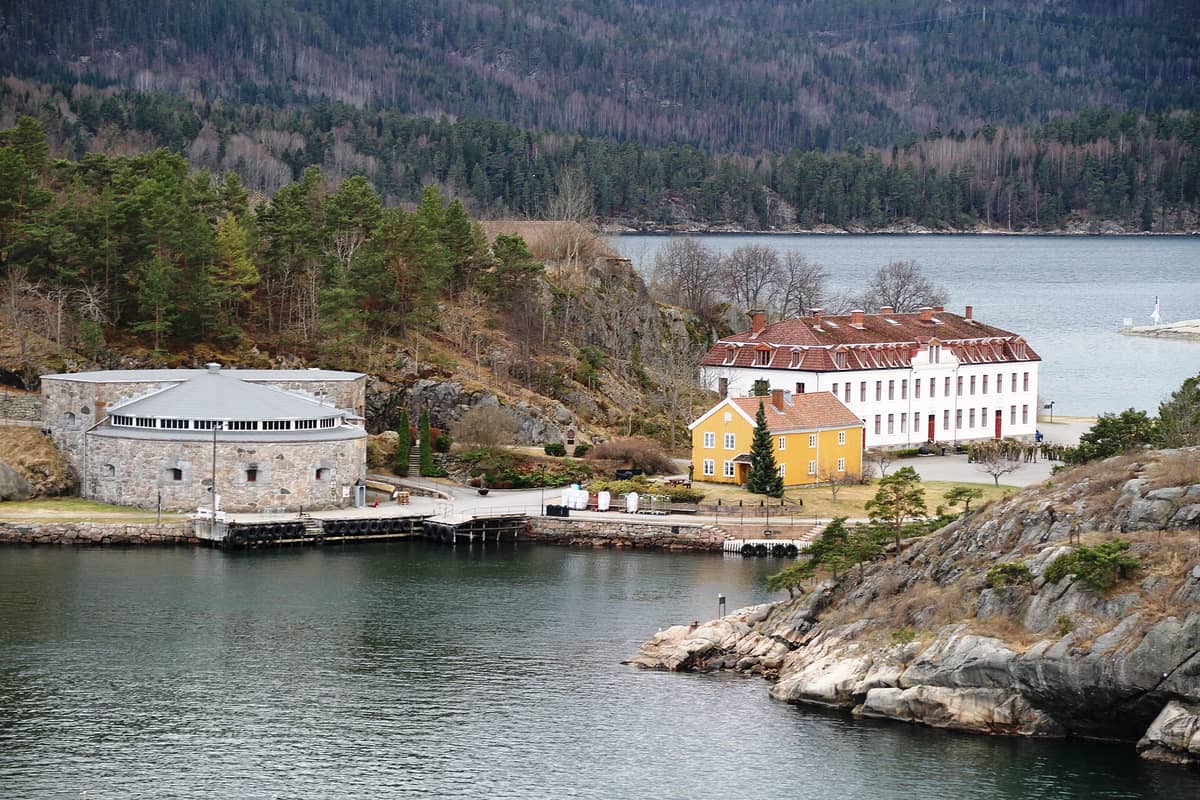
Oscarsborg sits on a small island in the Drøbaksundet strait — the narrowest passage of the Oslofjord — and the only way to reach it is by water. That constraint is also an asset. The five-minute ferry crossing from Sundbrygga, just north of Drøbak town centre, frames the fortress dramatically as you approach. The grey stone towers and low bastions emerge from the water in a way that no land-side approach could replicate. On calm summer mornings, the reflection on the fjord is nearly perfect.
From Oslo, the standard route is a bus to Drøbak (around 45–60 minutes depending on service), followed by the short ferry crossing. Ferry return tickets cost NOK 120 for adults, NOK 70 for children, and NOK 250 for a family ticket (2026 prices). Tickets must be purchased online before boarding — they are not sold on the vessel itself. In spring and autumn on weekends, and daily throughout summer, ferries also depart from Sjøtorget in Drøbak town centre. For a more scenic approach, Drøbak is itself worth a slow wander before or after your fortress visit — it is one of the most characterful small towns on the fjord.
During summer months, a direct passenger ferry service also operates between Aker Brygge in central Oslo and Oscarsborg/Drøbak. This route turns the transit into a proper fjord cruise and is the most atmospheric option if you are visiting between late May and August. Check current schedules with the operator before travelling, as departure times shift across the season.
⚠️ What to skip
Ferry tickets for Oscarsborg must be bought in advance — there is no ticket sales on board. Buy your round-trip ticket online or at the ticket machines at the pier (see Visit Greater Oslo or the official Oscarsborg ferry information) before arriving at the quay.
Tickets & tours
Live prices and dates from our booking partner. If you book, we may earn a commission at no extra cost to you.
Oslo Fjord sightseeing audio-guided electrical boat tour
From 35 €Instant confirmationFree cancellationFjord cruise with live jazz music
From 64 €Instant confirmationFree cancellationLuggage Storage in Oslo
From 6 €Instant confirmationFree cancellationPicturesque dinner cruise in Oslo
From 137 €Instant confirmationFree cancellation
Arriving on the Island: What You See First
The ferry docks at a small quay on the island's eastern side. The first impression is of scale: the main circular tower, Kaholmen tower, is more compact than its historical reputation might suggest, but the surrounding fortifications spread considerably once you begin walking. The island smells of salt water and old stone in about equal measure, and the sound of the fjord lapping against the walls is constant wherever you go.
The outdoor grounds are free to enter and completely open, with no barriers between you and the ramparts, gun emplacements, and outbuildings. In summer, the grass between the structures is kept short and almost manicured, which gives the place a slightly parklike quality in contrast to its military architecture. Children tend to run immediately toward the cannons. Adults tend to stop and read the information boards more carefully than they do at most historical sites — the story is compelling enough to hold attention.
Morning visits, particularly on weekdays, offer the fort almost entirely to yourself. By midday in July and August, school groups and day-trip families arrive in numbers. If you want the contemplative experience — standing alone at the torpedo battery looking across the strait where the Blücher went down — arrive on the first ferry of the day.
The Fortress Museum and the Blücher Story
The Oscarsborg Fortress Museum (Oscarsborg festningsmuseum) covers both the long military history of the fortification and the events of 9 April 1940 in detail. The Blücher section is the most visited part and for good reason: the account of how a skeleton crew of reservists fired century-old Krupp cannons and then launched two torpedoes — the first time the fortress torpedo battery had ever been used in combat — is genuinely dramatic. The museum presents the sequence of events with clarity, including maps of the strait and the Blücher's course.
Admission is approximately NOK 100–140 for adults, with reduced rates for children (confirm current pricing at the ticket desk on arrival). The museum is open daily 10:00–17:00, closed on public holidays. If you are visiting as part of a broader Oslo trip focused on the occupation period, the Norway Resistance Museum in Oslo city centre provides essential context on what happened after Oscarsborg's defense, making the two sites complementary rather than repetitive.
Guided Tours: Worth the Extra Cost
Guided tours of Oscarsborg are available primarily in summer, with open group tours during school holidays priced at around NOK 200 per adult (children under 12 free), and private group tours charged per group rather than per person. The tours access areas not reachable independently, including some of the underground gun galleries and the torpedo battery itself. Given that the tactical logic of the fortress — why its position in the strait made it so effective — is hard to read from the surface alone, a guide adds real value here. Book in advance during peak summer weeks, as tour spots fill quickly.
Tours are conducted in Norwegian by default; English-language tours run in summer but on a reduced schedule. Check availability directly with the fortress when planning your visit.
Practical Details: Timing, Weather, and What to Bring
The best months to visit are June through August, when ferry services are most frequent, the museum garden is in full use, and the long Scandinavian daylight gives you flexibility. September is quieter and still pleasant — the fjord light in early autumn has a particular quality that photographers respond to strongly. Winter visits are possible since the grounds are open year-round, but ferry frequency drops significantly and the museum may have reduced hours; confirm schedules carefully before travelling in the colder months. For a broader look at timing your Oslo area trip, the best time to visit Oslo guide covers seasonal considerations across the region.
Wear shoes with grip — the fortress terrain includes cobblestones, stone stairs, and uneven ground throughout the outer works. A light waterproof layer is advisable regardless of the forecast, since conditions on the fjord shift quickly and the crossing can be breezy even on otherwise warm days. There is a café and restaurant on the island, so you do not need to carry a full day's food, but supplies are limited and the kitchen works to island-scale capacity.
On accessibility: the fortress is not fully adapted for wheelchair users or visitors with significant mobility limitations. The Fortress Museum, restaurant, and café areas have lift access or wheelchair arrangements, but outdoor sections involve uneven surfaces and steps that cannot easily be bypassed. Work to improve universal design is ongoing, but as of now the outer fortifications are not fully accessible.
💡 Local tip
Photography tip: the best angle for shooting the fortress against the fjord is from the ferry on your approach, before docking. Have your camera ready before the quay comes into view — you get roughly 90 seconds of ideal framing as the vessel slows.
Pairing Oscarsborg With a Drøbak Day Trip
Most visitors combine Oscarsborg with time in Drøbak, the small coastal town on the western shore of the fjord directly opposite the fortress. Drøbak is known for its wooden architecture, waterfront fish market, and — oddly — its status as Norway's Christmas town, with a permanent Christmas shop operating year-round. The walk from Drøbak town centre to the Sundbrygga ferry pier takes about 12 minutes along the waterfront. A full day structured as Oslo to Drøbak, then fortress, then back through Drøbak for lunch or coffee, works well without feeling rushed. For those interested in the wider fjord, the Oslo fjord guide covers the broader range of destinations accessible from the city by water.
If you are planning day trips from Oslo more generally, Oscarsborg pairs logistically with a day trip from Oslo itinerary. It works as a standalone half-day from Oslo if you take the direct summer ferry from Aker Brygge, or as a full day when combined with Drøbak.
Who Should Skip This Attraction
Oscarsborg is not ideal for travelers with very limited time who want to maximize Oslo's city-centre highlights. The logistics of getting there — bus to Drøbak plus ferry, or summer boat from Aker Brygge — mean a minimum of three hours door-to-door even if you spend only an hour on the island. If your Oslo itinerary is already packed, this is a destination to save for a return visit or a specifically planned day trip rather than a quick add-on.
Visitors with significant mobility difficulties should also carefully consider the terrain before committing, given the uneven surfaces and steps throughout most of the outdoor areas. Those seeking a polished museum experience with climate-controlled galleries and extensive English-language interpretation may find the fortress itself somewhat lean on that front — the outdoor environment and the history carry the visit more than any exhibition design.
Insider Tips
- Book or buy ferry tickets before boarding — they cannot be purchased on board, and the last ferry back fills up on busy summer afternoons. Check the return timetable before you arrive so you are not stranded.
- The torpedo battery, where the Blücher was actually struck, is only accessible on guided tours. If the history is what draws you here, book the guided tour first and build your visit around it rather than treating it as optional.
- The fortress has a hotel and conference centre operating within the historic buildings. If you want the experience of waking up inside the ramparts with the fjord outside your window, accommodation can be booked directly — a genuinely unusual overnight option within striking distance of Oslo.
- On the return ferry from Oscarsborg to Drøbak, position yourself on the port side (left when facing forward) for the best view back toward the fortress as the vessel pulls away — the composition looking back is stronger than the approach.
- Combine with Drøbak's waterfront for lunch rather than eating on the island, where options are more limited and the café can get crowded at midday in high season. The fish market at Drøbak's harbour is the better meal.
Who Is Oscarsborg Fortress For?
- WWII and military history enthusiasts who want to stand at an actual site of significant wartime action
- Families with older children who can engage with the historical narrative and handle uneven terrain
- Photographers seeking fjord landscapes with strong architectural foregrounds
- Oslo visitors with a full free day who want to get off the city grid without travelling far
- Travelers interested in Norwegian national identity and how the events of April 1940 shaped the country's wartime experience
Nearby Attractions
Combine your visit with:
- Drøbak
Drøbak is a compact coastal town on the eastern shore of the Oslofjord, about an hour south of Oslo by bus. Known for its well-preserved wooden architecture, Sunday shopping tradition, and proximity to the historic Oscarsborg Fortress, it offers a genuine change of pace from the capital without requiring an overnight stay.
- Ekeberg Viewpoint
Perched on Ekebergåsen hill southeast of central Oslo, Ekebergparken combines one of the city's most sweeping viewpoints with an open-air sculpture park, ancient rock carvings, and forested walking trails. It is free to enter, open around the clock, and far less crowded than most Oslo attractions.
- Ekebergparken Sculpture Park
Ekebergparken Sculpture Park sits on a wooded hillside southeast of Oslo's city center, combining a rotating collection of contemporary sculpture with sweeping views over the Oslofjord. Entry is free, the park is open around the clock, and the experience shifts dramatically depending on what time of day and season you visit.
- Emanuel Vigeland Mausoleum
Tucked into a quiet residential street in the Slemdal neighborhood, the Emanuel Vigeland Mausoleum is one of Oslo's most singular and least-visited art experiences. A barrel-vaulted chamber covered floor-to-ceiling in frescoes depicting the human life cycle, with acoustics so extreme that a whisper lingers for twenty seconds. Open Sundays only, with timed entry slots and advance booking recommended.
Planning a trip? Discover personalized activities with the Nomado app.