Oosterpark: Amsterdam's Unhurried Eastern Park
Oosterpark is a large, free public park in Amsterdam-Oost, drawing locals rather than tourists with its tree-lined ponds, open lawns, public sculptures, and a kids' wading pool. It offers a genuine slice of Amsterdam neighbourhood life, particularly on weekday mornings and sunny weekend afternoons.
Quick Facts
- Location
- Oosterpark, Amsterdam-Oost (eastern Amsterdam)
- Getting There
- Tram lines serving the surrounding streets; also easily reached by bike from the city centre
- Time Needed
- 45 minutes to 2 hours depending on pace
- Cost
- Free – public park, open 24 hours daily
- Best for
- Picnics, cycling, family outings, escaping the tourist centre
What Oosterpark Actually Is
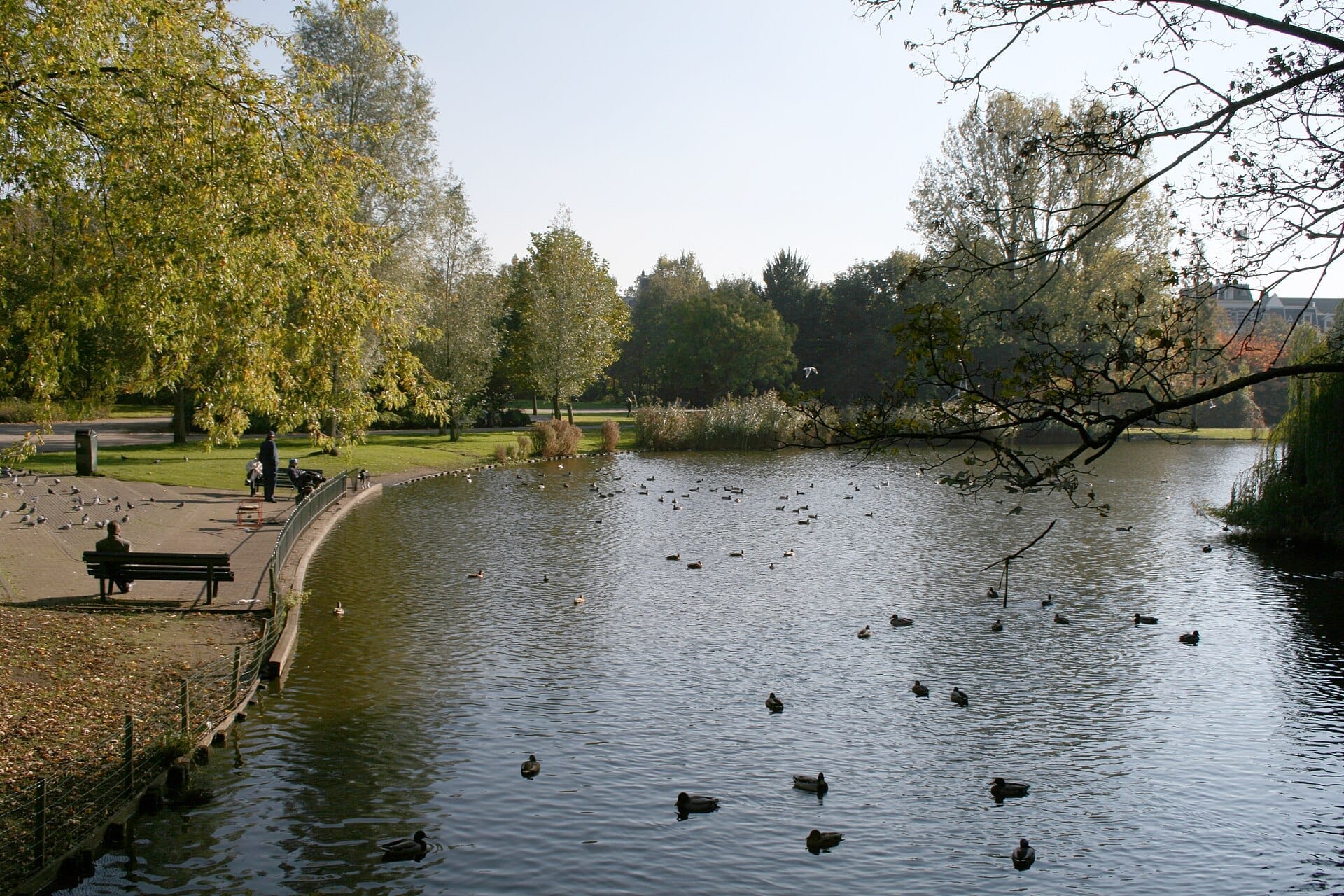
Oosterpark is a municipal park in the Oost (east) district of Amsterdam, a short distance from the city centre but firmly outside the tourist orbit. The name means, simply, Eastern Park, and it does exactly what it promises: a generous stretch of green space with ponds, mature trees, curving paved paths, and the kind of unhurried atmosphere that Amsterdam's canal ring rarely affords visitors anymore.
The park is large enough to lose yourself in for an hour without retracing your steps. Ponds sit at its heart, ringed by weeping willows and benches where people read, eat lunch, or watch coots patrol the water. Kids wade in the shallow pool on warm days. Cyclists cut through on their way to somewhere else. Dog walkers loop the paths before the commuter rush. It is, in other words, a working neighbourhood park that happens to be worth visiting.
💡 Local tip
Oosterpark is free and open around the clock. You don't need to plan around opening times or book anything. Just show up.
How the Park Changes Through the Day
Early mornings are the quietest and, on clear days, the most atmospheric. Low light filters through the tree canopy onto the ponds, the paths are almost empty, and you hear birds before you hear traffic. This is when the park feels genuinely large. Joggers and cyclists pass at intervals, but the lawns are open and calm.
By mid-morning on weekdays, the park fills gently with parents with pushchairs, older residents on their regular walks, and the occasional remote worker with a coffee and a laptop on a bench. The social fabric here is residential rather than touristic. You are far more likely to hear Dutch spoken than English.
Sunny weekend afternoons bring the biggest crowds, and by Amsterdam standards these remain modest. Groups spread blankets across the grass, children pile into the wading pool, and the benches along the pond fill up. The atmosphere is sociable but never overwhelming. On overcast autumn days, the park empties out considerably, and the colour of the turning leaves reflecting in the still ponds is worth the chill.
Tickets & tours
Live prices and dates from our booking partner. If you book, we may earn a commission at no extra cost to you.
Gray Line Canal Cruise with snackbox & Heineken Experience
From 48 €Instant confirmationFree cancellationAmsterdam evening canal cruise
From 18 €Instant confirmationFree cancellationJewish Museum and Portuguese Synagogue entrance ticket
From 20 €Instant confirmationFree cancellationAdmission ticket for Artis Royal Zoo and Micropia
From 39 €Instant confirmationFree cancellation
What to Look For: Sculptures and Landmarks
Oosterpark contains a small number of public sculptures distributed across the grounds. These are not signposted with interpretive boards or walking-tour markers, which is partly what makes discovering them feel natural rather than programmed. They sit in the landscape as if they belong there, which of course they do.
One of the most significant is the National Slavery Monument (Nationaal Slavernijmonument), a formal memorial unveiled in the park in 2002 and dedicated to the abolition of slavery in the Dutch colonies. It marks 1 July, the date in 1863 when slavery was abolished in the Dutch Caribbean, as a day of reflection. The monument is a sobering, dignified presence in what is otherwise a recreational space, and it adds a layer of historical weight to the park that most visitors on a standard Amsterdam itinerary never encounter.
ℹ️ Good to know
Every year on or around 1 July, Oosterpark hosts major Keti Koti commemorations and festivities, marking the abolition of slavery in the Dutch colonies. If your visit coincides with early July, check whether events are running in or around the park.
Getting There and Getting Around
Oosterpark sits in Amsterdam-Oost, east of the Plantage district. The park borders the Tropenmuseum (now the Wereldmuseum Amsterdam) and is close to Hotel Arena on the southern side. From Amsterdam Centraal, tram lines such as 14 (towards Flevopark) connect you to the surrounding streets via stops near Oosterpark; the ride takes roughly fifteen minutes. Cyclists from the Jordaan or De Pijp can reach the park in under twenty minutes on flat roads, which is the natural way to arrive if you already have a bike.
Inside the park, paved paths make the whole circuit accessible on foot or by bike. The terrain is flat throughout, with no significant gradients. Paths are wide enough for a wheelchair or stroller without difficulty. There are no entry gates, turnstiles, or barriers of any kind: it is a fully open public space.
Oosterpark pairs naturally with a walk through the surrounding Oost neighbourhood, where the dining and café scene has expanded significantly over the past decade. If you are building a half-day around this part of the city, consider combining it with a visit to the Dappermarkt, one of Amsterdam's most authentic daily street markets, located a few minutes' walk to the north.
Weather and Seasonal Considerations
Amsterdam's oceanic climate means rain is possible in any month. Oosterpark in the rain is not unpleasant if you are dressed for it: the park takes on a quieter, greener quality and the ponds reflect grey sky with their own kind of appeal. But a wet afternoon visit in November, without waterproof layers, is not enjoyable. The park has no covered areas to retreat to.
Spring and early summer are the strongest seasons for a visit. From late April through June, the trees are in full leaf, the grass is green, and the days are long enough to linger. Autumn, particularly September and October, brings good light and changing colour. For a broader seasonal picture of Amsterdam, the guide on the best time to visit Amsterdam covers what to expect month by month.
⚠️ What to skip
There is limited shelter in the park during heavy rain. If you are visiting in autumn or winter, bring a waterproof jacket. The paths can be slippery near the pond edges after rain.
Photography
The ponds are the most photogenic element of the park, especially in early morning when the light is soft and the water is still. The reflection of the surrounding trees in the pond surface works best when there is no wind, typically before 9am. The wading pool area is lively and colourful on warm afternoons but requires sensitivity around photographing children.
The sculpture of the National Slavery Monument is worth photographing carefully. It is not a backdrop for casual shots: treat it with the same consideration you would a war memorial.
Who Will Enjoy This Park and Who Might Not
Oosterpark is best suited to visitors who want to see how Amsterdam actually lives, rather than how it performs for tourists. It works well as part of a longer exploration of the Oost neighbourhood, or as a counterpoint to a morning spent at a major museum. If you have already visited Vondelpark and want to see a greener, quieter, and more residential alternative, Oosterpark is a sound choice.
Visitors with very limited time in Amsterdam, who need to optimise every hour, may find Oosterpark hard to justify over the city's heavyweight cultural attractions. It offers peace and local atmosphere rather than spectacle. If you are on a tight two-day itinerary, it is a nice addition but not a priority.
Families with children will find the wading pool and open lawns genuinely useful. For more structured family-friendly options in the same part of the city, the Artis Amsterdam Royal Zoo is close by and a perennial hit with younger visitors.
Insider Tips
- The benches along the northern pond edge face south, meaning they catch afternoon sun for most of the year. These fill up fast on warm days, so arrive before 1pm if you want a prime spot.
- The park is well used by the local Oost cycling community as a cut-through, but the main pedestrian paths are clearly separated. If you are walking, keep to the inner paths near the ponds and let cyclists use the outer ring.
- Keti Koti on 1 July draws a significant crowd to the National Slavery Monument area. If you want a quiet visit to the memorial itself, go early morning or the day before the festival.
- The neighbourhood around Oosterpark, particularly along Linnaeusstraat and Beukenplein, has a concentration of Indonesian and Surinamese restaurants that reflect the historical connections between Amsterdam and its former colonies. Combine an afternoon in the park with dinner in the neighbourhood for a more complete picture of this part of the city.
- On very warm summer days, the kids' wading pool is a genuine attraction for families with toddlers, but it draws a crowd. If you are visiting with young children, arrive before 11am.
Who Is Oosterpark For?
- Local-life seekers who want to see Amsterdam outside the tourist infrastructure
- Families with young children looking for free outdoor space with a paddling pool
- Cyclists building a half-day route through Amsterdam-Oost
- Visitors interested in Dutch colonial history and the National Slavery Monument
- Anyone needing a quiet break after a morning in a museum
Nearby Attractions
Combine your visit with:
- Amsterdam Dance Event (ADE)
Every October, Amsterdam transforms into the global capital of electronic music for five days. Amsterdam Dance Event brings together more than 1,000 shows across nearly 200 venues, from intimate club nights to warehouse raves, alongside a major industry conference that shapes the direction of dance music worldwide.
- Amsterdamse Bos (Amsterdam Forest)
Covering nearly 1,000 hectares on Amsterdam's southwestern edge, Amsterdamse Bos is a man-made forest park three times the size of New York's Central Park. Free to enter and open year-round, it offers cycling paths, a rowing lake, wildlife meadows, and genuine breathing room that the city centre simply cannot provide.
- Dappermarkt
Running along Dapperstraat in Amsterdam-East since 1910, Dappermarkt is a street market with around 200 stalls selling everything from fresh produce and spices to fabrics and secondhand clothing. Free to enter, open Monday through Saturday, and drawing locals from across the city, it offers a sharply different experience from the tourist-facing markets in the centre.
- Haarlem
Just under 20 km west of Amsterdam, Haarlem is the capital of North Holland and one of the Netherlands' oldest cities, granted city rights in 1245. A compact historic centre, the landmark Grote Kerk, the Frans Hals Museum, and a lively market square make it one of the most rewarding half-day escapes from the capital.
Planning a trip? Discover personalized activities with the Nomado app.