One World Observatory: NYC From 1,250 Feet Up
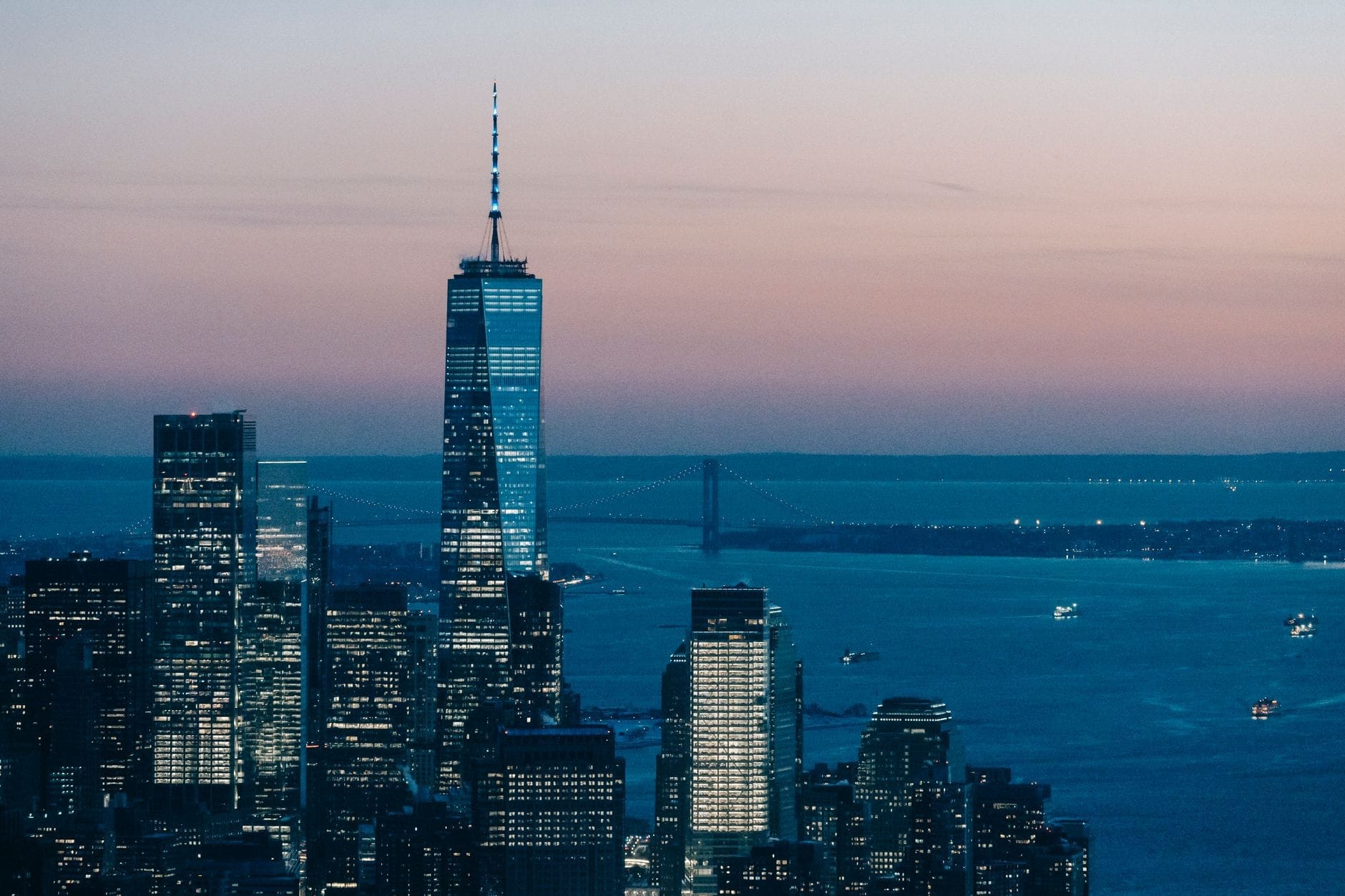
One World Observatory sits atop One World Trade Center, the tallest building in the Western Hemisphere, offering sweeping 360-degree views of New York City from 1,250 feet above street level. Here's what the experience actually looks like, and how to make the most of it.
Quick Facts
- Location
- One World Trade Center, 117 West Street, Lower Manhattan, NY 10007
- Getting There
- Fulton St (A/C/J/Z/2/3/4/5), Cortlandt St (R/W/1), World Trade Center (E) — all within a 5-minute walk
- Time Needed
- 1.5 to 2.5 hours including queuing, the ride up, and time on the observation floors
- Cost
- General admission from US$44 plus a US$3.50 processing fee and tax. Verify current pricing before visiting.
- Best for
- First-time NYC visitors, architectural enthusiasts, anyone who wants the city's most emotionally resonant high-altitude view
- Official website
- www.oneworldobservatory.com
What One World Observatory Actually Is
One World Observatory occupies floors 100 through 102 of One World Trade Center, a 104-story skyscraper at the corner of West and Vesey Streets in Lower Manhattan. At 1,776 feet to its architectural spire — a number chosen deliberately to reference the year of American independence — it is the tallest building in the Western Hemisphere. The observatory itself sits at 1,250 feet above street level.The experience is more than a straightforward elevator ride to a glass box. The building incorporates a multimedia sequence called "See Forever," which plays during the high-speed elevator ascent, compressing centuries of New York City's development into 47 seconds of floor-to-ceiling imagery. The effect is genuinely cinematic, and it primes visitors before the doors open onto the observation floor itself.
💡 Local tip
Book tickets online in advance. The processing fee applies regardless of booking channel, but pre-booking lets you choose a timed entry and skip the longest ground-floor queues.
The View: What You'll Actually See
The observation floor spans three levels connected by interior stairs. Floor-to-ceiling glass runs the full perimeter, and the curvature of the tower means there are no structural columns interrupting sightlines. On a clear day, visibility extends roughly 50 miles in every direction. To the north, Midtown's skyline reads like a compressed timeline of 20th-century ambition, with the Empire State Building and the Chrysler Building's art deco crown visible in the middle distance. The George Washington Bridge anchors the far north. To the east, the East River and the Brooklyn Bridge trace the borough boundary. On clear days, you can spot the green sweep of Prospect Park and, further out, the barrier beaches of the Rockaway Peninsula.
The western view looks across the Hudson River to New Jersey, where Newark and Jersey City form a lower-rise counterpoint to Manhattan's density. The southern view is the most unusual. Lower Manhattan ends abruptly at the water, giving way to New York Harbor, the Statue of Liberty, and the flat horizon of the Atlantic. It is the view that makes you understand, physically, that this island was always a port city first.
Interactive floor maps on each level let you identify specific buildings and neighborhoods. Knowledgeable floor ambassadors rotate through the space and will point out lesser-known landmarks if you ask. For more context on the skyline you're looking at, this guide to NYC's best viewpoints puts One World Observatory in context alongside Summit One Vanderbilt and Top of the Rock.
Tickets & tours
Hand-picked options from our booking partner. Prices are indicative; availability and final rates are confirmed when you complete your booking.
One day New York City tour: walking, subway and ferry with optional One World Observatory upgrade
From 76 €Instant confirmationFree cancellation9-11 Ground Zero walking tour with optional 9-11 Museum and One World Observatory tickets
From 33 €Instant confirmationFree cancellationGround Zero tour with optional One World Observatory ticket
From 33 €Instant confirmationFree cancellationOne World Observatory tickets
From 41 €Instant confirmationFree cancellation
How the Experience Changes by Time of Day
Morning visits, in the first hour after opening, offer the thinnest crowds and the clearest air. The light comes in from the east at a low angle, picking out texture in the Brooklyn and Queens streetgrids and turning the Hudson silver. The observation floor is cool and relatively quiet. This is the best window for photography: hard shadows, high contrast, minimal atmospheric haze.
Midday brings the largest crowds. The floors fill with school groups and tour buses, the ambient noise level rises noticeably, and the light flattens. If you visit between 11:00 AM and 2:00 PM on a summer weekend, expect to spend time waiting for a clear position at the glass. It is not a ruined experience, but it is a more compressed one.
Sunset and the hour after are where the observatory earns its price point most convincingly. As the light drops behind New Jersey, the city below shifts from gray concrete to orange and amber. The streetlights come on in sequence, the bridges illuminate, and Midtown goes from a silhouette to a grid of lit windows. The atmosphere at dusk is more contemplative than during peak midday hours. Crowds thin slightly after 7:00 PM. Hours operate until 9:00 PM, though they change seasonally, so check the official site before planning an evening visit.
The Memorial Context You Shouldn't Ignore
One World Trade Center was built on the site where the original Twin Towers stood before September 11, 2001. The building itself opened in 2014, and the observatory followed in 2015. Visiting the observatory without any awareness of this history is possible, but it would mean missing the weight the place carries. The 9/11 Memorial and 9/11 Museum sit directly adjacent on the same plaza. Many visitors combine the two experiences in a single half-day, though they require separate admission and the museum, in particular, needs at least two hours to move through with appropriate attention.
From the observatory's upper floors, you can look directly down at the two memorial pools, each set in the precise footprint of the original towers. The geometry is stark and intentional. The contrast between the living city stretching out in every direction and the black-granite quiet of the pools below gives the view a meaning that no other observation deck in New York carries.
Getting There and Practical Logistics
The building sits at the corner of West Street and Vesey Street in Lower ManhattanLower Manhattan. The closest subway options are the E train to World Trade Center station, which deposits you in the Oculus transit hub directly beneath the complex, and the 2/3, A/C, J/Z, and 4/5 trains at Fulton Street, about a five-minute walk north. The R and W trains stop at Cortlandt Street, which is equally close. There is no reason to take a cab from Midtown unless you have mobility constraints.
The observatory entrance is on the West Street ground floor. Bag screening and ticket verification happen here. The security process includes screening before entry, with X-ray conveyor belts and ticket verification. Budget an extra 10–15 minutes on busy days. Once through, the "See Forever" elevator experience begins.
Accessibility: the official booking page links directly to accessibility information, and the building is accessible and the official booking page links to accessibility information. Confirm specific needs directly with the observatory before visiting.
⚠️ What to skip
Weather matters here more than at lower viewpoints. On overcast days, cloud cover can sit below 1,250 feet, leaving the observation floor inside a grey-white murk with reduced visibility. Check a reliable weather app for cloud base altitude, not just general conditions, before committing to a ticket.
Is It Worth the Price?
At over US$44 before fees, One World Observatory is one of the more expensive single-attraction tickets in New York. Whether it justifies that cost depends partly on your priorities. The view is genuinely unmatched for emotional weight and geographic comprehensiveness. The multimedia elements are well-executed. The space itself is clean, modern, and well-maintained. Competitors like Summit One Vanderbilt and Top of the Rock offer their own strong arguments. Summit One Vanderbilt is positioned in Midtown with dramatic close-up views of the Empire State Building. Top of the Rock, from Rockefeller Center, is cheaper and puts the Empire State Building directly in the frame.
One World Observatory wins on scale of view, architectural significance, and the unique southward perspective over the harbor. If you are visiting New York for the first time, or if the history of this site matters to you, the price is defensible. If you are primarily chasing Midtown skyline shots for social media, another observatory might serve you better. Travelers who find the memorial context emotionally heavy rather than enriching should know that it is present throughout the experience, not just in adjacent buildings.
If budget is a factor, note that New York offers genuinely free high-altitude views. The free things to do in New York City guide covers rooftop and elevated vantage points that cost nothing, including the Staten Island Ferry's open-air decks with direct Statue of Liberty views.
Insider Tips
- Timed entry tickets for the first slot of the day (9:00 AM) almost always mean faster security processing and the fullest access to the glass before crowds build. The difference between 9:00 AM and 11:00 AM on a Saturday is significant.
- The floor ambassadors stationed on the observation levels are underused by most visitors. Ask one to point out your home state, a specific borough you're staying in, or a landmark you can't identify — they know the view in detail and genuinely engage with the question.
- The Sky Portal on the lower observation level is a circular glass disc set into the floor with a live camera feed looking straight down at West Street below. It draws a line at the security desk for nervous walkers, but it's worth trying. Standing over it, you see taxis and pedestrians as small as ants.
- If you're combining this with the 9/11 Memorial or Museum, visit the observatory first. The upward, outward perspective sets the geography of Lower Manhattan clearly in your mind, which makes the ground-level memorial pools read differently when you descend.
- The City Pulse data wall near the elevator lobby updates with statistics about New York City. It's a clever piece of design that most visitors walk past without stopping.
Who Is One World Observatory For?
- First-time visitors to New York City wanting comprehensive orientation from above
- Travelers with a personal or historical connection to September 11
- Architecture and urban geography enthusiasts who want to read the city's layout from a single vantage point
- Couples visiting at dusk for the sunset-to-night transition over the skyline
- Older visitors or families with young children who prefer a smooth, accessible, climate-controlled observation experience over more adventurous alternatives
Nearby Attractions
Other things to see while in Lower Manhattan:
- National September 11 Memorial
The National September 11 Memorial occupies the original footprints of the Twin Towers in Lower Manhattan. The outdoor reflecting pools are free and open daily from 8:00 a.m. to 8:00 p.m. This page covers the memorial plaza; for the underground museum, see our separate museum guide.
- National September 11 Museum
The National September 11 Museum sits beneath the World Trade Center memorial plaza in Lower Manhattan. The 110,000-square-foot underground museum documents the attacks of September 11, 2001, and February 26, 1993, and is one of the most emotionally significant museum experiences in the United States. The outdoor memorial pools are free; museum admission requires a timed ticket.
- Battery Park
Perched at the southernmost tip of Manhattan, The Battery is a free waterfront park offering sweeping views of New York Harbor, access to the Statue of Liberty and Ellis Island ferries, and nearly four centuries of layered history. It works well at any hour, but rewards those who arrive early.
- Ellis Island National Museum of Immigration
Ellis Island National Museum of Immigration sits in New York Harbor on ground that shaped American history more than almost any other. Reached only by ferry, it offers a deeply affecting look at the 12 million immigrants who passed through between 1892 and 1954, housed in a landmark Beaux-Arts building that has been meticulously restored.