Omoide Yokocho (Memory Lane): Shinjuku's Smoky Alley of Living History
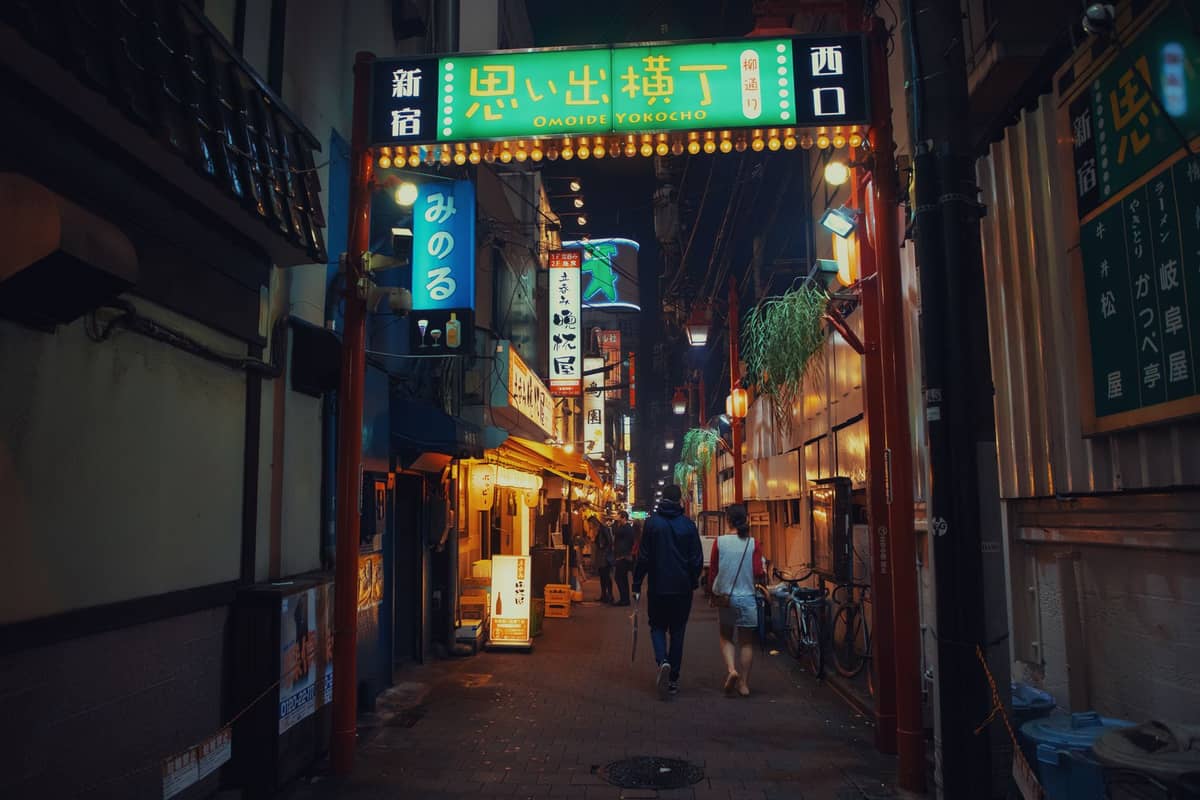
Tucked alongside the JR tracks at Shinjuku Station's west exit, Omoide Yokocho is a tightly packed alley of about 80 premises, including around 60 bars and eateries, that has been a postwar Tokyo dining and drinking district since the late 1940s. There is no admission fee, no gate, and no showmanship — just charcoal smoke, cold beer, and a Showa-era atmosphere that has somehow survived decades of redevelopment around it.
Quick Facts
- Location
- 1-2 Nishi-Shinjuku, Shinjuku-ku, Tokyo 160-0023 — alongside the elevated JR tracks, just north of Shinjuku Station's West Exit
- Getting There
- Shinjuku Station (West Exit) — 2-minute walk. Served by JR Yamanote Line, Chuo Line, Saikyo Line, Odakyu, Keio, Tokyo Metro Marunouchi Line, and nearby Toei lines via transfer
- Time Needed
- 45 minutes to 2 hours depending on whether you stop to eat and drink
- Cost
- Free to enter the alley. Food and drinks priced per venue at standard Tokyo izakaya levels
- Best for
- Night owls, solo travelers, food explorers, anyone wanting post-war Tokyo atmosphere with a cold beer in hand
- Official website
- en.shinjuku-omoide.com
What Omoide Yokocho Actually Is
Omoide Yokocho — formally Shinjuku Nishiguchi Omoide Yokocho, and often translated into English as Memory Lane — is not a theme park recreation of old Tokyo. It is the real thing: a surviving fragment of the postwar street culture that emerged near Shinjuku Station in the late 1940s, when the area around the burned-out station was rebuilt by vendors selling food and drink in the years immediately after the war.
Today, more than 70 tiny restaurants and bars occupy roughly 2,000 square metres of narrow passageway running parallel to the elevated JR rail tracks. The buildings are low, wood-framed, and pressed together so tightly that the whole street feels like a single organism. Most venues seat fewer than ten people at a counter — sometimes as few as four or five. The dominant smell is charcoal smoke from yakitori grills, mixed with the faint tang of cold beer and the occasional waft of hot broth.
ℹ️ Good to know
The alley itself is a public thoroughfare with no gate or entry fee. You pay only for what you order inside individual venues. Prices and opening hours are set independently by each restaurant and bar.
The History Behind the Smoke
Shinjuku Station was heavily damaged during the Second World War, and the area to its west was largely flattened. As the city began to rebuild from 1945 onward, informal food and drink stalls filled the gaps — operating in the gray legal area that defined much of post-war Tokyo commerce. This particular strip, alongside the rail tracks, gradually consolidated into a permanent row of tiny bars and grills. By the time the Japanese economic miracle was well underway in the 1960s, these stalls had become fixtures rather than stopgaps.
What makes Omoide Yokocho historically unusual is not that it exists, but that it survived. Shinjuku grew into one of Tokyo's primary commercial and transport hubs. The skyscrapers of Nishi-Shinjuku rose to the west, the entertainment districts of Kabukicho spread to the east, and repeated urban development projects restructured almost everything around this alley. The strip endured, partly through collective tenant resistance, partly through its growing identity as a place worth preserving.
The architecture visible today reflects what planners call the Showa aesthetic — low-slung buildings, exposed timber, lantern lighting, and hand-painted signage that has not been updated to look deliberately retro. For visitors who want deeper context on how this era shaped Tokyo's physical character, the Tokyo architecture guide offers useful background on how pockets like this fit into the city's broader built environment.
Tickets & tours
Hand-picked options from our booking partner. Prices are indicative; availability and final rates are confirmed when you complete your booking.
Bar-hopping in Kichijoji's Harmonica Yokocho
From 78 €Instant confirmationFree cancellationTsukiji Fish Market Walking Food Tour
From 40 €Instant confirmationFree cancellationMt.Fuji,Owakudani, Hakone Cruise & Ropeway, Oshino Hakkai 1-Day Trip
From 54 €Instant confirmationFree cancellationTour to Mt. Fuji Area, Oshino Hakkai and Kawaguchi Lake from Tokyo
From 57 €Instant confirmationFree cancellation
What It Feels Like at Different Times of Day
During the day, Omoide Yokocho is almost unrecognizable. The lanterns are off, the grills are cold, and the alley narrows to a dim corridor of shuttered stalls and plastic food displays. A small number of venues open for lunch, usually between 11:30 and 14:00, but the daytime visit is primarily useful for photographs rather than atmosphere. Without the smoke and the orange glow of lit lanterns, the alley's beauty is harder to read.
The transformation happens around dusk. Cooks arrive, charcoal starts, and lanterns switch on — the entire alley shifts from neglected passageway to living stage in less than an hour. By 18:00, most stalls are open and the first office workers have already taken their counter seats. The crowd builds steadily between 19:00 and 21:00, when the alley reaches peak density. Two people cannot pass each other comfortably in the narrowest sections. The sound is layered: the crack and hiss of skewers hitting the grill, conversations overlapping in Japanese, the periodic roar of a train passing on the tracks directly above.
If you arrive after 21:00 on a Friday or weekend, expect to wait for a seat at any of the more popular counters. Weeknights between 18:00 and 19:30 offer the best balance of full atmosphere and manageable crowds. Most shops close around midnight, with some running until the early hours.
💡 Local tip
Best visit window: weekday evenings, arriving between 18:00 and 19:30. You get full atmosphere without the weekend crush. If you arrive after 21:00 on a Friday or Saturday, be prepared to hover at the alley entrance until a counter seat opens.
How to Navigate the Alley
From Shinjuku Station's West Exit, walk north, keeping the elevated rail structure on your left. The alley entrance is clearly visible within two minutes — look for the cluster of red lanterns and the unmistakable column of charcoal smoke. There is no map to follow inside. The best approach is to walk the full length of the alley first — it takes about three minutes — and look through the small curtained entrances to see which counter has available seats and which menu appeals to you.
Menus are often posted outside on small boards or laminated sheets. Many venues have picture menus or plastic food displays, which simplifies ordering even without Japanese language skills. Yakitori (grilled chicken skewers) is the most common offering, though some stalls specialize in offal skewers, gyutan (beef tongue), or simple bar food to accompany drinks. The standard ordering sequence is to sit, catch the cook's eye, point or gesture at what you want, and pay when you leave.
Omoide Yokocho fits naturally into an evening that begins or ends in the surrounding area. Shinjuku offers considerable range within walking distance, from the neon chaos of Kabukicho to the quieter Golden Gai bar district, which has a somewhat similar DNA to Omoide Yokocho but leans more toward independent standing bars and creative cocktails than charcoal grills.
Practical Details Worth Knowing
Smoking is prohibited in the open alleyway itself but is permitted inside individual venues where the proprietor explicitly allows it. In practice, charcoal smoke from the grills fills the air regardless, so anyone with strong smoke sensitivity should factor this in. The smell will stay in your clothing after a visit — this is not a complaint unique to any particular stall, it is simply the nature of the place.
Wheelchair access is not viable in most of the alley. The passageways are extremely narrow, many venues involve step entry or raised seating areas, and crowding in the evening makes navigation difficult even for able-bodied visitors. This is an honest limitation of the space rather than a failure of planning — the physical dimensions have not changed significantly since the 1940s.
Payment norms vary by venue. Some smaller stalls operate cash-only. Carrying Japanese yen (JPY) is strongly recommended. There are convenience stores and ATMs within a few minutes of Shinjuku Station's west exit if you need to withdraw cash before visiting.
⚠️ What to skip
Many venues in Omoide Yokocho are cash-only. Bring Japanese yen before you arrive. The closest ATMs accepting international cards are typically found at 7-Eleven or Japan Post locations near Shinjuku Station.
If the grilled skewer format at Omoide Yokocho sparks a broader interest in Tokyo's drinking-and-eating culture, the Tokyo izakaya guide covers the wider landscape of casual Japanese drinking establishments across the city, including how to read menus and what etiquette to expect.
Photography and Who This Place Suits
Photographically, the alley is best shot at the golden transition point between dusk and full dark — roughly 18:00 to 19:00 in summer, 17:00 to 18:00 in winter. At this point, the lanterns are glowing but there is still some ambient light in the sky, which prevents the contrast from becoming too extreme for most cameras. A fast lens or a phone with a good low-light mode handles the interior lighting reasonably well. Flash photography inside stalls, while not formally banned, is socially awkward in spaces where you are seated 30 centimetres from another person.
The alley rewards patient observers. Watching a cook manage six different skewers simultaneously over a small charcoal grate, with practiced economy of movement and no wasted gesture, is its own kind of performance. This is not the place to rush through for a photograph and leave. The atmosphere is produced by being present in it, not by documenting it from the entrance.
Omoide Yokocho works well as part of a broader Shinjuku evening. The nearby Golden Gai offers a different but complementary atmosphere for those who want to extend the night across multiple small bars, while Kabukicho provides the full neon-lit entertainment district experience a few minutes to the east.
Who Might Want to Skip It
Travelers who are sensitive to cigarette or smoke-filled environments, or who have mobility constraints, will find Omoide Yokocho genuinely difficult. Families with young children will find the layout impractical — the counters are designed for adult solo drinkers or pairs, and there is no space for strollers or children who need room to move. Visitors expecting a sanitized or English-language-friendly dining experience may find the language barrier and the minimalist, grill-focused menus limiting, though pointing and gesturing genuinely works in most stalls.
Those more interested in Tokyo's contemporary dining and nightlife scene may find Omoide Yokocho interesting as a historical reference point but limited in variety. The city's broader food landscape is covered in depth in what to eat in Tokyo, which ranges from ramen and sushi to the kind of neighborhood izakaya culture that Omoide Yokocho exemplifies at its most concentrated.
Insider Tips
- Walk the entire alley before sitting down. It takes three minutes and lets you compare which counters have seats, what is on the grills, and how crowded each stall is — far better than ducking into the first open door.
- Solo travelers have a real advantage here. Counter seats are designed for one or two people, and a single diner is easier to seat quickly. Groups of four or more will often struggle to sit together in the same venue.
- If a counter is full but you are interested in a specific stall, it is perfectly acceptable to hover near the entrance — the cook will usually acknowledge you and signal how long the wait is with a gesture or a number of fingers.
- Arrive slightly before the evening rush by ordering a beer and one round of skewers early, then order more as you go. Trying to get the cook's attention once the counter fills up requires more patience.
- The alley runs roughly north to south alongside the JR tracks. The northern end tends to be slightly less crowded than the entrance near the station — worth knowing on busy weekend nights.
Who Is Omoide Yokocho For?
- Solo travelers and couples looking for authentic, low-key Tokyo nightlife without a cover charge or dress code
- Food-focused visitors who want to eat yakitori and drink cold beer the way Tokyo office workers have for decades
- Photographers and atmosphere-seekers interested in surviving Showa-era urban environments
- First-time visitors to Tokyo wanting to experience something that does not feel staged or tourist-facing
- Night owls who want a post-dinner drink destination after exploring the rest of Shinjuku
Nearby Attractions
Other things to see while in Shinjuku:
- Golden Gai
Golden Gai is a cluster of six narrow alleys in Shinjuku holding around 200 micro-bars, most seating fewer than ten people. Built on postwar foundations and surviving decades of development pressure, it remains one of Tokyo's most distinctive after-dark experiences — intimate, occasionally eccentric, and unlike anything else in the city.
- Kabukicho
Kabukicho is Tokyo's most infamous entertainment district, a dense grid of neon-lit streets northeast of Shinjuku Station where izakayas, host clubs, cinemas, and karaoke towers operate from dusk until well past dawn. Entry to the district is free and unrestricted, but the experience varies dramatically depending on when you arrive and where you look.
- Shinjuku Gyoen National Garden
Shinjuku Gyoen National Garden packs three distinct garden styles, a Victorian greenhouse, and over a thousand cherry trees into 58 hectares of central Tokyo. It is one of the few places in this city where the noise of Shinjuku Station genuinely disappears within two minutes of walking through the gate.
- Tokyo Metropolitan Government Building
Designed by Kenzo Tange and completed in 1990, the Tokyo Metropolitan Government Building offers free observation decks at 202 meters overlooking Shinjuku. It is one of the few high-altitude viewpoints in Tokyo that costs absolutely nothing to enter, making it a rare and genuinely worthwhile stop for any traveler.