Niagara-on-the-Lake: Upper Canada's First Capital and Wine Country Gateway
Niagara-on-the-Lake is a remarkably intact 19th-century town at the mouth of the Niagara River, once the first capital of Upper Canada. Today it draws visitors with its heritage architecture, award-winning wineries along the Niagara Parkway, and the internationally respected Shaw Festival theatre season.
Quick Facts
- Location
- Old Town Niagara-on-the-Lake, Ontario — approx. 130 km south of Toronto, 20 km north of Niagara Falls
- Getting There
- No direct rail. By car: QEW to Niagara Region, then the Niagara Parkway. Seasonal tour buses and shuttles operate from Niagara Falls. Driving from Toronto takes roughly 1.5 hours.
- Time Needed
- Half day minimum; a full day if combining wineries and Fort George. Overnight stays allow a much more relaxed pace.
- Cost
- Free to enter the town and walk its streets. Individual attractions charge separately: Fort George, Shaw Festival performances, winery tastings, and museum admissions are all priced in CAD — verify current rates with each venue.
- Best for
- History enthusiasts, wine lovers, theatre-goers, couples, and architecture buffs
- Official website
- www.niagaraonthelake.com
What Niagara-on-the-Lake Actually Is
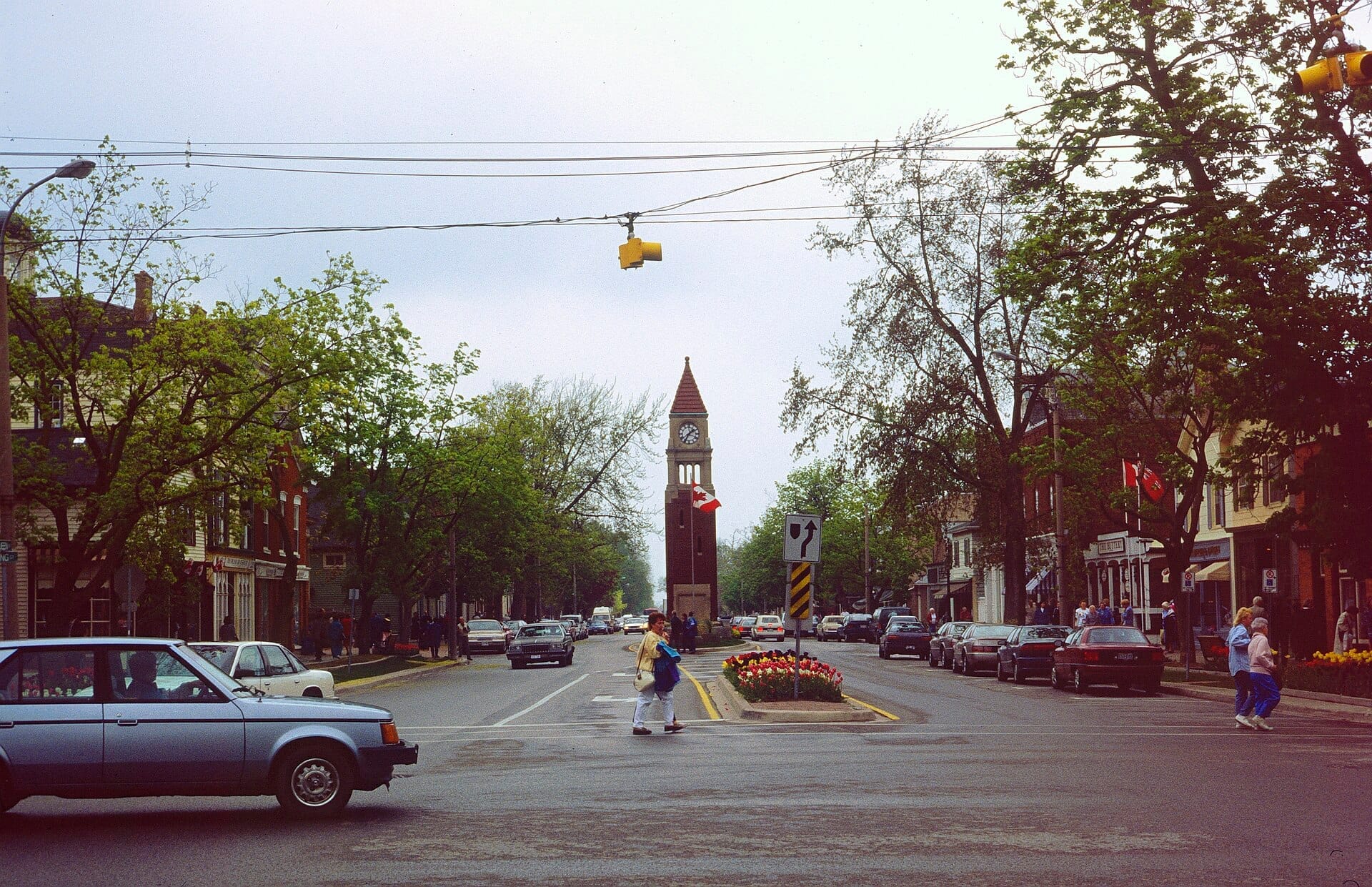
Niagara-on-the-Lake is a lower-tier municipality in Ontario's Niagara Region, sitting at the point where the Niagara River empties into Lake Ontario, directly across the river from New York State. It is not a theme park version of history. The town's historic district, designated a National Historic Site of Canada, contains more than 90 original buildings constructed between 1815 and 1859 within roughly 25 city blocks and 41 hectares — one of the most complete concentrations of early 19th-century British colonial architecture on the continent.
The reason that built heritage survived largely intact comes down to timing and tragedy. The town, then called Newark, served as the first capital of Upper Canada from 1792 to 1797. During the War of 1812, American forces burned much of it to the ground. Residents rebuilt quickly in the prevailing British classical tradition, producing a streetscape that was effectively frozen in the early Victorian era before railway-era development could alter it. The result today is a town that reads like an architectural archive.
ℹ️ Good to know
There is no admission charge to walk the town's streets or browse Queen Street's shops. Budget separately for winery tastings, Shaw Festival tickets, and Parks Canada sites like Fort George.
The Historic District: Walking Queen Street and Beyond
Queen Street is the commercial and social spine of Old Town. On a late morning in May or September, it fills steadily with visitors moving between fudge shops, independent booksellers, art galleries, and the kind of old-fashioned apothecary-styled confectioners that have been here for decades. The streetscape is low-scale and coherent: Federal and Regency-style storefronts in pale brick and painted wood, with covered verandas and flat-top cornices that echo Georgian precedents.
Walk one or two blocks off Queen Street and the crowd thins almost immediately. Residential streets lined with horse chestnut and maple trees reveal heritage homes with well-maintained front gardens. The pace is noticeably slower here, the sound of Lake Ontario occasionally audible in the distance, and the scale of buildings rarely rises above two stories. This is where the town's character becomes clearest: less a destination for any single attraction and more a coherent, walkable piece of early Canadian urban history.
Visitors interested in the broader context of Ontario's founding can pair this walk with a visit to Fort York in Toronto, which tells a parallel military story from the same War of 1812 era. Both sites carry Parks Canada designation and complement each other well on a regional itinerary.
Tickets & tours
Live prices and dates from our booking partner. If you book, we may earn a commission at no extra cost to you.
Niagara-on-the-Lake food tour with maple syrup and wine tasting
From 56 €Instant confirmationFree cancellationNiagara Falls evening tour with boat, dinner and Illumination Tower
From 77 €Instant confirmationFree cancellationNiagara Falls tour with local winery visit from Toronto
From 70 €Instant confirmationFree cancellationNiagara Falls tour with boat ride from Toronto
From 87 €Instant confirmationFree cancellation
Fort George: The Military History Anchor
Fort George National Historic Site sits at the northern edge of town, just off the Niagara Parkway, and is operated by Parks Canada. The fort was originally constructed by the British between 1796 and 1799, destroyed during the War of 1812, and substantially reconstructed during the 1930s as a heritage project. What visitors see today is a fully reconstructed fort complex with wooden palisades, powder magazine, officers' quarters, and blockhouses.
Costumed interpreters demonstrate musket drills, blacksmithing, and period cooking during operating season, which typically runs from spring through early fall. The experience is particularly effective for school-age visitors and anyone who wants more than a passive read of history. Admission is charged separately by Parks Canada; current rates and seasonal hours should be confirmed directly at pc.gc.ca before visiting. Photography inside the fort is generally permitted and the open parade grounds offer good light in the morning.
💡 Local tip
Arrive at Fort George when it opens to catch the morning musket demonstration with smaller crowds. By midday in summer, tour groups from Niagara Falls often fill the site.
Wine Country: The Niagara Parkway and Surrounding Estates
The Niagara Peninsula's wine-growing appellation surrounds the town, and the Niagara Parkway route between Niagara-on-the-Lake and Niagara Falls passes some of the region's most established estates. The area benefits from a specific microclimate: Lake Ontario moderates temperatures through the growing season while the Niagara Escarpment deflects cold arctic air, producing conditions suited to Riesling, Chardonnay, Pinot Noir, and Cabernet Franc. The peninsula is also one of very few regions outside Germany and Austria with a genuine Icewine tradition, harvesting frozen grapes in winter temperatures below -8°C.
Most estates along the route offer tasting experiences that range from informal bar pours to structured seated flights. Some larger operations have full restaurant dining and vineyard tours. Booking in advance is advisable on summer weekends, when the Niagara wine trail is at its most popular. If you are driving, designate a non-tasting driver or consider the seasonal shuttles and tour operators that run winery circuits from the town centre or from Niagara Falls.
For those planning a longer stay in the region, a day in Niagara-on-the-Lake pairs naturally with a Niagara Falls excursion the following day. See our Niagara Falls day trip guide for practical logistics, and the broader Toronto to Niagara Falls guide for route options from the city.
The Shaw Festival: World-Class Theatre in a Small Town
The Shaw Festival is one of North America's largest repertory theatre companies and the primary reason many visitors stay overnight rather than day-trip. Founded in 1962 to celebrate the work of George Bernard Shaw, the festival has long since expanded its mandate to include plays from Shaw's era broadly defined, as well as contemporary works. It operates across multiple venues in town, including the Festival Theatre, the Court House Theatre, and the Royal George Theatre, running a multi-production season typically from April through December.
Attending a Shaw Festival performance changes the texture of a Niagara-on-the-Lake visit significantly. An evening show means arriving early enough to walk Queen Street at dusk, when the tourist volume drops and the shop windows glow against the fading light, then settling into a pre-show dinner at one of the restaurants within walking distance of the venues. Booking well in advance is essential for popular productions; weekend performances in summer and early fall sell out quickly. Ticket prices vary by production and seating; check shawfest.com directly for current schedules and pricing.
How the Town Changes Through the Day and Season
Early mornings in Niagara-on-the-Lake, particularly on weekdays, are genuinely quiet. The light off Lake Ontario is soft before 9am, the streets are largely empty, and the smell of lake air and cut grass from the town's parks is strongest before the day heats up. This is the best window for unobstructed photography of Queen Street and for walking the residential heritage blocks without crowds.
By late morning in July and August, Queen Street is full. Day-trippers arrive in significant numbers, particularly on weekends, and the ice cream shops and fudge counters develop queues. The town handles visitor volume reasonably well given its scale, but it does mean that summer weekend afternoons on the main commercial strip feel noticeably different from a Tuesday morning in May.
Autumn — specifically September and October — is widely considered the most rewarding time to visit. Harvest season at the wineries adds a tangible agricultural energy to the surrounding countryside, foliage on the tree-lined streets turns amber and red, and the Shaw Festival is still in full season. Temperatures are typically cooler and more comfortable for walking than August. Winter visits are possible but quieter; many wineries and some restaurants reduce hours or close entirely.
⚠️ What to skip
Parking in Old Town fills quickly on summer weekends by mid-morning. Arriving before 9:30am or using paid municipal lots further from Queen Street is advisable. There is no rapid transit from Toronto; driving or a pre-booked tour is the realistic option for most visitors.
Getting There from Toronto and Practical Logistics
Niagara-on-the-Lake sits approximately 130 kilometres southwest of downtown Toronto. The standard driving route follows the QEW (Queen Elizabeth Way) to the Niagara Region, then connects to regional roads or the Niagara Parkway into town. Under good traffic conditions, the drive takes around 1.5 hours, though Friday afternoon departures from Toronto can extend this considerably due to highway congestion near Hamilton and St. Catharines.
There is no direct public transit link from Toronto to Niagara-on-the-Lake. GO Transit serves Niagara Falls by bus, and from Niagara Falls, seasonal shuttle services and tour operators connect to the town, but schedules and availability change by season. If you are not driving, a pre-arranged day tour from Toronto is the most practical option. Visitors combining Niagara-on-the-Lake with Niagara Falls can drive the Niagara Parkway between the two towns — a scenic 20-kilometre riverside route.
For a broader view of how to structure a regional trip from Toronto, the day trips from Toronto guide covers Niagara-on-the-Lake alongside other regional destinations, with practical transport notes for each.
Who Might Not Enjoy This
Travellers seeking an action-packed itinerary or those with limited interest in history, architecture, or wine will find Niagara-on-the-Lake underwhelming relative to the travel time from Toronto. The town is genuinely charming, but it is slow in the best sense of that word. Visitors who made the drive expecting scale or spectacle comparable to Niagara Falls often feel the contrast sharply. Children under ten may find the heritage walking content limited unless Fort George's costumed programming is on the schedule.
Insider Tips
- The Niagara Parkway drive between Niagara-on-the-Lake and Niagara Falls is one of Ontario's more scenic short drives — take it rather than the inland highway route even if it adds 15 minutes.
- Winery tasting rooms are significantly less crowded on weekday mornings; if you want proper conversation with the pouring staff about the wines, avoid Saturday afternoons from June through October.
- The Court House Theatre is the most intimate of the Shaw Festival venues — if you want a close, personal theatre experience rather than a large-house production, check what's playing there specifically.
- The Pillar and Post and Prince of Wales hotels in Old Town host afternoon teas that require advance reservation; these are popular with visitors who want a traditionally paced afternoon without driving to wineries.
- Check whether Fort George has its evening ghost tour program running during your visit — it operates seasonally and is a genuinely different way to experience the fort's spaces compared to the daytime interpretation.
Who Is Niagara-on-the-Lake For?
- Couples looking for a weekend with wine, good food, and period architecture at a deliberately unhurried pace
- History and architecture enthusiasts interested in early British colonial town planning and War of 1812 heritage
- Theatre-goers willing to plan around the Shaw Festival season, which runs roughly April to December
- Wine tourists exploring the Niagara Peninsula appellation, particularly those interested in Icewine production
- Toronto day-trippers who want genuine historical depth rather than a purely commercial tourism experience
Nearby Attractions
Combine your visit with:
- Aga Khan Museum
The Aga Khan Museum in Toronto is one of North America's only institutions dedicated to the arts of Muslim civilizations. Housed in a purpose-built building designed by architect Fumihiko Maki, it holds over 1,200 masterpieces spanning 14 centuries. Whether you spend 90 minutes or a full afternoon, the experience rewards curiosity at every turn.
- The Village at Black Creek (Black Creek Pioneer Village)
The Village at Black Creek is a fully realized open-air living history museum in northwest Toronto, where around 40 restored historic buildings, heritage breed livestock, and costumed interpreters recreate rural Ontario life from the 1800s. Operated by the Toronto and Region Conservation Authority, it offers a rare, tactile experience of pre-industrial Canada that few urban attractions can match.
- Blue Mountain & Collingwood
Perched on the Niagara Escarpment above Georgian Bay, Blue Mountain and Collingwood form Ontario's most accessible four-season resort destination. Whether you come for winter skiing, summer hiking, or a weekend in the pedestrian village, the area rewards visitors who plan around the season.
- Canada's Wonderland
Canada's Wonderland is the country's largest amusement park, located in Vaughan just north of Toronto. With 18 roller coasters, more than 200 attractions, and a 20-acre water park, it's a full-day commitment that rewards planning. Here's how to make the most of it.
Planning a trip? Discover personalized activities with the Nomado app.