Niagara Falls Day Trip from Toronto: What to Know Before You Go
Niagara Falls sits about 130 kilometres from downtown Toronto, making it the most popular day trip from the city. The falls are free to view, dramatic at any hour, and rewarding if you plan around the crowds. Here is what a well-prepared visit actually looks like.
Quick Facts
- Location
- Niagara Falls, Ontario (approx. 130 km / 80 mi from downtown Toronto via QEW)
- Getting There
- GO Train (Union Station to Niagara Falls, seasonal service), intercity bus, or car via Queen Elizabeth Way (QEW). Journey time roughly 1.5 hours each way.
- Time Needed
- 4–7 hours at the falls; allow a full day including transit from Toronto
- Cost
- Viewing from public areas is free. Paid attractions (boat tours, observation decks) have separate fees — check each operator's site for current CAD pricing.
- Best for
- First-time visitors to Ontario, families, couples, nature lovers, photographers
- Official website
- www.niagarafallsstatepark.com
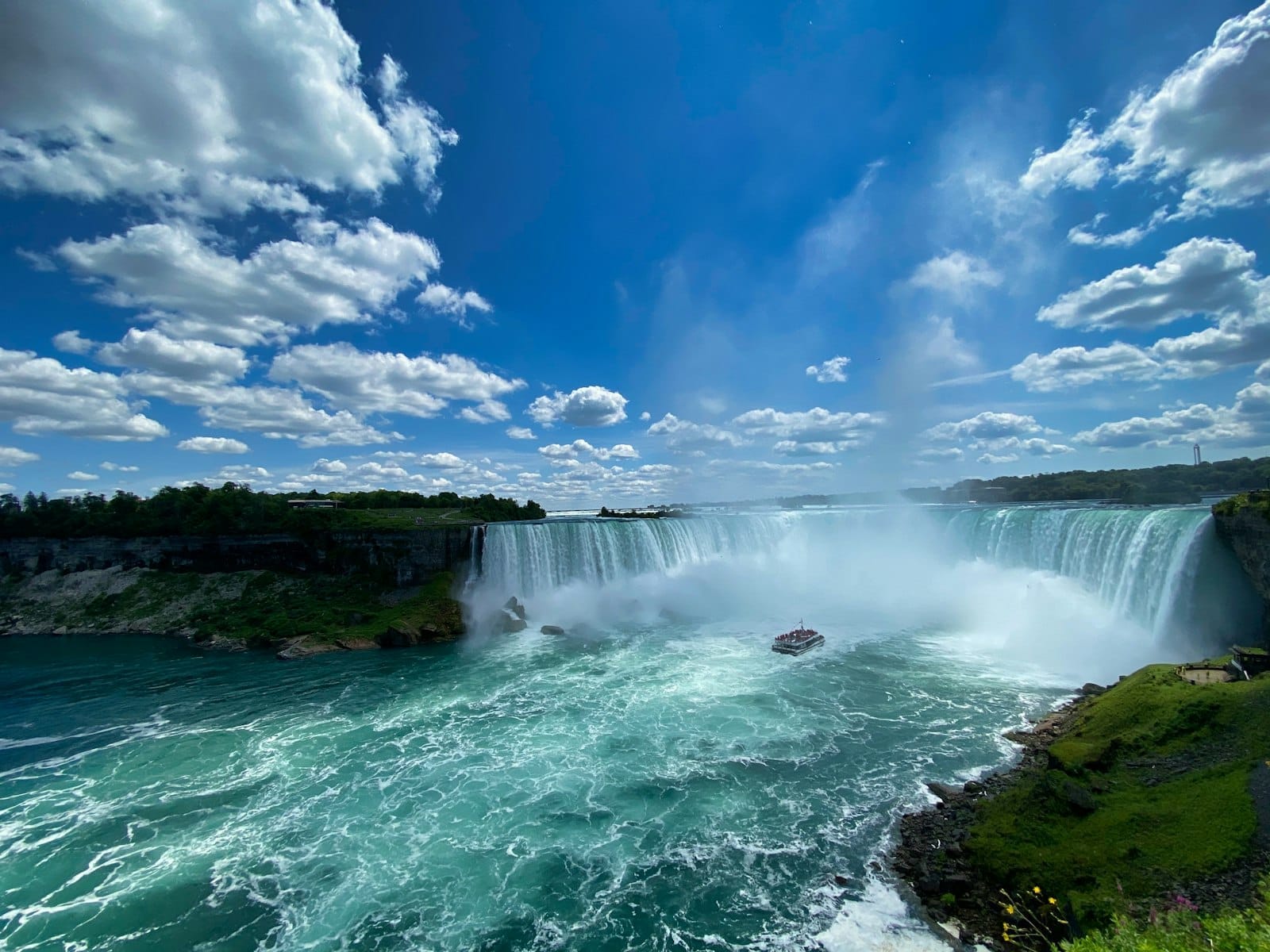
What Niagara Falls Actually Is
Niagara Falls is not a single waterfall. It is three: the massive Horseshoe Falls straddling the Canada-U.S. border, the American Falls on the New York side, and the narrow Bridal Veil Falls beside them. Together they form one of the highest-volume waterfalls in the world. During peak daytime hours, roughly 168,000 cubic metres of water per minute flow over the crest — a figure that is hard to absorb until you are standing close enough to feel the spray on your face and hear conversation become difficult.
The falls exist because of the last ice age. As the Wisconsin glaciers retreated roughly 12,000 years ago, meltwater from the Great Lakes helped carve the Niagara River and the gorge below. The drop is approximately 51 metres (167 feet). The current location of the falls is not where they started — erosion has pushed them several kilometres upstream over millennia, and that process continues today, slowly.
The falls sit on the Niagara River, which forms the border between the province of Ontario, Canada and the state of New York, USA. Most Toronto day-trippers arrive on the Canadian side in Niagara Falls, Ontario — and the Horseshoe Falls viewpoints here are widely considered the better vantage point on the Canadian side.
ℹ️ Good to know
The falls themselves are a natural feature with no admission fee. Public viewing areas on both the Canadian and U.S. sides are generally accessible 24 hours a day, year-round. Paid attractions — boat tours, observation towers, tunnels — have their own hours and prices published seasonally on each operator's site.
Getting There from Toronto
The straightforward route by car follows the Queen Elizabeth Way (QEW) southwest from Toronto, then south toward the falls. Under normal conditions the drive is about 1.5 hours from downtown, but this assumes no significant traffic on the QEW through Mississauga and the Niagara region. On summer weekends, add 30 to 60 minutes each way and factor in parking time once you arrive.
GO Transit operates seasonal train service from Union Station in downtown Toronto to Niagara Falls, Ontario, with train and bus service in the summer schedule. The route is generally available on weekends and holidays during summer and is significantly more relaxing than driving — you arrive at a station within walking distance of the falls area. Verify the current seasonal schedule and fares on the GO Transit website before booking, as service dates change year to year.
Intercity buses also serve the route from Toronto, typically departing from near Union Station. For travellers who prefer not to drive and want more flexibility than the train schedule allows, the bus is a practical option. Once you're in Niagara Falls, Ontario, the main tourist corridor along the river is walkable, though the town also has local transit options. If you are planning a broader Ontario trip, the guide on getting from Toronto to Niagara Falls covers transit options, driving tips, and border crossing logistics in detail.
💡 Local tip
If you drive, use the parking facilities near Queen Victoria Park on the Canadian side rather than private lots near the commercial strip — you'll pay less and walk through the park itself to reach the falls, which is a far better introduction to the site.
Tickets & tours
Live prices and dates from our booking partner. If you book, we may earn a commission at no extra cost to you.
Niagara Falls highlights tour with optional boat trip
From 59 €Instant confirmationFree cancellationNiagara Falls evening tour with boat, dinner and Illumination Tower
From 77 €Instant confirmationFree cancellationNiagara Falls tour with local winery visit from Toronto
From 70 €Instant confirmationFree cancellationNiagara Falls tour with boat ride from Toronto
From 87 €Instant confirmationFree cancellation
The Experience by Time of Day
Morning arrivals before 10 a.m. get something rare at Niagara Falls: space. The mist hangs low over the gorge, the light is angled and warm, and the roar of the water fills the air without the added noise of crowds. The walkways along the Canadian side, including the paved path through Queen Victoria Park, feel genuinely pleasant at this hour. The falls are unchanged — water does not care what time it is — but your ability to stand at the railing and absorb the view without being jostled is dramatically better.
By midday in summer, the entire tourist corridor is dense with visitors. This is when the paid attractions are busiest, boat queues can stretch long, and the commercial strip behind the park becomes especially noisy and busy. The view of Horseshoe Falls from the main overlook remains spectacular regardless, but this is the hour when many people leave feeling slightly overwhelmed rather than moved by what they saw.
Late afternoon light, from around 4 p.m. onward, brings a second good window. Tour groups begin to thin. The spray catches the lowering sun and produces vivid rainbows over the falls — this is the most reliably photogenic hour of the day on the Canadian side. Crowds are still present but noticeably more manageable than the midday peak.
In season (roughly late spring through early fall), the falls are illuminated at night with coloured lights. The nighttime display is popular and draws its own crowd, but it offers a genuinely different version of the experience. If you are visiting in summer, consider building in time for both the afternoon light and the evening illuminations before driving or taking transit back to Toronto.
What to See and Do at the Falls
The free experience alone justifies the trip. Walking the paved path along the Niagara Parkway from Table Rock to the upper rapids gives you progressively closer views of Horseshoe Falls, culminating at the stone overlook directly at the brink. At this point the water is moving faster than it appears from a distance, the mist is thick enough to wet your clothes, and the sound is physical — you feel it in your chest as much as you hear it.
Among the paid attractions, the boat tour (operated on the Canadian side as Niagara City Cruises) takes passengers in ponchos into the mist basin directly in front of Horseshoe Falls. It is genuinely spectacular and worth the cost for first-time visitors. You will get wet; ponchos are provided but are minimally effective against the volume of spray at the closest point. The Journey Behind the Falls at Table Rock allows visitors to reach observation platforms at the base of the curtain of water through tunnels in the rock — a different and quieter experience than the boat.
Niagara Falls State Park on the U.S. side, accessible by foot across the Rainbow Bridge (bring valid ID and be aware of border crossing requirements), offers its own distinct angles on the American Falls and Bridal Veil Falls. The Maid of the Mist boat tour operates from the U.S. side. Crossing into New York adds meaningful time to the day and requires a valid passport or equivalent travel document for most travellers — worth planning in advance rather than deciding on the spot.
⚠️ What to skip
If you plan to cross into the United States at the Rainbow Bridge, you need a valid passport (or equivalent travel document). Canadian and U.S. Permanent Residents should carry their documents. Do not attempt a border crossing without verifying your entry requirements first at the official Government of Canada or U.S. Customs and Border Protection websites.
Practical Walkthrough: Doing It Right
Wear shoes that handle wet stone without slipping. The viewing areas near Table Rock and along the lower path are constantly misted and the surface is slick. Sandals and dress shoes are poor choices. In the summer heat, a light change of clothes in a bag is worth the inconvenience — the boat tour will soak you.
Photography here is either very easy or very difficult depending on what you want. Wide-angle shots of the full Horseshoe Falls from the Table Rock overlook work in almost any lighting. Close-up or detail work near the spray requires lens protection; even a few seconds of exposure coats a lens in mist. The window light on the boat tour is dramatic but brief. For landscape shots, the angles from the upper viewing decks — including the Skylon Tower observation deck, which is paid — give you a clean elevated view of all three falls at once.
Accessibility at the Canadian side is generally good. The main pathway through Queen Victoria Park and Table Rock is paved and wheelchair accessible. Many paid attractions include accessible entry and adapted facilities. Check each operator's site for specifics. If you are combining the Niagara trip with other Ontario destinations, the guide to day trips from Toronto outlines how Niagara fits into a broader Ontario itinerary.
Seasonal Considerations and Honest Caveats
Summer (June through August) is peak season. The falls are at their most accessible, all paid attractions are fully operational, and the evening illuminations run regularly. It is also when the tourist strip — the section of Clifton Hill and the commercial district behind the park — is at its most intense. If high-volume theme-park-style commercial tourism puts you off, know that it is present and prominent, and plan your time to stay close to the river and the park.
Late September and October bring coloured leaves to the gorge and Niagara Parkway, and crowds thin considerably after the Labour Day weekend. Weather is cooler and some paid attractions begin reducing hours. It is a genuinely good time to visit if you have flexibility.
Winter visits are a distinct experience. The falls do not fully freeze — water volume is too high — but ice builds up on the surrounding rocks and along the gorge walls, creating formations that can be striking. Crowds are minimal, the commercial strip loses most of its energy, and some attractions close for the season. The Winter Festival of Lights typically runs through the colder months, drawing visitors for the illumination displays. Dress for temperatures that regularly drop below freezing.
If you are deciding when to fit Niagara into your Ontario trip, the guide on the best time to visit Toronto also covers seasonal patterns across the region that apply to this day trip.
💡 Local tip
Niagara Falls is hyped heavily and still delivers. The falls are genuinely one of the most dramatic natural features in North America. What the marketing undersells is how much the surrounding tourist commercial district can dilute the experience if you spend time there instead of along the river. Keep your focus on the parkway and the water and the falls will exceed expectations.
Who Should Reconsider This Trip
Travellers with very limited time in Toronto — a single day or less — may find the round-trip transit time of about 3 hours or more on public transit a high proportion of their available hours. The falls reward time spent at the site, not a rushed 90-minute visit. If your Toronto window is tight, the waterfront, the islands, or the city's own viewpoints may offer more value per hour.
Visitors who are primarily interested in urban culture, food, architecture, or museums will find that Toronto itself rewards deeper exploration and does not necessarily require leaving the city. The things to do in Toronto guide covers a wide range of alternatives that may better suit this type of traveller.
Insider Tips
- Arrive at Table Rock by 9 a.m. in summer. You will have the main overlook nearly to yourself for 30 to 45 minutes before the tour buses begin arriving. The early light from the east can catch the mist and produce natural rainbows that are less likely once the sun is higher.
- The Niagara Parkway running south from the falls toward Niagara-on-the-Lake is one of the most scenic drives in Ontario. If you have a car, add an hour to drive or cycle part of this route — it runs through orchards and vineyard country and has nothing in common with the tourist strip near the falls.
- Bring a dry bag or a zip-lock bag for your phone and wallet if you are doing the boat tour. The ponchos cover your body reasonably well, but anything in your hands can be exposed to spray at the closest approach to Horseshoe Falls.
- The Canadian side provides the better close-range views of Horseshoe Falls, but the best elevated photograph of all three falls together usually requires getting to the U.S. side or paying for an observation deck on the Canadian side. The free Canadian public viewpoints do not show the full picture from above.
- Avoid the Clifton Hill commercial strip entirely if you are not interested in wax museums, haunted houses, and midway games. It runs parallel to the river but faces away from it. The falls are one block in the other direction and require no time there whatsoever.
Who Is Niagara Falls For?
- First-time visitors to Ontario who have not yet seen the falls
- Families with children who respond to the physical scale and drama of moving water
- Couples who want to combine the falls with a scenic drive or wine region visit along the Niagara region
- Photographers pursuing landscape and long-exposure water work
- Travellers with a full free day in Toronto looking for the most dramatic natural scenery within day-trip range
Nearby Attractions
Combine your visit with:
- Aga Khan Museum
The Aga Khan Museum in Toronto is one of North America's only institutions dedicated to the arts of Muslim civilizations. Housed in a purpose-built building designed by architect Fumihiko Maki, it holds over 1,200 masterpieces spanning 14 centuries. Whether you spend 90 minutes or a full afternoon, the experience rewards curiosity at every turn.
- The Village at Black Creek (Black Creek Pioneer Village)
The Village at Black Creek is a fully realized open-air living history museum in northwest Toronto, where around 40 restored historic buildings, heritage breed livestock, and costumed interpreters recreate rural Ontario life from the 1800s. Operated by the Toronto and Region Conservation Authority, it offers a rare, tactile experience of pre-industrial Canada that few urban attractions can match.
- Blue Mountain & Collingwood
Perched on the Niagara Escarpment above Georgian Bay, Blue Mountain and Collingwood form Ontario's most accessible four-season resort destination. Whether you come for winter skiing, summer hiking, or a weekend in the pedestrian village, the area rewards visitors who plan around the season.
- Canada's Wonderland
Canada's Wonderland is the country's largest amusement park, located in Vaughan just north of Toronto. With 18 roller coasters, more than 200 attractions, and a 20-acre water park, it's a full-day commitment that rewards planning. Here's how to make the most of it.
Planning a trip? Discover personalized activities with the Nomado app.