Ngezi Forest Reserve: Pemba Island's Ancient Rainforest
Ngezi Forest Reserve covers roughly 1,440 hectares of primary lowland rainforest on the northwestern tip of Pemba Island. Declared a protected reserve in 1959, it shelters endemic species found nowhere else on Earth, and rewards visitors who make the effort to reach it with genuine wilderness far removed from Zanzibar's beach circuit.
Quick Facts
- Location
- Micheweni District, northwestern Pemba Island, Tanzania
- Getting There
- Taxi or motorbike taxi (piki-piki) from Konde; visitor centre approx. 5 km west of Konde toward Kigomasha Peninsula
- Time Needed
- 2 to 4 hours for a guided trail walk
- Cost
- Trail fees reported at Tsh 16,000–20,000 (unconfirmed; verify on arrival)
- Best for
- Wildlife enthusiasts, serious birders, and travelers who want Zanzibar without the crowds
What Ngezi Forest Reserve Actually Is
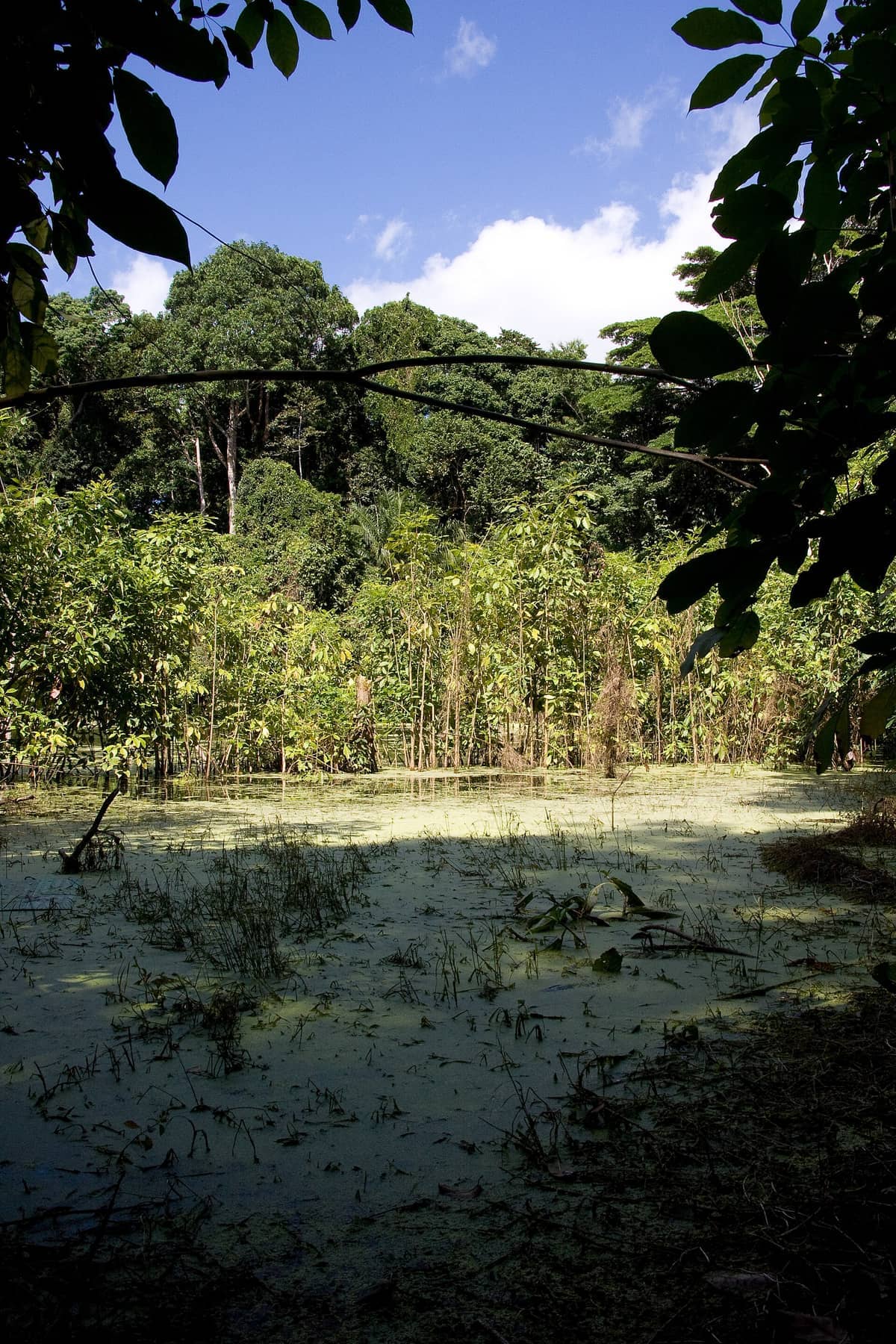
Ngezi Forest Reserve is not a manicured nature park. It is one of the largest remaining patches of natural vegetation on Pemba Island, and one of the most ecologically significant forests in the entire Zanzibar archipelago. The canopy here is dense and genuinely old, with trees draped in moss and strangler figs tightening their grip over decades. When you step off the dirt road into the interior, the temperature drops, the light turns greenish-grey, and the sounds of the outside world disappear almost immediately.
The reserve’s formal establishment date is uncertain in the available sources and covers approximately 1,440 hectares. That is a modest area by continental African standards, but on a small island like Pemba, it represents an irreplaceable reservoir of biodiversity. The forest is not a conservation success story in the triumphant sense; The forest has been affected by overharvesting, leaving substantial areas of secondary bush.
ℹ️ Good to know
Ngezi is on Pemba Island, not on Unguja (the main Zanzibar island). Reaching it requires a separate ferry or flight from Zanzibar City. Build in at least a full day, and ideally an overnight stay on Pemba.
The Wildlife: What You Can Realistically Expect to See
The Pemba flying fox (Pteropus voeltzkowi) is the species most associated with Ngezi, and for good reason. This large fruit bat, endemic to Pemba, roosts in the forest canopy in numbers visible even to casual observers. At dusk, groups of them cross the sky above the tree line, their wingspan reaching up to a metre. They are not shy, and patient visitors standing quietly below a roost colony can observe them at close range.
The forest also supports the Pemba scops owl, the Pemba green pigeon, and the Pemba sunbird, all of which are either endemic or near-endemic to the island. Serious birders treat Ngezi as one of the most rewarding sites in the western Indian Ocean region precisely because the density of island-specific species is so high relative to the forest's small size. Bring binoculars; the canopy is thick and many species stay high.
Mammals other than the flying fox are harder to observe but present. Sykes' monkeys move through the mid-canopy in small groups. You are more likely to hear them than see them clearly, especially in the middle of the day when activity slows. The forest floor has several species of skink and gecko, and the reserve is also habitat for the Pemba blue duiker, though sightings are infrequent.
💡 Local tip
For birds, arrive as early in the morning as you can arrange transport from Konde. Activity peaks in the first two hours after dawn. By mid-morning, the forest goes quieter and the heat makes walking less comfortable.
Tickets & tours
Live prices and dates from our booking partner. If you book, we may earn a commission at no extra cost to you.
Zanzibar catamaran and snorkelling tour to Mnemba Marine Park
From 114 €Instant confirmationFree cancellationNyerere National Park two-day safari with two game drives
From 866 €Instant confirmationFree cancellationSerengeti National Park private three-day safari from Zanzibar
From 2.144 €Instant confirmationFree cancellationZanzibar north coast sunset dhow cruise
From 42 €Instant confirmationFree cancellation
The Trails and What the Walk Feels Like
Visits are conducted with a naturalist guide, which is not merely a formality. The trails are not heavily signposted, the undergrowth is thick in places, and a knowledgeable guide will consistently spot wildlife that an unaccompanied visitor would walk straight past. The guiding requirement also supports local employment in an area with limited economic alternatives.
The main trail network winds through a mix of primary forest, secondary regrowth, and areas transitioning toward the coastal edge of the reserve. Paths are generally well-worn but can be muddy, especially during and just after the rains. The terrain is not technically challenging, but good footwear matters: sandals are a mistake. The combination of roots, mud, and uneven ground means closed shoes with some grip are the practical minimum.
The sensory experience of the walk is distinct from anything on the main Zanzibar island. The humidity is high, the air smells of wet leaf litter and bark, and the soundscape is layered: insects in the understory, birds in the canopy, the occasional rustle of something moving through the leaf litter. There are no snack vendors, no posted interpretive signs, and no background noise from tuk-tuks or beach bars. That is either the appeal or the problem, depending on what kind of traveler you are.
How to Get to Ngezi Forest Reserve
Getting to Ngezi requires commitment. Pemba Island is served by flights from Zanzibar City (Abeid Amani Karume International Airport) and Dar es Salaam, and by ferry from the Zanzibar mainland. Flight times are short, but schedules are limited and should be booked in advance. The ferry crossing is longer and conditions on the channel between Unguja and Pemba can be rough.
Once on Pemba, the reserve's visitor centre is approximately 5 km west of Konde, on the dirt road toward the Kigomasha Peninsula. Taxis and motorbike taxis (piki-piki) connect Konde to the reserve. Agree the fare before departure, as there are no meters. If you are staying overnight on Pemba, some guesthouses and small lodges can arrange transport as part of their service. For a broader sense of how to structure travel between islands, the day trips from Zanzibar guide covers the logistics of reaching Pemba from Unguja.
⚠️ What to skip
Do not plan Ngezi as a rushed day trip from Stone Town unless you have confirmed transport and accommodation on both ends. The ferry schedule and road conditions on Pemba mean timing can slip easily, and a missed return connection is a real possibility.
When to Visit
The forest is theoretically open year-round, but the experience changes significantly with the season. During the dry season, roughly June through October, trails are firmer underfoot and wildlife activity is more concentrated around water sources, which can make spotting easier. The air is clearer, and if you are combining the visit with any coastal activity on Pemba, the sea conditions are generally calmer.
Visiting during or just after the rains turns parts of the trail system muddy and occasionally impassable. On the other hand, the forest is at its most lush and photogenic, and birdlife can be more active. If your visit falls in a wet month, ask at the visitor centre about current trail conditions before setting out. Some sections may be temporarily closed.
If you are planning a broader Zanzibar trip and trying to decide when to go, the best time to visit Zanzibar guide breaks down the seasons across the archipelago in practical terms.
Practical Details and Who Should Think Twice
Trail fees were reported at Tsh 16,000–20,000 per person in available sources, but this figure has no verified date and should be treated as a rough estimate. Confirm the current fee at the visitor centre when you arrive. There is no indication of card payment facilities; carry cash in Tanzanian shillings.
There is no reliable information on wheelchair or limited-mobility access to the trails. The uneven, rooted, sometimes muddy terrain would present serious challenges for anyone with mobility difficulties, and this should be factored into planning.
Ngezi is not the right choice for every traveler. If you have a single day on Zanzibar, the logistics of reaching Pemba and the forest do not make sense. If structured wildlife reserves with guaranteed sightings and polished infrastructure are what you want, the reserve's raw character may feel underprepared rather than authentic. And if you are primarily in Zanzibar for beaches and water sports, your time is almost certainly better spent elsewhere. The forest rewards those who approach it with patience and appropriate expectations, not those checking a box.
For travelers who want forest and wildlife on the main island of Unguja without crossing to Pemba, Jozani Chwaka Bay National Park is the more accessible option, with red colobus monkeys and a well-developed trail network.
Insider Tips
- Arrange your guide in advance if possible, either through your accommodation on Pemba or by contacting the reserve visitor centre. Guides fill up quickly when tour groups from the larger lodges book ahead, leaving independent travelers without options on the day.
- Bring water from Konde. There are no facilities selling food or drinks inside the reserve, and the walk in humidity is more demanding than it looks on paper.
- The dirt road to the visitor centre can deteriorate after heavy rain. If you are hiring a standard taxi rather than a 4WD, ask the driver directly about road conditions that morning before you commit to the trip.
- For flying fox observation, late afternoon is actually more reliable than early morning. The bats become active and more visible as the sun drops. If your schedule allows, time your visit to catch both the dawn bird activity and the dusk bat roost in a single day.
- Pemba Island has very limited ATM infrastructure. Withdraw enough cash in Zanzibar City or at your point of departure to cover the full Pemba leg of your trip, including ferry or flight, accommodation, transport, and reserve fees.
Who Is Ngezi Forest Reserve For?
- Birders and wildlife watchers focused on endemic island species
- Travelers who have already covered the main Zanzibar circuit and want something genuinely different
- Nature photographers looking for primary forest conditions and unusual subjects like the Pemba flying fox
- Those combining a Pemba overnight with coastal diving or snorkeling on the island's reefs
- Independent travelers comfortable with minimal infrastructure and variable logistics
Nearby Attractions
Combine your visit with:
- Bwejuu Beach
Bwejuu Beach sits on Unguja's southeast coast, about 50 km from Stone Town, and delivers something increasingly rare on Zanzibar: a long stretch of sand without the resort crowds. The water is calm, the village is small, and the pace is slow. It suits travelers who want a beach day that feels like an escape rather than a performance.
- Cheetah's Rock Wildlife Sanctuary
Cheetah's Rock Wildlife Sanctuary is a small, guided wildlife experience on Unguja where visitors walk alongside rescued cheetahs, interact with servals, and meet a rotating cast of African species in semi-natural enclosures. It is expensive, deliberately exclusive, and unlike anything else on the island.
- Chumbe Island Coral Park
Chumbe Island Coral Park sits off Zanzibar's southwest coast and protects one of the Indian Ocean's most intact coral reef ecosystems. Reaching it requires advance planning, a boat transfer, and a genuine interest in marine conservation — but for the right traveler, nothing on the island compares.
- Kidichi Spice Farm & Persian Baths
A few kilometers inland from Zanzibar's northern coast road, the Kidichi Persian Baths preserve a rare piece of Omani sultanate architecture, complete with decorative plasterwork and domed ceilings. Paired with a working spice farm, this site offers a quieter, more considered alternative to the busier spice tours closer to Stone Town.
Planning a trip? Discover personalized activities with the Nomado app.