National Botanic Gardens of Ireland: Glasnevin's Green Sanctuary
A free-entry scientific garden and living museum in Glasnevin, the National Botanic Gardens of Ireland holds over 16,000 plant species, several restored Victorian glasshouses, and a quiet appeal that is easy to underestimate. About 3 km north of Dublin city centre, it is one of the most rewarding places in the city to spend a slow morning.
Quick Facts
- Location
- Botanic Road, Glasnevin, Dublin 9 — about 3 km north of Dublin city centre
- Getting There
- Dublin Bus from city centre to Glasnevin (Botanic Road); approx. 10–15 min by taxi from central Dublin
- Time Needed
- 1.5 to 3 hours depending on how deeply you explore
- Cost
- Free entry. Guided tours €5 per person; summer daily tours typically run at 11:30 (check current schedule).
- Best for
- Nature lovers, architecture enthusiasts, families, and anyone wanting calm away from the city centre
- Official website
- www.botanicgardens.ie
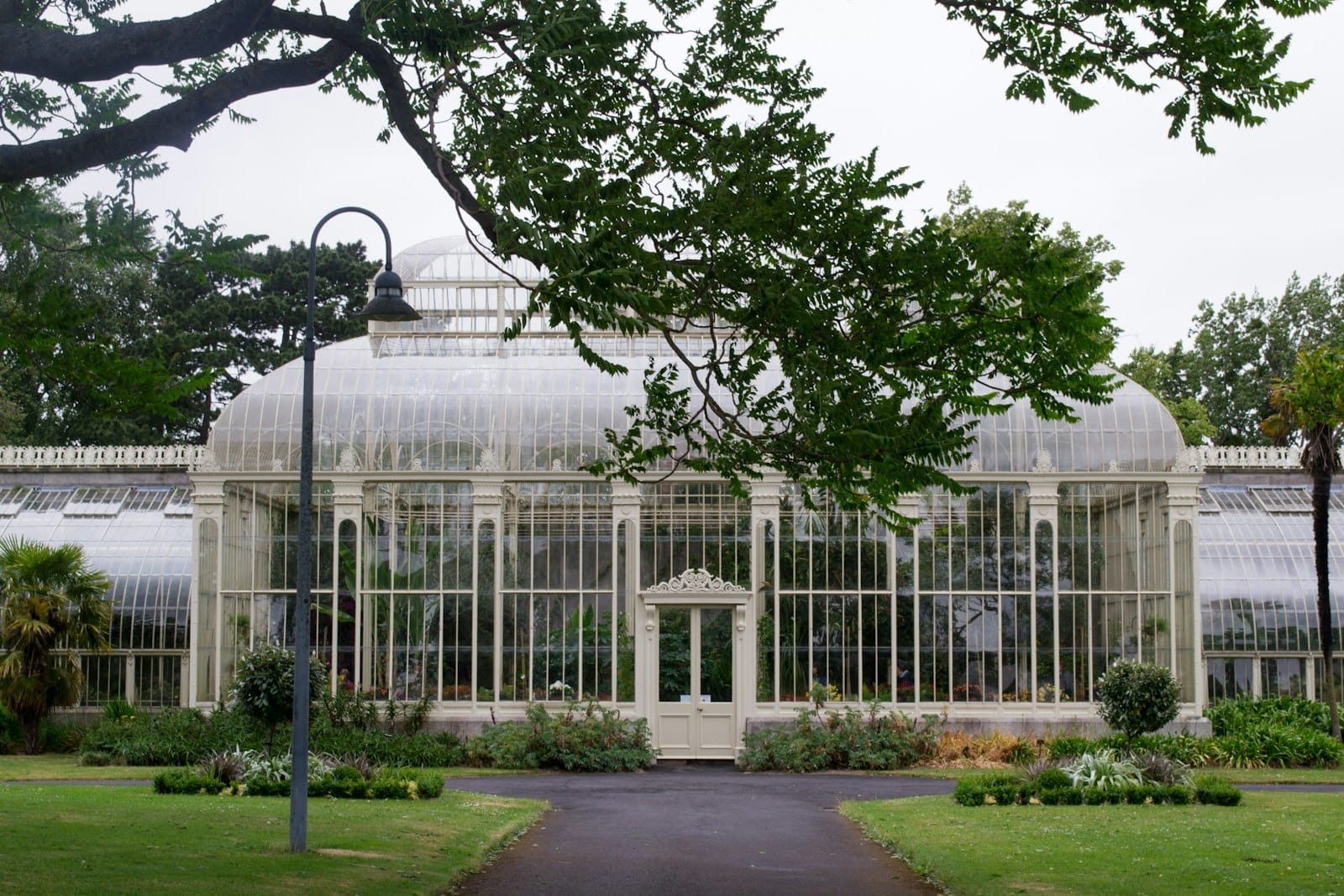
What the National Botanic Gardens Actually Are
The National Botanic Gardens of Ireland are not a park in the casual sense. The site in Glasnevin is a working scientific institution, maintained by the Office of Public Works, with a living collection of more than 16,000 plant species and cultivars. More than 300 of those species are endangered, and six are considered extinct in the wild — meaning the gardens are one of the few places on earth where they still exist. That context changes how you look at the place.
The grounds cover approximately 19.5 hectares, which is large enough to spend a full afternoon in without retracing your steps. There are ornamental borders, a rose garden, a vegetable garden, a rock garden, and long tree-lined paths where the canopy closes overhead in summer. But the architectural centrepiece, and the reason many visitors make the trip specifically, is the collection of Victorian glasshouses.
ℹ️ Good to know
Entry to the gardens themselves is completely free, year-round, on every day except Christmas Day (25 December). Guided tours cost €5 per person, with summer daily tours usually at 11:30 and additional free or paid tours on specific days — worth considering if you want context beyond what the signage provides.
The Victorian Glasshouses: What You're Actually Looking At
The Curvilinear Range is the building that photographs tend not to do justice. It is a long, flowing structure of wrought iron and glass, restored in the 1990s after decades of decline, and on a clear morning the light through the curved panes produces a particular quality that is difficult to describe without seeing it. Inside, the temperature and humidity shift noticeably as you move between sections — the warm damp of the tropical zone, the drier heat of the succulent house.
The Great Palm House is the other major structure, a larger, more formal Victorian greenhouse housing palms and other tall tropical specimens. The scale of the plants inside is what registers first: some specimens have been growing here for well over a century, and the root systems and canopy height reflect that. You are looking at living things that pre-date the Irish state.
Both structures are among the finest examples of 19th-century horticultural iron architecture in Ireland. If you have any interest in architectural history, this element of the visit stands on its own. The glasshouses are included in the free general admission.
Tickets & tours
Hand-picked options from our booking partner. Prices are indicative; availability and final rates are confirmed when you complete your booking.
Wicklow and Glendalough day trip from Dublin with Powerscourt Gardens
From 65 €Instant confirmationFree cancellationGiant's Causeway, Dark Hedges, and Belfast Tour from Dublin
From 85 €Instant confirmationFree cancellationDublin self-guided audio tour
From 10 €Instant confirmationBird of Prey, Cliffs of Moher and Aillwee Cave from Dublin
From 201 €Instant confirmationFree cancellation
How the Experience Changes by Time of Day and Season
Weekday mornings, particularly from opening until around 11:00, are the quietest periods. At that hour the gardens attract serious walkers, retired regulars, and the occasional plant researcher. The paths are almost empty, the birdsong is prominent, and the overall atmosphere is closer to a walled country garden than a city attraction. Weekend afternoons see families, photographers, and larger groups, which does not diminish the gardens so much as change the mood entirely.
Spring is when the ornamental borders are most visually dramatic — bulbs from February onward, followed by the rose garden coming into full bloom in June. Autumn brings a different kind of appeal: the deciduous trees along the main paths turn through amber and copper, and the reduced crowds allow more time near the specimen trees without other visitors in frame. Winter visits are quieter still, the glasshouses become genuinely warm refuges on cold grey days, and the structural bones of the garden — paths, beds, wrought iron — are more visible without the leaf cover.
💡 Local tip
If you visit in low light or overcast conditions, the glasshouses are actually better for photography than in direct sun. The diffused light through the glass eliminates harsh shadows on the plants inside.
Planning Your Visit: Getting There and Getting Around
The gardens are at Botanic Road, Glasnevin, Dublin 9 — roughly 3 to 3.5 km north of the city centre. By Dublin Bus from the city centre, you can reach the Botanic Road stop near the main entrance; journey time and specific route numbers should be confirmed via the Transport for Ireland journey planner before you travel, as services are subject to change. By taxi or ride-hailing app, the journey from central Dublin takes around 10 to 15 minutes depending on traffic.
Glasnevin Cemetery, a major historical site in its own right, is directly adjacent to the botanic gardens. Many visitors combine both in a single half-day. The cemetery's visitor entrance is a short walk along Botanic Road. If your interest runs to Irish history, see the Glasnevin Cemetery Museum alongside the gardens — the combination makes for a rich and quite different Dublin experience.
Summer opening hours (from 9 March 2026) run Monday to Friday 09:00–17:00, and Saturday, Sunday, and Public Holidays 10:00–18:00. Winter hours are Monday to Friday 09:00–16:30, Saturday, Sunday, and Public Holidays 10:00–16:30. These hours are subject to change, so check the official website before visiting.
Accessibility, Dogs, and Practical Logistics
Heritage Ireland describes the site as having "challenging access" for visitors with mobility needs. The grounds are large, and not all paths and areas are fully accessible. Anyone with specific requirements is advised to contact the Visitor Centre in advance at +353 1 804 0319 or botanicgardens@opw.ie to discuss what is possible and to arrange any necessary assistance.
Dogs are not permitted in the gardens, with the exception of registered assistance dogs. This is a firm rule and applies across the site. If you are travelling with a dog, you will need to make alternative arrangements.
There is a cafe on site, which means you do not need to bring food for a visit of standard length. The car park on Botanic Road provides vehicle access. Wear comfortable, flat-soled shoes — the paths are generally level but the ground can be uneven in older sections and wet after rain, which in Dublin is worth factoring in year-round.
What the Gardens Connect To Nearby
Glasnevin is a quiet residential neighbourhood that most visitors pass through only on the way to the gardens or the cemetery. The area does not have significant shopping or dining, so if you plan a longer outing, you are better served by extending your journey into the city centre afterward. If you are assembling a full day of free or low-cost attractions in Dublin, the free things to do in Dublin guide includes several options that pair well with a morning in the gardens.
For those interested in Dublin's garden and green spaces more broadly, the formal Victorian layout of the botanic gardens makes an interesting contrast with the more relaxed design of Iveagh Gardens in the city centre, or with the scale and informality of Phoenix Park to the west.
The gardens also have a sister site at Kilmacurragh in County Wicklow, associated with the institution since 1854. If you are planning time outside Dublin, it is worth noting alongside other options covered in the day trips from Dublin guide.
Who Should Reconsider the Visit
If you are in Dublin for two days or fewer and your main interests are history, nightlife, or literary culture, the National Botanic Gardens may not compete effectively with the city centre options for your limited time. The gardens are not in walking distance of the main tourist areas, and the journey adds a logistical step. The site does not have the kind of single showpiece moment that photographs and shares easily — it rewards slow walking and repeated attention more than a quick visit.
Visitors with significant mobility challenges should be aware of the site's acknowledged access limitations and contact the team before arriving, rather than discovering the constraints on the day. And if you are visiting in heavy rain without appropriate clothing, the open sections of the garden become significantly less pleasant, though the glasshouses remain a reasonable option regardless of weather.
Insider Tips
- The guided tours, typically priced at €5, offer context — particularly around the endangered species collection — that the ground-level signage alone does not fully convey. Worth the cost if you have genuine interest in the plant science side of the visit.
- Glasnevin Cemetery is directly next to the gardens on Botanic Road. If you enter the cemetery from the Botanic Road side after the gardens, you can cover both sites in a single morning without backtracking. The cemetery museum charges a separate entry fee.
- The Curvilinear Range glasshouse is best visited toward the end of your walk rather than first. Starting with the outdoor grounds while your energy is highest, then finishing in the warm, sheltered glasshouses, works well on cooler days and gives you a natural end point near the visitor facilities.
- Photography inside the glasshouses is permitted for personal use. Overcast days produce the most even light for plant photography — bright direct sun creates strong shadows through the glass structure.
- Weekday mornings before 11:00 are consistently the quietest periods. If the gardens are on your itinerary for a weekend, arriving close to opening time gives you the first hour in near-solitude before the family groups arrive.
Who Is National Botanic Gardens of Ireland For?
- Nature and plant enthusiasts who want a genuine scientific collection rather than a decorative park
- Architecture lovers interested in restored Victorian wrought-iron glasshouse design
- Families with children looking for a free, spacious outdoor space with genuine points of interest
- Photographers seeking structured gardens with architectural detail and plant macro subjects
- Visitors combining the gardens with Glasnevin Cemetery for a half-day of complementary sites
Nearby Attractions
Combine your visit with:
- Abbey Theatre
Founded in 1904 by W.B. Yeats and Lady Gregory, the Abbey Theatre is Ireland's National Theatre and one of the most historically significant stages in the English-speaking world. Sitting on Lower Abbey Street in the heart of Dublin city centre, it continues to produce new Irish work alongside classic plays that shaped a nation's identity.
- Blessington Street Basin
Once the Royal George Reservoir supplying water to Dublin's north side, Blessington Street Basin is now a free public park in Phibsborough. The central lake, Tudor gate lodge, and resident wildfowl make it one of the most quietly rewarding green spaces within walking distance of Dublin city centre.
- Casino Marino
Casino Marino is an 18th-century Neo-Classical pleasure house in north Dublin, designed by Sir William Chambers for the Earl of Charlemont. Despite its compact exterior, the building conceals 16 rooms across three floors — a feat of architectural illusion that continues to astonish visitors. Access is by guided tour only, with admission from €3 for children and students and €5 for adults.
- Clontarf Promenade
Clontarf Promenade stretches 4.5 kilometres along Dublin Bay from Fairview to the Bull Wall at Dollymount, offering open sea views, public art, and a marked cycle route along much of its length. It costs nothing to visit, runs along a flat sea wall path, and delivers some of the most expansive coastal scenery accessible from Dublin city centre.