Musical Instruments Museum (MIM) Brussels: The Complete Visitor Guide
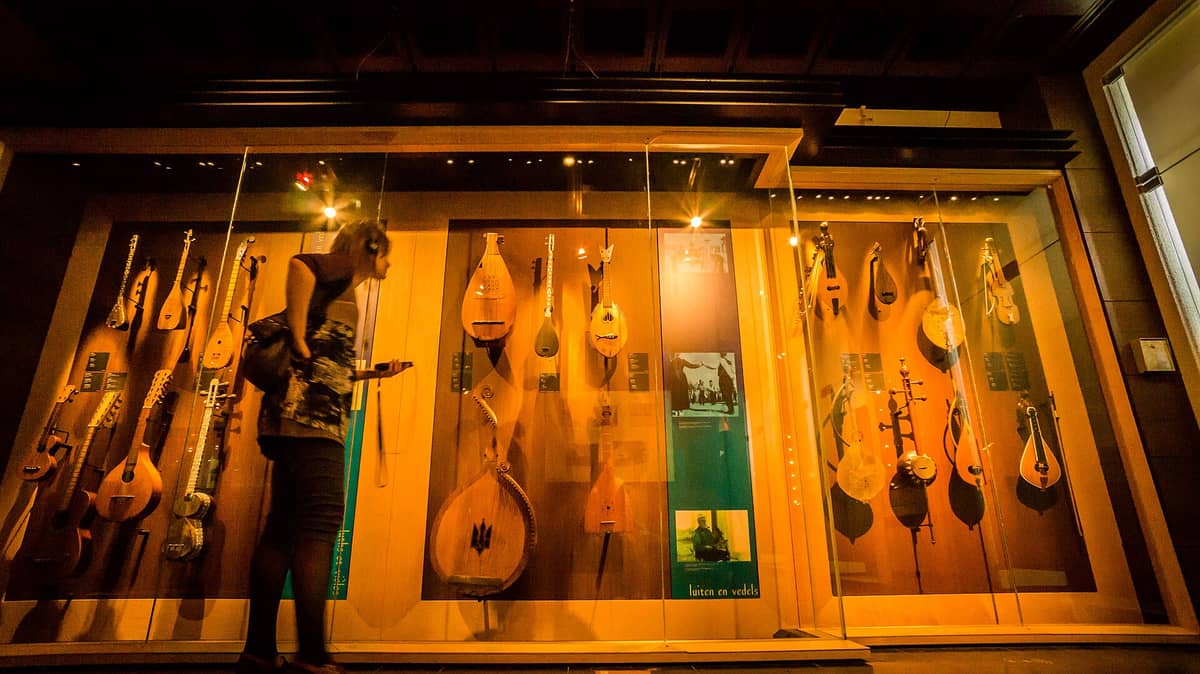
Housed in the breathtaking Art Nouveau Old England building near Mont des Arts, the Musical Instruments Museum (MIM) holds one of the world's largest collections of instruments across five floors. The wireless audio system that plays each instrument as you approach it makes this one of Brussels's most genuinely immersive museum experiences.
Quick Facts
- Location
- Rue Montagne de la Cour 2, 1000 Brussels (Royal Quarter, Mont des Arts)
- Getting There
- Brussels-Central station (5-min walk); tram and metro stops at Gare Centrale/Centraal Station
- Time Needed
- 2 to 3 hours for the collection; add 30 minutes if you visit the rooftop
- Cost
- Adult tickets approximately €16–€18; verify current rates at mim.be
- Best for
- Music lovers, architecture enthusiasts, families, rainy-day visits
- Official website
- www.mim.be/en
What the MIM Actually Is (And Why It Stands Apart)
The Musical Instruments Museum, universally known as the MIM, holds a collection of over 9,000 instruments spanning continents and centuries, making it one of the largest of its kind anywhere in the world. It sits at Rue Montagne de la Cour 2 in Brussels's Royal Quarter, just uphill from Brussels-Central station on the slope of Mont des Arts. The building alone justifies the entrance fee.
What genuinely separates the MIM from comparable institutions is its audio system. As you move through the galleries, infrared sensors detect which display case you are standing in front of and automatically stream the sound of that instrument through a pair of wireless headphones provided at entry. You hear a Javanese gamelan, a Renaissance lute, or a Congolese thumb piano playing as you look at the actual object. The effect is disorienting in the best possible way: a still museum case suddenly comes alive. Children who might otherwise drift through a conventional instrument display tend to stop, look, and listen.
💡 Local tip
Collect your audio headset at the entrance desk before heading upstairs. The system only works inside the galleries, and about a quarter of visitors miss this step and wonder why the experience feels flat.
The Old England Building: Art Nouveau at Its Most Theatrical
The MIM occupies the Old England building, completed in 1899 as a department store and now recognized as one of Brussels's finest surviving examples of Art Nouveau commercial architecture. The facade is a composition in iron, glass, and ornamental ironwork: curved window bays, exposed structural columns, and decorative flourishes that feel simultaneously industrial and organic. Standing on Rue Montagne de la Cour and looking up at the building from the pavement below, the glass curtain wall catches morning light in a way that few historic structures in the city can match.
The choice of this building for a music museum was not incidental. When the Belgian government relocated the Royal Conservatory's instrument collection here in 2000, the architectural context added a layer of cultural meaning: a monument to the decorative arts housing a monument to acoustic craft. If the building alone interests you, the Art Nouveau architecture guide for Brussels places the Old England building within the broader context of the city's extraordinary late 19th-century building legacy.
Tickets & tours
Hand-picked options from our booking partner. Prices are indicative; availability and final rates are confirmed when you complete your booking.
Musical Instruments Museum ticket and Brussels audio tour
From 28 €Instant confirmationGhent tour from Brussels
From 43 €Instant confirmationFree cancellationTablet Workshop at Choco-Story Brussels
From 45 €Instant confirmationShared tour of Delft and the Keukenhof Estate from Brussels
From 86 €Instant confirmationFree cancellation
Navigating the Five Floors: What to Prioritize
The collection is organized thematically across multiple levels, broadly moving from ancient and non-Western instruments on the lower floors through European folk instruments, mechanical instruments, and finally Western art music instruments on the upper floors. The layout rewards a methodical approach, but two hours is enough to see the highlights without fatigue.
The non-Western and ethnographic section on the lower floors is often underestimated by visitors who rush toward the European classical galleries. It contains instruments from Sub-Saharan Africa, Southeast Asia, the Americas, and Oceania, many of them visually striking objects with complex playing techniques that the audio system explains with unusual clarity. The contrast between a Bolivian charango and a Belgian hurdy-gurdy becomes a tangible lesson in how humans have solved the same acoustic problems with radically different materials.
The mechanical instruments floor, featuring automatic pianos, barrel organs, and music boxes, tends to draw the longest pauses from visitors of all ages. The audio system here is particularly effective because mechanical instruments have a characteristic timbre that is almost impossible to convey in photographs or text. The Flemish harpsichords in the early keyboard section are among the most historically significant items in the building, though they sit in cases that require you to lean in to appreciate the inlay detail.
ℹ️ Good to know
The museum opens Tuesday to Friday from 09:30 to 17:00, and Saturday and Sunday from 10:00 to 17:00. It is closed on Mondays and on several public holidays including 1 January, 1 May, 1 November, 11 November, and 25 December. Always confirm dates around Belgian national holidays before visiting.
The Rooftop: One of Brussels's Better Views Without the Crowds
The top floor of the MIM opens onto a rooftop terrace with a cafe and unobstructed views across central Brussels toward the Palace of Justice and the lower city. It is one of the cleaner panoramas in the Royal Quarter, and unlike the dedicated viewpoints on Mont des Arts, it rarely draws long queues. On a clear day, the silhouette of the Atomium is visible to the northwest.
The rooftop cafe serves coffee, light snacks, and Belgian beer. It is accessible without a museum ticket during certain hours, though this policy can change. If the weather is reasonable, building this into your visit adds fifteen minutes of context that no floor plan can provide: looking out over the city from the level of the Old England building's upper cornice makes the urban geography of central Brussels legible in a way that street-level walking does not.
In winter, the terrace is exposed and cold. The view is still worth a brief look, but the cafe inside is where most visitors end up on grey afternoons, which accounts for the majority of Brussels's afternoons between October and March.
When to Visit and How the Experience Changes
Weekday mornings, particularly Tuesday through Thursday between opening and 11:30, offer the quietest conditions. School groups occasionally visit mid-morning on weekdays, which can crowd the ground-floor entrance area and the mechanical instruments section. If you arrive at opening time, you will often have entire gallery floors to yourself for the first forty minutes, which makes a real difference when you are trying to linger with the audio system on a single object.
Weekend afternoons are the busiest periods. The building is not large, and the corridor galleries on certain floors feel narrow when more than a dozen visitors are moving through simultaneously. Saturday mornings are a reasonable compromise: the building is open from 10:00, and the first hour tends to be calmer than the post-lunch rush.
Because the MIM is an indoor attraction across all five floors, it is an excellent choice for Brussels's frequent grey or rainy days. The city gets rainfall distributed fairly evenly across the year, so having strong indoor options matters. The rainy day guide for Brussels pairs the MIM with other Royal Quarter institutions that can fill a full day without requiring outdoor time.
Getting There and Practical Logistics
Brussels-Central station is the most convenient arrival point. From the station's main exit, the walk to the MIM takes roughly five minutes uphill on Rue Montagne de la Cour. Trams and metro connections to Gare Centrale are frequent from most parts of the city. The STIB/MIVB urban network serves the area well, and the station itself is a hub for multiple tram lines.
There is no dedicated parking at the museum. Drivers typically use the paid underground car parks near the Grand-Place or beneath Place Royale, both within a ten-minute walk. Given the museum's location in the dense Royal Quarter, public transport is considerably more practical.
The MIM is located in a historic multi-storey building, but modern lifts provide access to all gallery floors. Visitors with mobility requirements should check directly with the museum regarding step-free entrance routes and accessible facilities before visiting, as the Old England building's ground-floor layout has some irregularities that can affect wheelchair navigation.
⚠️ What to skip
The museum is closed on Mondays. A surprising number of visitors walk up from Central Station only to find the doors shut. Double-check the schedule at mim.be if visiting around a public holiday, as closures do not always fall on the standard days.
Honest Assessment: Who Will Love It and Who Might Not
For anyone with a serious interest in music, acoustics, organology, or the material culture of sound, the MIM is one of Europe's genuinely important collections. The depth of the holdings in both Western European and non-Western traditions is unusual, and the quality of the building adds a dimension that purpose-built museum structures rarely match.
Visitors looking for interactive, hands-on exhibits where they can actually play instruments will find the MIM somewhat passive. The audio headset system is clever, but the instruments themselves are behind glass throughout. Families with young children who need tactile engagement may find the Brussels with kids guide useful for calibrating expectations and identifying complementary stops.
The museum's labeling and information panels are available in French, Dutch, and English, which is standard for Brussels institutions but worth confirming for visitors in language-specific school groups. The audio guide content is multilingual and available in several European languages.
Those whose primary interest is Brussels's Art Nouveau architecture should note that the Old England building shows its best face from the street. Inside, the museum fit-out is functional rather than architectural. For a full Art Nouveau interior experience, the Horta Museum in Saint-Gilles remains the benchmark, where the architecture itself is the exhibit.
Insider Tips
- The audio headset system defaults to whatever instrument is closest, which means standing between two cases produces audio bleed. Stand directly in front of the display you want to hear and let the system settle for two or three seconds before it locks on.
- The rooftop cafe can be accessed without a museum ticket during certain opening periods. If you are short on time but want the view, check at the entrance desk whether the terrace is accessible independently that day.
- The museum shop on the ground floor stocks a genuinely good range of music books, instrument replicas for children, and Belgian-made items that go beyond typical museum merchandise. It is open to non-ticket holders and worth a look even if you are passing by.
- Lighting in the mechanical instruments section is deliberately low to protect the objects. If you are photographing without flash (which is generally permitted in the permanent collection), bring a phone with a capable low-light camera or accept that images will be atmospheric rather than precise.
- The MIM is one of the Brussels institutions included in the Brussels Card, which currently covers admission to around forty to fifty museums. If you are planning three or more museum visits in two days, the card can represent meaningful savings. Verify current inclusions at visitbrussels.be before purchasing.
Who Is Museum of Musical Instruments (MIM) For?
- Music enthusiasts and anyone curious about how instruments from different cultures solve the same acoustic challenges
- Architecture observers who want to experience the Old England Art Nouveau facade from street level and the interior in context
- Travelers visiting Brussels on a rainy day who want a full half-day of genuinely engaging indoor content
- Families with children aged 8 and up who are comfortable with a museum format and can engage with the audio headset system
- Visitors combining a Royal Quarter loop that includes Mont des Arts, the Royal Museums of Fine Arts, and the Magritte Museum
Nearby Attractions
Other things to see while in Royal Quarter & Mont des Arts:
- BELvue Museum
The BELvue Museum traces Belgium's history from its founding in 1830 to the present day through seven thematic galleries and around 200 carefully selected objects. Located at Place des Palais, steps from the Royal Palace, it offers a clear-eyed account of a country that has rarely had a simple story to tell.
- BOZAR – Centre for Fine Arts
Housed in a landmark Art Deco building designed by Victor Horta, BOZAR is Belgium's premier multidisciplinary arts centre, blending major exhibitions, classical concerts, film screenings, and contemporary performance under one roof. Located steps from Brussels Central station in the Mont des Arts district, it rewards curious visitors who want more from their cultural itinerary than a single painting collection.
- Coudenberg Palace Archaeological Site
Beneath the Place des Palais lies one of Brussels' most unexpected attractions: the excavated ruins of the Coudenberg Palace, once the most powerful royal court in northern Europe. This underground archaeological site lets visitors walk through streets and halls that haven't seen daylight since the 18th century.
- Magritte Museum
The Musée Magritte Museum in Brussels holds the world's largest collection of works by René Magritte, with over 200 paintings, drawings, sculptures, and archival materials spread across multiple floors. Located on Place Royale in the Royal Quarter, it is one of the most focused single-artist museums in Europe and a serious destination for anyone interested in Surrealism, 20th-century painting, or Belgian cultural history.