Museum of Contemporary Art Chicago: What to Know Before You Go
The Museum of Contemporary Art Chicago (MCA) houses more than 3,000 works spanning post-World War II art to the present, set in a landmark 1996 building one block from the Magnificent Mile. Whether you are a casual browser or a serious collector of contemporary ideas, this guide covers everything you need to visit with confidence.
Quick Facts
- Location
- 220 E Chicago Ave, Streeterville, Chicago
- Getting There
- CTA Red Line – Chicago Ave stop (4 blocks west); buses #66 and Michigan Ave routes (such as #3, #147, and others) stop nearby
- Time Needed
- 2–3 hours for a focused visit; 4+ hours if attending a performance or film screening
- Cost
- Adults $22 (non-residents) / $19 (Illinois residents); free for anyone 18 and under, members, and Illinois residents on Tuesdays
- Best for
- Contemporary art lovers, architecture enthusiasts, adults seeking a quieter alternative to blockbuster museums
- Official website
- mcachicago.org
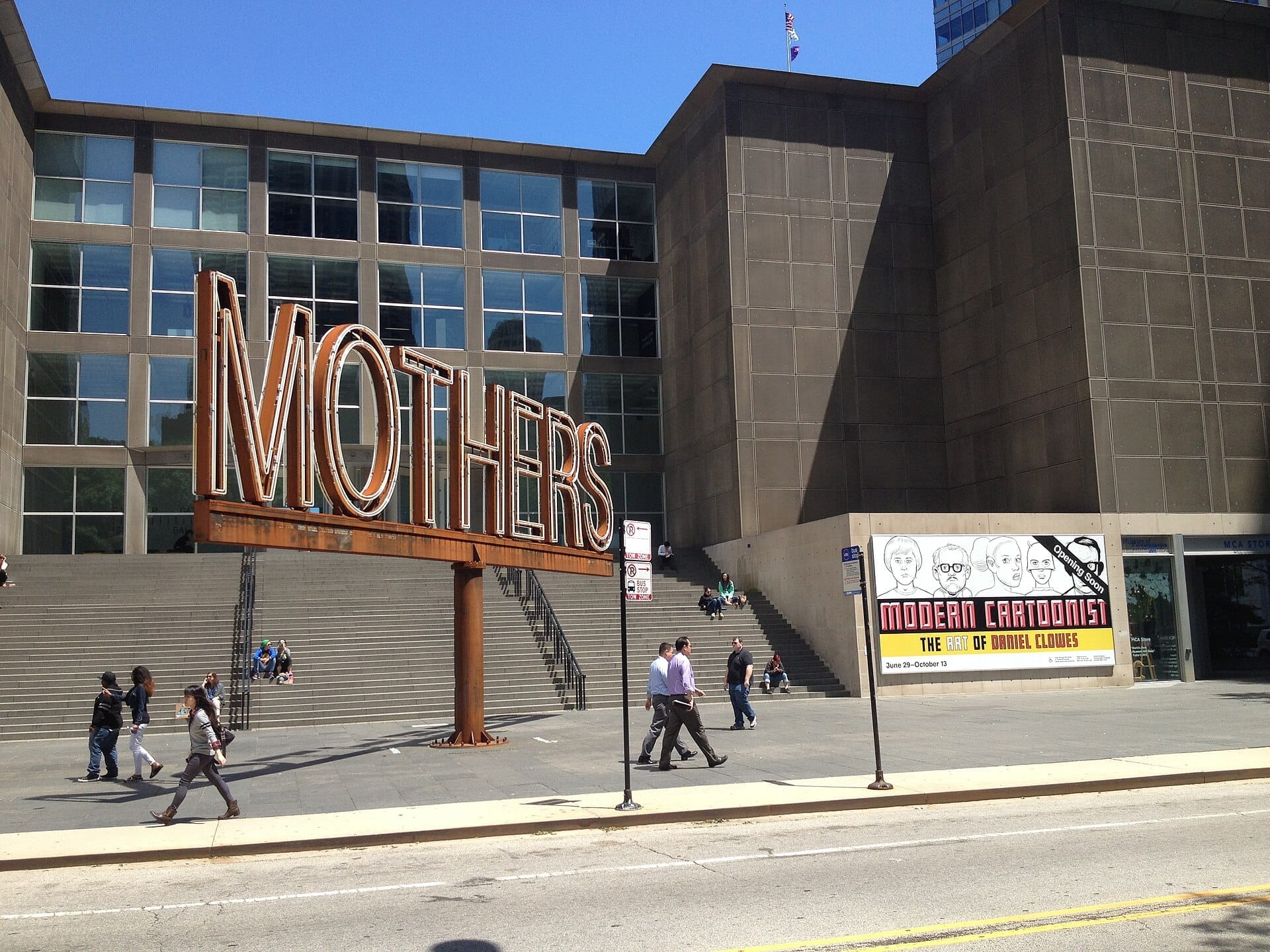
What the Museum of Contemporary Art Chicago Actually Is
The Museum of Contemporary Art Chicago (MCA) is one of the largest contemporary art museums in the world, holding a permanent collection of more than 3,000 works created after World War II. Unlike encyclopedic institutions that feel obligated to cover every century and continent, the MCA sharpens its focus: everything here was made in living memory, and the curatorial choices reflect that urgency. Painting, sculpture, photography, video, performance, and installation art all share the same halls, often in dialogue with each other in ways that reward slow looking.
The museum was founded in 1967, originally occupying a converted Playboy headquarters on East Ontario Street. It moved to its current purpose-built home in 1996, a building constructed on the site of a demolished National Guard Armory. That 1996 structure, designed by Berlin architect Josef Paul Kleihues, is itself worth examining before you step inside.
💡 Local tip
Illinois residents get free admission on Tuesdays during regular museum hours. Anyone 18 and under enters free every day, thanks to the Lefkofsky Free 18 & Under Fund. Visitors with disabilities and their caregivers are also admitted free.
The Building: Architecture Before You Cross the Threshold
Kleihues designed the MCA's exterior with a grid of aluminum panels punctuated by precise rectangular windows, a restrained vocabulary that reads as serious without being cold. The main entrance faces Mies van der Rohe Way, a street named for the architect who shaped Chicago's modern skyline and whose Illinois Institute of Technology campus is a pilgrimage site for architecture enthusiasts. The pairing of street name and building is quietly intentional.
The entrance staircase is one of those spaces that photographs poorly but registers strongly in person. It rises through a full-height atrium toward the upper galleries, flanked by glass that frames the sky. On clear mornings, light fills the stairwell and the travertine surfaces glow. On overcast winter days, the space feels monastic. Both moods suit the art inside.
The building sits one block east of North Michigan Avenue in Streeterville, the dense near-lakefront neighborhood that includes Navy Pier, Northwestern Memorial Hospital, and some of Chicago's most expensive residential towers. For more on the neighborhood's layout and what surrounds the MCA, the Magnificent Mile and Streeterville neighborhood guide covers the full area.
Tickets & tours
Hand-picked options from our booking partner. Prices are indicative; availability and final rates are confirmed when you complete your booking.
Go City | Chicago All-Inclusive Pass
From 127 €Instant confirmationFree cancellationArt Institute of Chicago tickets and self-guided audio tour
From 49 €Instant confirmationArt Institute of Chicago Guided Tour with Skip-the-Line Tickets
From 63 €Instant confirmationFree cancellationThe Art Institute of Chicago: private skip-the-line tour
From 124 €Instant confirmationFree cancellation
The Permanent Collection: What You Will Actually See
The MCA's collection spans the early postwar period through the present, with particular strengths in Chicago artists, Surrealism's influence on later American art, and conceptual and minimal work from the 1960s and 1970s. Artists including René Magritte, Alexander Calder, Cindy Sherman, and Bruce Nauman appear in depth. The Chicago-specific holdings are especially rewarding if you are spending more than a day in the city: the MCA functions as an argument that Chicago has a distinct artistic identity, not merely a provincial outpost of New York.
The permanent collection is not always entirely on view. The MCA rotates works in and out and devotes significant gallery space to temporary exhibitions, which can mean that a specific artist you came to see might be in storage. Check the museum's website for current exhibition listings before visiting if there is a particular work you want to see.
ℹ️ Good to know
The MCA also has an active performance and theater program, hosting dance, music, and comedy in its Edlis Neeson Theater. If you are visiting Chicago for its arts scene more broadly, check the events calendar when booking.
When to Visit and How the Experience Changes by Time of Day
Tuesdays, especially the extended hours from 5:00 PM to 9:00 PM, are the most social hours. The museum draws a younger, mixed crowd, the atmosphere loosens, and the galleries feel less like quiet study and more like genuine conversation. The extended hours also mean you can combine the MCA with dinner on the Magnificent Mile without rushing. For Illinois residents, Tuesday evenings are free, which makes this the obvious window.
Wednesday through Friday mornings, between opening at 10:00 AM and around noon, are the quietest hours. School groups occasionally appear, but the upper galleries in particular can feel genuinely empty, which allows for the kind of extended looking that large contemporary works often demand. Some installations are simply impossible to experience properly when a crowd is present; arriving early on a weekday solves that problem.
Weekends draw larger general audiences, especially Saturday afternoons. The experience is still good, but the atrium and main galleries feel noticeably more active. If you visit on a weekend, consider starting at the top floor and working downward, which is the reverse of what most visitors do and tends to mean you have the upper galleries to yourself for the first thirty minutes.
The MCA is a strong choice on a rainy day or during a Chicago winter, when outdoor options become less appealing. For a broader strategy on managing Chicago's weather, the Chicago in winter guide has practical seasonal advice.
Practical Walkthrough: Getting There and Getting In
The museum is at 220 East Chicago Avenue, with the main entrance on Mies van der Rohe Way. The CTA Red Line Chicago station is about four blocks west, a straightforward walk along Chicago Avenue past Northwestern Memorial Hospital. If you are coming from Millennium Park or the Loop, the #66 Chicago Avenue bus runs directly along the route. Several Michigan Avenue bus lines also stop within a short walk.
Paid parking is available in a garage on Chicago Avenue just west of Fairbanks Court, adjacent to the museum, but there is no direct indoor connection, so you will be outside briefly. Given the parking rates in this neighborhood, transit or rideshare is almost always a better option unless you are combining the MCA with a broader driving itinerary.
Admission for non-Chicago-resident adults is $22. Illinois residents pay $19. Reduced rates apply for students, teachers, and visitors over 65 (check current pricing). Visitors with disabilities and their caregivers enter free, as do active-duty military, police and fire department members, and veterans with ID. Pay-what-you-can pricing is available in person. Tickets can be purchased at the door; check the website for any timed-entry requirements if visiting during a high-demand exhibition.
💡 Local tip
The MCA is closed on Mondays and on major holidays including New Year's Day, Thanksgiving, and Christmas. Plan accordingly, especially if you are visiting around a major holiday.
The MCA Store and Other Practicalities
The MCA Store is one of the better museum shops in the city, stocked with art books, design objects, and exhibition catalogs that lean toward genuine usefulness rather than generic souvenir fare. It typically closes at 5:30 PM Wednesday through Sunday, slightly later than the galleries on those days. On Tuesday evenings it matches the museum's 9:00 PM closing time. The store is accessible without purchasing museum admission if you want to browse without visiting the galleries.
The museum has a restaurant on site, though dining options in the immediate Streeterville neighborhood are extensive if you prefer to eat before or after your visit. The area around the Magnificent Mile is dense with options at every price point.
If you are thinking about whether the MCA fits into a broader museum-heavy itinerary, the best museums in Chicago guide compares the city's major institutions and helps you prioritize based on your interests.
Honest Assessment: Is the MCA Worth Your Time?
The MCA is not a museum that overwhelms you with scale or tries to explain the history of civilization. It does something narrower and, for the right visitor, more rewarding: it presents contemporary art seriously and with strong curatorial judgment. The permanent collection is substantive, the temporary exhibitions are often ambitious, and the building itself contributes to the experience rather than simply housing it.
That said, if you are looking for the broadest possible return on museum time in Chicago, the Art Institute of Chicago covers more historical ground and has one of the finest Impressionist collections in the world. The MCA is a complement to that visit, not a substitute. Travelers who are indifferent to post-1945 art, or who find contemporary art frustrating rather than stimulating, may find the experience less rewarding than other options in the city.
For visitors trying to fit multiple major attractions into a short trip, the Chicago one-day itinerary and the Chicago CityPass guide can help with prioritization. Note that the MCA is not currently part of the CityPass program, so budget accordingly.
Photography is generally permitted in the permanent collection without flash. Individual temporary exhibitions may restrict photography; signage at gallery entrances makes this clear. The building's atrium and staircase are excellent for architectural photographs.
Insider Tips
- Start your visit on the top floor and work downward. Most visitors follow signs to the ground level first, so the upper galleries are noticeably quieter during the first hour after opening.
- The sculpture terrace on the upper level offers a view toward Lake Michigan that most visitors walk past without stopping. It is worth a few minutes, especially in good weather.
- If you are traveling with teenagers or young adults who find traditional museums slow, the MCA's performance and film programming tends to connect better than static gallery visits. Check the events calendar before you go.
- The MCA Store does not require admission, which makes it a legitimate stop even if you are short on time or budget. The book selection in particular is strong for contemporary art and design.
- Tuesday evening free hours for Illinois residents bring a noticeably different crowd than weekend afternoons, one that skews younger and more arts-engaged. If you have flexibility, this is the most interesting social atmosphere the museum offers.
Who Is Museum of Contemporary Art Chicago For?
- Adults with a genuine interest in post-World War II art who want curatorial depth rather than breadth
- Architecture enthusiasts who appreciate the Kleihues building alongside the collection
- Visitors returning to Chicago who have already covered the major encyclopedic institutions and want something more focused
- Travelers with an evening free on a Tuesday, especially Illinois residents who enter free
- Anyone seeking a serious, unhurried indoor experience on a cold or rainy Chicago day
Nearby Attractions
Other things to see while in Magnificent Mile & Streeterville:
- 360 CHICAGO Observation Deck
Perched on the 94th floor of 875 North Michigan Avenue, 360 CHICAGO delivers panoramic views stretching across the city grid, Lake Michigan, and on clear days, four states. With the TILT ride, interactive displays, and a full bar, it offers more than just a lookout.
- American Writers Museum
Tucked on the second floor of 180 N. Michigan Avenue, the American Writers Museum makes a persuasive case that literature shaped the United States as much as any battlefield or boardroom. It's compact, thoughtfully curated, and rewards visitors who slow down.
- Centennial Wheel
Standing nearly 196 feet above the Lake Michigan shoreline, the Centennial Wheel at Navy Pier offers enclosed, climate-controlled gondola rides with some of the most expansive views of Chicago's skyline. Opened in 2016 to mark Navy Pier's 100th anniversary, it replaced a beloved predecessor and quickly became one of the city's most recognizable structures.
- Chicago Children's Museum
Perched inside Navy Pier on the lakefront, Chicago Children's Museum has been sparking curiosity in kids since 1982. With hands-on exhibits built for children under 10, it rewards an unhurried half-day visit. Here is exactly what to expect, when to go, and how to make the most of your time.