Museu Puget: Ibiza's Quiet Masterpiece Inside a Medieval Manor
Tucked inside a centuries-old manor house in Dalt Vila, Museu Puget holds around 130 paintings and drawings by Narcís Puget Viñas and his son Narcís Puget Riquer. It is free to enter, small enough to visit in under an hour, and offers a rare, unhurried window into how Ibiza looked before the tourists arrived.
Quick Facts
- Location
- Calle de Sant Ciriac 18, Dalt Vila, Ibiza Town (Eivissa), Spain
- Getting There
- Walk up from Ibiza Town centre through Portal de ses Taules; the museum is a short climb into the old walled quarter
- Time Needed
- Up to 2–3 hours
- Cost
- Free admission
- Best for
- Art lovers, history buffs, travellers seeking shade on a hot afternoon
- Official website
- http://www.museopuget.com/
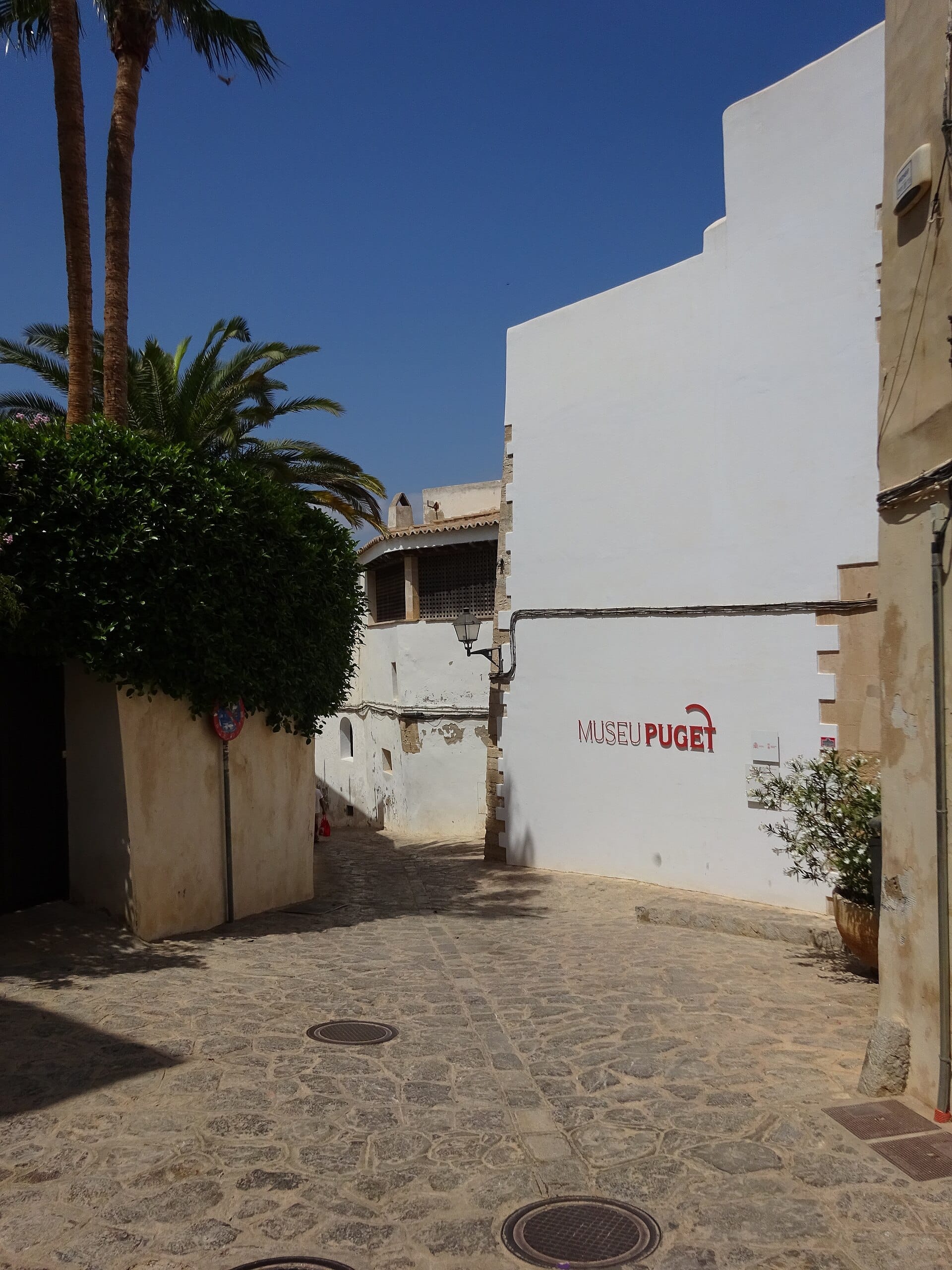
What Museu Puget Actually Is
Museu Puget is a small fine art museum dedicated entirely to two painters: Narcís Puget Viñas (1874–1960) and his son Narcís Puget Riquer (1916–1983). The collection spans 130 works, including oil paintings, watercolours, and drawings, all focused on Ibizan landscapes, village life, and the people of the island across the twentieth century. The museum is housed in Can Comasema, a historic manor house associated with the Catalan conquerors who took the island in the thirteenth century.
This is not a blockbuster institution. There are no international loan exhibitions, no audio guides in six languages, and no gift shop selling postcards. What it offers instead is something harder to find in Ibiza: a calm, contextual look at the island before it became a brand. The Puget paintings record market days, fishing boats, whitewashed farmhouses, and the Eivissenc costume worn by islanders for generations. For anyone curious about where Ibiza actually comes from, this collection is worth more than a dozen sunset cocktails.
ℹ️ Good to know
Admission is free. No booking is required. The museum is closed on Mondays and public holidays.
The Building: Can Comasema and Dalt Vila
Can Comasema is one of Dalt Vila's older surviving structures. The walled old town of Ibiza, a UNESCO World Heritage Site since 1999, rises above the harbour on a rocky promontory, and Can Comasema sits within its upper reaches on Carrer Major. The building's thick stone walls and shaded interior courtyard feel genuinely medieval rather than restored-to-look-medieval, which matters when you are surrounded by places that have been softened for tourism. The full context of Dalt Vila's Renaissance fortifications is visible from streets just outside the museum, making this a natural stop on any walking circuit of the old town.
The layout across multiple floors means some rooms are narrow and the stairways are steep. The building was never designed as a public gallery space, and that shows, but it also means you are experiencing the art in rooms that have their own history. Light enters through small windows rather than skylights, giving the oil paintings a slightly different quality than they would have in a modern white-cube gallery.
⚠️ What to skip
Visitors with reduced mobility should be aware that Dalt Vila's streets are steep and cobbled, but there is a lift inside the museum to improve access between floors. Check with the museum directly if this is a concern before making the climb.
Tickets & tours
Hand-picked options from our booking partner. Prices are indicative; availability and final rates are confirmed when you complete your booking.
Sunset boat tour with tapas, open bar and water sports in Ibiza
From 70 €Instant confirmationFree cancellationEscape Tour self-guided, interactive city challenge in Ibiza
From 30 €Instant confirmationPrivate Sunset Cruise on a Maritime Classic in Ibiza
From 750 €Instant confirmationFree cancellationIbiza to Formentera boat trip with open bar and water sports
From 69 €Instant confirmationFree cancellation
The Collection: Two Painters, One Island
Narcís Puget Viñas was born in Ibiza in 1874 and spent most of his life painting the island around him. His work sits within a broadly post-impressionist tradition, using warm Mediterranean light and loose brushwork to capture rural Ibizan scenes: salt flats, almond trees in bloom, women in traditional dress carrying water, the harbour at different hours. He is not widely known outside the Balearic Islands, but within Ibiza his name carries real weight as the painter who documented a world that no longer exists.
His son Narcís Puget Riquer continued in a similar vein but with a more modern sensibility, absorbing some mid-century European influences while staying rooted in Ibizan subject matter. Seeing both generations side by side across 130 works creates an accidental time-lapse of the island, from the early 1900s to the 1980s. The changes in the landscape between father and son are visible, and quietly striking.
The watercolours and drawings in the collection deserve attention and are often overlooked in favour of the larger oil paintings. Puget Viñas's sketches in particular are loose and observational in a way that feels contemporary, recording details of daily life without sentimentality.
Visiting: Times, Light, and Crowds
Museu Puget keeps split hours in summer (April through September): Tuesday to Saturday, 10:00 to 14:00, then reopening from 18:00 to 20:00, with Sundays open 10:00 to 14:00. In winter (October through March), official hours shift to 10:00 to 13:30 on Tuesday through Sunday mornings and 16:00 to 18:00 on Tuesday through Friday afternoons, with closure on Mondays and public holidays. These hours are seasonal and can change, so confirm via the official website or the Ibiza tourism portal before visiting.
Morning visits, particularly on weekdays, tend to be quietest. The 18:00 to 20:00 summer evening slot is worth considering: the light filtering through the old town at that hour is good, the heat of the afternoon has eased, and the crowds that fill the streets for the evening promenade have not yet reached Dalt Vila's upper reaches. The museum rarely fills up regardless of when you go, which is part of its appeal.
If you are combining the museum with a broader walk through the old town, consider starting at the Portal de ses Taules, the main gate into Dalt Vila, and working your way uphill toward the museum before finishing at the Ibiza Cathedral at the summit. The route covers the best of the walled city without backtracking.
Photography and Practical Notes
Photography policies in small municipal museums vary and can change. If you want to photograph the paintings, ask at the entrance. The building itself, the courtyard, and the street outside are all worth photographing, particularly in the late afternoon when the stone takes on a warm golden tone.
There is no coat check, no cafe, and no seating areas to speak of. Bring water, especially in summer, as the climb through Dalt Vila is warm work. The interior of Can Comasema stays noticeably cooler than the streets outside thanks to its thick stone walls, which makes it a genuinely comfortable place to pause during a hot afternoon.
💡 Local tip
The 18:00 to 20:00 evening slot in summer is the most atmospheric time to visit. Dalt Vila is cooler, the street light is beautiful, and you can continue directly from the museum to watch the sunset from the walls.
Who This Museum Is For, and Who Can Skip It
Museu Puget rewards travellers who want to understand Ibiza beyond its present-day reputation. If you are curious about the island's pre-tourism culture, the Eivissenc way of life, or simply want an hour of quiet in a city that rarely offers it, this museum justifies the climb into Dalt Vila. It pairs naturally with a visit to the Puig des Molins necropolis and the Ibiza Museum of Contemporary Art, creating a full cultural day in and around the old town.
Travellers who are primarily in Ibiza for beaches, nightlife, or outdoor activities will likely find 30 to 45 minutes here is sufficient rather than a highlight. The collection is focused and not comprehensive; it is a specialist museum about two local artists, not a broad survey of Spanish or Mediterranean art. If you have no particular interest in painting or local history, the Dalt Vila walk itself may satisfy your curiosity without stopping inside.
The museum is not suitable as a primary activity for young children, but it is free and uncrowded, so it imposes no real cost on a family that wants to peek inside during a Dalt Vila walk. The steep cobbled streets getting there are the bigger challenge with pushchairs or prams.
Insider Tips
- The 18:00 to 20:00 summer opening slot is the best time to visit: temperatures drop, the light in the old town is excellent, and you can walk the walls afterward for one of the better sunset viewpoints in Ibiza Town.
- The watercolours and drawings on the upper floors tend to be overlooked by visitors who spend most of their time with the large oil paintings downstairs. They are worth slowing down for.
- Combine your visit with the Ibiza Museum of Contemporary Art, which is also free and a short walk away in the lower section of Dalt Vila. Two free museums in one morning is a sensible use of time before the heat peaks.
- The thick stone walls of Can Comasema make the interior noticeably cooler than outside. On a hot summer afternoon, the museum doubles as a comfortable refuge from the midday heat.
- Confirm hours before visiting during shoulder season (October and early April) as the transition between summer and winter schedules does not always happen on the exact date listed.
Who Is Museu Puget For?
- Art and culture travellers who want local context rather than international names
- Visitors exploring Dalt Vila on foot and looking for a quiet, free stop mid-walk
- Travellers curious about Ibiza's pre-tourism landscape and traditional Eivissenc life
- Anyone seeking shade and cool air on a hot afternoon in the old town
- Repeat visitors to Ibiza who have already covered the island's beaches and want something different
Nearby Attractions
Other things to see while in Dalt Vila:
- Castle of Ibiza (Castell d'Eivissa)
Perched at the summit of Ibiza Town's UNESCO-listed old city, the Castle of Ibiza (Castell d'Eivissa) is the island's oldest continuously occupied defensive site. Visitors today explore the exterior, two free bastions, and sweeping views over the harbour and open sea — the main castle building itself remains closed to the public.
- Dalt Vila Walls & Bastions
The Murallas de Dalt Vila are the 16th-century Renaissance fortification walls encircling Ibiza Town's historic upper quarter. Free to enter at any hour, they form the architectural backbone of a UNESCO World Heritage Site and offer the island's most commanding views of the harbour and open sea.
- Ibiza Cathedral (Catedral de Santa Maria d'Eivissa)
Perched near the highest point of Ibiza's UNESCO-listed Old Town, the Catedral de Santa Maria d'Eivissa is a Gothic tower wrapped in Baroque stone, with sweeping views over the harbour and the Mediterranean beyond. Entry is free, the climb is steep, and the reward is genuine.
- Ibiza Museum of Contemporary Art (MACE)
The Ibiza Museum of Contemporary Art, known as MACE, sits inside a 1727 Hall of Arms and Prova military storehouse in Dalt Vila's UNESCO-listed old town. Free to enter and often overlooked by visitors focused on beaches and nightlife, it offers a quiet, layered experience that combines modern Ibizan art with underground archaeology reaching back to the Phoenician era.