Museo di Storia Naturale di Milano: What to Expect Before You Go
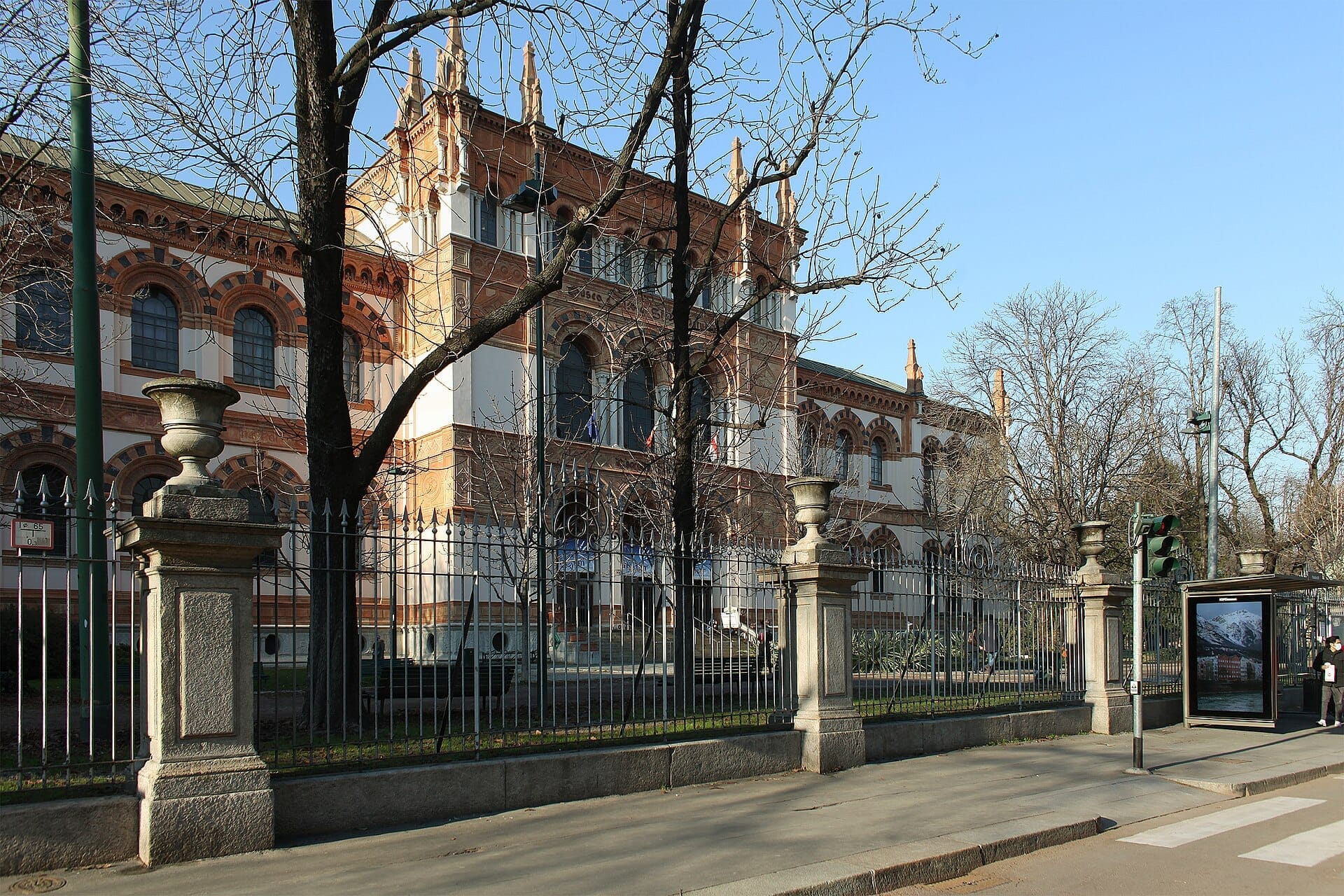
Built between 1888 and 1907 in a neo-Gothic palace inside Milan's oldest public gardens, the Museo civico di storia naturale di Milano holds one of Italy's largest natural history collections. Across 23 halls and roughly 5,500 square metres, it covers mineralogy, palaeontology, zoology, and more — and preserves almost three million specimens across its collections.
Quick Facts
- Location
- Corso Venezia 55, inside Giardini Pubblici Indro Montanelli, Porta Venezia, Milan
- Getting There
- Metro Porta Venezia (Line 1/red line), short walk through the gardens
- Time Needed
- 1.5 to 2.5 hours for a thorough visit
- Cost
- Full €10 / Reduced €5 / Free for all visitors on the first Sunday of each month
- Best for
- Families with children, science enthusiasts, rainy-day culture seekers
- Official website
- storianaturalemilano.education
What the Museum Actually Is
The Museo civico di storia naturale di Milano is the city's civic natural history museum, one of the most important natural history museums in Europe. Its origins go back to 1838, when the naturalists Giuseppe De Cristoforis and Giorgio Jan donated their combined natural history collections to the municipality of Milan. The museum was formally inaugurated on 9 September 1844, during the VI Congresso degli Scienziati Italiani, and has been growing ever since. Today, its holdings number almost three million specimens spread across geology, palaeontology, mineralogy, entomology, botany, and vertebrate and invertebrate zoology.
The building that houses the collection is itself worth attention. Designed by architect Giovanni Ceruti and constructed between 1888 and 1893, then completed in 1907, it is a confident piece of neo-Gothic eclecticism: red brick, terracotta detailing, pointed arches, and a facade that feels more like a Lombard civic palace than a museum. It sits inside the Giardini Pubblici Indro Montanelli, Milan's oldest public gardens, which softens the arrival considerably — you approach through trees rather than traffic.
💡 Local tip
Entry is free for all visitors on the first Sunday of each month. Online booking is not available for free-admission Sundays, so arrive early to avoid queues, especially on good-weather weekends.
The museum sits in the Porta Venezia neighbourhood, one of the more architecturally layered parts of the city, known for its Liberty-style palaces and wide, tree-lined boulevards. If you are planning a broader day in the area, the Giardini Pubblici Indro Montanelli surrounding the museum make a natural complement — particularly pleasant in spring and early autumn.
The Collection: What You Will Find Inside
The museum is arranged across two floors and a mezzanine, totalling 23 exhibition halls over approximately 5,500 square metres. The layout is broadly thematic: mineralogy and petrology occupy some of the ground-floor rooms, while palaeontology, with its full-scale dinosaur casts and fossil displays, draws the most visitors and tends to get the noisiest crowds, especially on weekday mornings when school groups arrive in numbers.
The palaeontology section is the headline act for most visitors. The casts of large theropods and sauropods are rendered at full scale, and the lighting in those halls is dim enough to give the skeletons a slightly theatrical weight. Children tend to slow down here in a way they don't in the quieter mineralogy rooms. That said, the mineralogy and gemology display has some genuinely striking specimens — raw crystals, meteorite fragments, fluorescent minerals that glow under UV light — and it draws far fewer people, making it easier to linger.
The zoology galleries cover both vertebrates and invertebrates, with taxidermied mammals, birds, and fish alongside entomology cases packed with pinned specimens. The quality of the older taxidermy is uneven, as it is in most natural history museums of this age, but the sheer density of the entomology collection is remarkable. The botany section, which includes herbarium specimens and models, is among the least visited areas — and therefore one of the more peaceful corners of the building in the late afternoon.
Tickets & tours
Hand-picked options from our booking partner. Prices are indicative; availability and final rates are confirmed when you complete your booking.
Milan Museo Del Novecento entry ticket with audio guide
From 14 €Instant confirmationFree cancellationMilano highlights 2 hours private tour by vintage car
From 300 €Instant confirmationFree cancellationMilano highlights 3 hours private tour by vintage car
From 400 €Instant confirmationFree cancellationMilano highlights 30 minutes private tour by vintage car
From 80 €Instant confirmationFree cancellation
How the Experience Changes by Time of Day
Morning visits, particularly from 10:00 to 12:00 on weekdays, bring the highest concentration of school groups. The palaeontology halls in particular can feel congested between 10:30 and 11:30, with teachers corralling children around the large fossil casts. If you are visiting without children and want to move at your own pace, arriving just before noon or after 14:00 on a weekday noticeably improves the experience.
Weekend afternoons are a different kind of busy: families with younger children tend to dominate, and the ground-floor halls near the entrance see the most foot traffic. The upper floor, which houses some of the zoology and botany collections, is consistently quieter at any time of day — the staircase alone seems to filter out a portion of casual visitors. Late afternoon, in the final hour before the 17:30 closing, the museum empties considerably. The light through the tall windows in the upper rooms shifts to something warmer, and you can hear the building itself: wooden floors, the faint hum of climate systems, the occasional cart from a staff member resetting displays.
ℹ️ Good to know
The museum is open Tuesday through Sunday, 10:00 to 17:30. It is closed on Mondays and on major public holidays including 25 December, 1 January, Easter Monday, and 1 May. Verify current hours on the official site before visiting, as holiday schedules can shift.
Getting There and Getting In
The most direct approach is Metro Line 1 (red line) to Porta Venezia station. From the exit on Corso Buenos Aires, the walk to the museum entrance takes roughly five to eight minutes through the public gardens. The gardens themselves have multiple entrances; the one on Corso Venezia, directly in front of the museum facade, is the most straightforward.
Tickets can be purchased at the door or online through the Musei Civici Milano shop. Full-price admission is €10; reduced tickets (for qualifying categories) are €5. An "open" ticket, which includes a presale fee, costs €11 full and €6 reduced. On the first Sunday of each month, admission is free for all visitors, with no online booking available for that day — you pay nothing at the door, but expect queues on good-weather Sundays.
If you are combining this with other Musei Civici properties, it is worth checking whether your existing card or subscription covers entry. The museum is a partner of the Abbonamento Musei Lombardia Val d'Aosta system, which covers a range of civic museums across Lombardy and Piedmont.
💡 Local tip
Photography is generally permitted in the permanent collection without flash. The mineralogy hall with the UV-lit fluorescent mineral display produces unusual and striking images — it is one of the more photogenic corners of the building.
Architecture and Setting: The Building Is Part of the Visit
Giovanni Ceruti's neo-Gothic design rewards attention before you step inside. The exterior uses polychrome terracotta and red Lombard brick in a way that was common in late-nineteenth-century Milan civic building, though the museum's facade is more ornate than most. The entrance portal has decorative stonework that references zoological and botanical motifs, a detail easy to miss if you walk straight past it. Inside, the floor plan retains much of its original configuration, with interconnected halls that flow in a roughly linear sequence — there is no complex wayfinding system, and most visitors find their way through the building intuitively.
The setting inside the Giardini Pubblici adds a layer to the visit that a standalone museum building cannot replicate. The gardens, Milan's oldest, date to the late eighteenth century and were redesigned in the English romantic style in the 1880s. After the museum, it is natural to walk among the trees for a few minutes rather than heading directly back to the metro. The neighbourhood rewards further exploration: Casa Galimberti on Via Malpighi, a short walk away, is one of the finest examples of Liberty-style architecture in Milan and takes only minutes to appreciate from the street.
Who Should Skip This (and Why)
The museum's permanent collection is substantial but has not been comprehensively modernised. Some display cases, particularly in the zoology galleries, use older presentation methods: hand-typed labels, non-interactive cases, taxidermy of variable quality. Visitors accustomed to the immersive multimedia experiences of larger natural history museums in London, Paris, or New York may find the presentation style dated in places.
The building is spread over two floors and a mezzanine, but detailed accessibility information — including lift availability and step-free routing — should be confirmed directly with the museum's Infopoint before visiting (telephone +39 02 88463337, or email msn.milano@coopculture.it). Do not assume accessibility from the building's general layout.
Visitors primarily focused on Milan's art and design identity will likely find more immediate reward at nearby institutions. The Pinacoteca di Brera or the Museo del Novecento speak more directly to Milan's cultural self-image. The natural history museum is a different proposition: quieter, older, slower, and more suited to visitors who want depth over spectacle.
Practical Notes for a Smooth Visit
Allow between 90 minutes and two and a half hours depending on how thoroughly you move through the halls. A quick pass through the highlights — palaeontology, mineralogy, the main zoology galleries — can be done in 90 minutes. A proper visit, including the upper-floor botany and invertebrate collections, takes closer to two and a half hours.
There is no in-museum cafe, so plan accordingly. The gardens have seasonal kiosks, and Corso Buenos Aires to the east has a dense concentration of cafes and bars within a five-minute walk. Coats and bags can be left in the cloakroom near the entrance.
The museum is a reliable rainy-day choice for all visitor types: the building is well-heated, the collection is large enough to fill an afternoon, and the ticket price is low relative to most major Milan attractions. It works particularly well for families travelling with children aged six and older, though the palaeontology halls hold the attention of younger children too. Strollers can be managed on the ground floor, but the upper levels require the cloakroom to confirm current access arrangements.
Insider Tips
- The UV-lit fluorescent mineral display in the mineralogy section is one of the most visually striking moments in the museum — easy to walk past if you are moving quickly. Ask at the entrance if you cannot locate it immediately.
- Arriving at 14:00 on a weekday almost guarantees a quieter experience than the morning. School groups typically leave before lunch, and the afternoon crowd is smaller and more self-directed.
- The facade's terracotta detailing includes zoological and botanical motifs worked into the stonework around the entrance portal. Worth ten seconds of attention before you enter.
- Free-admission Sundays (first Sunday of the month) can draw longer queues than usual, but the line moves quickly. Bring a printed reminder of any qualifying reduced- or free-rate category if you are eligible — staff at the door do check.
- Combine the visit with a walk through the Giardini Pubblici Indro Montanelli. The gardens are at their best in April and May when the chestnuts and magnolias are in flower, and the combination of green space and museum visit fills a morning without requiring metro rides between stops.
Who Is Museo di Storia Naturale di Milano For?
- Families with children aged 6 and up, particularly those drawn to dinosaurs and large fossil displays
- Travellers on a tight budget looking for a substantive cultural visit at low cost
- Visitors seeking shelter from rain without sacrificing a meaningful afternoon
- Science and natural history enthusiasts who want to see one of Italy's largest collections of geological and zoological specimens
- Architecture-minded visitors interested in late-nineteenth-century Lombard neo-Gothic civic design
Nearby Attractions
Other things to see while in Porta Venezia:
- Casa Galimberti & Liberty Architecture
Built between 1903 and 1905 by architect Giovanni Battista Bossi, Casa Galimberti is the most ornate surviving example of Italian Liberty style in Milan. Its façade, covered in roughly 170 square metres of fire-painted ceramic panels, wrought iron, and floral cement reliefs, can be viewed from the street for free at any hour. This guide explains what to look for, when to visit, and how it fits into the wider Porta Venezia neighbourhood.
- Giardini Pubblici Indro Montanelli
Dating to 1784, the Giardini Pubblici Indro Montanelli are Milan's first public park, covering 160,000 square metres near Porta Venezia. Free to enter and open daily from early morning, they offer shaded paths, a small lake, and access to three museums, all a short walk from the city centre.