Stari Most (Old Bridge), Mostar: What to Know Before You Visit
Stari Most is the reconstructed 16th-century Ottoman bridge at the heart of Mostar's UNESCO-listed Old Town, roughly 150 km from Dubrovnik across the Bosnia and Herzegovina border. Free to cross, profound to see, and far easier to reach than most travelers expect, it ranks among the most emotionally resonant stops in the western Balkans.
Quick Facts
- Location
- Mostar Old Town, Bosnia and Herzegovina (approx. 150 km from Dubrovnik, across the border)
- Getting There
- Day-trip bus or private transfer from Dubrovnik; walk 1–2 km from Mostar bus/train station to the bridge
- Time Needed
- 2–4 hours for the bridge and Old Town; half-day if combining with nearby sites
- Cost
- Free (bridge and Old Town area open to all, no admission fee)
- Best for
- History lovers, architecture enthusiasts, photographers, and day-trippers from the Dalmatian coast
- Official website
- whc.unesco.org/en/list/946
What Is Stari Most, and Why Does It Matter?
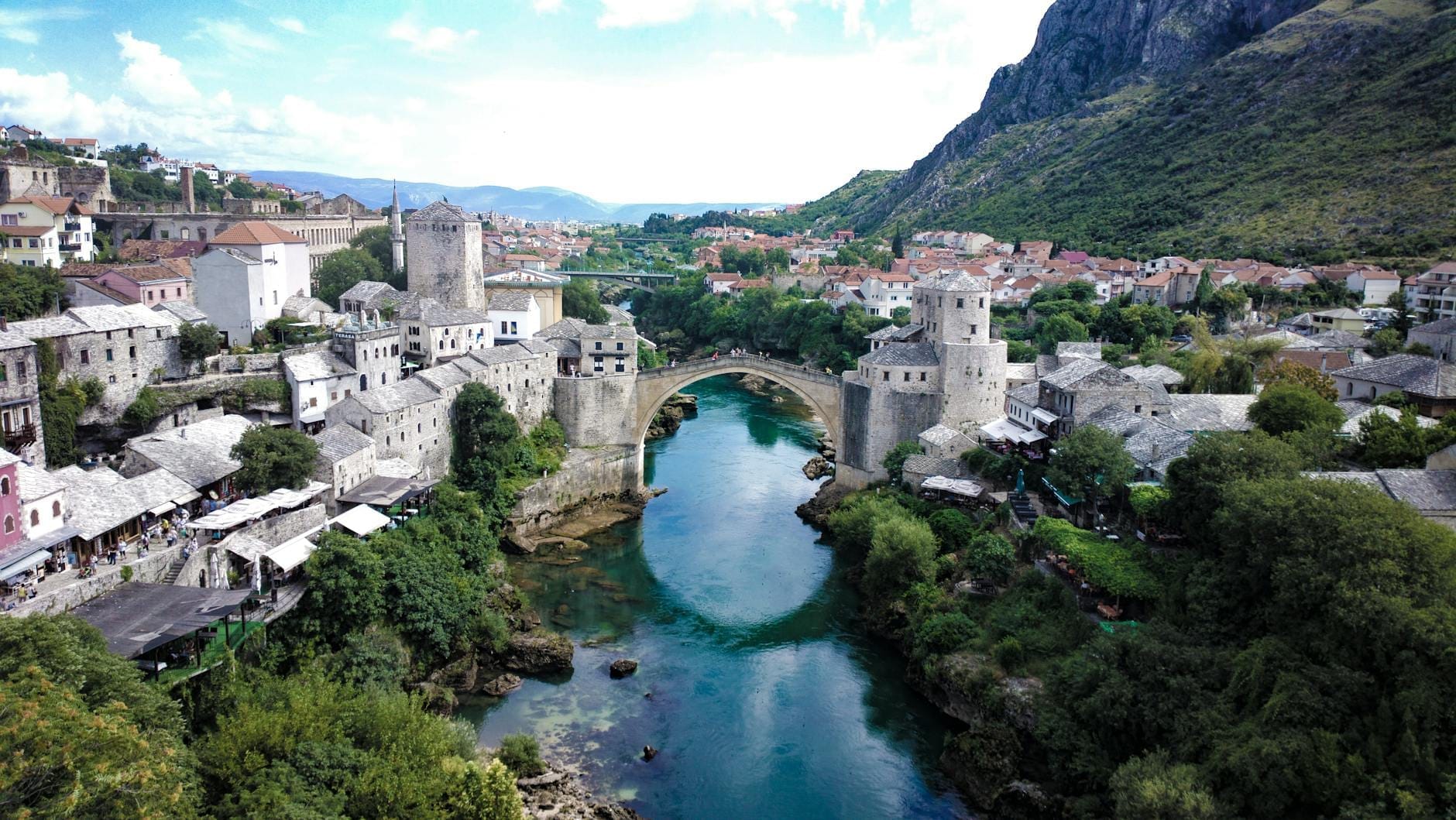
Stari Most, which translates simply as "Old Bridge," spans the turquoise Neretva River at the center of Mostar's Old Town in Bosnia and Herzegovina. It is one of the most architecturally significant Ottoman structures in the Balkans, and its story is inseparable from the region's history of conflict and reconciliation. Originally completed in 1566 by the Ottoman architect Mimar Hajrudin, the bridge stood for over four centuries before being deliberately destroyed by artillery fire during the Bosnian War in November 1993. Its reconstruction, completed in 2004 using original limestone from the Tenelija quarry near Mostar and techniques documented from Ottoman-era records, was declared a UNESCO World Heritage Site in 2005 under the designation "Old Bridge Area of the Old City of Mostar." For many visitors, arriving here from the Dubrovnik Old Town is a study in contrasts: one city restored after medieval siege, the other after modern war.
The bridge itself is 30 meters long, 4 meters wide, and rises 24 meters above the river at its peak. That hump-backed limestone arch, steep enough to make you grip the rope railings on first crossing, is not decorative exaggeration. It is structural necessity, and the engineering behind it drew on techniques that were extraordinary even by 16th-century standards. Walking across it, particularly when the stone is damp, gives you immediate physical respect for its proportions.
ℹ️ Good to know
Mostar is in Bosnia and Herzegovina, not Croatia. You will cross an international border on the way from Dubrovnik. EU citizens and most Western passport holders do not need a visa for Bosnia and Herzegovina, but verify your specific requirements before traveling. Bosnia and Herzegovina uses the Convertible Mark (BAM), not the Euro, so bring local currency or use ATMs in Mostar.
The Experience at Different Times of Day
Early morning, roughly 7–9 AM, is when the bridge belongs to locals. A handful of residents cross between the eastern and western banks, shopkeepers roll up metal shutters in the cobblestone lanes off Kujundžiluk (the old bazaar street), and the Neretva runs a deep jade color in the low-angle light. The air carries the faint smell of coffee from cafés beginning their day, and the sound of the river is loud enough to hear clearly from the bridge. At this hour, the stone surface is often damp with overnight humidity and cooler underfoot even in summer.
By mid-morning, particularly from June through September, tour groups begin arriving from the coast. The bridge becomes a corridor of bodies, and the surrounding lanes fill quickly. This is also when the bridge divers, members of the Mostar Diving Club who have maintained the tradition for centuries, begin their pre-jump rituals. Watching a diver pace the apex of the bridge collecting donations before launching 24 meters into the Neretva is theatrical and genuinely impressive, though the dives do not happen on a fixed schedule and are not guaranteed at any given time.
Sunset and the hour after it are arguably the most photogenic window. The limestone glows warm amber, the minarets of the nearby mosques catch the fading light, and the river reflects the sky in long silver ribbons. Crowds thin somewhat after 6 PM in shoulder season, and the temperature becomes comfortable for wandering without the mid-day heat. If you are staying overnight in Mostar rather than day-tripping, the bridge at 9 or 10 PM, softly lit and nearly quiet, is the version most visitors never see.
Tickets & tours
Live prices and dates from our booking partner. If you book, we may earn a commission at no extra cost to you.
Mostar and Kravice Waterfalls excursion from Dubrovnik
From 120 €Instant confirmationFree cancellationMostar and Kravice Waterfalls full-day tour with pickup from Dubrovnik
From 66 €Instant confirmationFree cancellationMostar and Medjugorje full-day trip from Dubrovnik
From 55 €Instant confirmationFree cancellationPrivate day-tour to Pocitelj and to Mostar from Dubrovnik
From 49 €Instant confirmationFree cancellation
Crossing the Bridge and Exploring the Old Town
The bridge connects two distinct neighborhoods. On the east bank, the Kujundžiluk bazaar is the most immediately tourist-facing part of the Old Town: narrow lanes lined with copperwork, embroidery, painted shells, and Turkish coffee sets. Quality varies dramatically between stalls. Look for handmade copperwork being actively produced in small workshops rather than mass-imported items.
On the west bank, the character shifts. The Croat-majority side of the river is more cafe-heavy and somewhat less touristically curated. The two towers flanking the bridge, Tara on the east and Helebija on the west, date to the Ottoman period. Tara Tower houses a small exhibit about the bridge's history and reconstruction, which is worth the brief stop before crossing.
Away from the immediate bridge zone, the Old Town contains several mosques, Ottoman-era houses, and the Karadjozbeg Mosque (one of the finest in Bosnia and Herzegovina). The War Photo Limited exhibit in the Old Town documents the 1990s conflict through photojournalism and is sobering but important context for understanding what the bridge's destruction meant. If you have only two hours, prioritize the bridge itself and a walk along both banks of the Neretva.
💡 Local tip
The cobblestones throughout Mostar's Old Town are polished smooth by decades of foot traffic and become dangerously slippery when wet. Wear rubber-soled shoes, not sandals with leather soles or flip-flops. This is especially true on the bridge itself, which offers no grip when damp.
Getting There from Dubrovnik
Mostar is approximately 150 km from Dubrovnik, crossing from Croatia into Bosnia and Herzegovina. The drive or bus ride typically takes 2.5 to 3.5 hours depending on the route and border wait times. Organized day trips from Dubrovnik are common and often include the Kravica Waterfalls en route, which makes the journey more varied. Private transfers are also available and give you more flexibility over timing. If you prefer independent travel, bus services connect Dubrovnik and Mostar, though schedules change seasonally and should be verified in advance. For a full breakdown of logistics, the day trips from Dubrovnik guide covers transport options, estimated costs, and how to combine Mostar with other stops.
From Mostar's main bus and train station, the Old Town and bridge are roughly 1 to 2 km on foot, a flat walk through a modern city that transitions abruptly into the Ottoman streetscape of the old quarter. Taxis are available at the station if you are short on time or carrying luggage.
Photography at Stari Most
The most iconic image of Stari Most is taken from river level, looking up at the arch against the sky with both towers in frame. To reach the riverbank shooting position, descend the stone steps behind the cafés on either bank. Some cafés on the east bank terrace have direct sightlines to the bridge from above the waterline and allow you to order a drink and photograph from a stable, elevated position. For wide-angle shots of the full bridge and its reflections, early morning and late afternoon light from the east (upstream) side produces the most depth. The Dubrovnik photography guide has general advice on Adriatic-region light conditions that also applies to Mostar's summer hours.
Drone photography is heavily regulated in Bosnia and Herzegovina and is not permitted without prior authorization over the Old Town or UNESCO-protected areas. Do not fly a drone here without verifying current local regulations.
Accessibility and Honest Limitations
Stari Most is not wheelchair accessible. The bridge itself involves a steep stepped approach on both sides, and the Old Town's cobblestone lanes are uneven and unpredictable. Visitors with significant mobility limitations will find the area genuinely difficult to navigate. There are no ramps on the bridge, and the width of 4 meters is adequate but not generous when crowds are heavy.
The attraction is also worth calibrating expectations around the surrounding commercial zone. The immediate Kujundžiluk area is aggressively tourist-oriented in peak season, with persistent vendor attention. This is not a criticism so much as preparation: if you arrive expecting a quietly preserved historic district, the commercial energy on the bazaar street may feel jarring. Walk one or two streets back from the main drag and the tone shifts immediately.
Day-trippers with very limited time who are also hoping to walk the Dubrovnik city walls, visit the franciscan monastery, and see Stari Most in the same day will find the logistics punishing. Mostar is a half-day commitment at minimum when travel time is included. It is best treated as its own destination rather than a quick addition to an already full Dubrovnik itinerary.
Insider Tips
- Book any organized day trip to Mostar early in your Dubrovnik stay, as popular departures fill several days in advance during July and August.
- The bridge divers collect donations before each jump and will not dive without reaching a threshold amount from the crowd. If you want to see a dive, be patient and contribute — the ritual is part of the experience, not a performance you are entitled to.
- Mostar's convertible mark (BAM) is pegged to the Euro at roughly 1.96 BAM to 1 EUR, but euro notes are not universally accepted by vendors. Withdraw local currency from ATMs near the bus station before entering the Old Town.
- The Tara Tower exhibit on the east bank of the bridge tells the story of the original construction and the 2004 reconstruction in more detail than any sign on the bridge itself. It takes about 15 minutes and provides essential context.
- If you are visiting in summer, the international bridge diving competition (usually July) draws enormous crowds but offers the rare spectacle of multiple trained divers performing in sequence. Dates vary annually — check Mostar Diving Club's schedule before your trip.
Who Is Mostar Old Town & Stari Most For?
- History and architecture travelers who want to understand post-war reconstruction and Ottoman heritage firsthand
- Day-trippers from Dubrovnik or Split looking for a half-day excursion with genuine cultural depth
- Photographers seeking dramatic bridge and river compositions, particularly at dawn or dusk
- Travelers curious about the complex ethnic and political geography of the former Yugoslavia
- Families with older children who can manage cobblestone terrain and engage with the historical context
Nearby Attractions
Combine your visit with:
- Elaphiti Islands
The Elaphiti Islands, an archipelago of 13 islands northwest of Dubrovnik, offer a striking contrast to the crowds of the old city. Koločep, Lopud, and Šipan, the three inhabited islands, are car-free, unhurried, and layered with medieval history. Whether you want a single beach day or a slower multi-island journey, the Elaphiti deliver.
- Kravica Waterfalls
Kravica Waterfalls is a sweeping 25-meter high, 120-meter wide horseshoe cascade fed by the Trebižat River in southern Bosnia and Herzegovina. Reachable on a day trip from Dubrovnik, it offers one of the most dramatic swimming spots in the western Balkans — cold, clear water pooled at the base of travertine cliffs draped in fig trees and emerald moss.
- Trsteno Arboretum
Founded in the late 15th century as a noble summer estate, Trsteno Arboretum sits 25 km northwest of Dubrovnik and remains one of the most historically layered green spaces on the Adriatic coast. Managed by the Croatian Academy of Sciences and Arts, it combines formal Renaissance garden design with ancient Oriental plane trees, a working aqueduct, and sweeping sea views.
Planning a trip? Discover personalized activities with the Nomado app.