Kravica Waterfalls: The Bosnian Cascade Worth the Drive from Dubrovnik
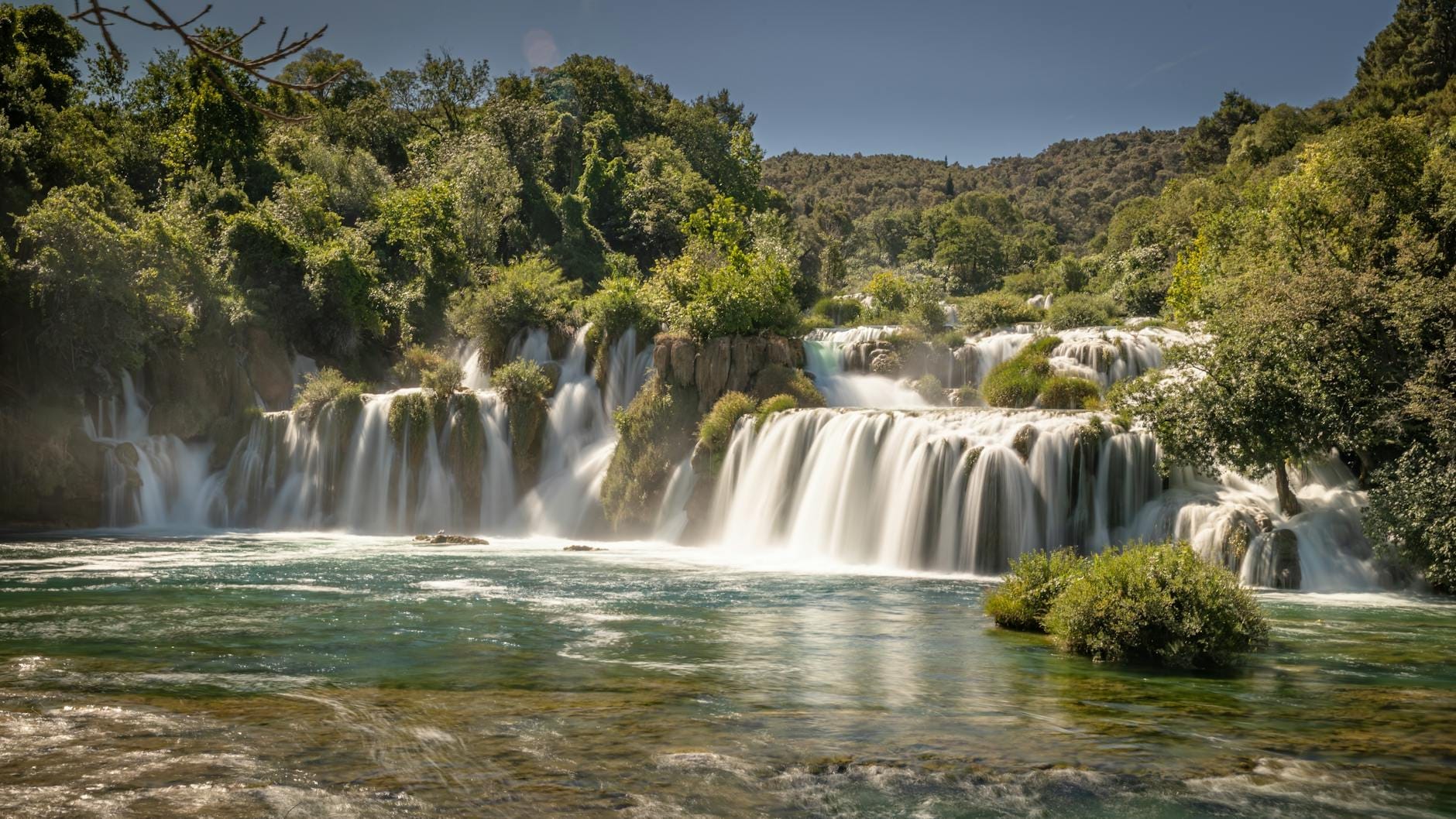
Kravica Waterfalls is a sweeping 25-meter high, 120-meter wide horseshoe cascade fed by the Trebižat River in southern Bosnia and Herzegovina. Reachable on a day trip from Dubrovnik, it offers one of the most dramatic swimming spots in the western Balkans — cold, clear water pooled at the base of travertine cliffs draped in fig trees and emerald moss.
Quick Facts
- Location
- Near Ljubuški, southern Bosnia and Herzegovina — approx. 130 km from Dubrovnik
- Getting There
- By car (~2.5 hrs via Pelješac Bridge, Neum, and the border crossing near Metković) or organized day tour from Dubrovnik; no direct bus service
- Time Needed
- 2–3 hours at the falls; full day trip including transit
- Cost
- €10 adults / €5 youth / free under 8 (cash only). Sun lounger €5, parasol €3. Parking free.
- Best for
- Swimmers, nature lovers, day-trippers wanting to cross into Bosnia
What Kravica Actually Is
Kravica Waterfalls is not a single plunging stream. It is a broad, semi-circular cascade — 120 meters across and 25 meters high — formed by the Trebižat River spilling over a series of travertine shelves. The effect is closer to a natural amphitheater than a conventional waterfall: the water fans wide, drops in multiple streams, and lands in a shallow pool ringed by limestone rock and shaded by overhanging fig and willow trees.
The falls sit inside Bosnia and Herzegovina, roughly 15 kilometers from the Croatian border, which means any visit from Dubrovnik crosses an international frontier. EU and most Western passports pass through quickly, but allow time at the border crossing, especially in peak summer. Bring your passport — a driving license alone will not suffice.
ℹ️ Good to know
Admission is cash only. The nearest ATMs are in Ljubuški town, 10 km away. Bring euros or Bosnian convertible marks before you arrive — there are no card readers at the entrance.
The Experience at the Falls: What to Expect
The access path from the car park is a straightforward 1-kilometer walk that takes around 20 minutes. It descends gently through low scrub, and you hear the falls before you see them — a consistent white noise that grows louder as the vegetation opens up. When the cascade comes into view, the scale registers gradually. The semicircle of water is wide enough that you cannot take it all in from a single point.
At the base, the pool is shallow enough to wade across in parts and deep enough to swim in others. The water is cold regardless of the season — fed by springs and underground channels — and noticeably refreshing against summer heat. Water shoes are strongly recommended: the submerged travertine is slippery, and the rocky banks are uneven. The smell at the water's edge is clean and mineral, with a faint freshness from the spray.
The falls are flanked by a row of sun loungers and parasols available for hire. At peak hours in July and August, the surrounding area fills with day-trippers, many arriving on organized tours from Dubrovnik, Mostar, and Medjugorje. The atmosphere shifts from tranquil to festival-like between roughly 11 AM and 3 PM. If solitude is important to you, this is not the best destination in high season — but if you enjoy a sociable, lively swimming atmosphere set against a genuinely dramatic backdrop, the crowds rarely detract.
💡 Local tip
Arrive before 10 AM or after 4 PM in summer to avoid the largest tour group arrivals. The light is also softer and more photogenic at these hours.
Tickets & tours
Live prices and dates from our booking partner. If you book, we may earn a commission at no extra cost to you.
Mostar and Kravice Waterfalls excursion from Dubrovnik
From 120 €Instant confirmationFree cancellationMostar and Kravice Waterfalls full-day tour with pickup from Dubrovnik
From 66 €Instant confirmationFree cancellationPrivate tour from Dubrovnik to Ston, Mostar and Kravice Waterfalls
From 91 €Instant confirmationFree cancellationFull-day tour to Mostar and Kravice Waterfalls from Dubrovnik
From 55 €Instant confirmationFree cancellation
How the Falls Change Through the Day
Early morning at Kravica is a different experience entirely. The mist from the cascade drifts low across the pool, the light filters through the surrounding trees at a low angle, and the only sounds are the water and birdsong. The turquoise of the pool is at its most saturated before direct overhead sunlight flattens the color. Photographers should note that the horseshoe shape means portions of the falls are always in shade — a polarizing filter helps significantly.
By midday in summer, the site is at capacity. Tour buses begin arriving from around 10:30 AM, and the pool bank fills quickly. The water remains inviting but the surrounding rocks get crowded. Families with children tend to cluster toward the shallower edges; adults with more swimming experience tend to move closer to the base of the main curtain of water, where the spray is heaviest.
Late afternoon sees a gradual thinning. Tour groups depart on schedule, and by 4:30 to 5 PM the atmosphere is markedly calmer. The descending sun catches the falls at a more favorable angle from the western side of the horseshoe, and the limestone walls take on a warmer tone.
Getting There from Dubrovnik
The most practical way to reach Kravica from Dubrovnik is by rental car or on an organized day tour. The drive covers roughly 130 kilometers and takes around 2.5 hours each way via the Pelješac Bridge and the border crossing near Metković. The route passes through the Croatian town of Metković before entering Bosnia. If you plan to combine Kravica with a visit to Mostar, both can be done in one long day — Mostar lies about 50 kilometers north of the falls. Several operators in Dubrovnik offer combined Mostar Old Bridge and Kravica tours departing early morning.
There is no direct public bus from Dubrovnik to Kravica. Reaching the falls by public transport requires transfers in Mostar or Međugorje and is not practical for a day trip. If you do not have a rental car, a guided tour is the most efficient option — they also handle border paperwork logistics and typically include a guide who explains the natural and regional context.
If you are planning a multi-stop Bosnian excursion, review the day trips from Dubrovnik guide for itinerary combinations that include Kravica alongside other regional highlights.
⚠️ What to skip
You are crossing into Bosnia and Herzegovina — a non-EU country. Ensure your travel insurance covers you outside Croatia. EU citizens, UK, US, Canadian, and Australian passport holders typically enter visa-free for short stays, but verify current entry requirements before travel.
History and Natural Context
Kravica is a travertine waterfall, which distinguishes it from volcanic or glacial cascades. Travertine forms when calcium carbonate precipitates from the water, gradually building the porous, layered rock that gives the falls their distinctive stepped and terraced character. The Trebižat River, which feeds the cascade, draws from a karst aquifer system common across the Dinaric Alps — the same geological formation that shapes much of coastal Croatia and inland Bosnia.
The surrounding area is agricultural and sparsely populated, characterized by Herzegovina's dry limestone terrain and low scrub. Kravica itself is a small settlement; the falls are the primary reason anyone outside the region knows the name. The site has no grand historical significance — it is valued purely as a natural formation — but the travertine barrier that creates the falls has been growing for thousands of years and continues to evolve slowly with each passing season.
What to Bring and How to Prepare
Pack a swimsuit and a quick-dry towel regardless of whether you plan to swim — the spray from the falls reaches well beyond the water's edge, and it is difficult to stand close to the cascade without getting wet. Water shoes with rubber soles are the single most important piece of gear; bare feet on the travertine are uncomfortable and risky.
Sun protection matters more than it might appear. The surrounding terrain provides limited shade except directly beneath the canopy at the water's edge, and the reflective surface of the pool amplifies UV exposure. Sunscreen, a hat, and sunglasses are practical necessities in summer. Bring enough water for the day — the on-site facilities include a small cafe-style outlet, but options are limited and prices reflect the captive audience.
If you are combining Kravica with other Dubrovnik-area natural sights, the Trsteno Arboretum along the coastal road makes a worthwhile stop on the return journey — it requires minimal extra time and offers a completely different character of natural landscape.
Honest Assessment: Is It Worth the Drive?
For travelers with more than two or three days in Dubrovnik, Kravica is worth the effort — particularly if the itinerary already includes a Bosnian excursion. The falls are genuinely impressive at any scale, and swimming at the base of a 25-meter horseshoe cascade in clear mountain water is an experience that few Mediterranean coastal destinations can match. Paired with the Mostar Old Bridge, it forms a logical and satisfying day out.
However, travelers with only one or two days in Dubrovnik should prioritize what the city itself offers before committing a full day to a 5-hour round journey. The falls also lose much of their appeal on rainy or overcast days, when the water color flattens and swimming becomes unappealing. The site's charm is inseparable from its summer swimming atmosphere — in cooler months, it is scenic but considerably less compelling.
Visitors who dislike crowds, have limited mobility, or expect a remote wilderness experience may be disappointed in peak summer. The facilities are basic, the site is popular, and the experience is inherently social. Those who embrace that context — and come prepared with cash, water shoes, and an early start — typically leave satisfied.
⚠️ What to skip
Kravica is significantly less rewarding in cold or wet weather. If you are visiting Dubrovnik outside the May to September window, check conditions before committing to the drive. The swimming is the main event — without it, the falls are scenic but not exceptional.
Insider Tips
- Pay the entrance fee in euros if you have them — Bosnian convertible marks are accepted but change is sometimes given in an unfavorable mix. There are no card payment facilities anywhere at the site.
- The left side of the horseshoe (facing the falls) tends to be less crowded than the central bank opposite the main cascade. It also offers a better compositional angle for wide photographs of the full arc of water.
- If you are driving rather than touring, consider stopping at a supermarket in Metković on the Croatian side of the border to stock up on snacks and drinks — prices are lower and selection is wider than anything available at the falls.
- The walk down to the falls is easy, but the return is uphill in full sun. In summer heat, take it slowly and carry more water than you think you need.
- Combined Dubrovnik-Mostar-Kravica day tours are widely available but long. If you find the pace exhausting, consider an overnight stay in Mostar and visiting Kravica the following morning before driving back — the falls at 9 AM with almost no other visitors is a markedly better experience.
Who Is Kravica Waterfalls For?
- Swimmers and outdoor enthusiasts looking for a natural alternative to Dubrovnik's built attractions
- Families with older children who can handle uneven rocky terrain and cold water
- Travelers on 4+ day Dubrovnik itineraries who have already covered the city's main sights
- Photography-focused visitors seeking landscape variety beyond the Adriatic coastline
- Anyone combining a Bosnia day trip with Mostar who wants a natural counterpoint to the historic bridge
Nearby Attractions
Combine your visit with:
- Elaphiti Islands
The Elaphiti Islands, an archipelago of 13 islands northwest of Dubrovnik, offer a striking contrast to the crowds of the old city. Koločep, Lopud, and Šipan, the three inhabited islands, are car-free, unhurried, and layered with medieval history. Whether you want a single beach day or a slower multi-island journey, the Elaphiti deliver.
- Mostar Old Town & Stari Most
Stari Most is the reconstructed 16th-century Ottoman bridge at the heart of Mostar's UNESCO-listed Old Town, roughly 150 km from Dubrovnik across the Bosnia and Herzegovina border. Free to cross, profound to see, and far easier to reach than most travelers expect, it ranks among the most emotionally resonant stops in the western Balkans.
- Trsteno Arboretum
Founded in the late 15th century as a noble summer estate, Trsteno Arboretum sits 25 km northwest of Dubrovnik and remains one of the most historically layered green spaces on the Adriatic coast. Managed by the Croatian Academy of Sciences and Arts, it combines formal Renaissance garden design with ancient Oriental plane trees, a working aqueduct, and sweeping sea views.
Planning a trip? Discover personalized activities with the Nomado app.